2026 SEO Core Logic: Stop Obsessing Over Keywords, These 18 Points Determine Traffic Survival

1. Fundamental Cognitive Update: 3 Core Logic Changes in 2026 SEO
At the beginning of 2026, I reviewed the Search Console dashboards of several cross‑border e‑commerce sellers and noticed a common pattern: exposure for informational queries dropped precipitously, while traffic from transactional keywords actually rose. This isn’t a coincidence—after Google’s 2026 core algorithm update, about 80 % of informational query traffic was captured, and that traffic was consumed by AI summaries, knowledge graphs, and generative search results.
The first cognitive shift to update is: the underlying logic of search engines has moved completely from keyword matching to a dual drive of trust and answers. Previously, you could write an article, keep keyword density right, and build internal links, and you might rank. Now, search engines first judge whether the site is trustworthy and can provide a direct answer. If your content is just a word dump without a structure that actually solves a problem, AI will never cite it.
The second change is that AI‑friendly content has become a prerequisite. Voice search now accounts for over 45 % of queries, multimodal search (image + text + voice + video) is mainstream, and click‑less searches are increasing. Modern SEO must not only be understandable to humans but also comprehensible and citable by AI. This is the essence of GEO (Generative Engine Optimization)—your competition is no longer other sites but the AI summary itself.
The third often‑overlooked point is the compliance baseline. The EU Digital Services Act (DSA) is now part of Google’s ranking system; cross‑border SEO that fails data‑compliance will have its impressions cut. This isn’t a bonus—it’s a threshold. If you don’t meet it, you can’t talk about rankings.
A foreign‑trade team in 2025 still used the old playbook, stuffing keywords and bulk‑generating AI content. After Google’s core update in March 2026, their traffic plummeted 70 %. Two weeks of investigation revealed it wasn’t a technical issue but a lack of real value and trust signals in the content. The old method failed far faster than anyone expected.
2. Content Strategy: Replace AI Stacking with Real Experience and Multimodal Matrix
Pure AI‑generated single‑text content in 2026 can’t achieve good rankings. Comparing several B2B client sites, I found that content containing real operational steps, customer problem‑solving records, and market‑pitfall retrospectives had an average dwell time 2.3 × that of pure AI content. The gap is even larger in fields like mechanics and electronics that require professional judgment.
How to proceed? Three directions.
First direction: Prioritize real experience. When writing product tutorials, don’t just list specs; add a detail like “When a customer installed model XX, they encountered excessive vibration; we discovered the base screw torque was insufficient and solved it by switching to an M8‑grade screw.” It doesn’t have to be long, but it must be genuine.
Second direction: Make your content citable by AI. Start with a direct answer to the core question, e.g., “The annual maintenance cost of an industrial robot mainly includes 40 % parts, 30 % labor, and 20 % inspection fees; exact amounts vary by model,” then structure the article with clear H2/H3 headings. Pair every 300 words with an image or short video to lower the reading barrier.
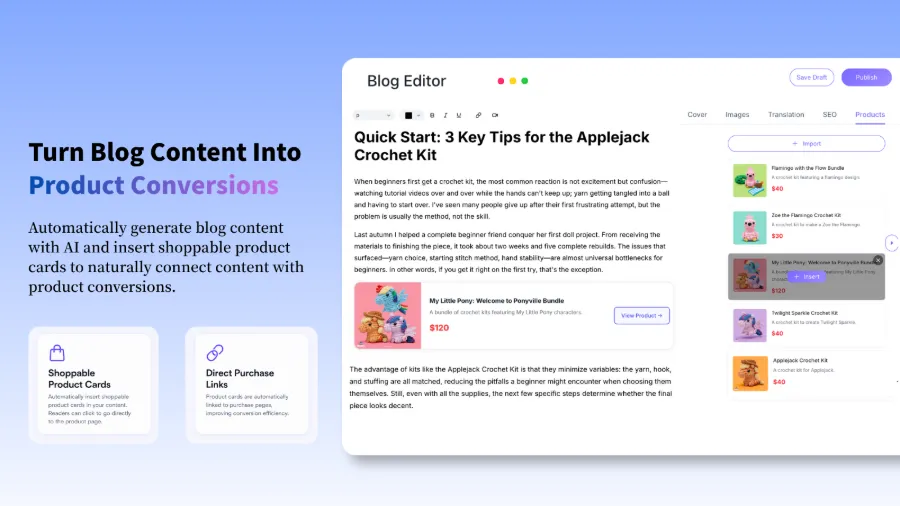
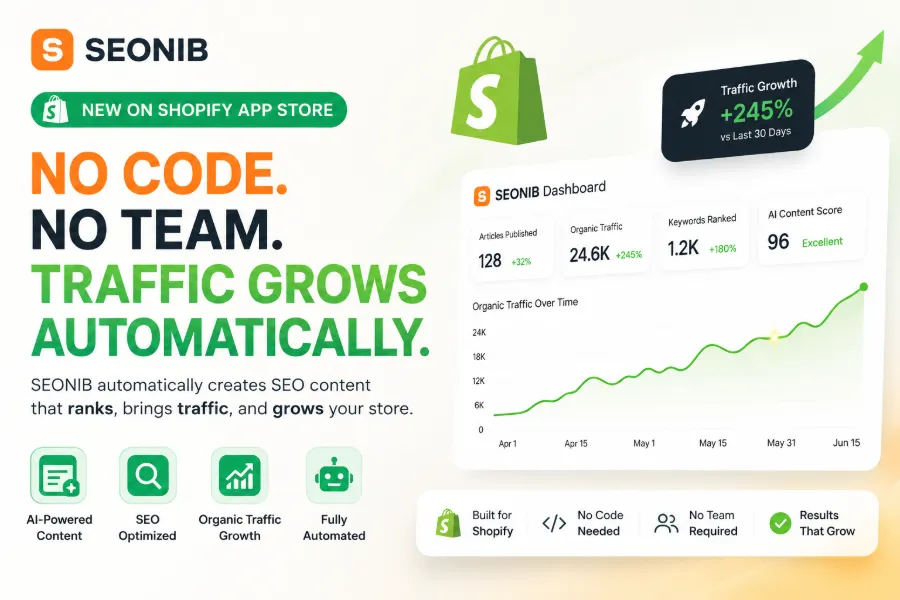
Third direction: Multimodal content matrix. Single‑text is no longer enough; each core piece needs a 2‑3 minute video summary, an audio version for voice search, and ideally a 3D model on the product page for users to rotate and examine details. Videos should include second‑accurate transcripts to help search engines understand the content. That’s why many sellers now use tools like SEONIB to centrally manage content generation and multi‑platform distribution—one‑click generation of blogs, video scripts, and audio transcripts from keywords or product links, then automatic syncing across channels.
For batch processing of multimodal content, you can combine practical methods like “Turning Product Links into SEO Blogs” to quickly build a content matrix. Meanwhile, the article “Why SHOPLINE Stores Should Run a Blog” provides platform‑specific data support.
3. Technical Optimization: Load Speed and Structured Markup Set the Ranking Ceiling
Great content is useless without technical support. In 2026, search engines impose stricter site‑experience requirements; five technical details must be nailed down.
Mobile load time beyond 2 seconds starts losing users; beyond 3 seconds the loss doubles. Use Cloudflare Argo smart routing, switch images to WebP or AVIF, and keep load time under 1.8 seconds. A 3C accessories company saw a 50 % mobile traffic increase after these optimizations.
Structured data markup is mandatory. Product pages need price, stock, and certification fields; FAQ pages need FAQ markup; articles must clearly indicate author and publish date. A medical‑device firm boosted click‑through rate by 35 % after adding product markup. Refer to the 2026 Technical SEO Checklist for a systematic audit of missing items.
For mobile experience, touch elements must be at least 48 px apart to avoid accidental taps; the above‑the‑fold area should showcase core value instead of forcing users to scroll. High bounce‑rate pages can adopt AMP.
Privacy compliance is crucial for cross‑border operations—GDPR must be respected. Privacy policies need to be clear, with a user data deletion mechanism, and cookie banners must be lawful. Use Google’s DSA compliance detection tool for self‑audit to avoid limited impressions due to non‑compliance.
SameAs markup can link your official site with LinkedIn, Google Business Profile, etc., confirming brand identity to search engines and boosting authority. SEONIB also automatically handles such structured data during content publishing, reducing manual configuration.
4. Trust Asset Construction: The Hard Currency of 2026 Rankings
In 2026, search engines place unprecedented emphasis on the authenticity behind a site. With equal content quality, sites with solid trust assets rank on average 37 % higher. Build them in three steps:
Step 1: Prove corporate authenticity. The “About Us” page should display real team information, link founders’ LinkedIn profiles, and show core members’ years of experience. Physical address must be verifiable; upload office photos and lease contracts, and complete Google Business Profile verification. Keep business registration info consistent and match site备案 with the business license.
Step 2: Verify product authority. Turn SGS test reports, ISO certifications, etc., into timestamped interactive documents with verifiable certification numbers. Don’t just post images—search engines can’t read information inside pictures.
Step 3: Real customer testimonials. Accumulate at least 50 genuine reviews on platforms like Trustpilot, meeting a defined positive‑review rate. Integrate a review module on product pages and encourage users to upload usage‑scenario videos. Real cases persuade both potential customers and search engines.
5. Link Building & Brand Operations: From Quantity to Quality
In 2026, brand search volume is becoming a more important ranking signal than backlink count. Search engines use brand searches to gauge a site’s authenticity and user endorsement. Thus, link‑building logic shifts from “quantity stacking” to “quality boost + brand creation.”
Reject spammy backlinks; only pursue authoritative links. Use tools like AuthorityGraph to find truly influential sites in your industry—association websites, top media outlets, well‑known corporate blogs—and collaborate on original content or interviews. Such links not only lift rankings but also increase your brand’s presence in AI‑generated results.
Simultaneously, create a brand‑search flywheel. Consistently expose your brand on LinkedIn, YouTube, etc.; when monthly impressions exceed 500 k, core‑keyword rankings improve noticeably. For example, at the end of a short video, prompt viewers to search “Brand + Product Name” for a detailed manual, converting generic social traffic into high‑value brand searches, which then boost rankings—a virtuous cycle.
6. Tools, Monitoring & Pitfall Guide: Data‑Driven Optimization
2026 SEO must be data‑driven, not intuition‑based. I rely on two categories of tools:
Free tools: Google Search Console for rankings and indexing anomalies, Google DSA compliance detection tool for compliance issues, Hotjar for heatmaps and user behavior.
Paid tools: Semrush for brand monitoring and keyword tracking, ClarityAI for content gap discovery, AuthorityGraph for authoritative links. Also, regularly use the Google Knowledge Graph API to check the number of brand‑associated attributes—this is called entity richness, a core GEO metric.
Three core monitoring metrics must be checked daily: (1) Citation share—how often your content is cited in AI summaries (the most important GEO metric in 2026); (2) Task completion rate—whether users solve their problem via your content; (3) Entity richness—whether brand‑related attributes are sufficient.
Five common mistakes to avoid: (1) Still keyword‑stuffing—keep density at 2‑3 % and focus on natural integration. (2) Publishing pure AI content without edits—high bounce rates and poor rankings; add real experience and case studies. (3) Ignoring privacy compliance, especially for cross‑border sites—conduct early self‑audits. (4) Producing only text without multimodal assets—miss out on voice and visual search traffic. (5) Not searching for your brand name in GPT, Gemini, etc.—you won’t know if AI can see you.
For detailed configuration of automation tools, consult the SEONIB Help Center. The article “Page SEO Analysis Tool Recommendations” also lists noteworthy new tools for 2026.
FAQ
Do we still need keyword research in 2026?
Yes, but the method has changed. It’s no longer about stuffing keywords; it’s about finding the gap between “what users ask” and “how AI will answer.” Focus on long‑tail questions and entity relationships rather than high‑search‑volume short terms.
Can pure AI‑generated content still rank in 2026?
Almost not. Pure AI content has high bounce rates and a high risk of AI‑detected de‑ranking. AI can be a helper—generate a draft, then inject real experience, concrete cases, and verifiable data. That’s the correct 2026 content production approach.
What should foreign‑trade sites consider for multilingual content?
Three core points: (1) Set hreflang tags per market to avoid duplicate‑content penalties; (2) Obtain and prominently display target‑market certifications (UL, CE, etc.) on product pages; (3) Optimize a three‑level keyword matrix “country‑product‑pain point,” e.g., “German solar inverter installation standards” converts 2.3 × better than core terms.
What is GEO and how does it differ from traditional SEO?
GEO (Generative Engine Optimization) aims not for your content to rank first in search results, but for AI summaries, ChatGPT, Perplexity, etc., to cite your content when answering questions. Traditional SEO fights for clicks; GEO fights for citations.
Small teams without dedicated SEO staff—what should they prioritize in 2026?
Prioritize two things: (1) Content automation—use tools to turn product links and keywords into blogs and distribute them; (2) Trust asset construction—complete corporate info, product certifications, and customer reviews. These have the highest ROI and don’t require a full‑time specialist.
Share Article