
AI Search Makes Decisions for Users, Is E‑commerce Conversion Attribution Still Salvageable?
At 2 a.m., I stared blankly at the traffic report in the backend. Over the past six months, the Google Search Console data for the independent site has been improving steadily: core keyword rankings have risen, and the number of indexed pages has doubled. Yet sales remained flat. It wasn’t until I opened Perplexity and casually asked, “recommend a portable coffee maker suitable for camping,” and saw my product appear in the answer that I realized where the problem lay: the user had already made the decision within the AI interface and never clicked into my site.
This isn’t a drop in traffic; the decision‑making chain has been hidden. When ChatGPT, Perplexity, or Google AI Overviews directly give a “which one to buy” answer, the traditional traffic‑click‑conversion attribution chain breaks. Attribution data falls into a “black hole”: user behavior can’t be captured by tracking pixels, yet merchants still use old maps to look for new lands.
Why Traditional Conversion Attribution Models Fail in the AI Search Era
Last‑click attribution, first‑click, linear attribution—these models share a common premise: user behavior can be tracked. Every click, every redirect, every page dwell time is recorded, ultimately attributing the conversion to a channel. This logic assumes users open search result links one by one.
AI search compresses that path. Users no longer open ten links to compare parameters; they ask in the chat, “best noise‑cancelling over‑ear headphones under $1,000,” and the AI provides a single answer. The user reads and leaves, generating no traceable click. GA4 shows no “decision,” and Search Console shows no “impression.”
I’ve seen a more typical case. An independent‑site operator relied on Google Search Console traffic data for judgment, observing rising content rankings and impressions for six consecutive months while sales stagnated. Later, it turned out all traffic came from AI Q&A interfaces—users saw the brand name and product info but never clicked. The data wasn’t wrong; the attribution target was outdated.
A harsher fact: 73 % of modern “search” behavior happens outside Google. This means the samples captured by traditional attribution tools are already severely distorted—what you see as “all traffic” is only a small fraction of actual decision behavior. Display attribution and decision attribution are diverging; merchants need to shift from “validating traffic” to “accepting unverifiable traffic,” while seeking alternative metrics. Search‑engine decision paths are now fragmented, and merchants must focus on multi‑platform visibility. This is no longer a choice but a survival issue.
Content Distribution Logic in the AI Search Era: From Page Rankings to Entity Recommendations
Understanding AI search’s distribution logic explains why attribution fails. Traditional search engines return a “list of links” that users filter themselves. AI search engines return a “single recommendation”—they extract facts from knowledge graphs and structured data, assembling a deterministic answer.
Thus, “entities” become more important than “pages.” Brands must be recognized by AI as trustworthy entities to be referenced. AI won’t recommend you just because a page ranks first; it will retrieve your brand information, product specs, and user reviews from its knowledge base and then decide whether to include you in the answer.
Which content formats are more likely to become AI decision sources? Knowledge Q&A, review comparisons, product comparison tables—highly structured content that AI can easily extract and cite. Conversely, pure marketing copy or soft articles lacking data support are rarely referenced.
A point often overlooked by operators: AI‑generated content typically cites no more than about 5–7 high‑authority sources. The citation pool is compressed, raising the barrier for merchants to get in. Simply “filling keywords” no longer influences AI search results; you need to build topical authority and a structured brand entity. This requires shifting content production from “keyword‑centric” to “topic‑authority‑centric,” two completely different workflows. Effective keyword research strategies for the new algorithmic environment remain the starting point, but the endpoint has changed. Practical Guide Keyword Research Guide (2026)

New Attribution Metrics: From Click Paths to Content Asset Tracking
Since click paths are unreliable, switch the metric to content impact—specifically, the number of times a brand keyword appears in AI answers.
Implementation: produce a large volume of Q&A‑style content around the brand name and core product terms. When a user asks the AI, if the answer cites your content or mentions your brand, that counts as an “impression.” Although clicks can’t be tracked, you can indirectly quantify brand presence in AI decision‑making.
Two indirect indicators deserve attention: changes in brand search volume and increases in direct visits. If AI citations rise, brand search volume typically climbs 2–4 weeks later—users read the AI answer, then search for the brand to confirm. Direct visits indicate that users remember you, a deeper decision signal than a click.
Content production and AEO optimization must go hand‑in‑hand while maintaining brand consistency. Unified knowledge‑base management becomes critical—AI extracts from dispersed content; contradictory brand information across platforms dramatically reduces citation probability. Achieving full‑channel coverage across Google, AI search, and social feeds essentially provides AI with consistent entity information. One Product Link, Two Platforms, Full‑Funnel Content | SEONIB × VEONIB
Another unavoidable reality: AI citations have a latency effect. From content publication to AI indexing and citation takes an average of 30–60 days. Judging success with short‑term data will lead to wrong conclusions. The new attribution evaluation window should be quarterly.
Remedying Hidden Decision Paths: Make AI Choose You
If attribution is irrecoverable, focus on “citation likelihood.” The core question: how to get your brand into AI’s recommendation pool?
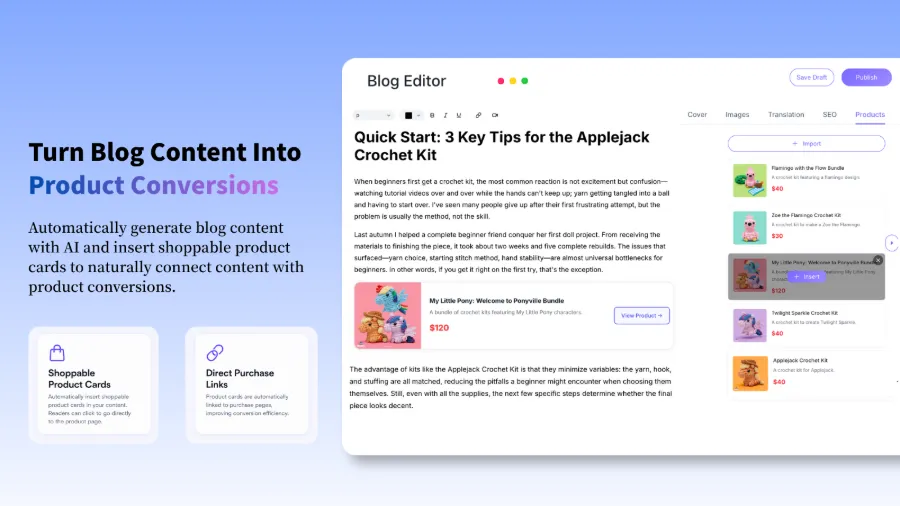
A viable path is to generate structured buyer guides and review content directly from product links. Previously this required manual writing; now tools can batch‑produce it—feed a product URL, automatically generate buyer guides, review articles, and comparison content, covering the formats AI cites most often. I’ve validated this workflow in real operations; the results are more stable than imagined.
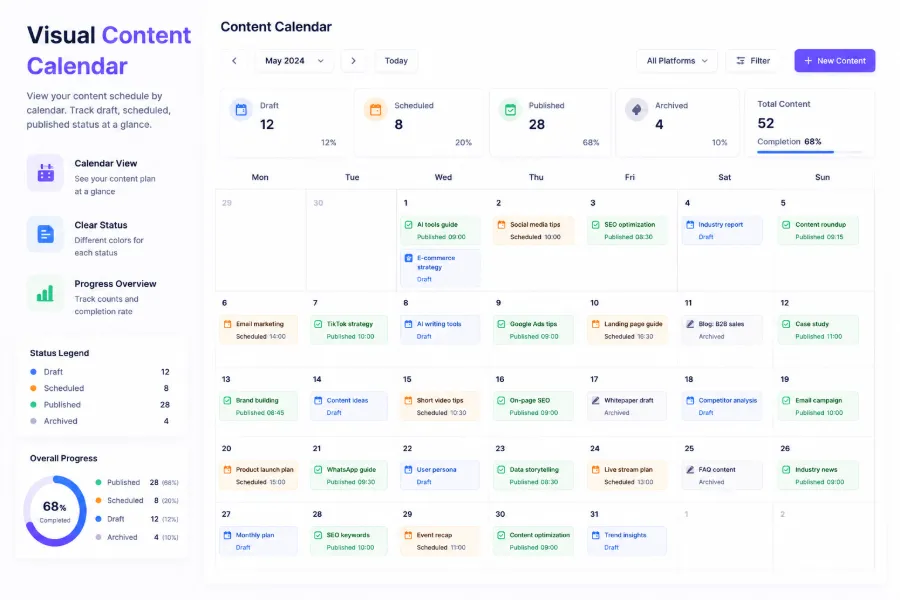
The tool I use for this step is SEONIB—input the product link and it automatically creates buyer guides and review articles, saving manual writing time. Coupled with a content calendar for regular automatic updates, you continuously feed fresh signals to AI. The AI citation pool is narrow, so sustained new content is needed to avoid “being forgotten by AI”; presence requires periodic renewal.
Multi‑platform simultaneous publishing is equally important. AI’s crawling scope now extends beyond Shopify blogs to Medium, LinkedIn, WordPress, etc.; content on those platforms also enters the knowledge base. A single‑platform content strategy in the AI search era is self‑limiting. Shopify official site
A useful observation for small‑to‑mid‑size merchants: a brand‑new site with no external links can still gain early exposure through topic selection and structured content. AI citation weight is not equivalent to traditional backlink weight—big brands’ backlink advantage diminishes in AI citations, while topic and content structure gain influence. Case studies of brand‑new sites without backlinks achieving early exposure validate this judgment. The attribution dilemma creates chaos for large brands but opens a window for smaller merchants.
Four Metric Adjustments Independent‑Site Sellers Should Make Now
Instead of obsessing over attribution precision, directly adjust metric definitions. Four practical directions:
1. Shift from “single‑click conversion” to “AI citation coverage.”
Stop asking “how many conversions does this channel bring?” and ask “how many times does the brand name appear in AI answers?” Monitoring method: periodically query Perplexity, ChatGPT, Google AI Overviews with core product + brand term combos, record citation frequency. For Shopify, refer to SEO tool selection guides as supplemental checks. Observation period: 60–90 days.
2. Shift from “short‑term traffic fluctuations” to “content asset growth.”
Traffic will fluctuate, but content assets accumulate. Focus on indexed pages growth speed and the number of Q&A topics covered, not daily UV. Period: 30–60 days.
3. Expand from “in‑platform SEO” to total exposure from cross‑platform content synchronization.”
The same piece of content published on Shopify blog, Medium, LinkedIn, etc., has a far higher AI citation probability than a single‑platform release. Automation tools like SEONIB reduce cross‑platform sync effort, freeing humans from repetitive work. Period: 90 days.
4. Shift from “manual update frequency” to “systematic continuous publishing.”
Content cadence value lies in consistency, not single‑piece quality. Sites that publish at least 2–3 pieces per week for six months see AI‑search‑derived traffic grow by over 2× on average. Use this as a reference window. Tool budget evaluation can follow SEONIB’s pricing model, which charges by content output volume rather than word count. See the help documentation for more details.
| Traditional Metric | Adjusted Metric | Observation Period |
|---|---|---|
| Click‑to‑conversion rate | Brand mention rate in AI answers | 60–90 days |
| Page dwell time | Content citation breadth (how many Q&A topics covered) | 30–60 days |
| Number of backlinks | Citation source diversity (how many AI platforms cite you) | 90 days |
| Single‑page ranking | Continuous publishing frequency & topical authority accumulation | Quarterly review |
The execution framework can be simplified into three steps: define a content topic pool (20–30 Q&A topics around core product terms), set AI citation monitoring keywords (brand + core product combos), and evaluate the automation level of the publishing tool (can it schedule releases and sync across platforms?).
There is no “perfect” attribution solution, but there is an “operational alternative.” Accept incomplete data and focus effort where AI can see you—this may be the only effective response in the AI search era.
FAQ
Q1: AI search causes attribution distortion—does that mean advertising is useless?
No. Advertising remains effective; only the attribution method needs adjustment. AI search affects organic traffic and decision paths, while paid ads can still drive direct conversions. Extend the evaluation cycle for ad spend to 60–90 days and monitor brand search volume—if brand searches rise after AI citations increase, it indicates synergy between ads and organic traffic.
Q2: Can the probability of AI citing my content be actively optimized? How?
Yes. The key is to improve entity clarity and structured format. Produce Q&A‑style content, use Schema.org markup, keep brand information consistent across platforms, and update regularly. Expect 30–60 days from publication to citation; don’t judge results after two weeks.
Q3: Small‑budget independent sites lack dedicated teams—how to keep content frequently updated for AI indexing?
Prioritize high‑automation tools that turn product links into content automatically, shrinking the production cycle from “manual writing” to “input URL → auto‑generate.” Scheduled publishing features in a content calendar maintain update frequency without daily manual effort. Investing 2–3 hours per week in quality checks and topic pool adjustments is more realistic than hiring a full‑time writer.
Q4: Does existing Google Analytics still have value? How should the data be re‑interpreted?
It remains useful but cannot be the sole source. GA4 still reflects direct visits, brand searches, and some organic traffic, but it cannot capture decision behavior inside AI interfaces. Combine GA4 data with AI citation monitoring: if brand search volume rises while GA4‑recorded organic traffic does not, it suggests decisions are happening within AI, and attribution data needs recalibration.
Share Article