AI Skills Are Shifting the Capability Boundaries of Agents: Will SEO Be the Next Use Case?

Cross‑border e‑commerce teams usually don’t lack product information, keywords, or content channels. What really consumes time is switching back and forth among trend tools, writing windows, image editors, the Shopify backend, and social platforms. An operator may discover a search trend in the morning, finish the article in the afternoon, forget to fill in meta tags when publishing, and only days later realize that one language version never synchronized successfully.
An agent that can generate a piece of text is not the same as an agent that can take an SEO task from topic selection through publishing and result recording. The former solves expression; the latter deals with permissions, data, APIs, reviews, and post‑failure handling.
SEO is very likely to become the next application scenario for agents, but the judgment criterion isn’t whether the article reads like a human’s, but whether the agent can read brand knowledge, invoke publishing tools, execute a series of actions, and leave results that can be inspected and rolled back. If it only generates a draft, it is still a content tool; only when trend discovery, SEO checks, scheduled publishing, and result monitoring form a workflow does it approach a real SEO application.
AI Skill Changes Not Writing Speed, but the Execution Boundary of Agents
An AI Skill can be understood as a set of domain‑specific work instructions, tool connections, and operational constraints. It does more than tell the model “write an article about a product”; it also specifies which data to read, which tools to call, which fields to check, when to stop, and where to leave records after execution.
This expands an AI Agent’s capability from answering questions to a chain of verifiable continuous actions. General conversational models excel at explanation and rewriting, content‑generation tools excel at bulk output, and Claude Code, Codex, Cursor, and GitHub Copilot have already demonstrated another direction: agents that read files from context, invoke tools in the environment, and then modify or execute actual objects. The tasks an SEO Skill must perform are similar, only the objects shift from code repositories to keywords, pages, content calendars, and publishing backends.
A complete automated content pipeline for cross‑border e‑commerce can be broken into at least four stages: trend discovery, content generation, scheduled publishing, and multi‑platform synchronization. Each stage has non‑writing issues. Trend discovery must assess whether keyword search volume and competitive content have commercial relevance; content generation must handle search intent, product facts, and AEO structure; publishing must write meta tags, image alt text, internal and external links; synchronization must then verify index status and check for anomalies in organic search traffic.
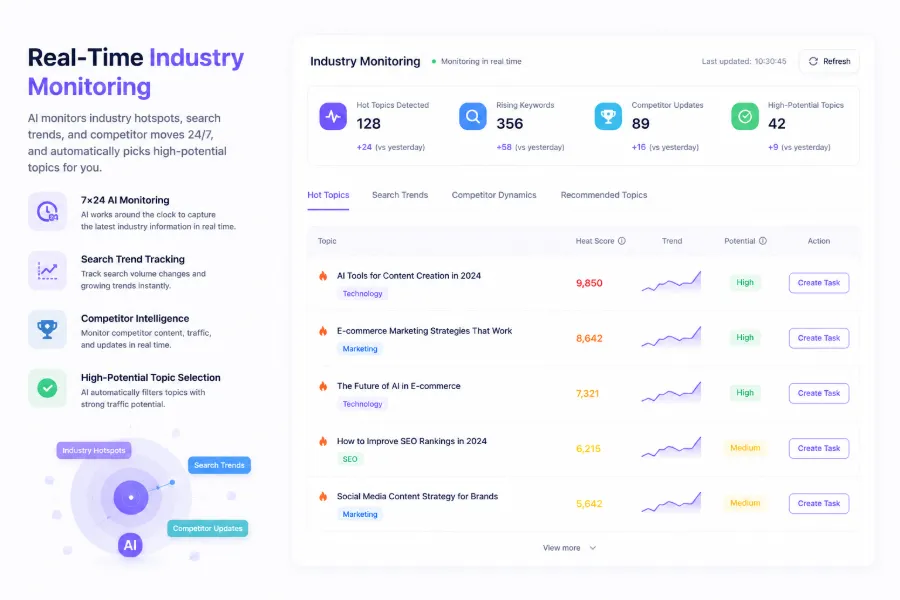
That’s why a single article’s quality cannot represent an agent’s SEO capability. Even a smoothly written article is a failed SEO task if it didn’t read the brand knowledge base, mis‑states product specifications, or publishes to the wrong language directory. Some have documented similar trend‑first content practices, see AI Trend Practice, but trend capture alone is not a closed‑loop search operation.
Human review does not disappear just because a Skill exists. It shifts from line‑by‑line writing to fact‑checking, brand phrasing, sensitive content, and final publishing decisions. For basic issues of page structure, crawling, and indexing, one still needs to understand the SEO fundamentals, rather than hand all judgments over to a prompt.
Why SEO Is a Good Candidate for the Next Agent Application
SEO has several natural characteristics that suit automation: repetitive work, rule‑breakable tasks, relatively stable inputs, and observable results after publishing. A Shopify or Shopline store may add new products weekly, update inventory, and adjust market language, requiring corresponding product descriptions, buying guides, and FAQs to be maintained. WordPress and WooCommerce sites often face old‑article updates, internal‑link gaps, and insufficient category‑page coverage.
Typical inputs include product links, keywords, industry trends, competitor articles, and social media content. The real work for an agent is handling the relationships among these inputs: what search intent a keyword maps to, whether a product page and a blog page duplicate each other, whether an article covers the needed entities, whether titles and meta tags exceed page facts, whether image alt text is accurate, and whether external and internal links guide users to appropriate pages.
These processes can use general‑purpose generation tools for the textual steps, but general tools usually don’t know which product field is a trusted source, nor do they inherently understand which language directory a page must be published to. The gap between generating an article and completing an SEO operational loop lies in these intermediate judgments.
所谓 “Topical Authority” isn’t about rewriting the same keyword dozens of times; it’s about forming clear content relationships among product pages, comparison pages, tutorial pages, and industry questions. Entity SEO isn’t just sprinkling a few entity names; it requires pages to accurately describe the brand, product, usage, and related concepts. Google Search indexes based on page quality, relevance, and user intent; meta tags can help express a page’s theme but cannot replace factual and content value.
Multilingual scenarios amplify these differences. An automated workflow can support 40 languages, which is valuable for global content operations, but the more languages, the more likely inconsistencies in brand terminology, units, regulatory statements, and link paths. An English page being indexed does not guarantee that German, Japanese, or French versions are indexed simultaneously; the index report in Google Search Console is not a real‑time dashboard, and operators often have to wait before they can tell whether a publish actually took effect.
Therefore, humans should remain involved at nodes of fact‑checking, brand‑sensitive wording, compliance content, and final publishing decisions. Process details can refer to the Content Process Help Documentation, but documentation can only prescribe operations, not make commercial judgments for the team.
What’s Missing Between Generating Content and Running an SEO Workflow
A truly runnable workflow usually proceeds in the following order, rather than letting the model write everything first and then adding SEO fields:
- Discover topics, read trends, competitor data, and product data
- Generate content, establish titles, structure, internal links, and conversion paths
- Check SEO elements, verify meta tags, alt text, canonical links, and facts
- Schedule publishing, synchronize platforms, and monitor index status and subsequent traffic
The first step needs stable data sources. Without a brand knowledge base, the agent will treat common statements from public web pages as brand facts; without a product inventory or price API, the content may be outdated the day of publishing. The second step needs a content calendar; otherwise “automation” simply produces isolated articles that can’t avoid duplicate topics.
The third step is often underestimated. Tool invocation isn’t just “generate HTML”; it involves webhook return statuses, platform permissions, field formats, and retry logic. Publishing APIs for Shopify, WordPress, Shopline, Contentful, Ghost, and Medium are not identical; the same title field may have different constraints across platforms. If image alt text, canonical tags, and internal‑link structures get truncated during synchronization, the article may appear to publish successfully while the page is actually malformed.
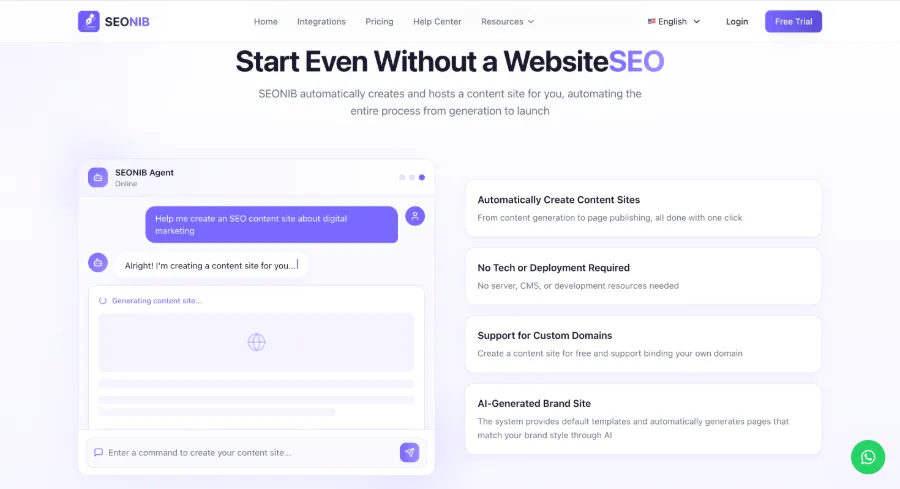
A cross‑border e‑commerce task may involve product pages, blogs, the Shopify backend, and other content platforms simultaneously. Multi‑platform synchronization can cover more than ten content and e‑commerce platforms, but as the number of platforms grows, permissions, formats, and troubleshooting nodes also increase. That number sounds like coverage capability, but for on‑call staff it means more failure logs, more token expirations, and more inconsistent pages.
| Work Mode | Topic Source | Content Generation | Publishing Execution | Cross‑Platform Sync | Human Intervention Points | Primary Failure Types |
|---|---|---|---|---|---|---|
| Manual SEO workflow | Manual search, competitor analysis, experience | Manual writing or editing | Log‑in to each site to publish | Copy‑paste | Almost every step | Missing fields, missed publishing, duplicated effort |
| General content generation tools | Manual keyword input | Auto‑generate draft | Usually not responsible | Usually not responsible | Fact, SEO, publishing | Generalization, inaccuracy, format loss |
| Agent with SEO Skill | Trends, product, knowledge base | Generate and check per rules | Call APIs for scheduling | Webhook or platform connection | High‑risk judgment and spot checks | Permission errors, API changes, rollback difficulty |
In a real failure, it’s rarely the article that’s bad. One cross‑border team, during a night‑time deployment, scattered trend discovery, content generation, and multi‑platform publishing across different backends; for three consecutive days operators had to copy titles, re‑format, and re‑check language versions. On the fourth day, a webhook reported success, but the target site didn’t receive the canonical tag, and another platform turned internal links into broken paths. The team only noticed a sharp drop in clicks for the relevant directory after a week of checking organic search traffic, prompting them to pause the schedule, roll back templates, and rerun the crawl check.
In this case, automation saved operation time but amplified the impact of permission errors and API changes. Another less obvious outcome is that the more stable the publishing, the more stable the erroneous content becomes. Without version records, approval status, and retry limits, automation won’t troubleshoot problems for you; it will simply defer the issue until traffic or index data expose it. Teams should first test product‑SEO market fit to confirm that content topics truly connect to product demand, rather than just verifying that an article can be published.
Which Steps Should Be Automated First When SEO Agents Are Actually Deployed
In Shopify, Shopline, or WordPress environments, automating highly mechanical, easily detectable failure tasks is usually safer than granting full publishing permissions outright. Topic collection, draft generation, SEO field filling, image alt‑text handling, scheduling, and platform synchronization can be the first batch of candidates. Strategic tasks should retain human confirmation, such as covering a new market, comparing competitors, modifying product promises, or deciding whether an article should funnel traffic to a product page.
Publishing stability and multilingual synchronization often affect operational efficiency more than a few minutes saved per article. Cross‑border teams rarely struggle to write an article; they struggle to maintain a fixed weekly publishing cadence, or to get a language version into the correct site after publishing. At that point, schedule status, failure notifications, and re‑publish mechanisms are more closely tied to actual cost than “generation speed”.
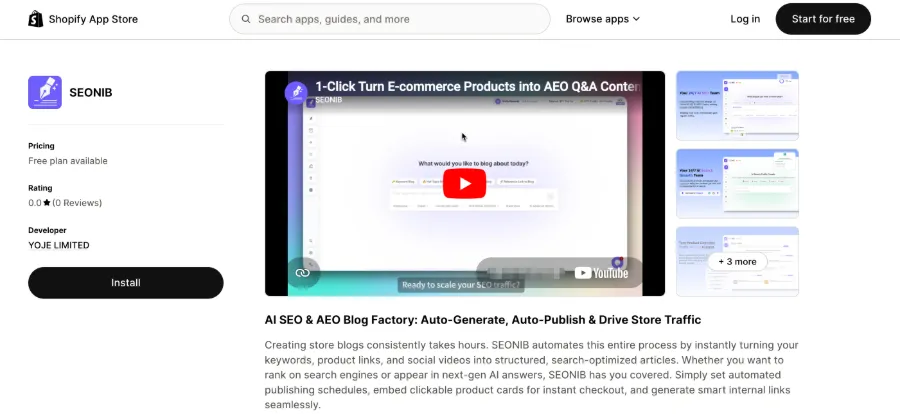
In this friction of publishing, syncing, and maintenance, tools like SEONIB are inserted into existing workflows: product links, keywords, or trends enter a task queue, articles are generated and SEO fields written, then pushed to target platforms according to a calendar. The key check isn’t whether there’s an “auto‑publish” button on the UI, but whether after a failure you can identify which step broke, which platform didn’t receive the payload, and whether you can retry just one language version.
The later part of the schedule also reveals different issues. If SEONIB is connected to multiple sites, operators still need to verify access tokens, field mappings, and publishing time zones, especially when European markets span multiple daylight‑saving rules. Automation does not eliminate maintenance; it merely shifts maintenance from daily manual uploads to periodic checks of connections, logs, and exception queues.
During the trial phase, split the impact into four metrics: time from topic to publish, number of manual steps, cross‑platform publishing success rate, and index/traffic changes after publishing. If publishing frequency rises but index status does not improve, the issue may be duplicate topics or insufficient page quality; if organic traffic grows without conversion, the content may satisfy information demand but fail to create a path to product or commercial pages. Content coverage and conversion rates should be evaluated together with article count, not replaced by article count alone.
Small‑scale runs should retain human spot‑checks and error rollbacks. Start with a single site, a single language, and a low‑risk topic class, observe for 2–4 weeks, then decide whether to expand permissions. For differences among automation modules, pricing, and processes, see the SEO Automation Solution Breakdown, but any solution must still include pre‑publish fact checks and post‑publish index verification.
Will SEO Become the Next Application Scenario? The Criterion Is Not Generation but Responsibility
SEO meets the conditions for an AI Agent use case: tasks can be broken down, data can be read, actions can be invoked, results can be monitored, and errors can be rolled back. AI Skills expand an agent’s execution scope, but they don’t automatically solve search‑engine changes, commercial judgments, or content authenticity issues.
Cross‑border e‑commerce is better suited to start with low‑risk, repeatable, quantifiable steps rather than opening full publishing permissions from the outset. The trial phase should focus on four outcome observations: time, manual steps, publishing success rate, and index/traffic changes. Such records cannot guarantee rankings, but they can show how much operational work was actually reduced and how many troubleshooting tasks were added.
SEO is very likely to become an important application scenario for agents. Its competitive edge won’t stay in “can it write,” but will hinge on the ability to stably manage the entire workflow: read brand knowledge, understand search intent, control permissions, retain traceability, and stop promptly when a platform errors or content is lost. Rankings, organic traffic, and AEO performance still depend on search‑engine algorithms and user behavior; no one should describe an agent as a completely unattended SEO team.
FAQ
What is the main difference between an AI Skill and a regular AI writing tool?
The direct difference is that an AI Skill can constrain tool calls and execution results, while a regular AI writing tool usually only generates text. An SEO task may require reading product data, filling meta tags, invoking publishing APIs, and recording index status; if these steps still rely on manual copying, the workflow isn’t truly closed.
Which parts of an SEO task are most suitable for an agent?
Topic collection, draft generation, SEO field filling, image alt‑text handling, and scheduled publishing are the most suitable to hand over to an agent first. Teams can run a 2‑4‑week pilot, compare manual steps, publishing success rate, and index changes, then decide whether to expand to higher‑risk commercial content.
Does AI‑generated SEO content still need human review before publishing?
Yes, especially for facts, brand phrasing, sensitive content, and final publishing permissions, which should still be confirmed by humans. After auto‑publishing, pages, meta tags, and index reports need to be checked within 24 hours to a few days because a successful API response does not guarantee that the search engine has finished processing.
How should cross‑border e‑commerce evaluate whether an SEO agent truly saves operational costs?
Don’t just count how many articles were generated; also record time from topic to publish, number of manual steps, cross‑platform success rate, and index/traffic changes after publishing. Observe at least one full content cycle to see whether saved writing and formatting time is offset by troubleshooting, translation, or rollback work.
How does AI‑generated content reduce the risk of duplication, inaccuracy, and indexing failures?
First, have the agent read controlled brand, product, and channel data, then set up duplicate‑topic checks, fact verification, human spot‑checks, and failure rollbacks. After publishing, re‑crawl key pages and check index status per language and platform; merely seeing a successful article generation does not prove the page has been properly processed by the search engine.
Share Article