Which Channels Most Boost Brand Presence in AI Search Answers? — Analysis Based on Data from 2,000 Brands
Last year I spent ten months optimizing content for an independent‑site brand. I published over 80 blog posts, optimized every product page, and fixed technical SEO issues. Then I searched for the brand name on ChatGPT and Perplexity—no result. The team questioned whether the content quality was insufficient. So I launched a study: I scraped data for 2,007 brands from 14 sources and measured the correlation between each source’s mentions and the brand’s appearance in AI answers. The results completely overturned my previous strategy assumptions.
Own Website: You Invest the Most Resources but Get the Weakest AI Citation Signal
Content on a brand’s own domain improves its appearance in AI answers by only 1.30×. That’s lower than Amazon’s 1.46× and Wikipedia’s 1.42×. On the same chart, Reddit is 3.17×, YouTube 3.19×, Gartner 3.15×. Own websites are the weakest signal among the 14 measured sources.
This data is hard to swallow. Most brands allocate 60‑80 % of their content budget to official blogs and product pages. I did the same. The logic is self‑consistent: write good content, do SEO, and let search engines and AI crawl it. But AI models trust third‑party independent voices more than the brand’s own statements when deciding whether to cite a brand. Real user discussions on Reddit, candid product reviews on YouTube, and industry analyses in Gartner reports are far more credible to AI models than marketing‑tone copy on the official site.
In October last year I compared a data point: after a brand was mentioned three times on Reddit, the probability of appearing in a certain AI Q&A rose about 3×; whereas over 30 product‑page mentions on the official site barely moved the needle at all.
Truly Effective Channels: High Influence + High Coverage Combination
Choosing the right channels isn’t about a single metric. We plotted each source on two dimensions: Influence Lift and Number of Brands Covered. Only the points in the upper‑right quadrant are worth investing in as “general boosters” — they increase the chance a brand appears in AI answers and work across categories.
| Channel | Influence Lift | Brands Covered | Suggested Priority |
|---|---|---|---|
| 3.17× | 1,984 | High | |
| YouTube | 3.19× | 1,432 | High |
| Gartner | 3.15× | 625 | Medium |
| Own Website | 1.30× | Full coverage | Low |
Reddit covers 1,984 brands in the sample—almost full coverage—with a lift of 3.17×. YouTube covers 1,432 brands with a lift of 3.19×. Gartner covers only 625 brands, focused on B2B, with a lift of 3.15×.
There’s a clear trap in the data: some niche sites show 4×, 5×, or higher lifts. For example, the vertical running‑shoe review site weartesters.com could be decisive if you sell running shoes, but irrelevant otherwise. A 5× lift that applies to only 50 brands is an “outlier”; a 3× lift that applies to 1,984 brands is a “channel strategy”.
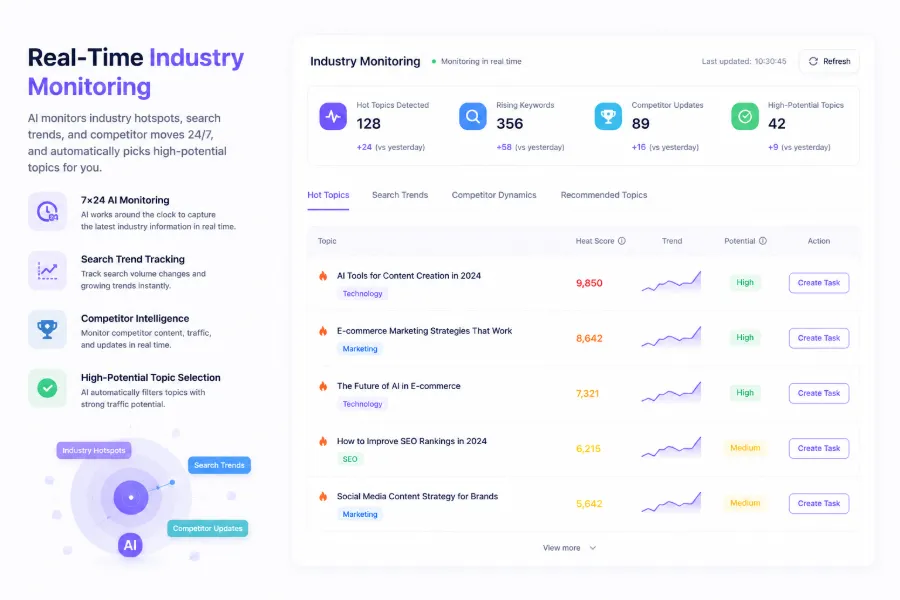
You need to monitor communities, video platforms, professional reviews, and analyst reports simultaneously. You don’t have to be present on every vertical channel, but you must ensure genuine discussions on Reddit and YouTube. How do I monitor my performance on these channels? I usually use a tool for real‑time industry monitoring to avoid missing critical trends.
Own websites are not useless. They are infrastructure that must stay technically compliant—structured data, Core Web Vitals, etc. But they are a baseline, not an amplifier. I’ve compiled a Technical SEO Checklist (https://seonib.com/guide/technical-seo) to ensure the site has no hard technical issues, yet that alone cannot drive AI visibility.
Don’t Focus Only on Citation Frequency — Influence and Coverage Are Key
A common misconception is “the most‑cited source is the best source”. If you look at ChatGPT or Perplexity’s frequent citation sources, Wikipedia dominates. Public citation analyses show Wikipedia accounts for 15‑25 % of total AI citations. Yet its influence lift is only 1.42×, placing it at the bottom of the channel list. Wikipedia’s high citation frequency stems from its breadth and authority as a knowledge base, but its impact on a single brand’s appearance in answers is negligible.
Reddit may account for only 1‑2 % of total AI citations—far less than Wikipedia—but each mention yields more than double Wikipedia’s effect. YouTube is similar: limited citation frequency but high weight.
This directly affects resource allocation. If you chase “the most‑cited source by AI”, you’ll chase Wikipedia and mainstream media. If you aim to “get your brand into AI answers”, you should chase Reddit, YouTube, and Gartner. The two goals require different tactics. Some people achieve better results by focusing on a single niche platform; for example, a blogger demonstrated that focusing on one effective channel beats casting a wide net in the case study “How I Got Search Traffic by Writing a Blog” (https://telegra.ph/I-Got-Search-Traffic-by-Writing-a-Blog-06-05).
Re‑plan Your AI Visibility Strategy: From Content Production to Channel Layout
Based on this data, I adjusted my strategic framework. If you also want a systematic way to improve your brand’s appearance in AI answers, follow three lines of action.
Prioritize general boosters. First, build a presence on Reddit and YouTube. Write authentic reviews on Reddit, answer user questions, join industry discussions. On YouTube, create product demos, comparison reviews, tutorials. Actively manage review pages on G2 and Capterra. The ROI of these channels far exceeds that of website content writing.
When evaluating each channel, consider both influence and coverage. Don’t be fooled by high‑lift but low‑coverage false signals. If a niche blog claims a 4× lift but only covers your sub‑category, it’s useful for a category‑specific strategy but not for a general one. Separate category‑specific tactics from universal tactics.
Don’t put all your eggs in the own‑website basket, but keep it basic. The website remains the foundation of your content assets; users need a landing point when they search the brand name. For content architecture, refer to the SEO Ultimate Guide (2026) (https://seonib.com/guide/seo). It offers systematic top‑level design references.
When I need to publish content across multiple channels, manual work becomes extremely inefficient. One Reddit post, a YouTube video script, a G2 review reply, and a website blog each require separate logins and formatting. Later I started using SEONIB (https://www.seonib.com) to reduce this manual effort; it can generate content once and automatically sync it to multiple platforms, cutting intermediate friction.
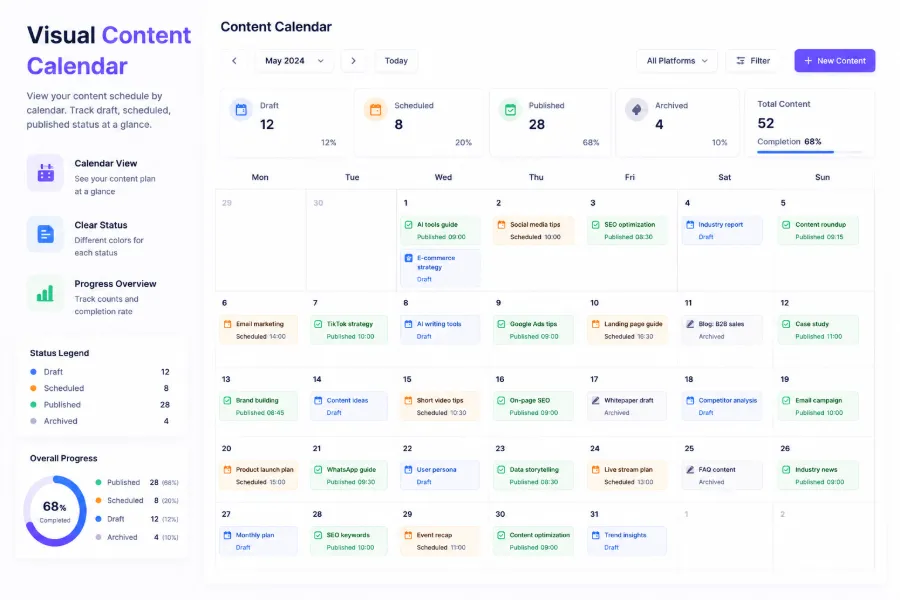
SEONIB’s sync feature supports Shopify, WordPress, Shopline, and other major platforms. Coupled with batch content‑calendar execution, you can achieve a weekly content output rhythm. The goal is to minimize friction in multi‑channel distribution so you can focus on managing genuine interactions on third‑party platforms.
If you want a deeper custom publishing workflow, see the Bulk Publishing to WordPress Guide (https://seonib.com/c/guides/seonib-bulk-publishing-to-wordpress-turn-your-blog-into-an-automated-content-factory-2026/index.html). All configuration details and steps are in the accompanying help documentation; you can consult the SEONIB Help Center (https://seonib.com/help) when adjustments are needed.
FAQ
Why does my own website have such a small impact on AI answer appearance?
When AI models decide which sources to cite, they prioritize third‑party independent information. Content on a brand’s own site is essentially “self‑promotion”, which the model deems less trustworthy than user‑generated reviews on Reddit. This is a bias in the training data, not a quality issue with your site.
Should I stop writing content on my own site?
No. Your own site remains the destination when users search the brand name and the base of the conversion funnel. It should not be the primary vehicle for AI citation strategy. Treat it as infrastructure, not an amplifier, and allocate the core resources for AI visibility to third‑party channels.
How do I start getting brand mentions on Reddit or YouTube?
On Reddit, avoid direct advertising. Participate in relevant subreddits, answer genuine questions, and share useful resources. On YouTube, create product comparisons or tutorial‑style videos, ensuring the video title contains relevant keywords. The key is to be discussed, not just published, so the content naturally generates conversation.
What’s the difference between “citation frequency” and “citation influence”?
Citation frequency measures how many times a source is cited across AI answers, reflecting its overall presence in the model’s training data. Citation influence measures the multiplier increase in the probability that a specific brand appears in an AI answer after the source mentions that brand. Wikipedia has high frequency but low influence; Reddit has low frequency but each mention yields more than twice Wikipedia’s effect.
Does this research apply to all AI engines (ChatGPT, Perplexity, Gemini)?
The data spans multiple AI engines, though it isn’t broken down per engine. The ranking trends are highly consistent across engines—third‑party communities and video platforms consistently outperform official sites. Some engines rely more on Wikipedia than others, but the overall pattern does not reverse.
Share Article