
How to Build an AI-Driven Content System for Scalable SEO Growth
Cross‑border e‑commerce teams often suffer from the same content problem as the Accio Automation Tool; I’ve seen it countless times. Every morning we have a meeting to pick topics, spend half an hour debating before settling on a direction; at noon we open ChatGPT, tweak prompts, and get a draft that makes no logical sense, then spend another hour manually editing; finally we log into WordPress to format, add images, fill SEO fields, and by the time we publish it’s already evening. With this workflow, producing half a blog post a day is considered efficient. A friend running a Shopify clothing site had three people cramped on content, and after two months they had published only 14 articles, with organic traffic constantly hovering below 200.
The problem isn’t laziness; the workflow itself is blocked by manual steps. We need a system to replace this process, not to write faster, but to keep the entire pipeline free of human touch. This article breaks down the architecture and implementation details of the fully automated AI content system I built.
Step 1: Define Core Goals and Data Metrics
Before writing any code or calling any API, you must be clear on the conflict the system is meant to resolve. The biggest tension I faced was speed of content production vs. quality—chasing volume makes keyword rankings drop quickly; focusing only on quality slows the cycle back to a manual era.
I set several hard metrics for myself: indexing rate (the proportion of URLs recorded in Google Search Console within 14 days of submission) not less than 85%; the share of target keywords ranking in the top 10 should grow from zero to over 30% within six months; monthly compound growth of organic traffic should stay above 15%. Without these numeric anchors, the system’s performance would be judged by feeling and could easily go off track.
Initially I increased the publishing frequency from one post per week to three per day. The first two months saw almost no traffic change; in the third month Google started to assign weight, and by the sixth month organic traffic had grown roughly 200% compared to the starting point. Half of that 200% came from volume, the other half from the system keeping each article with a relatively uniform structure and keyword density—something humans can’t consistently achieve; a standardized process actually does it better.
Step 2: Automated Topic Selection — Let AI Continuously Discover High‑Potential Topics
Manually selecting topics is not only inefficient, it creates blind spots. The topics set at the beginning of the month are often overtaken by industry hot spots by mid‑month. I’ve tried running Ahrefs keyword gap reports manually; they can only be updated once a week, and by the time the data is ready competitors have already published two rounds of content.
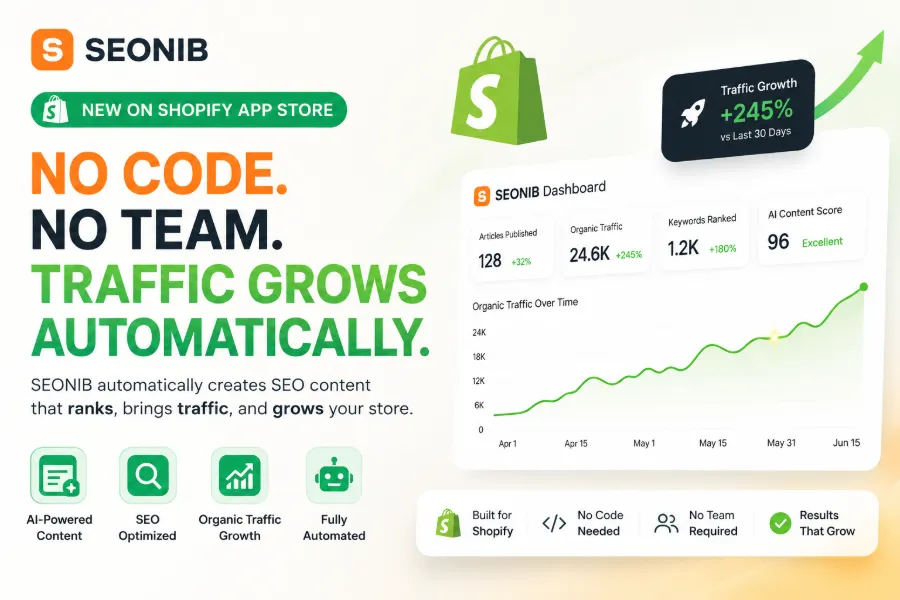
To free the topic‑selection process from human dependency, I use SEONIB to automatically monitor industry topics. The logic is simple: continuously track search volume changes for industry keywords, the indexing speed of new competitor content, and social‑media topic heat; every day it generates 10–15 recommended topics and adds them to a topic pool. Picking a topic from the pool and generating a writing task takes no more than 30 seconds—this truly automates the “find a topic” step.
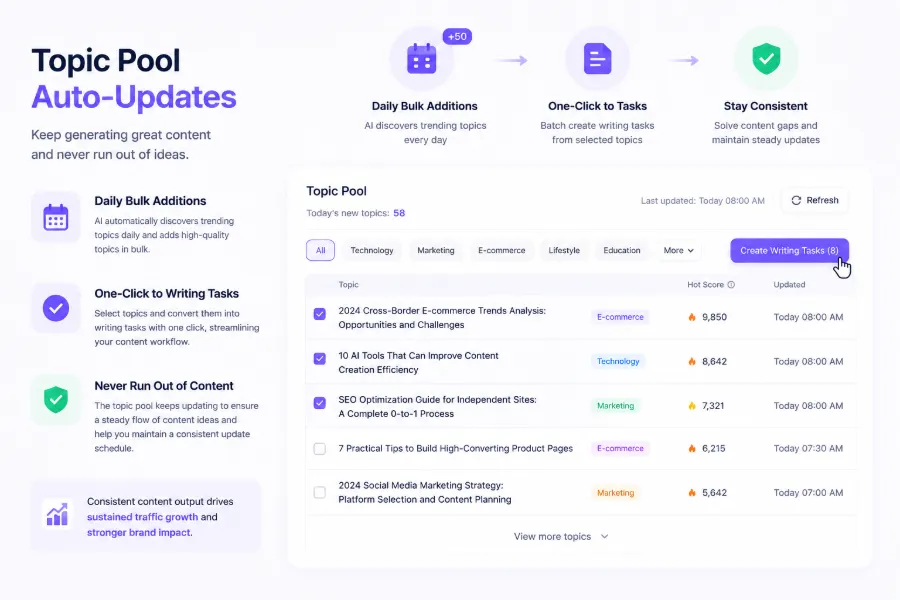
Compared with the previous manual judgment using a cross‑border e‑commerce trend data platform, the actual experience of this automation is that the only human actions left are “confirm” or “skip”; there’s no need to open three browser tabs to compare keyword heat.
I previously wrote a comprehensive review of SEONIB’s features and pricing, where I compare traditional keyword tools with an automated topic pool. If you’re still on the fence about switching workflows, check it out.
Step 3: Content Production Pipeline — From Any Input to SEO‑Ready Articles
Automated topic selection is just the appetizer; the real challenge lies in content generation. Early on I used pure AI to write keywords, and the content became extremely homogeneous—three articles started with “In today’s fiercely competitive digital marketing environment” repeated three times. Google rankings visibly fell, and we lost about 40% of the traffic that would have come from indexed articles over two months.
The root cause turned out to be a lack of brand context. A content system must be backed by situational knowledge: brand voice, internal linking logic, terminology, and competitor comparison points. Otherwise AI only produces generic templates. I re‑engineered the workflow: product links, social media content, and even a voice transcription are fed into the system, which automatically converts them into a structured article. From input to output, an article now takes an average of 3 minutes and supports 40 languages.

An unexpected finding: the biggest bottleneck in the production line isn’t writing itself, but the quality of the input sources. Feed the system a vague keyword and it returns an article you can read but isn’t great. Feed it a high‑performing competitor article plus your own product link, and the output can be published directly. This suggests that the system’s ability to re‑structure existing material is far stronger than creating from scratch. I’ve also seen peers share similar conclusions in a product‑page‑to‑blog case study—using live SKUs as input yields a conversion rate noticeably higher than pure topic articles.
At this stage I used SEONIB’s content generation module; the underlying AI model I tested both Gemini and GPT, and ultimately settled on Gemini for its better stability with multilingual long texts. Platform matching is also crucial; I recommend reading this WordPress SEO Tool Selection Guide if you’re still debating which publishing backend to use.
Step 4: Scheduled Publishing & Multi‑Platform Sync — Keep the System Running 24⁄7
After content is generated, the publishing step must be solved. Manually logging into multiple back‑ends—WordPress once, Shopify blog once, Shopline once— is slow and error‑prone. Once I edited an internal link on Shopify but forgot to sync it to WordPress, causing a two‑week inconsistency.
I pre‑configured a content calendar in the system: publish regular blogs every Monday, Wednesday, and Friday; release a monthly industry report at the start of each month. AI automatically generates and pushes the content to the bound platforms according to the schedule. After the initial setup, the system ran for three consecutive months without any human intervention, publishing a new piece at 9 am each day to both my WordPress and Shopify sites.
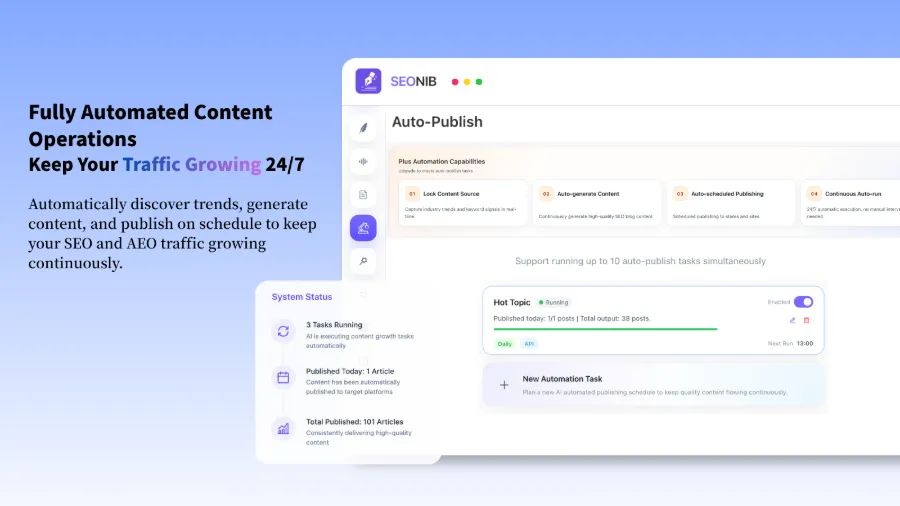
To connect WordPress to this publishing pipeline, see the guide Connecting a WordPress Site to SEONIB. My first configuration took less than ten minutes, mainly verifying the API connection and setting the default publishing category.
If you’re unclear about the meaning of each configuration item, I recommend reading the SEONIB Help Documentation first to avoid missing field‑sync settings during scheduled publishing.
Step 5: Continuous Optimization & Iteration — The System Is Never “Done”
When the system first launched, I made a fatal mistake: I let it run automatically for two weeks without checking performance. When I finally looked at Google Search Console, only 5 of the top‑20 keywords remained; the rest had slipped beyond the 30th position. The root cause was that the system was using a fixed brand context while competitor and search trends had already shifted.
I later added a semi‑manual review layer. Each week I spend 30 minutes on three tasks: flag pages in GSC with fewer than 10 natural clicks as low‑efficiency topics; add this month’s hot terms and competitor keywords to the brand context library; adjust internal linking weight to steer traffic toward conversion‑focused pages.
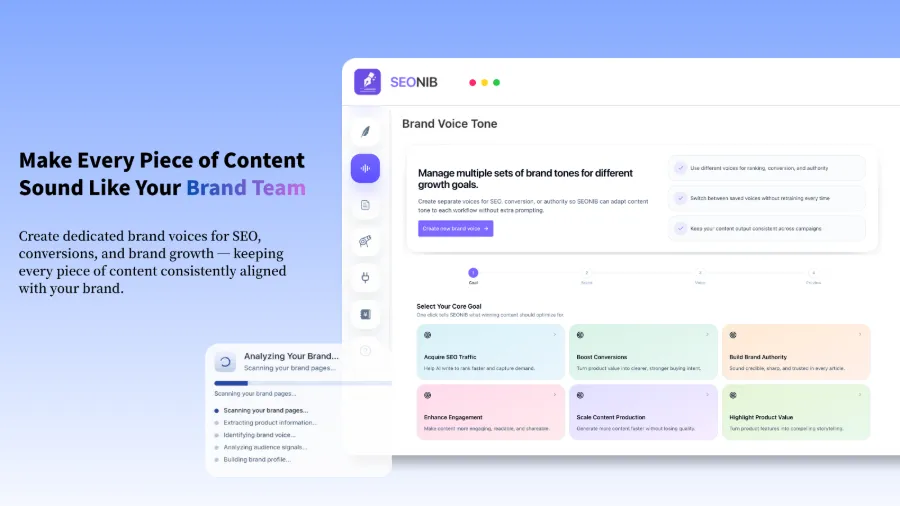
These micro‑adjustments continued for two months, rankings gradually recovered, and the share of organic traffic rose from 10% of total site traffic to 45%. This experience taught me that the quality ceiling of the system’s output depends on how frequently the brand context library is updated, not on the AI’s writing ability. The more diligently you refresh the brand context, the less likely the system will produce out‑of‑date content.
I documented the detailed data changes of this iteration cycle in another article, Three AI Growth Models to Boost Organic Traffic (https://seonib.com/c/guides/how-to-grow-traffic-without-ads-three-ai-growth-modes-seonib/index).
The content generated by the system is hosted on the publishing platform’s server, using the site’s own storage space. When the article count grows from dozens to hundreds, there’s virtually no strain on a typical virtual host or cloud server. The only concern is images and attachments; I recommend using a CDN to accelerate large files.
FAQ
Is this content system suitable for individual sellers just starting out?
Yes, early‑stage sellers benefit the most. Their biggest issue is insufficient content capacity; an automated system solves the publishing rhythm problem directly. Start with a low frequency of 1–2 posts per day; traffic will accumulate far faster than a manual approach.
Will AI‑generated content be flagged as low quality by search engines?
It depends on whether the content is backed by brand context and asset libraries that give it uniqueness. Pure AI articles with identical structures and generic viewpoints are easily marked low quality; but if you configure a product knowledge base, competitor differentiation points, and internal linking logic, the richness and uniqueness increase dramatically, and Google treats such long‑tail pages as valuable.
Is it painful to migrate or switch platforms?
Not at all. The system supports API integration with WordPress, Shopify, and Shopline; switching only requires changing a platform key. Existing content data is retained, and the whole migration takes about an hour.
Do I need dedicated SEO knowledge to maintain it?
Basic usage doesn’t require it. Deep maintenance benefits from a basic understanding of Google Search Console data to identify pages that need keyword replacement or internal‑link updates. Regularly optimizing the brand context configuration has a bigger impact on rankings than tweaking a single article’s title.
Will larger content volumes strain the server and storage?
The system’s content is stored on the publishing platform’s server, using the site’s own storage. Scaling from dozens to hundreds of articles puts almost no pressure on a standard virtual host or cloud server. Only images and attachments can become a concern; use a CDN to handle large files.
Share Article