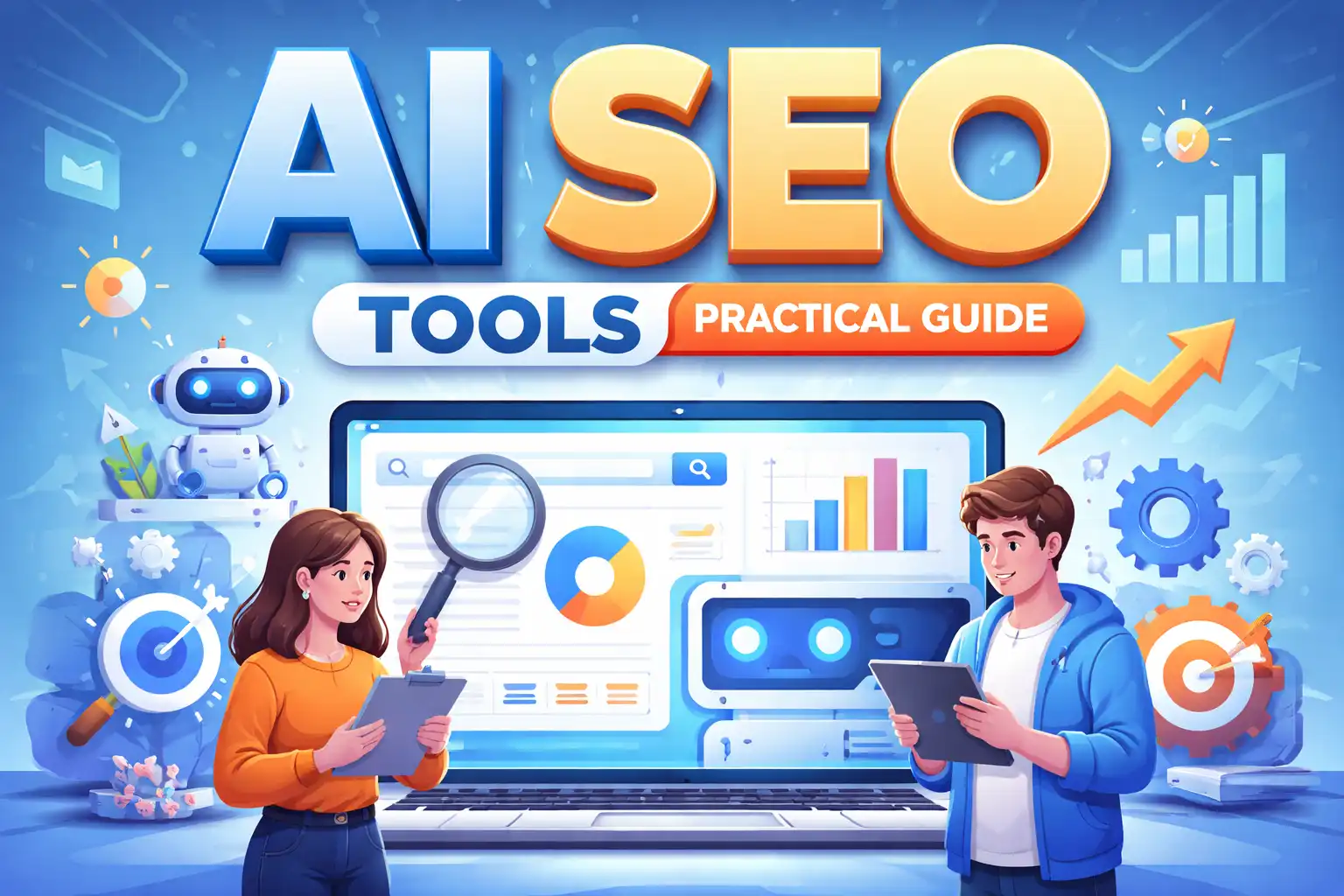
AI SEO Tools Test Guide
SEO teams deal with repetitive tasks daily: keyword research, content optimization, and technical audits. Even with AI tools, most people still manually stitch together multiple platforms: first generating a brief with Frase, then drafting with ChatGPT, and finally logging into WordPress to paste and publish. Switching between three tools means a piece of content still takes three to four hours from topic selection to live publication. We spent 90 days testing 15 mainstream AI SEO tools, selecting 10 keywords in each of three industries—SaaS, e‑commerce, and local services—and running the full content creation to publishing workflow. The conclusion: a single tool can improve performance, but the real efficiency bottleneck isn’t writing itself—it’s the manual steps in publishing.
AI SEO Tools Evaluation Method: How We Tested
The testing dimensions cover five aspects: the accuracy of AI‑generated suggestions (validated against manual analysis), the onboarding difficulty for a marketer with moderate SEO experience during the first week, ROI comparisons across price tiers, integration capabilities with platforms like Google Search Console and WordPress, and the depth of NLP and content generation quality. Each tool used the same 10 target keywords and completed the full process—topic selection, content generation, optimization, and publishing—in each industry over a 90‑day period.
Pricing data were verified directly from each vendor’s website in January–February 2026. No discount or promotional prices were used; all calculations are based on publicly listed pricing. During testing we recorded the time each tool took from keyword import to publishable content, content scores, and subsequent Google ranking performance. We also tracked friction points in cross‑tool workflows—e.g., after exporting a brief from Frase to Surfer SEO, the format required manual adjustment; copying content from ChatGPT into Clearscope often yielded low scores that needed a second round of edits. The time spent on these steps accumulated and could offset the efficiency gains the tools themselves provide.
Content Optimization Tools Test Comparison
The core value of content‑optimization tools is telling you “what to write” and “how to write it to rank.” We tested four market‑leading tools: Surfer SEO, Frase, Clearscope, and MarketMuse. The table below compares their key parameters.
| Tool | Starting Price | Core Features | Test Performance | Ideal Users |
|---|---|---|---|---|
| Surfer SEO | $69/mo | SERP analysis, real‑time content scoring (0‑100), AI writing, multilingual optimization | Avg. optimized content score 82, 34 % faster to reach the first page | Teams that care about detailed scoring metrics |
| Frase | $15/mo | Top‑20 SERP summaries, content briefs, AI writing, People Also Ask aggregation | Brief creation 65 % faster, outline covers 89 % of topics | Small‑to‑mid‑size teams with limited budgets |
| Clearscope | $170/mo | A‑F content rating, keyword reports, team collaboration, automatic re‑optimisation alerts | Enterprise teams saw a 53 % natural traffic increase in 4 months | Large teams needing enterprise‑level collaboration |
| MarketMuse | $149/mo | AI content inventory, personalized difficulty scores, content cluster mapping, strategy calendar | Authority score for topics rose 47 % in 6 months | Professional teams focused on content strategy and clustering |
During testing we noticed a noteworthy phenomenon: using Surfer SEO and Frase together outperformed either tool alone, but it required exporting and importing data between the two platforms, adding roughly two extra hours of manual work per week. The value of a tool combination exceeds that of a single tool, but the more tools you combine, the more cumbersome the manual steps become—this is the first source of the efficiency bottleneck mentioned earlier.
Integrated SEO Platforms and General AI Writing Assistants
Beyond dedicated content‑optimization tools, integrated SEO platforms and general AI writing assistants are also essential in daily workflows. Platforms like SEMrush, Ahrefs, and SE Ranking provide end‑to‑end functions such as keyword research, site audits, and backlink analysis, while ChatGPT and Claude fill specific scenarios with flexible writing capabilities.
SEMrush’s AI Copilot proactively surfaces SEO opportunities; its keyword clustering feature groups 500 target keywords 78 % faster than manual classification, achieving 91 % accuracy compared with human‑validated groups. ChatGPT Plus shines in brief generation—average brief creation time dropped from 2 hours to 20 minutes, a six‑fold efficiency boost. Our team uses it daily to generate schema‑structured data, saving about 5 hours per week. Claude Pro’s extended context window is effective for analyzing competitor content libraries; importing 10‑20 articles at once produces a content gap report, typically identifying 12 undeveloped sub‑topics per analysis.
The content quality produced by these tools is already impressive, but the subsequent steps still rely on human effort: copying text from ChatGPT into an editor, adjusting formatting, uploading images, filling SEO metadata, and finally logging into each platform to publish. This process often takes longer than the content generation itself, and when publishing to multiple platforms (e.g., Shopify and WordPress simultaneously), the duplicated work multiplies.
From AI Tools to Fully Automated Content Publishing: Workflow Upgrade
After completing the 90‑day tool evaluation, we realized the biggest efficiency gains lie not in the optimization algorithms but in connecting the entire pipeline from content creation to publishing. Manually moving content to each platform is time‑consuming and error‑prone—forgotten internal links, missing image alt tags, inconsistent publishing times that confuse crawlers. We tried using SEONIB to fill this gap; it breaks the whole content pipeline into four automated steps: trend discovery, content generation, scheduled publishing, and multi‑platform synchronization. In short, AI handles everything from topic selection to live publication without daily manual backend logins.
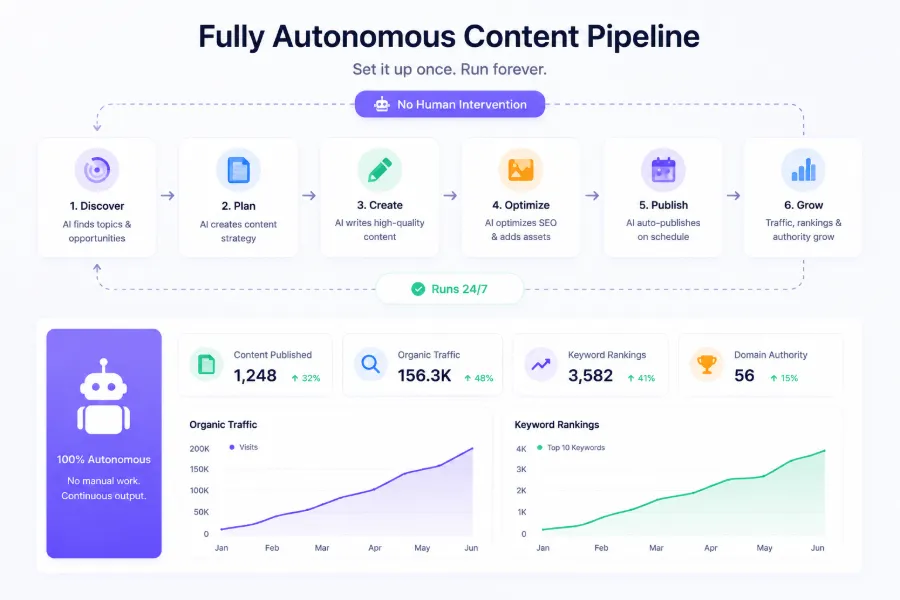
Specifically, the workflow works as follows: AI continuously monitors industry hot topics, automatically identifies subjects with search demand, and pushes them to a topic pool; then it generates SEO‑optimized articles based on keywords or product links, supporting 40 languages; after setting the publishing frequency, AI follows a calendar to output content daily. The most critical step is one‑click synchronization to multiple platforms—Shopify, WordPress, SHOPLINE, etc.—without separate logins.
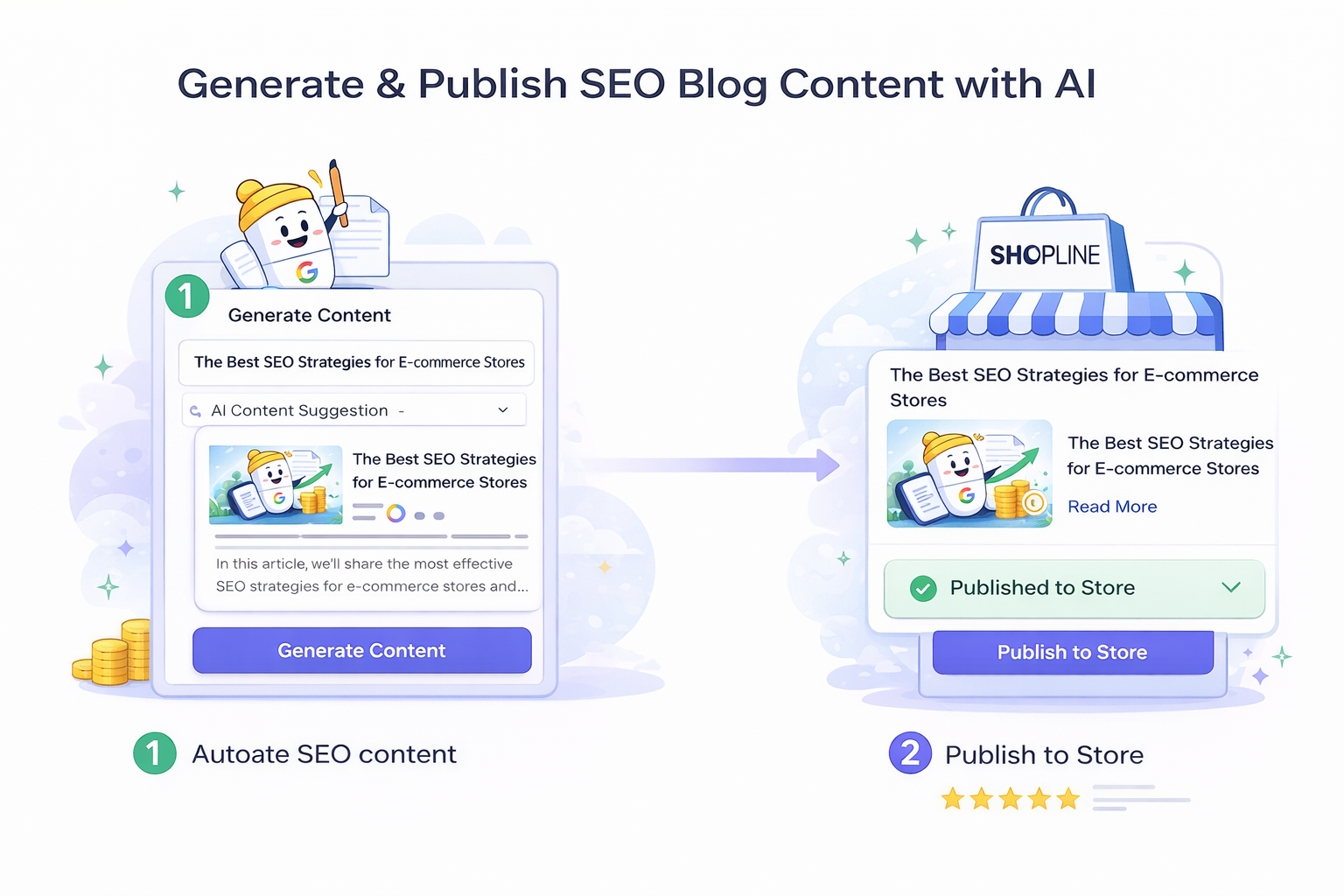
In practice, we tested automatically generating buyer guides and review articles from product links, scheduling three posts per week. SEONIB automatically extracts information from product pages, creates structured content, and adds internal links and purchase cards. The entire process required no human intervention; after a month of continuous operation, the site grew from zero to 12 articles, and Google Search Console began recording page indexings. For a brand‑new site with zero backlinks, a steady stream of content output is more valuable than any single‑time optimization.
If your workflow already contains many drafts generated by ChatGPT or Surfer SEO but still relies on manual publishing, consider adding this automation layer. For detailed operation steps and configuration parameters, refer to the full documentation in the SEONIB Help Center.
Another point worth mentioning: the “one‑click convert product page to blog” feature in SEONIB saved our team a lot of product copywriting time during testing—previously, product blogs required manually compiling specifications, selling points, and usage scenarios; now, simply entering a product link generates a first draft.
When using multiple AI tools together, we found that content‑optimization scores do not directly translate to rankings. An article scoring 85 % in Surfer SEO performed worse than a 75 %‑scoring article that was updated three times a week across multiple platforms. This observation confirms our judgment: an automated publishing workflow is at least as important as content optimization, if not more so.
Frequently Asked Questions
Q1: What is the main difference between AI SEO tools and traditional SEO tools?
Traditional SEO tools mainly provide data analysis and manual‑operation interfaces, such as keyword rank checking, backlink monitoring, and site audit reports. AI SEO tools add automated content generation, intelligent optimization suggestions, and predictive analysis on top of that. The key distinction is that AI tools can proactively complete tasks—like generating a brief or writing a full article—without waiting for user actions, whereas traditional tools require the user to execute each step manually.
Q2: How do content‑optimization tools differ from AI writing tools? Can they be used together?
Content‑optimization tools (e.g., Surfer SEO, Clearscope) focus on analysis and scoring, telling users where existing content needs improvement to rank higher. AI writing tools (e.g., ChatGPT, Claude) generate text from scratch. They can be combined: first generate a draft with a writing tool, then import it into an optimization tool for scoring feedback and revisions, and finally publish. Our tests showed this combination outperforms using any single tool alone, but it requires manual data transfer between the two tools.
Q3: How should a small or medium‑size team choose the most cost‑effective AI SEO tool combo?
Teams with limited budgets can start with Frase ($15/mo) for content research and pair it with ChatGPT Plus ($20/mo) for writing, using the free version of Google Search Console for performance tracking. If the monthly budget is around $100, upgrading to Surfer SEO Essential ($69/mo) to replace Frase yields more precise content scores. SE Ranking ($44/mo) is also a high‑ROI integrated option, as its built‑in content editor reduces the need for an additional tool.
Q4: Does automated content publishing affect content quality?
Automation itself does not lower quality, provided the content generation stage includes thorough optimization and rule setting. Quality drops typically occur at two points: (1) AI‑generated content not reviewed or calibrated by human editors, and (2) publishing without prior format cleaning and internal‑link checks. By establishing brand style guidelines, internal‑link rules, and SEO metadata templates, automated publishing can maintain a quality level comparable to manual operation while increasing publishing frequency by 2–3×.
Q5: Can a brand‑new site with zero backlinks achieve rankings using AI SEO tools?
Yes, but the strategy must adjust. For sites without backlinks, the focus should be on content volume and coverage rather than single‑article quality. Using AI tools to produce 1–2 pieces of topic‑related content daily, targeting long‑tail keywords, and employing protocols like IndexNow to accelerate indexing can help. In our 90‑day test, a zero‑backlink site that consistently produced over 30 articles began seeing pages appear in Search Console ranking reports within the top 50, providing initial exposure even if rankings weren’t high. The key is consistent publishing frequency, not one‑off optimization.
Share Article