Quick Guide to Getting a New Website onto the GEO Recommendation List: Pitfalls I’ve Encountered and Key Actions

In the first week after launching a brand‑new site, I was glued to Google Search Console, refreshing until my fingers aached. All I saw was a single line: “Not indexed yet.” Even worse, in the AI‑search era your new site faces a double hurdle—traditional search engines haven’t indexed it, and AI engines like ChatGPT and Perplexity won’t magically know it exists. I spent about half a year on this road, tripping over the “too little content” pit, the “output frequency” pit, and the “trust AI‑generated content without human review” pit. This article skips theory and focuses on a few actions that actually worked for me after testing.
When I first built a new site, I made a particularly stupid mistake: I waited to accumulate 50 articles before publishing them all at once. Two months later, Google still hadn’t indexed a single page, and AI search completely ignored me. Later I discovered that AI search engines (e.g., Google AI Overviews, Perplexity, ChatGPT) judge content quality differently from traditional SEO—they care more about whether you organize information from the start in a way they can understand.
After adjusting my strategy, the first article did three things: it opened with a Q&A pair (directly answering a clear user search intent), it embedded basic structured‑data markup, and it included a concise introductory summary. It was indexed within 24 hours. Industry data from 2025 shows that structured Q&A content published within the first seven days of a new site’s launch is three times more likely to be cited by AI search engines than a regular article. In practice, I preset a FAQ module, entity tags, and clear hierarchical headings when publishing the first article, so both crawlers and AI models can quickly capture the structure. If you’re not yet familiar with the basics of the GEO era, see this guide on SEO fundamentals in the GEO era. The reason this works lies in the search behavior logic of ChatGPT: AI prefers to read well‑structured snippets when matching answers, rather than a wall of unformatted prose.
The second pitfall involved publishing frequency. My blog posted two articles in the first week, three in the second, then stopped entirely in the third because I ran out of time. Meanwhile a competitor posted one piece of content every day; after a month, each of its articles had been cited three times by AI search, while I had none. Data backs this up: a 2025 industry survey shows that sites that update daily are about 2.5 × more likely to be recommended by AI search than those that update weekly.
It’s not about “hard writing” but about closing the loop from topic discovery to publishing. I integrated a real‑time trend‑monitoring tool that scrapes industry hot words and competitor activity 24⁄7, automatically filtering out high‑potential topics and pushing them into a topic pool.
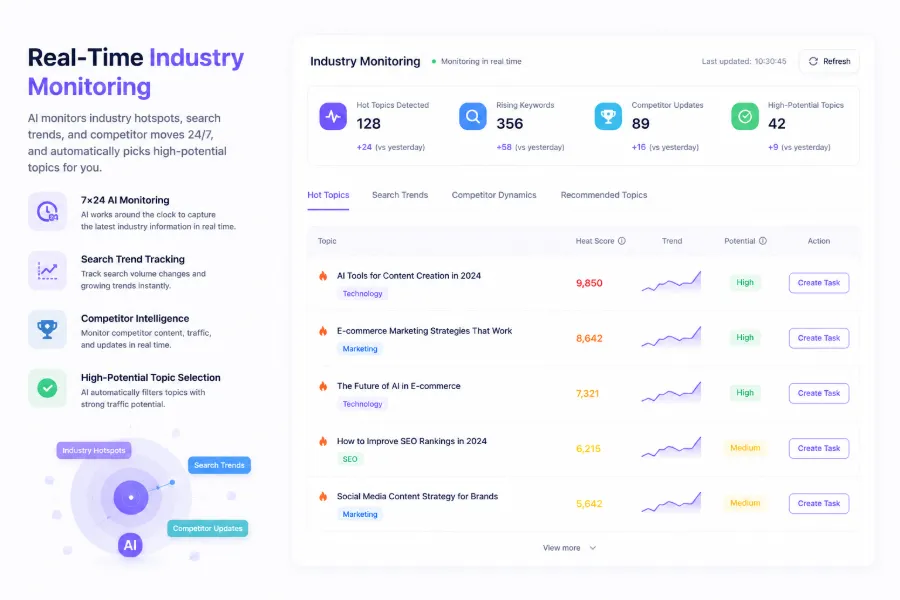
Then I generate draft content from those topics, manually review and fine‑tune it, and schedule publication. This reduced my daily content‑creation time from three hours to about twenty minutes. If you’re just building a content system, check out this SEO tools recommendation for beginners. For a hands‑on look at trend monitoring, see this solid AI‑driven trend‑monitoring case study. Automation has advantages, but it also carries hidden costs—my first big mistake was over‑relying on AI output, which made the articles read like templated mash‑ups, causing AI search to downgrade them. I later instituted a strict rule: every AI‑generated piece must pass my manual review, where I adjust tone, add real‑world examples, and remove overly mechanical transition sentences. After this process, indexing and citation rates rose noticeably. For tool‑cost references, see the pricing guide for automated content tools.
Another common mistake by new site owners is waiting for product pages and copy to be ready before thinking about content strategy. In fact, product information itself is the best content material. The most efficient thing I’ve done is feed freshly launched product links straight into an automated generation pipeline, letting AI transform the product name, price, specs, and user reviews into three content formats: buyer guides, tutorial articles, and EEO Q&A pairs.
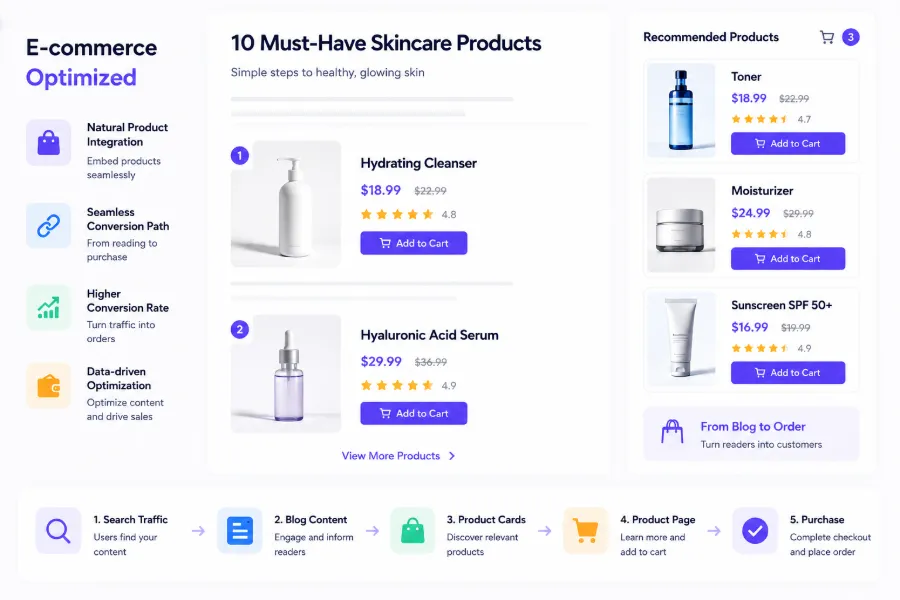
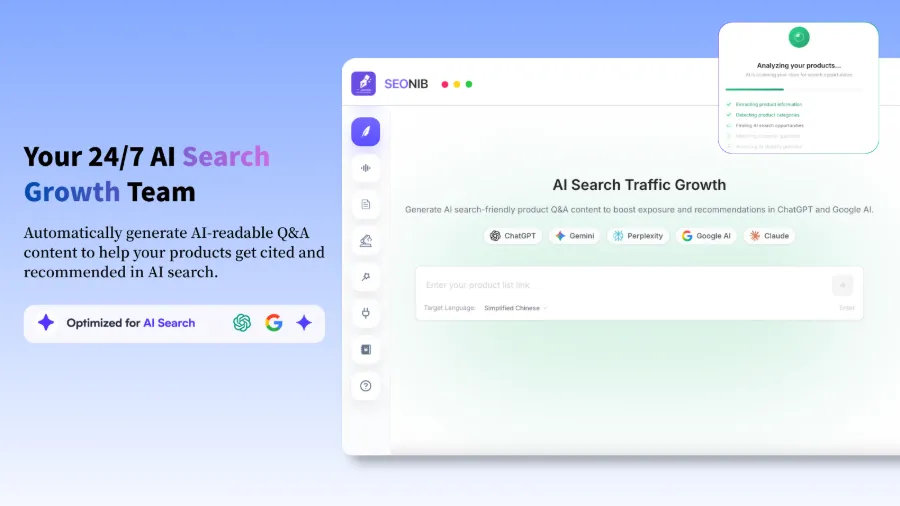
Specifically, AI search prefers content that contains entity information (product name, price, specs). 2025 data shows that such content is 45 % more likely to be cited than content without entities. In a Shopify store I ran, I turned a best‑selling desk lamp’s product description into a “Top 10 Home Desk Lamps Comparison Guide” via SEONIB, embedding a product card at the bottom. By the third day, Perplexity cited it directly as an answer source. I then bulk‑generated tutorial content for other SKUs with SEONIB, and the store’s AI‑search‑driven referral traffic grew nearly threefold in 30 days. Before crafting a product‑content strategy, use the quick method to validate product search demand to confirm direction. If you’re unsure about your product’s market fit, try the simple market‑demand validation method for a test round.
Below is a table comparing manual versus automated efficiency:
| Dimension | Manual | AI‑Generated |
|---|---|---|
| Time per piece | 2‑4 hours | 3‑8 minutes |
| Weekly output | 2‑5 articles | 15‑30 articles |
| Multi‑platform publishing | Log in and copy‑paste each platform | One‑click sync to all platforms |
| SEO adjustments | Separate keyword and entity optimization | Built‑in optimization during generation |
During the first 30 days of a new site, the most overlooked task is internal linking. Most new sites are like islands—an article is published without any internal links pointing to it, and no other page links back. In AI search, this is a fatal signal: the model assumes the content is “isolated and lacking authoritative support.” A 2025 SEO experiment shows that core pages with more than 10 internal links are 78 % more likely to be recommended by AI search than pages with zero internal links.
My approach: every time I publish a new article, I immediately find 2‑3 previously published, them‑related articles and naturally insert anchor text linking to the new content. For example, after publishing “Shopify Store SEO Setup Guide,” I added a link with the anchor text “Shopify store optimization tips” inside my earlier “Cross‑border e‑commerce Tool Recommendations” article, and also added a reverse link from the new article back to the old one. Within two weeks, the site’s basic internal‑link network was in place, with core pages maintaining 8‑15 internal links each. For scenarios needing higher content authority, refer to the 2026 most popular SEO page analysis tools for internal‑link health checks.
A reminder of a common misconception: don’t spend early effort on high‑authority external links. In the GEO environment, AI search engines weight “content relevance” higher than “number of external links.” I spent a month on an external‑link budget, but AI citation rates stayed flat; after shifting effort to internal‑link optimization, recommendation rates doubled.
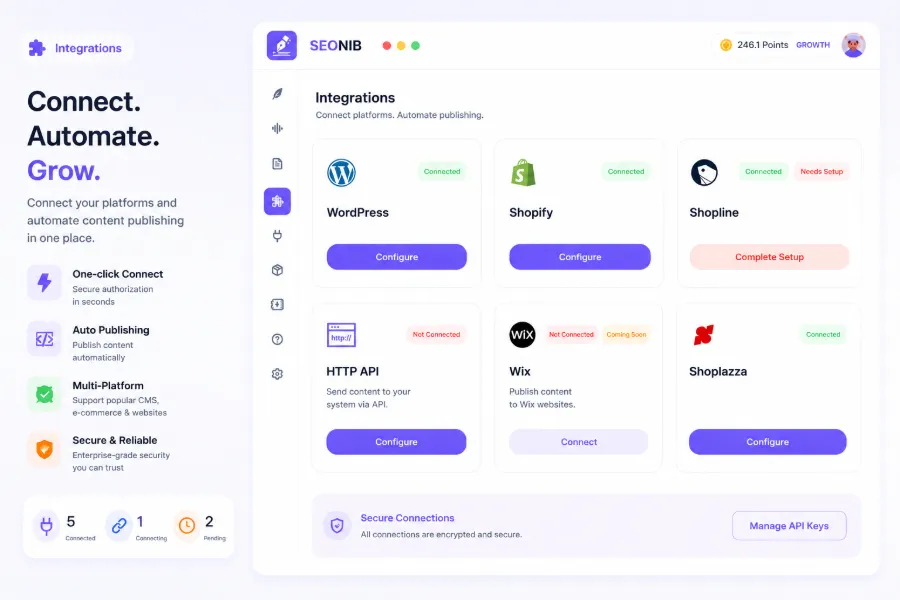
Multi‑platform synchronization is another often‑missed piece. If your content lives only on a single platform while competitors push to Shopify, WordPress, Shopline, and others, AI models tend to favor the source with broader coverage. I therefore push each piece of content to every platform I’ve integrated, maximizing signal density.
FAQ
How long after a new site launches can it be indexed by AI search engines?
In the best case, AI search can recognize and index content within 24‑48 hours of the first publication, provided the content has a clear structure, includes Q&A pairs and basic entity markup, and is updated at least once daily. If indexing takes longer than five days despite meeting these criteria, check your robots.txt and sitemap configurations for crawl blocks.
What’s the difference between a GEO recommendation list and traditional SEO rankings?
Traditional SEO rankings rely on Google‑type algorithms, weighting factors such as backlink count, domain authority, and page load speed. The GEO recommendation list targets AI‑search answer generation, emphasizing semantic completeness, structured format, entity density, and recent timestamps. The two can coexist, but investing in GEO optimization yields faster early results for new sites.
If a new site lacks enough content, how can I compensate for low authority?
Two parallel approaches: first, interlink existing articles to build an internal‑link network, preventing any page from being isolated; second, embed verifiable entity data (prices, specs, data citations) and external sources within the content. Internal links reinforce topical relevance for AI search, while entity data directly boosts citation probability.
Will having too many internal links penalize the site?
No, as long as the links appear in natural context and point to highly relevant pages. Forcially stuffing every paragraph with links or using identical keyword anchors will be flagged as over‑optimization. My personal rule is 3‑5 internal links for a 800‑1500‑word article, with varied anchor text.
Does content generated by automated tools affect quality scores?
It depends on whether you apply human review and personalization. Purely AI‑generated templated content—identical structures, lacking real examples and tonal variation—is easily downgraded by AI search. However, if you add your industry insights, adjust tone, and supplement screenshots or data citations, the result can be faster and better than fully hand‑written content. The key is a “generate → review → refine” workflow, not blind publishing.
Share Article