From $18,000 to $1.7 M: Three Local SEO Tips I Learned from a Garage Door Company

I used to be like most small business owners, thinking that as long as the website looks beautiful, customers would naturally call. Then I saw real data from a Houston garage‑door company: they spent $18,000 on SEO and, 11 months later, earned $1.7 million in revenue. My first reaction to that number was “another brag,” but after dissecting the whole case, I found they only did three things, and most local owners get those three completely wrong.
In my first month doing SEO myself, I kept adding service descriptions to the Google Business Profile, thinking the more detailed the better. The only photo in the garage was taken with a phone—the car hadn’t even been moved. Yet that very photo generated more inquiries than my $4,000 website.
Get the Google Business Profile Right First, Then Think About the Website
Many owners’ first instinct is “build a website first,” which is actually the biggest misconception. For local service businesses, the Google Business Profile outranks the corporate website in priority. The garage‑door company first completely revamped its profile: they replaced the stock photo of a smiling model with blue sky with real pictures of tools, trucks, and finished jobs. Then they quickly gathered ten authentic reviews, even calling former customers one by one to ask for help. They also re‑filled every field—hours, service area, categories, description—leaving no ambiguity.
I later applied the same routine to several local merchants I served. One plumbing client had used a smiling model photo with a “24‑hour service” tagline, and got no traction for months. After uploading real photos of the work and toolbox, the reviews jumped from four to ten, and inquiries for that month nearly doubled.
One special note: local SEO is not just filling fields; it must align with the brand’s messaging. If your Google Business Profile says “professional service” but your website and content convey a different style, it’s hard for search engines and customers to trust you. For more on this, see the article “Maintaining brand consistency is the hidden ticket to AI search” (https://seonib.com/c/guides/brand-consistency-is-the-hidden-ticket-to-ai-search-an-operator-s-field-notes-2026/index.html).
Create “Money‑Making” Pages, Not Generic Ones
After reviewing that garage‑door case, I realized I had made another mistake: I liked creating large, all‑encompassing pages like “About Us” and “Service Overview.” They look professional, but users have no idea what to do next after landing on them.
What’s the real approach? Tear out the hollow generic service pages and replace them with hyper‑specific landing pages. For example, “Houston Affordable Garage‑Door Repair – Same‑Day Service, No Hidden Fees.” Who searches for that? People who need an emergency fix. They’re willing to pay and fill out a form immediately rather than slowly browsing a company intro.
The key is that a highly specific page can rank for multiple related keywords. It doesn’t just rank for that long title; it also shows up for “Houston garage‑door repair,” “garage‑door spring replacement,” and other nearby terms. I tried a similar page for an HVAC repair company, and a month later several keywords made it into the top three pages, all driven by long‑tail traffic.
Write Local Blog Content, Small Businesses Can Do It Too
You might think blogs are only for big brands. But that garage‑door company wrote an article like “How to Protect Your Garage Door Before a Houston Storm.” Local residents felt it was relevant, shared it in community groups and Facebook, and it generated a wave of organic traffic and trust.
I’ve tried a similar content strategy: I wrote “Winter Indoor Plant Care Tips” for a local florist, and not only did locals find it, but some local lifestyle accounts shared it. The biggest problem, however, was staying consistent.
If you’re interested in AI search optimization trends, check out a more systematic overview— I recommend the article “2026 AEO Tool Recommendations” (https://seonib.com/c/guides/2026-aeo-ai-recommended-aeo-tools-for-2026/index) as further reading.
Ongoing Content Production Is the Real Barrier – An Automated Solution
The biggest pitfall of writing blogs manually isn’t the inability to write, but the inability to stick with it for three months. I tried hiring writers, writing myself, and intermittent posting—eventually the search engine noticed my site hadn’t been updated for months, and the new pages weren’t indexed at all. That garage‑door company also went down the same road two years ago: they built a generic site, posted occasionally, and the content vanished.
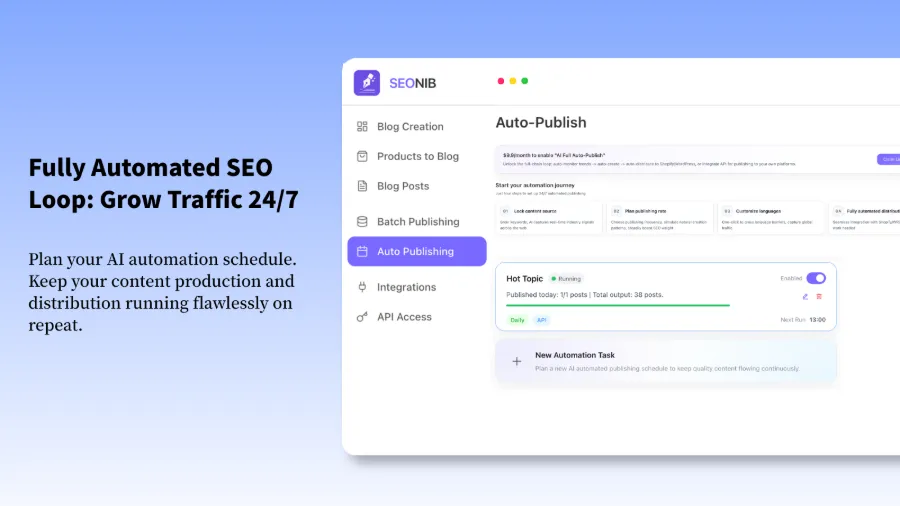
If you face the same issue, automation is almost the only way out. I now use SEONIB (https://www.seonib.com) for the content production workflow; I don’t have to find topics daily, manually format, or copy‑paste into the backend. It pulls topics directly from keywords and real‑time trends, auto‑generates articles, and publishes them according to my schedule.
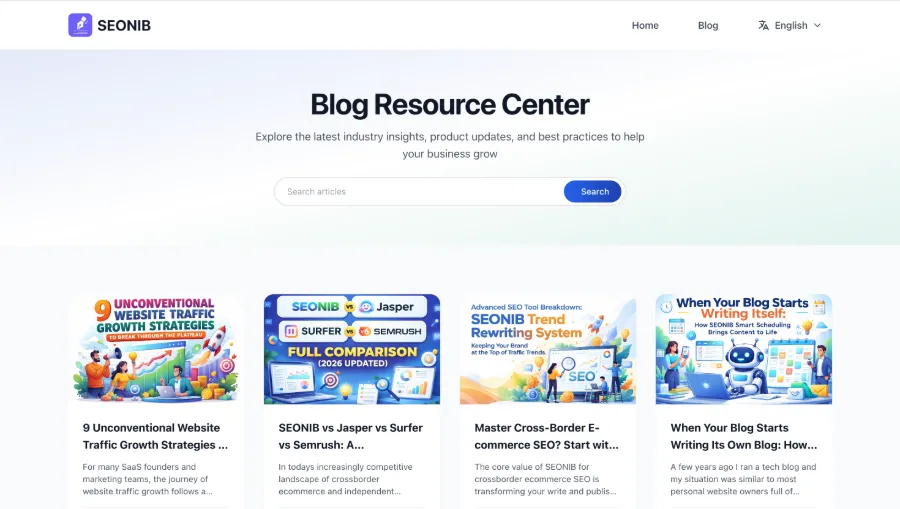
For friends who want to know how it differs from traditional AI writing tools, see the article “What is SEONIB” (https://seonib.com/c/guides/what-is-seonib-how-it-differs-from-jasper-chatgpt-other-ai-tools-2026/index) – it’s much clearer than my verbal explanation.
SEONIB can also sync to multiple platforms in one go—you don’t need to manually log into WordPress each time to repost.
In content strategy, I especially recommend this approach: don’t wait for people to chase trends—let AI capture them first. A content creator wrote a piece titled “Practical Record of AI Pre‑emptively Capturing Trends” (https://medium.com/@seoaiblogteam/trending-topics-cant-catch-me-because-i-let-ai-run-first-a-content-creator-s-cheat-record-5bc038dbdd59), which describes a method essentially the same as SEONIB’s trend‑discovery module—let the machine scan the heat, you just make decisions.
If you want to dive deeper into configuring these automated workflows, consult SEONIB’s “Detailed Help Documentation” (https://seonib.com/help), which contains many practical screenshots and setup steps.
FAQ
How long does it usually take for local SEO to show results?
Typically, you’ll see noticeable changes in 3–6 months. The first two months focus on optimizing the Google Business Profile and gathering baseline reviews; by the third month, local search traffic starts to rise and the landing pages get indexed. With ongoing content publishing, the local rankings usually stabilize around six months.
I don’t have a physical store, only a service area—can I register a Google Business Profile?
Yes. Google allows service‑type businesses to set a “service area” without displaying a physical address. Just make sure to select “service area covers multiple cities” during setup and enter the actual regions you can serve. Do not enter false address information, or you’ll be suspended.
Do I have to write about local events when writing a local blog?
Not required, but the stronger the local relevance, the better the results. You can write about how local climate affects certain products, demand shifts from community events, local policy changes, etc. If you can’t find a local angle, at least ensure the content is useful to the target city’s audience.
How can I quickly get ten genuine reviews?
The simplest method is to ask recent customers to spend two minutes writing a review. Call or message them with a casual tone. You can also generate a QR code for the review link and place it on receipts. Avoid offering rewards or discounts for reviews, as Google may deem that a violation.
Will Google penalize blogs written by AI?
As long as the content provides real informational value, Google currently has no specific ban on AI‑generated content. The issue is quality—purely keyword‑stretched, low‑quality content will be filtered out by quality assessment mechanisms. Therefore, you need to combine factual coverage, brand context, and sensible internal/external linking to pass quality evaluation.
Share Article