AI Citation Readiness Checklist: 31 Points to Get Your Content Cited by ChatGPT and Perplexity

Last year I helped an e‑commerce site with a daily traffic of 100 k optimize its content strategy and discovered a strange phenomenon: they had three guides that ranked 1st, 3rd, and 6th on Google’s search results page, yet for three consecutive months ChatGPT and Perplexity never referenced any of them when answering related questions. Instead, a competing article that ranked 8th was repeatedly extracted. This wasn’t a fluke. I later examined Otterly’s public data and saw the same pattern repeatedly—content in the top three positions was skipped by AI more than half the time. The reason is simple: Google pushes the page to the top, but AI only extracts answers. If your content isn’t designed to be “extractable,” a high rank will still be bypassed.
AI citation readiness is the ability of content to be extracted, trusted, and attributed by large language models. It differs from traditional SEO in that SEO optimization is about being “found,” while citation‑readiness optimization is about being “extracted.” A good page might score 10⁄10 in Google’s eyes but only 3⁄10 in an AI extraction test. Below I will break down AI’s citation mechanism layer by layer and then provide a set of 31 checklist items covering technical aspects to content structure, helping you systematically increase the likelihood of being cited.
What Is AI Citation Readiness?
Citation readiness refers to the complete ability of content to be recognized, extracted, and used as a source by systems such as ChatGPT, Perplexity, Gemini, and Google AI Overviews. Its core difference from traditional SEO is that SEO evaluates whether a page deserves to rank, while citation readiness evaluates whether a page deserves to be “pulled out” and placed into an answer.
Most teams only do the first half. They chase topical authority, backlink scores, and page speed, but ignore what AI actually needs. I examined hundreds of pages that are frequently cited and found they consistently do seven things right: they start with a clean answer; they cover the topic comprehensively; the author’s identity is clear and visible; they are technically accessible to AI crawlers; the structure is extraction-friendly; the content is distributed off‑site; and they iterate continuously after publishing.
A common misconception is that “good content” will naturally be cited. Good content and extractable content are two different things. 73 % of websites have technical barriers that prevent AI crawlers from accessing the main text—such as relying on JavaScript to render critical content or mistakenly blocking AI user agents in robots.txt. Those sites may rank well, but AI can’t read the body at all, so they can’t be cited.
How Does AI Decide Which Article to Cite?
AI’s citation decision chain is not “who ranks higher gets cited.” Otterly’s 2026 research showed that pages providing more complete answers receive eight times as many citations as ordinary pages. Profound’s source‑stack theory further explains why: AI first builds a candidate source stack, then selects the “easiest to extract and most trustworthy” one.
The first three steps in this decision chain are crucial:
- Candidate source pool – AI gathers relevant pages via crawlers or search‑engine APIs, not limited to the top three rankings.
- Extractability test – AI quickly scans the first 200 characters of each page to see if it contains a self‑contained direct answer. If the opening is a story, a hook, or rhetorical, AI is very likely to skip it.
- Credibility scoring – AI checks whether the page includes author attribution, external references, and clear structured data. Articles without author information, even if solid, get a credibility discount.
That’s why articles that appear later in the rankings can win—they present the first 200 characters more like an API endpoint for AI rather than a suspense hook for human readers. I’ve verified this countless times: changing an article’s opening from “Have you ever wondered…” to “X refers to…” noticeably increased the probability of being cited in ChatGPT responses a month later. You can refer to ChatGPT’s citation mechanism to understand how it selects answers; the core logic is to choose the lowest‑cost extraction with the strongest trust signals.
Checklist (Part 1): Technical Accessibility & Structured Data
Technical aspects form the foundation of citation readiness. AI crawlers and Google crawlers have slightly different requirements—AI crawlers usually use fixed user agents (e.g., GPTBot, Claude‑Web) and have weaker JavaScript rendering capabilities. This means that if critical content is loaded dynamically via JavaScript, AI may see an empty page.
Here are the five technical items I always verify before publishing:
- robots.txt – Ensure Allow for GPTBot, CCBot, and other major AI crawlers; no accidental Disallow.
- Sitemap – Make sure AI crawlers can discover your sitemap and parse all URLs.
- JavaScript dependencies – Core content must appear in the HTML source, not only after JS rendering.
- Core web vitals – Lighthouse scores should not be too low; AI crawlers have timeout mechanisms for slow pages.
- Mobile compatibility – AI crawlers often fetch content using a mobile viewport.
I’ve seen many sites block all AI crawlers with a blanket “Disallow: /” in robots.txt while Google still indexes them. A quick check with Google Search Console and Lighthouse will surface these issues. If you want a systematic audit of a page’s technical health, refer to the full workflow in How to Check Page SEO Optimization, which includes a self‑audit checklist of over 20 technical metrics.
After clearing technical barriers, the next step is structured data. Schema.org markup such as FAQPage, Article, and HowTo can directly tell AI what type of content the page contains. Don’t just add an Article schema—use FAQPage markup for Q&A pages so AI can directly extract questions and answers, dramatically boosting citation probability.
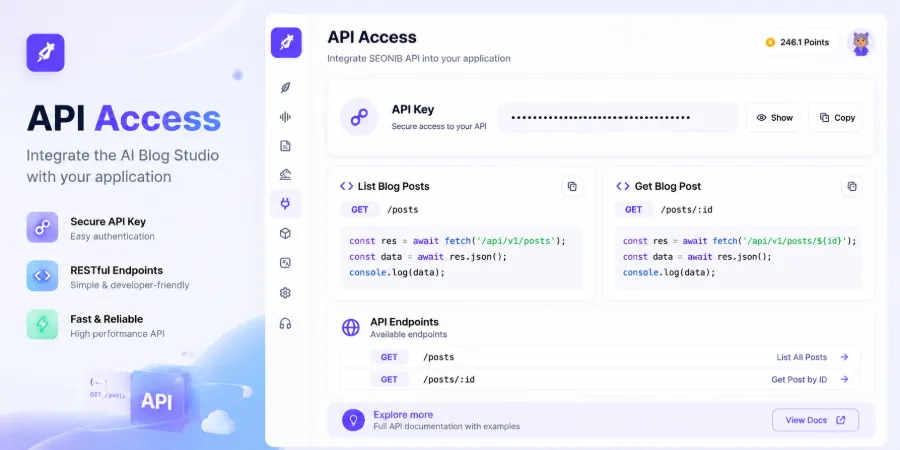
The integration management panel shows data flows between multiple platforms—technical accessibility and integration management share the same logic: keep the data channel clean so AI can read freely.
Checklist (Part 2): Content Structure & Authority Signals
At the content level, the goal is to let AI decide within milliseconds that “this thing can be trusted.” The first 200 characters are the most critical window. If AI scans the first 200 characters and doesn’t find a concrete definition or answer, it will jump to the next article.
My writing principle: the first sentence must be a direct definition. For example, when writing “What is AI citation readiness,” the opening line should be “AI citation readiness refers to…”, not a preamble like “With the development of artificial intelligence…”. AI does not accept suspense.
Another often‑overlooked point is “complete coverage.” If your article answers the main question but omits a few related sub‑questions, AI will choose another article that covers more ground, even if that article ranks lower. My approach: before writing, run a Perplexity search to see which sub‑questions its current answer covers; my article must cover every one of them, leaving none uncovered.
Authority signals have three key components:
- Display the author’s name, bio, LinkedIn, or institutional endorsement.
- Cite external authoritative sources within the body (research papers, official documentation, industry reports).
- Keep each H2/H3 sub‑topic independently complete so AI can extract a single section directly.
If you’re new to content optimization and don’t know where to start, read the Best SEO Tools Beginner’s Guide first to understand the basic tools and audit mindset, then come back to focus on AI citation.
Automated Content Maintenance & Iteration
Publishing content is not the end; it’s the beginning. AI citation freshness decays faster than Google rankings—a six‑month‑old article, even with a strong citation history, will gradually disappear from AI’s source stack. Manually updating all content across multiple platforms is unsustainable, especially when you manage dozens or hundreds of articles.
For the past two years I’ve been using workflow automation to solve this pain point. From trend discovery, content generation, scheduled publishing, to multi‑platform sync, the entire chain can be handed off to tools. Specifically, I use SEONIB for the whole process: it automatically monitors industry trends and competitor content, pushes high‑traffic topics to a task list; after I approve a topic, AI generates an SEO‑optimized article, automatically fills in images and structured data; once a publishing cadence is set, the system publishes on schedule and syncs to all CMS platforms—no daily backend login required.
SEONIB also lets you configure automation rules, such as publishing a “Shopify SEO” article every Wednesday and Friday. Detailed rule‑configuration instructions are in the SEONIB Help Documentation. This automation‑iteration mindset aligns with the principle that regular updates are essential for maintaining AI citation. If you’re interested in an automated workflow for a standalone site, check out the detailed guide “How Independent Sites Can Auto‑Publish SEO Content Daily.”
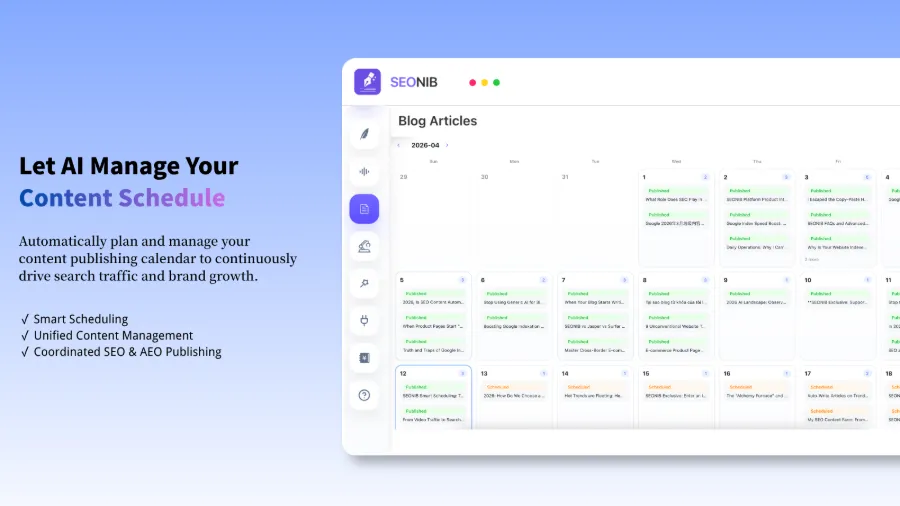
Using a marketing calendar tool to plan publishing in advance ensures a stable content update cadence and prevents interruptions due to busy schedules.
FAQ
Q1: How is AI citation readiness different from traditional SEO?
Traditional SEO optimizes ranking signals—backlinks, domain authority, page speed—so Google puts your page near the top. AI citation readiness optimizes “extractability”: does your opening contain a direct answer, is the structure AI‑friendly, and is the page technically accessible to AI crawlers? High rank does not equal easy extraction.
Q2: Why does my content rank in Google’s top three but never get cited by ChatGPT?
Most likely because your opening isn’t a self‑contained direct answer. If AI scans the first 200 characters and finds a story hook or rhetorical question, it will skip the page. Another reason could be a technical barrier—AI crawlers blocked by robots.txt or JavaScript‑rendered content. Check your crawler access logs to confirm.
Q3: Which item in the technical accessibility checklist is most often overlooked?
JavaScript dependency. Many modern sites use React or Vue to render all body content, but AI crawlers (especially GPTBot) don’t always execute JS, resulting in an empty page. Ensuring core content is directly visible in the HTML source is the minimum requirement.
Q4: How often should I update content after publishing to maintain AI citation?
I recommend refreshing core content at least every three months. If an article has been cited but its data or definitions become outdated, AI will gradually lower its citation weight. Updates should not only replace stale information but also add recent industry data and cover any missing sub‑questions.
Q5: Do I need to write separate versions of content for AI?
No need for two versions. You just need to adjust the structure: place a direct answer at the top, make each H2 independently complete, and avoid relying on preceding context. Such content is equally friendly to human readers and smoother for AI extraction. One piece can serve both audiences perfectly.
Share Article