Search Becomes a “Decision Engine”: Is Brand SEO Buying Traffic or Trust?
Last month I debriefed with a friend who runs an independent site. He showed me the backend data: the content team spends dozens of hours each week writing articles and posting blogs, Google rankings are indeed rising, and several core keywords have made it to the homepage. But inquiries haven’t moved, and the conversion rate remains unchanged. He asked me whether the content direction was wrong.
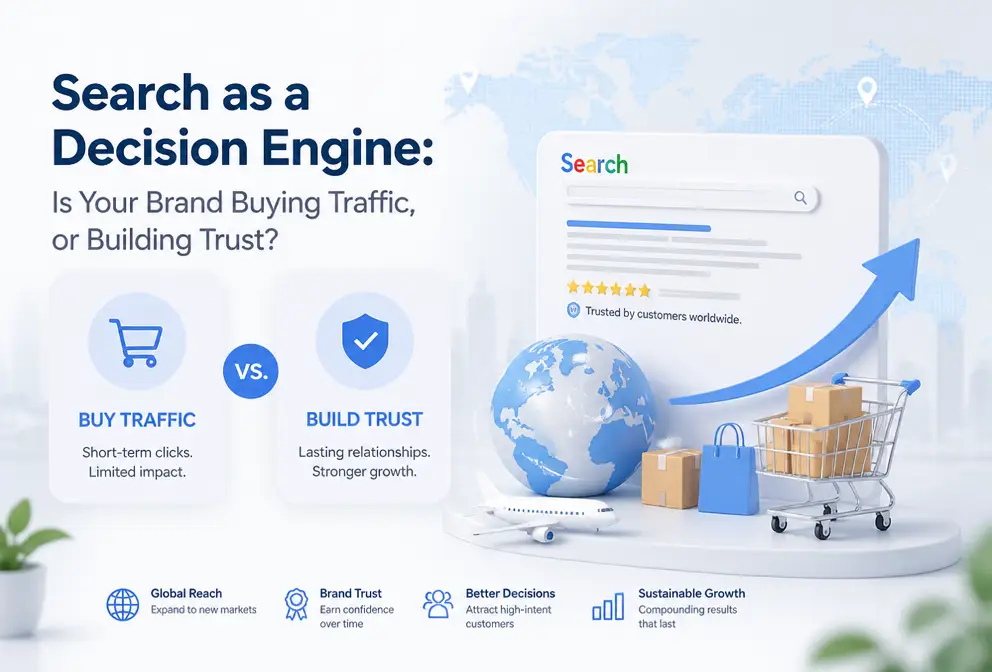
I said the direction isn’t wrong; the misunderstanding is about “search.” When users make a purchase decision, they no longer just look at Google’s blue links. They turn to ChatGPT, TikTok, Reddit, and Amazon for questions. When search shifts from “information retrieval” to a “decision engine,” is every dollar you spend on SEO paying for exposure, or is it building assets for brand trust? If you can’t answer that, even the fastest ranking rise won’t translate into revenue growth.
When Search Shifts from “Information Retrieval” to “Decision Engine,” Rankings No Longer Equal Revenue
The SEO logic of the past decade was simple: users type a keyword into Google, click the top few results, browse, compare, and purchase. You optimize titles, build backlinks, improve Core Web Vitals, aiming to push the link to the homepage. Under this “information filtering” logic, rankings and traffic are roughly proportional.
Now that logic is breaking down. Users are no longer satisfied with clicking ten blue links; they ask AI directly, “Which brand of fascia gun is best for a gift?” ChatGPT, Perplexity, Google AI Overviews will give a single answer—often just a brand name. A TikTok unboxing video can have more impact than a product page you’ve optimized for six months. A genuine Reddit comment can be more persuasive than any ad.
This structural change creates a common dilemma: your site ranks well on Google, but users never even get to Google. This is the so‑called Google trap—you optimize for visibility, while customers decide elsewhere. One video noted that 73 % of modern “search” behavior happens outside Google. I was skeptical at first, but after reviewing the traffic sources of several sellers I know, it turned out to be true.
I’ve seen a home‑goods seller who manually posted three blogs each week. After six months, Google rankings did reach the homepage, but the conversion rate fell. He later did a small survey and found that the target users’ next step after searching was to ask ChatGPT, “Which brand of storage boxes is high quality?” and his brand never appeared in the AI’s answer. Rankings were there, but trust wasn’t, so traffic could not be monetized. If you’re still using traditional ranking tactics, I recommend first reading the complete SEO practical guide to clarify the underlying logic.
Traffic Is the Result, Trust Is the Asset: The Underlying Value Shift of Brand SEO
“Buying traffic” is a short‑term ROI mindset: spend money to buy exposure, calculate cost per click. “Buying trust” is a long‑term asset mindset: every piece of content proves to search engines and AI recommendation engines that “this brand is reliable.”
How do search engines and AI recommendation engines assess a brand’s reliability? The core mechanism is Topical Authority—consistency, coherence, and authority of content. Google observes how often you update, whether the content deepens a single topic, and whether information is contradictory. AI search engines work similarly but more strictly: they build a Knowledge Base and treat the brand as an “entity.” If the brand’s information is inconsistent across platforms, or update frequency is erratic, AI will deem the entity unreliable and lower its recommendation probability.
The frequency and consistency of content updates are key signals for building Topical Authority. Publishing one SEO article on a schedule for 90 days yields about 90 indexable pages, forming an initial Topical Authority. During this process, the brand’s Search Visibility on Google and AI search rises in tandem. When AI recommends the brand as a “trusted entity,” natural traffic and conversion rates grow together—because users trust the brand’s overall presence, not a single piece of content.
Purely buying ads or soft articles cannot build this trust accumulation. Ads are rented traffic that disappears when you stop spending; soft articles are one‑off exposures that cannot form a lasting content footprint. Trust assets require stable, predictable content output. For sellers with many product lines, consider turning product links into rankable blog posts so each product continuously generates content.
From “Manual Content Stacking” to “Systematic Trust Accumulation”: A Paradigm Shift in Content Production
The traditional, time‑consuming content production workflow is familiar to anyone who’s done it: spend half a day scouting topics, write an article in two to three hours, then spend another hour on images, layout, and SEO fields, and finally log into WordPress, Shopify, or SHOPLINE to publish manually. Updating three articles a week basically fills a person’s capacity.
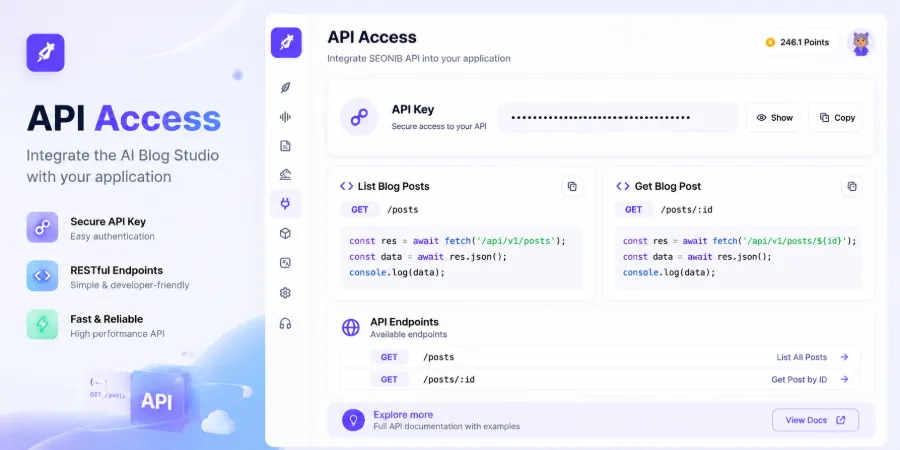
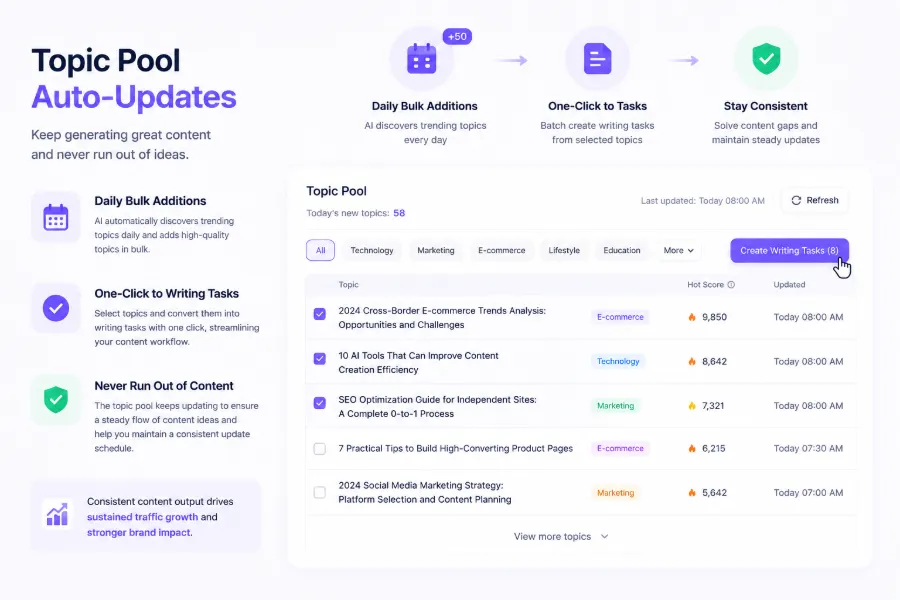
A systematic workflow compresses this chain dramatically. AI monitors industry trends and pushes high‑potential topics into a topic pool; content generation shrinks from “hours” to “minutes,” supporting 40 languages; scheduled publishing makes update frequency as stable as a clock; multi‑platform sync eliminates repetitive logins. I compared the two processes:
| Process Step | Traditional Method | Automated Method |
|---|---|---|
| Topic Discovery | Manually browse news, guess trends | AI monitors trends in real time, pushes topics |
| Content Generation | Manual writing, 2‑3 hours per article | AI generated, a few minutes per article |
| Publishing | Manual editing, layout, SEO fields | Automatic image selection, built‑in SEO optimization |
| Multi‑Platform Sync | Log into each backend separately | One click publish, auto‑sync across platforms |
After automating content production, human resources can focus on user research and product optimization instead of repetitive tasks. The SEONIB I’m currently using is a component of this workflow—it handles the entire automated chain from topic discovery to multi‑platform publishing. Brands only need to configure the knowledge base and context constraints; the rest is handled by scheduled tasks. Automation does not equal low quality; the key is whether the brand knowledge base and context constraints are well‑defined. Tone drift and contradictory information will be seen by AI as an unreliable entity, costing recommendation opportunities.
In bulk‑production scenarios, SEONIB’s value becomes even clearer. For example, import dozens of product links at once, generate corresponding buying guides and review articles in bulk, then schedule daily automatic publishing. This scale is impossible manually, but automation makes it feasible. It’s already available on the SHOPLINE App Store; Shopify and WordPress can also connect directly. Detailed configuration steps are in the full SEONIB help documentation, which contains many practical details.
Trust Is Not Mystical: Validate Brand Reliability with Visible Content Footprints
Trust assets may sound abstract, but they can be quantified. Observable metrics include content update frequency, cross‑platform presence, citation count, and how often the brand is mentioned in AI Q&A. These metrics together form a brand’s content footprint.
When the content footprint is dense and consistent, Google boosts its weight, and AI search engines treat the brand as a “knowledge source” for a particular entity direction. For instance, an outdoor‑gear brand that regularly produces content about camping, hiking, and climbing will, after a few months, be mentioned by ChatGPT when asked “Recommend reliable camping brands.” Such mentions are more valuable than any ad spend.
Cross‑platform presence is also crucial. Beyond the independent site, a brand’s store on the Shopify official platform and tools in the SHOPLINE app store become part of AI’s brand‑entity assessment. I recommend operators conduct a quarterly content audit: tally update frequency, verify consistency across platforms, and use AI tools to test whether the brand appears in relevant Q&A. If you invest heavily in content but never get mentioned, the direction may be off.
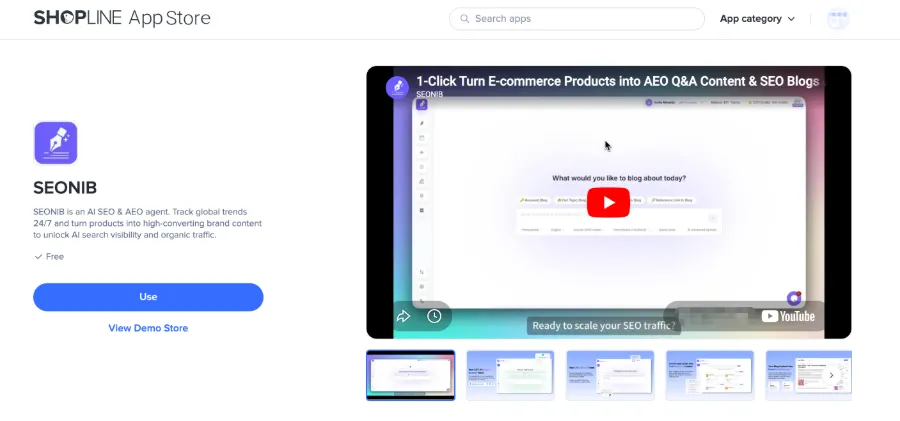
Here’s a counter‑intuitive point: simply increasing content volume without maintaining brand‑entity consistency can dilute trust. I’ve seen a seller who used AI to generate hundreds of unrelated articles covering dozens of unrelated topics; Google’s indexation rate dropped, and the brand disappeared from AI search. Content automation isn’t the enemy of trust; inconsistency is. Keeping a unified brand tone and consistent information is more important than sheer quantity. To test whether your content is recognized by AI search engines, try the one‑click conversion of products into AEO Q&A content and see if Perplexity and Google AI Overviews index it.
FAQ
Q1: Should SEO investment be considered a cost or an investment?
It’s an investment, provided the direction builds trust assets rather than just buying exposure. The test is simple: if you stop spending, does traffic persist? If accumulated content continues to grow, natural and AI‑recommended traffic will keep rising slowly, it’s an investment; if traffic drops to zero the soon as you stop, it’s a cost.
Q2: Will content automation cause quality decline and damage brand trust?
Automation itself doesn’t harm trust; inconsistent content does. The key is a well‑configured brand knowledge base and context constraints. As long as the brand tone is unified, information is consistent, and content delves deeply into core topics, AI‑generated content can fully build trust. I’ve seen sellers who schedule one AI‑generated article per day; after three months their search visibility noticeably improved.
Q3: How can I tell whether my SEO is “buying traffic” or “buying trust”?
Look at three metrics: stable content updates, brand appearance in AI Q&A, and conversion rate growth alongside ranking. If rankings rise but conversion stays flat, you’re likely buying traffic; if rankings are stable and the brand starts appearing in AI search, trust assets are accumulating.
Q4: Can a small team without a dedicated SEO person build this kind of trust asset?
Yes, but you need to tool the content production workflow. It’s hard for one person to maintain daily manual updates, but with an automation tool that handles topic selection, generation, publishing, and syncing, you only need to spend a few minutes each day checking quality. Accumulating 90 indexable pages in 90 days is entirely feasible for a solo operator.
Share Article