10 GEO Mistakes That Are Making Your Brand Disappear from AI Answers
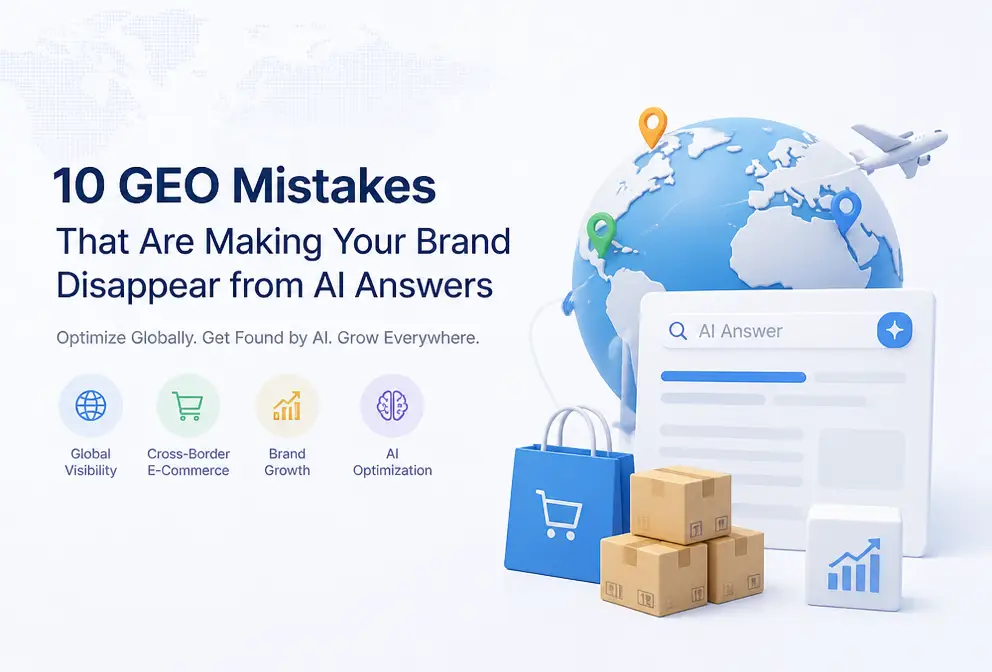
I’ve spent a lot of time polishing content quality, but ChatGPT and Perplexity never cite my brand. Later I realized the problem wasn’t the writing but the structure. When LLMs extract answers, they value entity clarity, answer format, and semantic authority. This article breaks down the 10 most common GEO mistakes and provides actionable fixes.
The core metric of GEO (Generative Engine Optimization) is not ranking but citation frequency—how many times your content is quoted in AI answers. If your content is written but doesn’t appear in AI summaries, you are likely falling into the following traps.
Mistake #1: No Direct Answer at the Beginning
LLMs place extremely high weight on the first 100–150 characters. My most foolish mistake was starting with a lyrical intro or a rhetorical question, causing GPT to skip the entire page. When the model scans the beginning and can’t find an extractable answer signal, it decides this is not a source of a direct answer.
The fix is simple: give the definition or answer in the first sentence. The sentence can be “X is Y, whose main features are Z.” This lets the LLM know within about 20 characters what the article is answering. In my own test, after changing the article’s opening to a 40–60 word direct answer, Perplexity cited it three times within two weeks.
You need to check every core article: remove sentences that start with “Have you ever wondered…”. If you’re unsure which tools can help you batch‑detect and fix these issues, see the 2026 AI Content Marketing Tools Recommendations, which includes many automated detection methods.
Mistake #2: Missing or Incorrect Structured Data
JSON‑LD schema is a content specification for AI crawlers. The most typical error I’ve seen is that the FAQPage schema’s Q&A don’t match the actual content on the page. When an LLM parses it, it detects the contradiction and reduces trust in the whole page.
Beyond FAQPage and HowTo, many people miss the speakable schema—it tells the LLM which paragraphs can be directly extracted as answers. There’s also author entity markup; without it, the E‑E‑A‑T signal is weak. Incorrect schema is more dangerous than missing schema because contradictory information makes it harder for the LLM to attribute.
When fixing, verify all targeted schemas against the latest version on Schema.org and run them through Google’s Rich Results Test tool. For SHOPLINE stores, structured data is especially critical; see the specific implementation in SHOPLINE Store Ranking Optimization Tips.
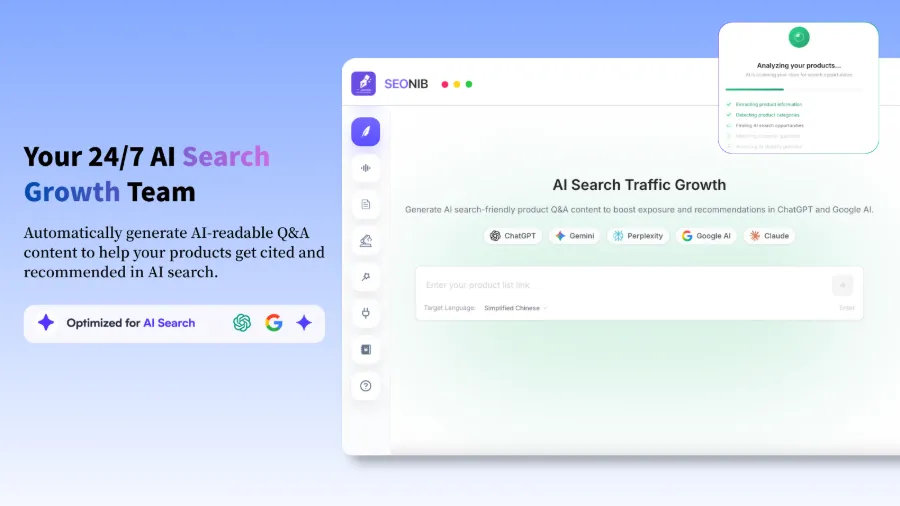
Additionally, if you need to quickly turn product pages into blogs with correct structured data, check out Convert Product Pages to Blogs with One Click Using SEONIB, which demonstrates how to automatically generate content with AEO‑optimized schema.
Mistake #3: Entity Ambiguity and Overuse of Pronouns
The content may read fine, but the LLM doesn’t know which brand you’re referring to—that’s entity ambiguity. When I heavily used pronouns like “it”, “this tool”, “the platform”, the AI’s entity parser assigned the reference to a competitor or simply didn’t assign it.
Content with a high entity repetition rate is much more likely to be cited in LLM answers. The fix is to repeat the brand name, product name, or key entity every 3–4 sentences—better to sound repetitive than to let the AI guess.
I recommend using SEONIB’s brand context management feature—it lets you predefine brand information, industry terminology, and proprietary names, and it automatically normalizes entity names during content generation, reducing pronoun usage. In tests covering “product comparison” queries, brand mention rate increased by about 40%.
For more on basic AI SEO strategies, see the AI SEO Beginner’s Guide, which explains how to systematically build an entity SEO framework.
Mistake #4: Content Format Not Suitable for Machine Extraction
Dense paragraphs are LLMs’ biggest enemy. When AI extracts answers, it prefers lists, tables, and short paragraphs—these structures are easy to slice into independent answer units. I tried breaking a 500‑word block into three short sections with subheadings and inserted a table, and the Google AI Overview citation rate nearly doubled.
Fix: split every 200–300 characters, using H2/H3 to separate subtopics. Highlight key conclusions in bold, but keep bolding under 2% of the total content. Multi‑level headings and ordered lists help the LLM quickly locate answer locations.
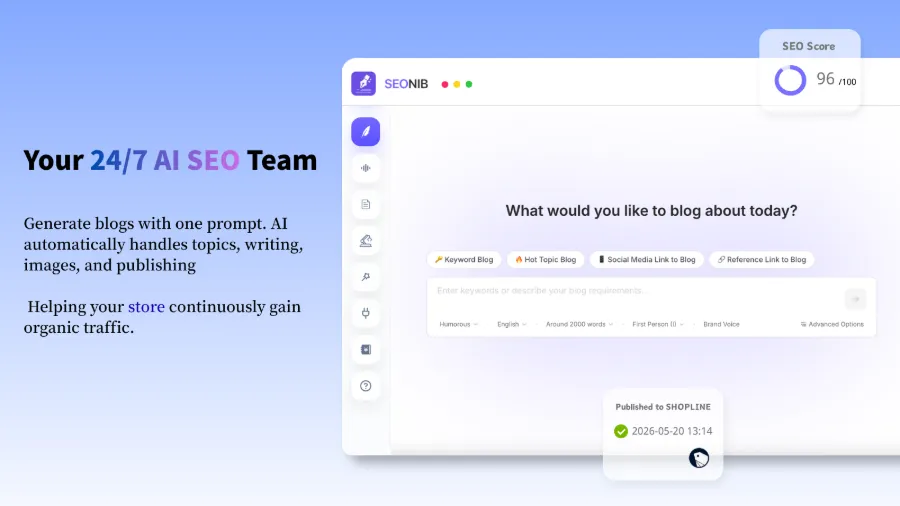
If you want to automatically generate this kind of structured blog content, SEONIB does a good job—it can turn product links, keywords, or hot topics into blog posts with headings, lists, and FAQ schema. See the Reference Link to Blog Post Tutorial for a detailed walkthrough.
The video above demonstrates how to convert product links with one click into highly structured blog posts optimized for LLM extraction. If you need a systematic overview of content generation settings, the Help Documentation compiles configuration guides for all platforms.
Another article, Make ChatGPT Treat Your Site Like a Treasure, also shares many formatting optimization tips worth checking out.
FAQ
Q1: What’s the difference between GEO and SEO?
The goal of GEO is to have LLMs directly cite your content as an answer source, whereas SEO aims to rank pages high in traditional search engines. The signals they rely on differ: GEO emphasizes entity clarity and answer format; SEO emphasizes links and keyword relevance. However, there is overlap—good GEO often also boosts SEO.
Q2: Do I have to add FAQPage schema to every page?
Not necessarily. Only content that objectively contains Q&A pairs is suitable for FAQPage. If a page is a single‑topic article, adding an Article schema with speakable is sufficient. Adding mismatched schema is worse than omitting it, because contradictory data reduces page credibility.
Q3: How can I check if my content has been cited by LLMs?
The most direct method is to ask relevant questions in ChatGPT, Perplexity, or Gemini and see if the answers cite your domain. You can also use AI citation tracking tools like Brand24 or specific API monitors. A simpler approach is to Google search “site:yourdomain.com” with core keywords and see if AI Overview displays your content.
Q4: How long does it take for changes to structured data to take effect?
Fast: one to two days; slow: up to a week. LLM crawl frequency depends on the page’s update rate and domain authority. After each change, manually request indexing via Google Search Console and submit an updated sitemap. For FAQPage schema, effects are usually visible within a week.
Q5: Can content generation tools automatically fix GEO mistakes?
Some tools can, but they require manual configuration—such as setting brand context, fixed schema templates, and controlling entity repetition. Full automation still carries risk, especially verifying that schema matches content. It’s recommended to batch‑generate drafts with a tool, then manually audit them against a GEO checklist.
Share Article