2026 SEO New Trends: More and More Sites Hand Over Content Production to AI
I used to spend at least two days a week manually writing articles: finding topics, drafting, adding images, formatting, and publishing. After three months, traffic remained flat, but my hair started falling out. Then I took a gamble and handed the entire content pipeline to automation. What sounded like a lazy decision actually made the site’s search exposure and AI citation volume steadily rise. This article isn’t a theoretical PPT; it’s the full process I went through—mistakes, trial and error, and finally a working system.
SEO in 2026 is no longer about stuffing keywords to get rankings. AI search summaries are eating traditional search results; if your content gets directly quoted by Google AI Overview, ChatGPT, or Perplexity, you can gain continuous exposure even if you’re not number one. My approach is to let tools handle 90 % of the repetitive work while I only decide direction and audit key pages.
Why SEO in 2026 Is Not Just “Writing the Right Keywords”
Last year I was still tracking keyword difficulty and search volume in spreadsheets, only to discover that users hardly click blue links anymore. In 2025, over 30 % of searches ended with zero clicks—users got their answers from AI summary pages without ever visiting a website. Even worse, my content, even when ranked in the top ten, could be folded by AI into a single paragraph, after which users left.
Traditional SEO teaches us to optimize keyword density and match search intent, but AI search cares more about “can this snippet be used directly?” Google AI Overview and ChatGPT prioritize sources that are well‑structured, answer‑first, and have independent paragraphs. E‑E‑A‑T and topical authority become trust cards—no matter how many keywords you cram in, if the author’s background is vague or the brand information is inconsistent, AI won’t dare cite you.
My old practice of “write 2,000 words and add a few internal links” is basically useless in 2026. It was only after I studied the new logic mentioned in the 2026 AI SEO Complete Guide that I realized my previous optimization tactics were completely off‑target.
My Content Pipeline: From “Don’t Want to Write Every Day” to “Automatically Produce Daily”
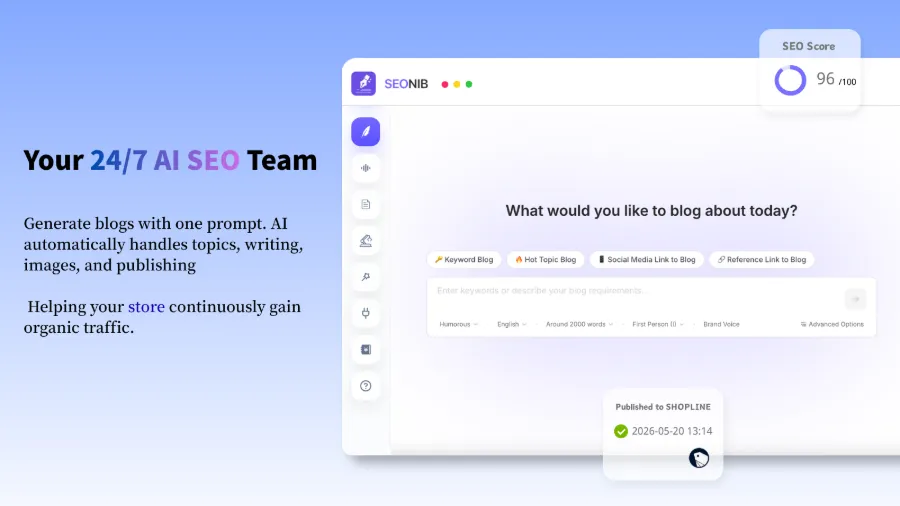
The diagram above shows the five content sources I now use, covering product pages, keywords, industry hot topics, social‑media posts, and external reference links. Previously I had to handle each source manually; now everything runs on a single line.
Honestly, I’m lazy to the bone. When I started writing manually, I spent at least two days a week and saw no traffic lift. Then I tried a few tools and finally stitched the whole workflow together with SEONIB—it automatically selects topics from trend monitoring, then generates articles based on keywords, product links, or social posts, schedules them according to my settings, and syncs them across multiple platforms. I now automatically generate five pieces of content daily, with only ten minutes of manual review. Before, I would forget to update the site while scrolling; now fresh content accumulates every day.
Scheduled publishing is the most peace‑of‑mind part. Once set up, AI outputs a few pieces each day, and I no longer have to wonder on Monday night “what should we write this week.” The detailed workflow is documented in the Independent Site Daily Automated SEO Content Playbook, which breaks down everything from topic selection to multi‑platform sync. A peer shared a similar “cheat” record of a content creator on Medium, also mentioning how much time automation saved him.
How to Write Content That AI Search Will Actually Cite
Just because you’ve written something doesn’t guarantee it will be quoted. I compared 50 articles with tables versus 50 without; the former were cited by AI about 30 % more often (personal test, not a precise statistic). AI search systems—including Google AI Overview and ChatGPT—prefer this structure:
- Answer first: The opening paragraph should give the conclusion directly, without filler. For example, “There are three ways to improve page load speed,” not “In this digital age…”
- Short paragraphs: No more than four sentences per paragraph, making it easy for AI to extract a complete snippet.
- Clear tables: List comparison items, steps, or parameters in tables; AI extracts them efficiently.
- Question‑driven: Use an H2 to pose a user‑possible question, then answer it directly.
Additionally, schema markup matters more than you might think. Adding FAQPage or Article markup helps AI pinpoint the answer region. Keeping author info, source links, and update dates consistent is also crucial—pages with chaotic brand info are rarely cited by AI.
The article What Content Performs Best in ChatGPT Search? analyzes which structures AI prefers. I copied its writing style in practice and it worked. Another piece, How to Make ChatGPT Treat Your Site Like a Treasure, offers concrete tactics, such as embedding purchasable product cards within the article.
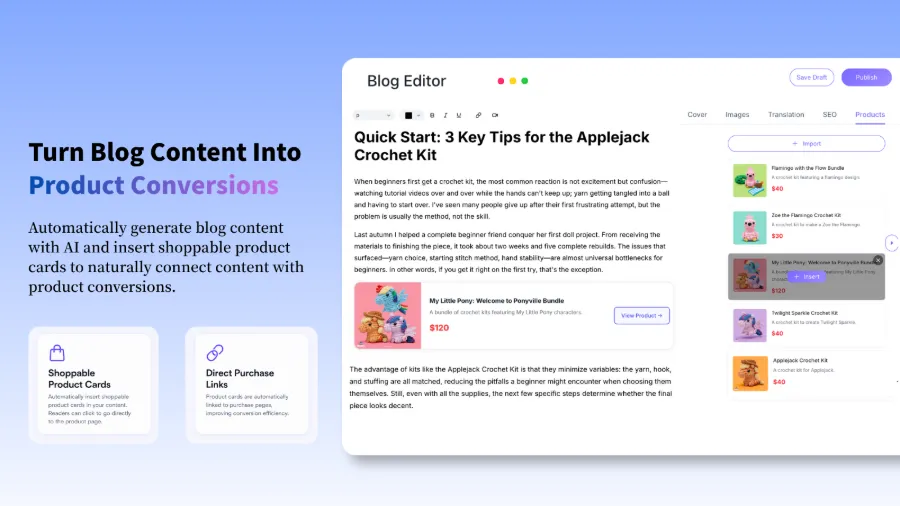
The image above shows how to naturally integrate conversion elements into content. AI summaries may directly quote your product card information; users may not click through to your site, but they remember the brand name. I later discovered that a lot of traffic comes not from direct clicks but from users seeing the brand in an AI summary, then searching the brand name and landing on the site, which actually increased brand‑search traffic. This shows that “being citable” is more important than “ranking first,” because AI aggregates multiple sources—if your page is on the second page but properly structured, it can still be cited and give brand exposure.
Pitfalls I’ve Encountered: Automation Isn’t a “One‑Click Win”
Sounds perfect, right? In the first month I hit a big snag. I got overly enthusiastic and set the daily generation target to over ten pieces. Within a month I published hundreds of AI‑generated articles, quality varied wildly, and traffic dropped 15 %. Upon review, I found that homogenized content diluted brand signals, and some structured data conflicted with existing pages, confusing Google’s overall site understanding.
I then cut the frequency to 15 pieces per week and added manual review for key pages—home, product pages, and popular articles. For each AI‑generated draft, I spend a few minutes tweaking the intro, adding personal examples, and verifying data before publishing. After three months, traffic grew 80 %. The lesson: automation can’t replace judgment; it only handles repetitive work.
Technically, I also ran into odd issues: duplicate content, multi‑platform sync failures, and overlapping structured data. For example, when syncing articles to Shopify, some product descriptions were unintentionally overwritten. I followed the Batch Publishing Data Source Documentation to troubleshoot and discovered a mapping error. When similar problems arise, the SEONIB Help Center is the fastest resource, with detailed platform integration guides.
The video above demonstrates how to correctly sync a blog to Shopify, especially tips for avoiding data conflicts.
FAQ
Do I still need to write SEO articles manually in 2026?
Yes, but the scope has changed. Routine baseline content (industry news, FAQs, product descriptions) can be fully automated, while key pages, brand stories, and deep case studies still require human input. My current split is roughly 80 % auto‑generated + 20 % manually refined.
Should a new site focus on SEO first or advertising?
It depends on cash flow. If the budget is tight and you can wait 3–6 months, start with SEO content accumulation; if you need short‑term leads, run ads while building SEO foundations. Many teams do both in parallel, but keep ad landing pages separate from SEO pages to avoid interference.
How can I tell if an SEO automation tool fits my business?
Look at the data source types it supports and the number of platform integrations. For cross‑border e‑commerce, the tool must read product links and generate buying guides directly; for a content site, it should support keyword topic selection and trend tracking. Also, the ability to maintain a brand knowledge base is crucial—otherwise generated content will lose brand personality.
What technical preparations does a site need before starting automation?
Make sure robots.txt doesn’t block crawlers, the sitemap is correctly submitted, and there are no massive duplicate pages. I recommend running a manual Screaming Frog or Ahrefs site audit for a few days, fixing technical issues before launching automated content production. Otherwise, AI‑generated pages may be missed by slow crawlers or fail to index due to structured‑data conflicts.
Share Article