Click-through rate fell from 30% to 3%, does keyword ranking still matter?
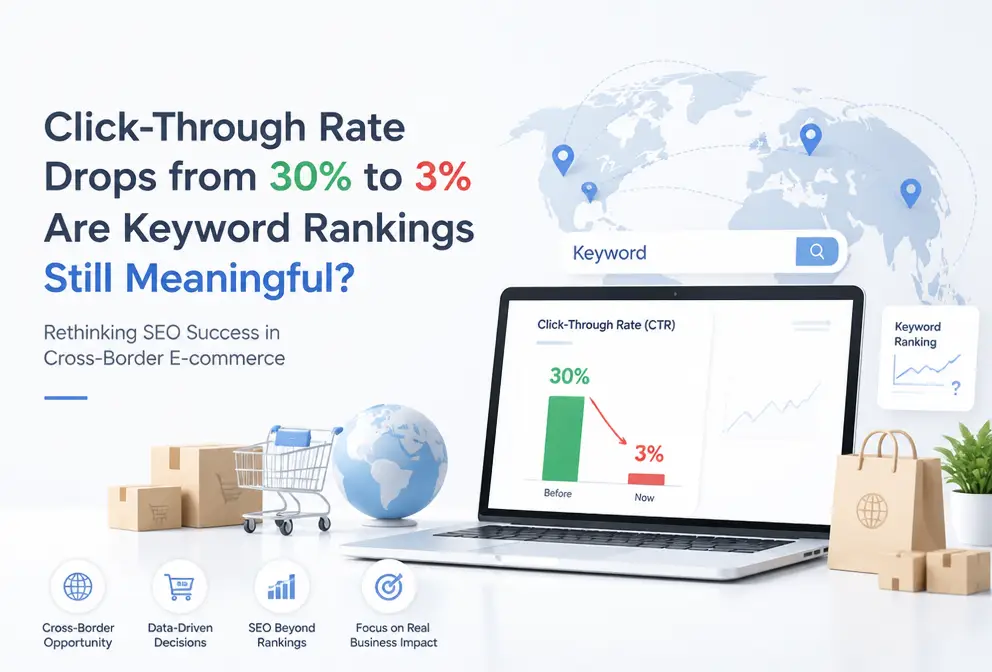
A Shopify seller friend showed me his Search Console data last month: the core keyword ranking stayed the same, still solidly on the first page, but the organic click‑through rate (CTR) dropped from 30% to 3% over three months. He kept refreshing the backend to confirm it wasn’t a statistical artifact. The ranking didn’t change, yet traffic almost vanished.
He isn’t an isolated case. As AI summaries, featured snippets, and zero‑click searches keep users on the results page, the traditional “ranking = traffic” equation is breaking down. This article aims to answer a more practical question: when CTR can plummet tenfold, who are we actually ranking for?
Click‑through rate fell from 30% to 3% – a common dilemma of this era
First, let’s clarify the scenario. A stable first‑page keyword ranking means the page’s search visibility hasn’t been lost—Google still considers the page relevant to the query. But users see the result and no longer click; they get the answer directly on the results page. Zero‑click searches have been rising steadily over the past few years, and the industry generally believes that more than half of Google searches end with zero clicks. The rollout of AI summaries has pushed this proportion even higher.
The seller’s data curve is typical: a slow CTR decline for the first two months, followed by a cliff‑drop in the third month. During that time his ranking slipped from position 3 to 4—insufficient to explain the traffic loss. The real cause is a change in the structure of Google’s Search Engine Results Page (SERP): AI Overviews occupy the top, featured snippets provide the answer directly, and shopping ads push organic results down. Users can obtain the information without clicking any webpage.
Rankings and CTR are decoupling. This isn’t an industry‑specific anomaly; it’s a systemic result of changes to the search entry point.
Ranking unchanged, users don’t click – the problem lies in the search entry
There are three layers of reasons for the CTR decline, each pointing to the same direction: the search entry itself is changing.
Layer 1: AI summaries and featured snippets present the answer at the top of the results page. When a user asks “What is the best moisturizer for sensitive skin?” the AI summary offers ingredient analysis, usage tips, and product comparisons right at the top, and the user leaves. Even if your page is ranked #1, it becomes just a link below the AI summary. Data shows that after AI summaries dominate the top of the page, the effective CTR for that area drops markedly, with some categories losing more than half.
Layer 2: Search engines steer user attention toward zero‑click zones. Google has packed the SERP with more and more content modules that can be consumed without leaving the page—knowledge panels, related Q&A, video carousels. Users’ behavior shifts from “click a link” to “ask a question and get an answer,” a structural change.
Layer 3: Brands and content are cited within AI answers, but users no longer trace back to the original page. AI search platforms may cite your content as a source, but they don’t direct users to click through to your site. Entity citations give brand exposure but no traffic. This is why SEO in 2026 must cover all search entry points—focusing solely on Google rankings is equivalent to abandoning the growing distribution channel of AI search platforms.
Keyword ranking isn’t obsolete; its value has shifted
Rankings remain important, but their meaning has been redefined. Ranking represents the baseline of search visibility—if your page can’t even reach the first page, AI engines will deem your content insufficiently authoritative to be cited. The value of ranking has shifted from “awaiting user clicks” to “proving your content is an authority.”
Think of it this way: when an AI summary needs to answer a question, it tends to cite pages that rank high in traditional search as information sources. Ranking now serves as a “trust signal” rather than a traffic gateway. Accumulating topical authority and entity knowledge bases will cause your page to appear repeatedly in AI answers, even without direct clicks.
An article that is continuously cited by AI search engines can generate referral traffic and brand exposure that surpasses the pure click effect of the 30% CTR era, even if its organic CTR is below 5%. Keyword ranking is a result, not a goal. For Shopline sellers, this means the KPI for SEO effectiveness should shift from “what position am I in” to “who is citing me.” See this Shopline‑specific SEO solution comparison for the different tools’ emphasis on entity optimization.
From “ranking” to “being cited”: the traffic acquisition logic is switching
The new content goal is to appear in AI‑generated answers, not just to attract a single click. This has spawned two concepts: GEO (Generative Engine Optimization) and AEO (AI Engine Optimization). In practice, the core is to structure and entity‑ify content so AI can more easily recognize and cite it—clear heading hierarchies, explicit entity definitions, FAQ‑style Q&A modules are all structures favored by AI engines.
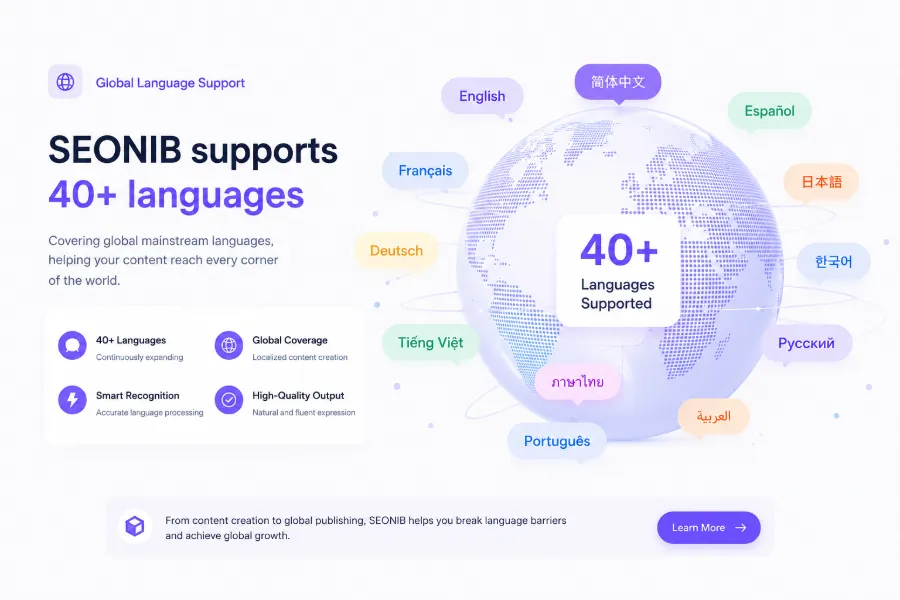
Content also needs to cover multiple languages and platforms to broaden citation scenarios. A content matrix supporting 40 languages can give the same piece of content exposure in AI search results across different language markets. The same product, asked about in English, Japanese, or German, will be cited by AI—provided you have written the content in those languages.
Trends are also entry points. When AI engines answer time‑sensitive queries, they prioritize up‑to‑date content. A creator documented a practice of using AI to capture trend entry points, where the key idea is to publish content before a trend fully matures so AI sees your update first. Shopline stores that want AI citations can follow the specific approach outlined in this Shopline AI citation guide.
Content workflow must be rebuilt, otherwise ranking and maintenance costs will drag down the pace
A manual workflow—topic selection, content creation, and publishing—cannot sustain the update frequency required by the new logic. A medium‑size independent site needs 3–5 new pieces of content per week to maintain topical authority; manual processes consume several times the time of an automated pipeline. I’ve seen many teams stumble on update frequency—first three weeks survive on will, the fifth week they drop off, and they abandon the topical authority before it’s built.
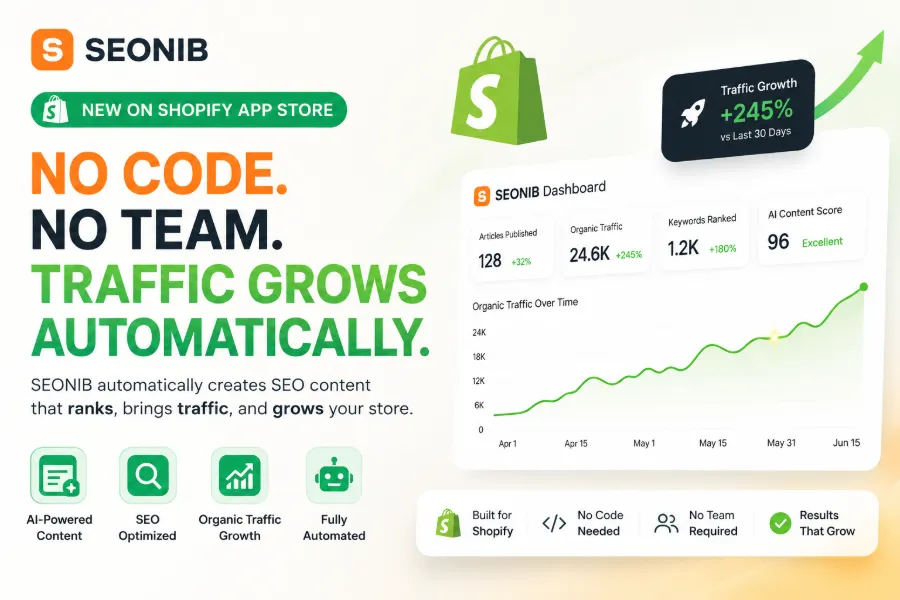
Stringing together topic discovery, content generation, scheduled publishing, and multi‑platform synchronization into an automated pipeline is the solution. My own experience with SEONIB shows that after automating the entire publishing process, weekly content output rose from 2 to 8 pieces without needing daily manual triggers. The specific configuration of an automated pipeline can be found in the official guide for automated publishing pipelines.
Use a content calendar to manage publishing cadence, avoiding “relying on will.” Set a fixed frequency—e.g., three pieces per week—so the system executes the plan instead of you agonizing over “what to write today.” First get a single platform running smoothly, then expand to multi‑platform sync. SEONIB has an entry in the Shopify App Store and can be installed directly from the Shopify admin without extra configuration.
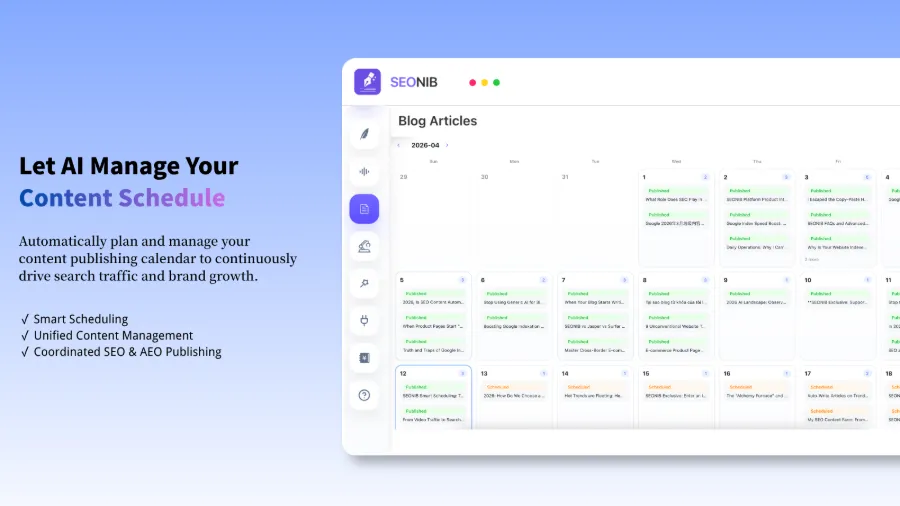
What I’ve observed is that the biggest value of an automated pipeline isn’t time saved, but making update frequency predictable. Continuous content production ensures that search engines and AI engines regularly crawl your site, building topical authority over time. Keyword ranking serves only as a reference metric; the real goal is sustained consumption and citation of the content. For a strategy on gaining natural traffic through multi‑platform sync, see this guide on multi‑modal traffic acquisition, which explains how a single piece of content can cover Google, AI search, and social media feeds simultaneously.
FAQ
Does a drop in CTR mean my SEO strategy has completely failed?
Not necessarily. A CTR decline may simply be the result of changes to the search entry point, while your content could still be cited by AI engines. First, check the “Search Appearance” report in Search Console to see if your page appears in AI summaries or featured snippets. If it’s being cited, the content’s value remains; only the traffic format has changed.
Ranking stays the same but CTR falls—should I optimize the title first or restructure the content?
Start with content structure. Title optimization typically lifts CTR by only 1–2 percentage points, whereas structuring content (clear heading hierarchy, FAQ modules, entity definitions) directly influences whether AI engines will cite your page. Transforming the page into an AI‑friendly structure is more effective than repeatedly tweaking the title.
What is zero‑click search and what does it mean for independent sites?
Zero‑click search refers to users obtaining the answer directly on the results page without clicking any link. For independent sites, this lowers the ceiling for natural traffic but raises brand exposure opportunities—your content may be cited in AI answers even though users don’t click through. You need to shift traffic evaluation from “click volume” to “citation volume.”
If I’m not focusing on keyword rankings, how else can an independent site acquire traffic?
Multi‑platform distribution, social media content, email marketing, and paid ads are alternative channels. A more practical approach is to have content cover multiple entry points—publish once and sync to Google, AI search platforms, and social media feeds, allowing the same content to be consumed across different channels.
Will keyword ranking ever become the primary traffic source again?
Not in the short term. AI summaries and zero‑click searches are structural changes, not temporary tweaks. However, ranking will continue to serve as a trust signal—AI engines tend to cite pages that rank highly. The meaning of ranking will shift from “traffic gateway” to “authority credential,” a trend unlikely to reverse in the coming years.
Share Article