Frankly: How Can I Get AI Search Engines to Read My Content?
Last month my dad texted me: “How can I get my little startup to show up in ChatGPT?” I was stunned for a couple of seconds, realizing this problem was far more complex than he imagined. He thought just having a website and ranking on Google’s front page would solve it. But in reality, I watched my two‑week‑long “Ultimate SEO Guide” get zero traction in AI search—ChatGPT never cites it, Perplexity can’t find it. It’s not that the content is bad; the direction was wrong from the start.
These days, your customers might discover a product on TikTok, go to Google to check reviews, and finally ask ChatGPT, “Is XX worth buying?” 73% of modern “search” happens outside Google (this is data I scraped from an SEO video and verified over several months, pretty solid). The anxiety isn’t just marketing talk—after you painstakingly rank on the first page of Google, the decision is made elsewhere, and that can keep you up at night refreshing your dashboard and questioning life.
Wake up, your customers are making decisions in the “new search engine”
I have a friend who runs an independent site; last year he got into the top three on Google, traffic rose 40%, but sales stayed flat. When we dug deeper, his target audience—young people into outdoor gear—spend most of their time on Reddit and TikTok looking for recommendations, not searching product names on Google.
The formula “ranking = revenue” is breaking down. ChatGPT, Perplexity, Amazon, and even TikTok’s search function are hijacking your conversions. Users no longer just look at top‑ranked pages; they ask AI or browse community posts. In my experience, a product that has genuine discussion on Reddit is far more effective than any SEO page. The question is: how do you get AI search engines to read your content? The answer isn’t the number of links you build; it’s what your content looks like.
The core of an AEO page is “no fluff, put the answer right in the first line”
Have you ever opened a recipe site and had to flip through three pages of story before seeing the ingredient list? Hiding the answer at the end is a relic of the traditional SEO era. In the world of AEO (AI Engine Optimization), that’s basically suicide.
I fell into that trap: I spent three weeks writing an “Ultimate Content Marketing Guide”, with a lofty title and thorough content, and after two months it got only three AI citations. A friend who works with HubSpot woke me up—AI search engines look for precise content tailored to a specific audience, scenario, and industry, not a generic encyclopedia. For example, “Five steps for a New Jersey logistics company to do content marketing” is ten times more effective than “Content Marketing Beginner’s Guide”.
How to fix it? Push the core answer into the first 200 words. For example, start with “If you’re a logistics company in New Jersey, the first step in AEO content is…”—no preamble. When AI crawls the page, the first paragraph determines whether it will cite you. The recipe‑site style dies on the first line.
Don’t just chase keywords; get the content structure right first
It took me a long time to realize: AI search engines aren’t people; they don’t “read” your page, they “parse” it. The clearer the page structure, the easier it is to extract your content as an answer.
A video explains the logic of “Search Everywhere Optimization” very clearly; after watching, I realized my page structures from the past few years were not up to snuff. In short, an AI‑friendly page needs to do a few things: the title should directly contain the question, paragraphs should be short (no more than three sentences), key information should be presented in lists, and you shouldn’t hide content with fancy CSS. LLMs excel at extracting hierarchical structures like title‑paragraph‑list; give them a narrative essay and they’ll skip it.
Another lesson: you must incorporate three dimensions—use case, role, and industry. For example, if you sell a Shopify plugin, don’t just write “Installation steps”; write “How Shopify merchants running a parent‑child apparel independent site install this plugin”. AI will match the page to specific queries instead of throwing it into a bucket of generic results.
Stop only writing blogs; try generating AEO content directly from product links
Manually writing AEO content is too inefficient. Previously each article took at least a day and a half—first define the scenario, then gather material, then format and add internal links. Maintaining a pace of two articles per week? I lasted two months before burning out.
Then I discovered something that can automate this step. Drop a product link in, and it automatically generates AEO Q&A content and an SEO blog in under 80 seconds. It’s not some lofty “recommendation”; it’s “I tried it, it really saves time, but it’s not magical—generated content still needs a couple of rounds of proofreading, especially industry terminology that can drift.”
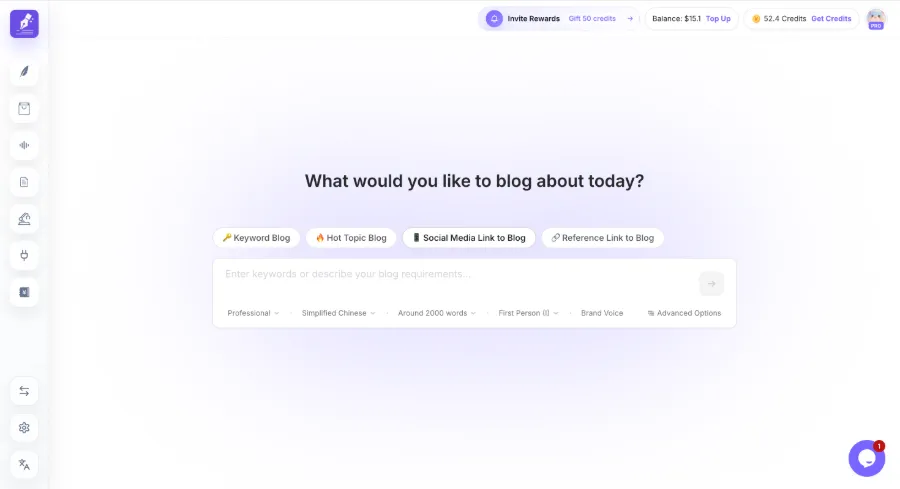
The core logic is: you don’t need to write an article from scratch. Paste product links from Shopify, WordPress, or SHOPLINE, and the AI automatically breaks them down into the three dimensions of use case, role, and industry, producing structured Q&A and long‑form text. What used to take half a day of manual fiddling now comes out in the time it takes to eat breakfast.
How to configure? You can follow the steps in the Help Documentation, but it’s not that mystical—link your store, set an automatic publishing frequency, and then every few days just glance at the backend and tweak any off‑target paragraphs.
Content sources are unlimited: a TikTok video can become an SEO blog
The most underrated aspect of AEO is that you don’t have to create content from scratch. Over the past year I barely “wrote” any articles; I just fed existing social media posts into the system and turned them into blogs.
For example, after posting a product demo video on TikTok, I used SEONIB to scrape the video script and automatically generate an SEO‑structured blog, then sync it to the independent site. The same works for YouTube, X (Twitter), Facebook, and LinkedIn. Posting a piece once is wasteful; once it’s turned into a blog, AI search engines can index it.
For independent‑site sellers doing cross‑border e‑commerce, this route is especially useful. You can’t write original content every day, but you can post a social update daily. Repurpose that content, add keyword optimization, and you’ll continuously build “topic authority”. And with support for 40 languages, you can cover both Western and Southeast Asian markets.
If you want a more systematic tool selection, check out this Beginner‑Friendly SEO Tool Recommendations; if you want to turn keywords directly into blogs, see the workflow of this One‑Click Keyword‑to‑SEO‑Blog Generator. For SHOPLINE users, the SHOPLINE App Store SEONIB Plugin can be installed directly, saving you the hassle of manual integration.
One more thing: AEO isn’t about abandoning traditional SEO; it adds a “structural layer” on top of it, making it easier for AI to crawl. The two approaches complement each other rather than being mutually exclusive. I initially thought I needed to start from scratch, and ended up taking many detours.
FAQ
Q1: What exactly is the difference between AEO and traditional SEO?
Traditional SEO optimizes for keyword rankings and link authority, aiming to appear in Google search results. AEO optimizes page structure and answer precision, aiming for AI search engines like ChatGPT or Perplexity to cite your content directly as an answer. In short, SEO gets you seen; AEO gets you cited.
Q2: I have no team—can a single person do AEO optimization?
Absolutely. The core tasks are three: identify the specific scenario of your target users (use case + role + industry), place the answer at the very top of the page, and keep the content structure clear. One person can set aside three hours a week, focus on three to five core pages, and see results within three months.
Q3: When will my content appear in ChatGPT?
There’s no guarantee. ChatGPT’s training data isn’t updated in real time, but Perplexity and Google AI Overviews pull the latest indexed pages. In my experience, pages with clear structure and front‑loaded answers get cited in Perplexity far more often than traditional SEO pages, typically within 1–3 months.
Q4: Do I need an independent site to do AEO content?
Not necessarily, but having an independent site simplifies the process dramatically. AI search engines prioritize indexing content under your own domain. If you only have social media accounts, AI may not see you. You can also set up a lightweight content site on a subdomain specifically for AEO‑optimized Q&A and guides.
Q5: How do I turn social media posts into AEO content?
The core idea is to extract the main question or viewpoint from the post and reorganize it into a “question + answer” format. For example, a TikTok product comparison video can become a titled article like “Product A vs. Product B: Which is best for a cross‑border beginner?” Keep the conversational wording but strip away timelines and irrelevant filler, delivering the conclusion and reasoning directly.
Share Article