Brand Visibility in AI Search: LLM Monitoring and Content Response Strategies

In the past few months, my biggest impression has been that even though Google rankings haven’t dropped, order volume has mysteriously decreased. Later I discovered that many potential customers have turned to ChatGPT, Claude, and Perplexity for purchase decisions, and my brand is either misdescribed or completely absent in these AI models. Since then, I’ve started using LLM tracking tools to monitor my brand’s real performance in AI search and explore how to turn the gaps I detect into content actions.
One set of data kept me awake at night: the source rotation rate cited by AI models is as high as 52%. In other words, the content you see in a ChatGPT answer today may be replaced with a competitor’s information a month later. Brand visibility in AI search is not a one‑time achievement; it’s a dynamic process that requires continuous monitoring and intervention.
Why You Must Monitor Brand Visibility in AI Search Engines
Let me share my own situation. In Q4 last year, I saw no obvious drop in clicks on Google Search Console, which made me feel fairly secure. Until one day I searched my brand’s category keywords on Perplexity and found that the AI‑generated purchase recommendation list didn’t include me at all. The top two brands listed included one I hadn’t even heard of a month ago. Clicking the link, I discovered that the competitor’s standalone site content quality wasn’t better than mine, yet it was cited far more often by the AI model.
AI search is eating away traditional search traffic, especially at the purchase decision stage. Users no longer type a few keywords and skim search result pages; they directly ask ChatGPT or Gemini: “Which brand’s X product has the best value for money?” If your brand is absent from these answers, you don’t even get a chance to be evaluated by the user. Worse still, if an AI model misdescribes you—getting the price, features, or use‑case wrong—the user’s trust may be damaged on the first encounter.
Monitoring is not optional. It’s a mandatory lesson for understanding real market positioning. I spent two weeks testing multiple LLM tracking tools, trying to answer a basic question: how does my brand appear in the eyes of ChatGPT, Claude, Gemini, and Perplexity?
Core Capabilities and Selection Criteria for LLM Tracking Tools
There are many tools that claim to track LLMs, but few are truly usable. I filtered them using five dimensions.
Multi‑model coverage is the most basic baseline. If your tool only monitors ChatGPT, you’re seeing just the tip of the AI search iceberg. Gemini and Perplexity have completely different citation logics, and Claude prefers a different style for brand descriptions. Monitoring only one model yields biased data.
Accuracy detection is the feature I care about most. The tool must not only tell me “the brand was mentioned,” but also flag whether the information cited is incorrect. For example, I once found ChatGPT recommending our product but stating it only supports Shopify—while we have already integrated WordPress and several other platforms. If such errors aren’t corrected, each citation costs a conversion.
Competitive comparison gives meaning to the monitoring data. Seeing only your own visibility score is useless; you need to compare it within the competitive landscape to gauge your true position in AI search.
Sentiment analysis tracks the proportion of positive, neutral, and negative mentions. I’m interested in whether AI answers recommend, stay neutral, or question the brand. This ratio directly influences user decisions.
Finally, the tool must provide actionable recommendations. A dashboard alone isn’t enough; I need to know what to do next. I mentioned this in my experience sharing on gaining search traffic through blogging—there should be no gap between data and action.
Closing the Loop: From Visibility Gaps to Action
Monitoring alone doesn’t create value; action does. But before acting, you must understand where the gap originates.
I once spent two weeks manually writing a deep‑dive article, only to discover that ChatGPT cited a competitor’s content. It wasn’t because my article was poor, but because I hadn’t considered the AI model’s preference for structured data. ChatGPT’s citation logic looks not only at content quality but also at extractability—whether there are clear Q&A pairs, entity annotations, and structured data. My article was good, but to the AI it was less citeable than a competitor’s short piece equipped with FAQ Schema and an entity knowledge base.
This made me realize: content quality and quantity alone aren’t enough; you must align with the AI’s citation logic.
Fixing visibility gaps follows three steps. First, correct misinformation. If an AI says something wrong about your brand, you need to supplement structured content—add FAQ Schema to product pages or publish a dedicated blog that answers common misconceptions. Second, fill empty topics. When you see a key topic where a competitor is cited but you’re absent, quickly produce AI‑friendly content covering that subject. Third, keep tracking and iterating; this isn’t a one‑off project.
In turning monitoring data into content actions, I ultimately chose a tool that can directly convert insights into automated content production—SEONIB. The reason is simple: it lets me configure a brand knowledge base, set internal linking rules and asset libraries, ensuring AI‑generated content matches brand tone and is correctly understood by both search engines and AI models. For a hands‑on guide on quickly validating product search demand, see my How to Quickly Validate Product Search Demand.
After running the full process once, I felt: previously I worried why my brand didn’t appear in AI search; now I at the cause and the fix. Without monitoring data, optimization is like blind shooting; with data, every action has direction. I later integrated this workflow into the framework of One Platform, Three AI Growth Modes—tracking, optimization, and automated publishing form a closed loop.
Building an Automated Content Workflow to Maintain AI Search Visibility
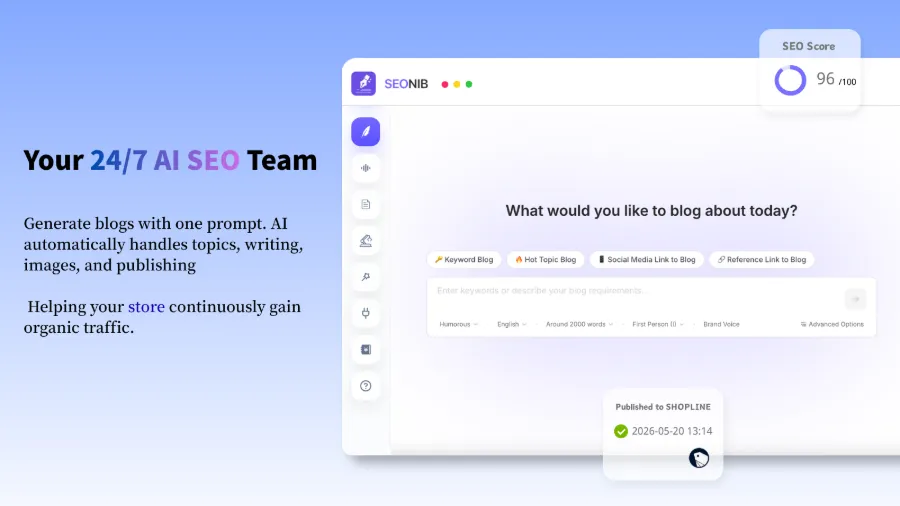
Manually producing content article by article can’t keep up with the pace of AI search updates. I tried publishing two high‑quality articles per week, but the citation update cycle of ChatGPT’s model is much faster—often the model switches citation sources right after an article is published. A 52% citation rotation rate means you must continuously produce content while ensuring its structure and format align with AI model parsing preferences.
An automated content pipeline solves two core bottlenecks: frequency and structure. From trend discovery to content generation to synchronized publishing, every step can be automated. My current approach is to automatically convert product links into blog and Q&A content, schedule releases, and let the system sync to all platforms.
YouTube: https://www.youtube.com/watch?v=MiQmHktMVDg
Below is a table comparing my experience with two workflows:
| Work Node | Traditional Manual Process | Automated Workflow |
|---|---|---|
| Trend Discovery | Manually check hot searches and competitors daily | AI automatically monitors and pushes topics to the idea pool |
| Content Generation | Open ChatGPT, then copy‑paste | Input source and directly output SEO article |
| SEO Optimization | Add images, meta descriptions, internal links per article | Built‑in optimization rules execute automatically |
| Publishing Sync | Log into each platform individually to upload | One click publishes to all platforms |
| Ongoing Frequency | Relies on perseverance and schedule | System executes automatically on schedule |
Below the table, I should to note why I chose SEONIB over other tools: it connects all these automation nodes—from product link to blog content to publishing sync—without any gaps. In contrast, some AI writing tools I tried earlier could only generate text; subsequent SEO optimization and multi‑platform publishing still required manual work. For WordPress‑specific tool selection, see How to Choose an SEO Tool for WordPress for a comparative analysis.
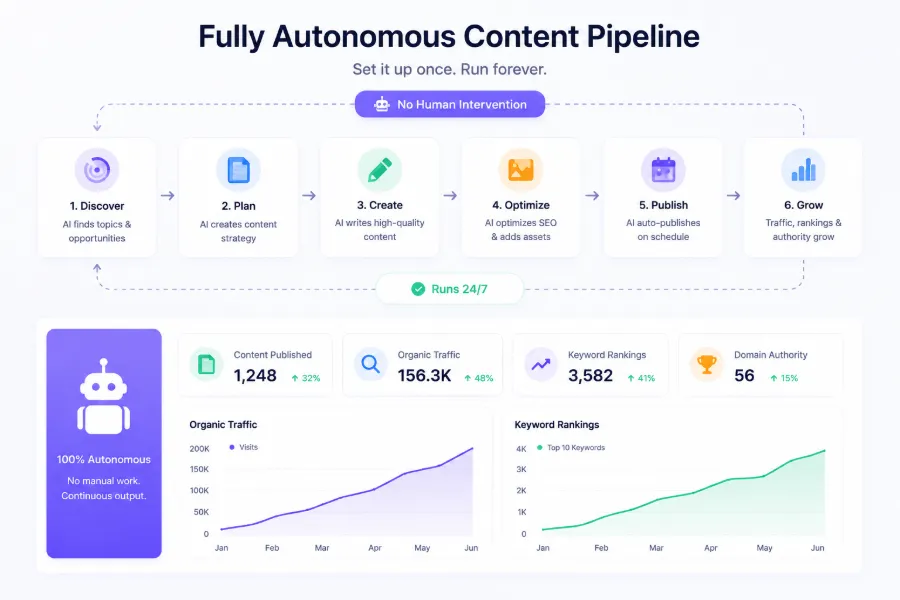
After launching the automated workflow, my blog update frequency rose from 2 posts per week to over 10 per week, and each post includes the basic SEO elements. More importantly, I noticed the AI models’ citation frequency for my brand increasing—because every article now embeds Q&A pairs and entity knowledge that match ChatGPT and Gemini’s citation logic. Once this feedback loop is established, visibility is no longer random.
For specific pricing plans, check the SEONIB pricing page to see different tiers’ publishing frequencies and platform support. If you want a complete conversion process from product link to SEO blog, read Turning Product Links into SEO Blogs that Drive Sustainable Organic Traffic. This method has been validated across multiple independent sites and is especially suitable for brands in the early stages.
FAQ
Q1: How do LLM tracking tools differ from traditional SEO tools?
Traditional SEO tools monitor SERP rankings, clicks, and keyword performance. LLM tracking tools monitor how AI models cite a brand when answering questions—whether they mention you, how they describe you, and who they mention alongside you. The data dimensions don’t overlap but are complementary. My view is that traditional SEO reflects historical performance, while LLM monitoring reflects probabilities in users’ future decision paths.
Q2: What if my brand completely disappears from AI search?
First, verify: search different AI models for your brand name and core category keywords to confirm whether it’s truly absent or just a version difference. If confirmed missing, start with the fastest‑impact actions—create an FAQ page with structured data, publish a few Q&A‑style posts addressing common purchase questions, and ensure the site has clear Knowledge Graph entity links. Typically, within 2‑4 weeks some models will begin citing you.
Q3: Can LLM tracking tools cover all AI models?
Most tools cover the four major models—ChatGPT, Gemini, Claude, and Perplexity—some also support Google AI Overviews, Grok, DeepSeek, and Copilot. No tool can claim 100% coverage of every AI model version. I recommend prioritizing the 2‑3 models most used by your audience rather than chasing full coverage.
Q4: How often should I check my brand’s visibility in AI search?
Given the 52% citation rotation rate, at least weekly checks are advisable. Model citation update cycles are roughly 7‑14 days, especially around new version releases. My habit is to run a full‑model scan every Monday morning, log changes, and then prioritize that week’s content production accordingly.
Q5: How do I turn monitoring data into concrete content optimizations?
You need a translation step between data and content. Incorrect descriptions → add corresponding structured content and FAQ Schema. Competitor‑cited topics where you’re absent → produce AI‑friendly Q&A or in‑depth articles on those topics. Low positive‑mention rate → verify that the sources feeding the AI training data are authoritative enough. The key is to understand the citation logic behind each data point rather than blindly following monitoring suggestions.
Share Article