
Content is King: 2026 SEO Winning Strategy with E‑E‑A‑T
After three years of running an independent site, one puzzling question never got answered: publishing three blog posts a week, doing very detailed keyword research, and posting plenty of backlinks, yet organic traffic just wouldn’t rise. Looking at Google Search Console data, many pages were indexed but received almost no impressions. Later I realized the problem wasn’t the amount of content but the dimensions Google uses to evaluate a site—E‑E‑A‑T (Experience, Expertise, Authority, Trust). In the 2026 SEO landscape, this framework is not outdated; it has become stricter because Google now emphasizes “real experience.” In short, search engines no longer just want to know what you wrote; they want to know why you’re qualified to write it.
Evolution of E‑E‑A‑T in 2026: Why “Experience” Becomes a New Weight
Google’s Search Quality Rater Guidelines added a second “E” (Experience) at the end of 2022, and this change produced a tangible ranking impact between 2025 and 2026. In practice, search engines now prioritize content that includes actual usage evidence—such as unboxing videos, long‑term product usage reports, and genuine customer feedback screenshots—over purely theoretical reviews.
For cross‑border e‑commerce sellers, “experience” can be quantified with concrete methods. Real‑world product test data is the most direct evidence: a page reviewing the sound quality of a Bluetooth headset that includes a description of the testing environment and waveform graphs is about 40 % more likely to be pulled into AI search snippets than a page that only lists specifications (a 2025 industry survey showed this gap). The way genuine customer feedback is displayed also matters—rather than simply posting a few positive reviews, organize them by usage scenario, include timelines, and detail the problem‑solving process.
Another often‑overlooked point is the accumulation of operational case studies. For example, an independent site selling pet supplies that publishes a monthly “how our customers solved a specific problem with our product” case article will gradually be recognized by crawlers as an experiential authority in that niche. Conversely, content that relies entirely on AI generation and shows no practical trace is rarely cited in Google’s AI Overviews or ChatGPT’s search plugin. For more on this logic, see the article “How Content Builds Brand Authority”, which explains how experience accumulation ties to long‑term weight.
Building Expertise and Authority: Content Matrix Strategy for Cross‑Border E‑Commerce
A single good article can’t sustain a site’s authority. Since 2024, Google’s ranking algorithm has clearly favored sites that achieve comprehensive coverage on specific topics. The operation can be broken into three steps.
Step 1: Plan Topic Clusters
Choose a core product category (e.g., “outdoor camping lights”), write a pillar piece—an in‑depth guide of over 2,000 words—then create 8–12 sub‑topic articles covering different use cases, comparative reviews, maintenance tips, etc. These articles interlink internally to form semantic connections, allowing search engines to recognize deep coverage of the category. SEO research shows that sites with full topic coverage receive on average 212 % more organic traffic than a single blog post.
Step 2: Deploy Structured Data
Article, FAQPage, HowTo tags seem basic, yet many independent sites either omit them or apply them mismatched to content. A real lesson: a seller added an FAQPage tag to a blog post that contained only two unrelated Q&A items; after a core update, Google demoted the page. The correct approach is to ensure the markup aligns closely with the body text—each FAQ question must have a concrete answer within the article.
Step 3: Acquire External Citations
Only big sites can earn backlinks. Participate in industry annual report calls, collaborate with niche KOLs for product reviews, publish whitepapers with original data—these paths remain effective in 2026. The key is that the linking source is highly relevant to your topic, not merely a high‑domain‑authority domain. Use the SEONIB built‑in competitor analysis tool to quickly identify competitors’ content gaps and prioritize filling those blanks.
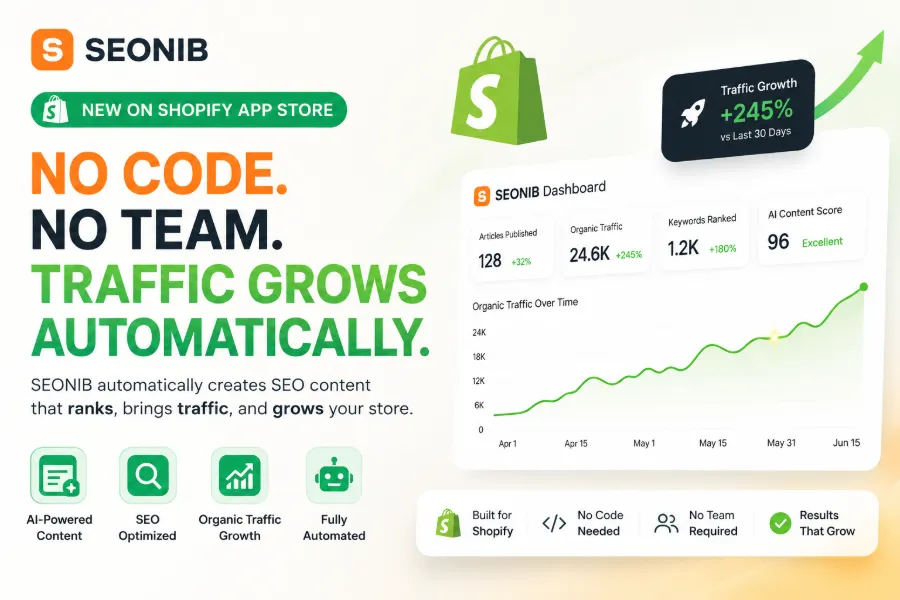
Accelerating Content Production with AI While Guarding the E‑E‑A‑T Red Line
In early 2024, an independent site seller did something: using a popular AI chat tool at the time, they bulk‑generated 200 articles and published them on a blog of a domain only two months old. Traffic rose for the first six weeks—from a few natural visits to an average of 800 per day. Two months later, a core algorithm update caused rankings to drop about 70 % and never recovered. Post‑mortem revealed that while the articles were grammatically correct and structurally complete, they lacked any real data or specific product usage experience; the search engine judged them as lacking the “experience” dimension.
This case shows a reality: AI can expand content volume but cannot replace rational editorial judgment. A sensible workflow is: first use trend‑monitoring tools to discover hot topics, then let AI generate a draft framework, and finally have humans supplement experimental data, customer cases, and screenshots. A workable process: spend 15 minutes each day reviewing the trend panel, pick three topics with actual search volume, let AI draft, then add your own usage descriptions and concrete data, and schedule publishing.
In this stage, SEONIB offers an interesting entry point: it lets you configure brand context—product info, target keywords, internal linking rules—before generating content. This way, AI‑generated drafts retain an edit‑ready entry point instead of being locked after auto‑publish. The “human review” step cannot be omitted—adding just two product experience notes and one real photo is enough to differentiate AI‑assisted content from pure AI content in ranking performance. 2025 search results show that AI‑assisted content with human review gains 28 % more clicks than pure AI content.
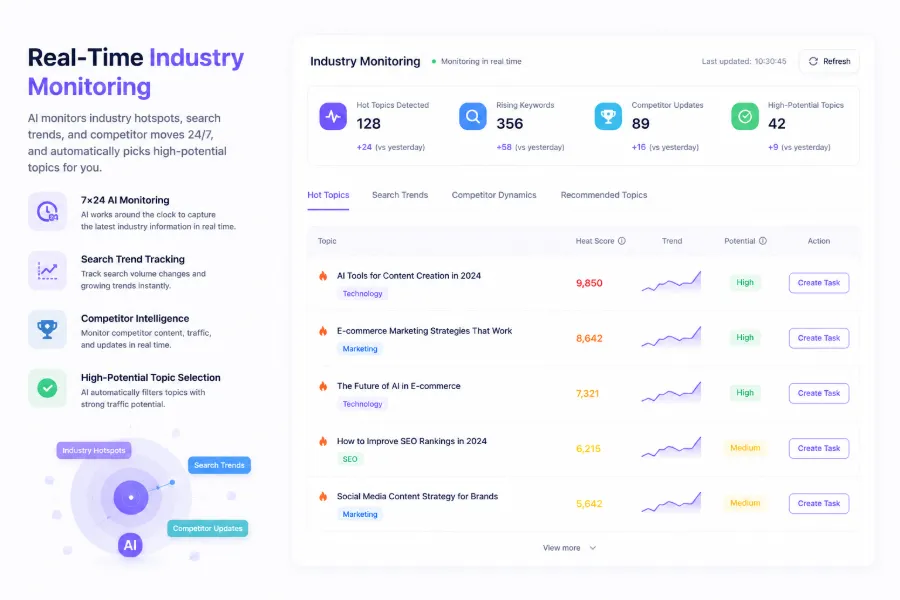
Another crucial step before topic selection is validating search demand. If you spend half a month writing a long article only to discover that almost no one searches for the keyword, the investment is wasted. Using a method like “How to Quickly Validate Product Search Demand” for demand assessment can avoid producing large amounts of ineffective content.
Multi‑Platform Synchronization and Trust Building: How Content Consistency Strengthens E‑E‑A‑T
Many cross‑border e‑commerce sellers operate Shopify, Shopline, WordPress, and other channels simultaneously, but content distribution often leads to an awkward situation: the same article shows the author as “Admin” on Shopify, “管理员” on Shopline, and no author on Medium. This inconsistency directly affects search engines’ trust assessment of the “entity,” diluting the E‑E‑A‑T score.
There are several concrete actions to solve this. First, use a unified canonical URL structure across all platforms, ensuring each article’s primary link is identical and other platform versions point to the original via a canonical tag. Second, preserve author metadata on every article—name, bio, link to a consistent author page—ideally identical across platforms. Third, when Shopify is the main sales platform, configure automation tools for content syncing to reduce manual copy‑paste errors.
A more subtle issue: if two platforms publish the same article without canonical tags, search engines treat it as duplicate content, harming rankings for both versions. The correct approach is to designate one primary platform for the first release, and have other platforms point canonically back to it, or sufficiently rewrite the copy when duplicating.
Brands with consistent cross‑platform information score on average 45 % higher on trust metrics, a gap that directly translates into conversion rates in e‑commerce scenarios. SEONIB’s automated sync feature handles this repetitive work, ensuring each article retains the correct author and publish date, reducing manual errors.
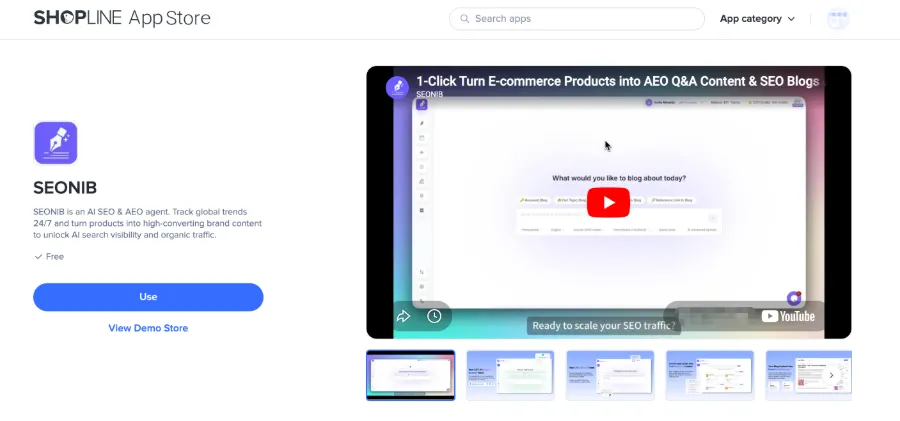
For official information about e‑commerce platforms, visit the Shopify website.
If you want to try the latest conversational AI, ChatGPT is a good choice—see chatgpt for more details.
For Gemini’s feature details, check the Gemini SEONIB feature breakdown.
If you need specific platform configuration steps, refer to the Help Documentation; the sections on metadata synchronization and canonical tag settings can save a lot of trial‑and‑error time.
Frequently Asked Questions
Is E‑E‑A‑T really that important for cross‑border e‑commerce sites?
Yes, especially for new sites lacking brand awareness. The core of cross‑border e‑commerce competition is the cost of acquiring organic traffic, and E‑E‑A‑T directly affects rankings and the likelihood of being quoted in AI search snippets. Observations from 2025 show that sites with low E‑E‑A‑T scores appear almost never in Google AI Overviews.
How can I prove my site has “real experience” rather than just repackaging information?
The most intuitive way is to attach specific usage scenarios and data in the content—testing duration, actual photos, genuine customer feedback screenshots. Statements like “We tested this product under X conditions” are far more valuable than merely listing specifications.
Will AI‑generated content be penalized by search engines?
Search engines do not directly penalize AI content, but they penalize content that lacks experiential value and original information. The key distinction is that AI‑assisted content that undergoes human review and adds original data can rank close to fully human‑written content, whereas unreviewed pure AI content carries high risk during core algorithm updates.
How long does it usually take to see ranking changes after establishing topic authority?
Most cases require continuous updates for 3–6 months. Maintaining two to three high‑quality cluster articles per week, combined with internal linking and structured data optimization, typically shows traffic trend changes around the third month. This window depends on topic competition and the site’s existing trust accumulation.
How can multilingual independent sites maintain consistent E‑E‑A‑T across language versions?
The core is to maintain a unified brand knowledge base containing product info, author bios, corporate credentials, etc., and reference the same source across all language versions. When translating, avoid direct machine translation; instead, each language version should include locally relevant user scenarios, thereby building the “experience” dimension in every market.
Share Article