When your customers silently search for you in ChatGPT, but your backend is blank? “AI Search Visibility (GEO) Master Handbook”
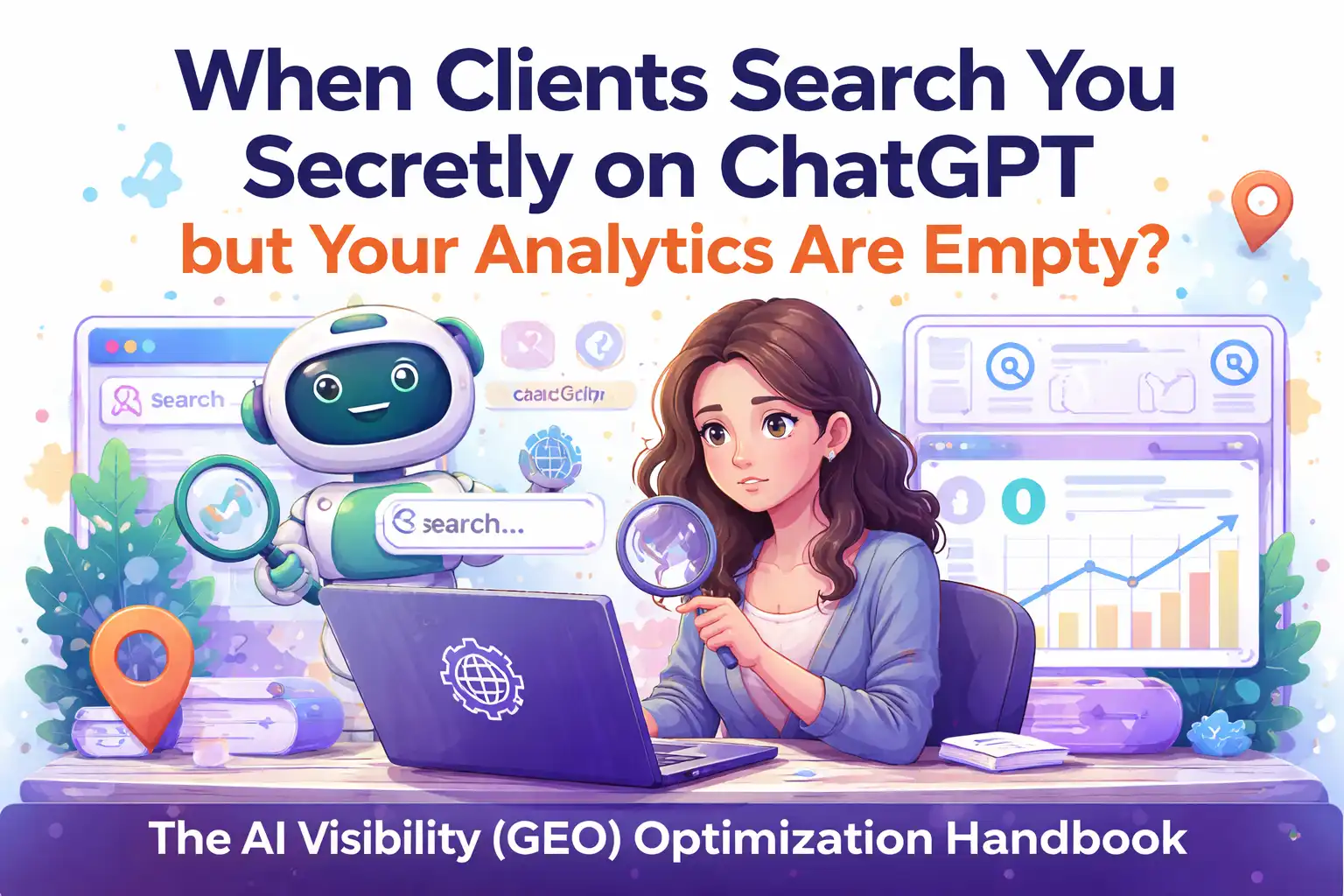
Last month, while reviewing Google Analytics, I noticed a strange phenomenon: direct visits for a client’s brand suddenly jumped by 30%, but the “Source / Medium” column was entirely “direct / none”. That gave me chills — because I knew these users weren’t typing the URL directly; they left no traceable footprints.
Later, chatting casually with the client’s sales team, the truth emerged: they spent three days asking product comparison questions on ChatGPT, then ran three rounds of price evaluations on Perplexity, and finally placed an order after typing the brand name into Google. The entire decision journey spanned half a month, yet your analytics platform only saw the final click. This is the so‑called “dark conversion” — users complete research and decision‑making on AI search platforms without ever visiting your site, then convert directly via brand search or word‑of‑mouth. You never know where they did their homework.
Dark Conversion: Your Customers Are Secretly Researching You on AI Platforms
Imagine: a prospective customer sits on a couch, opens ChatGPT, asks “Compare product A, B, and C – which is better for a small team?”, follows up with eight rounds of details, reads all the comparisons, and then happily closes the chat. Immediately after, they type your brand name into Google and place an order. Your analytics platform only shows a single “direct brand visit” with the source listed as “unknown”. Yet you have no idea that they have already completed 80% of the decision journey inside ChatGPT.
This situation is accelerating. According to feedback from Exposure Ninja’s clients, an increasing number of conversions are shifting from traditional search‑engine paths to an “underground research mode” within AI platforms. Users don’t click your site link, but they remember your brand name from the AI response and then search for it separately. Your site may never have been visited, yet you’ve already secured the order.
Old Methods Still Work: Ask Them Where They Came From
Since technical means struggle to track these pre‑conversion actions, use the simplest approach: ask directly. We added an old field to all our forms — “How did you hear about us?” — absurdly simple, yet surprisingly effective. The sales team casually asks “How did you find us?” at the close of a deal, often uncovering “Oh, I saw you while searching product comparisons on ChatGPT.”
This self‑attribution method costs virtually nothing but lets you gauge the true proportion of dark conversions. You’ll discover that a sizable chunk of customers come from AI platforms you’ve never advertised on. Combine this with your comprehensive SEO practice guide and the attribution accuracy will improve.
Step Two: Regularly Audit Your AI Search Visibility
Now that you know customers are researching you on AI platforms, the next step is to verify your own rankings on those platforms. Manual auditing is simple: input core keywords into ChatGPT, Perplexity, Google AI Overviews, and see if your brand appears in the response. For example, search “best Shopify SEO tool” and check whether you’re among the top three recommendations.
But manual audits are tedious; it’s best to do them once a month. You can use tools like Profound to track ranking changes. Also, don’t forget basic technical health — AI search visibility largely depends on whether your site is correctly crawled. Run the technical SEO checklist to ensure your pages are understandable by search engines and AI crawlers.
Content Automation: Let AI Continuously Produce AI‑Friendly Content for You
You may have realized: the essence of AI search is content recommendation. When ChatGPT and Perplexity answer questions, they pull from the depths of well‑structured, authoritative, and comprehensive content. You can’t cover all long‑tail queries by manually writing a few articles. This is where automation tools are needed to scale production.
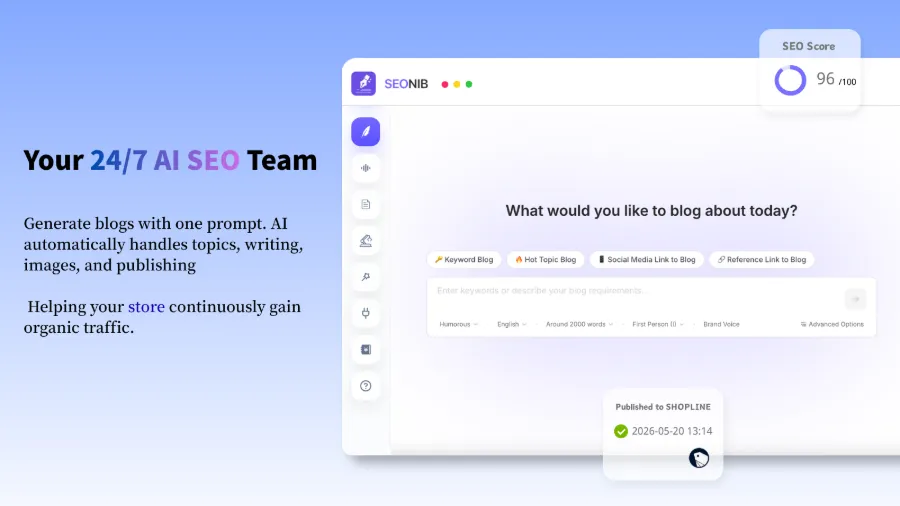
I’ve been using SEONIB for three quarters now. Its problem‑solving is straightforward: it turns content production from “manual creation” into an “automated pipeline”. You simply set up trend discovery sources — product links, keywords, hot news, social media posts, reference links — and it automatically generates SEO‑optimized articles, schedules them for publication, supports 40 languages, and can sync to multiple platforms with one click. For example, drop a Shopify product link in, and within minutes you get a product review blog, structured for easy AI search citation.
It’s not just about saving labor; coverage is the key. Writing a single article manually takes half a day, but AI search generates tens of thousands of query variations daily. Only automation can fill those long‑tail search paths you wouldn’t even think of. Someone has written a case study on one‑click product link to SEO blog conversion that you can reference. If you have questions about specific configurations, the official SEONIB help documentation is detailed.
Of course, using automation tools doesn’t mean mindlessly churning content. You need to regularly review the generated quality and adjust brand context and keyword strategy. We don’t recommend lazy reliance solely on tools, but compared to manual writing, efficiency gains are order‑of‑magnitude. Similar tools can be compared in the best AI marketing tools recommendations.
Other Layers of the AI Search Visibility Pyramid
Content is just one layer of AI search visibility. According to industry consensus, reputation is the first layer of the pyramid — the number of citations of your brand in references and authoritative sites directly determines whether AI platforms will mention you. Technical fundamentals and topical authority are also important. In my view, for most independent site operators, content automation is the easiest to get started with and the most directly actionable component. Other layers either require time to mature or additional resource investment, while content production can begin today.
FAQ
What is a dark conversion? Why can’t I see it?
A dark conversion refers to users completing research and decision‑making on AI search platforms without visiting your website, then converting via brand search or direct URL entry. Traditional analytics tools only record page visits on your site and cannot track browsing behavior inside ChatGPT, Perplexity, etc., so you don’t see it.
How can I know my product’s ranking in AI search?
Manual audit: input your core keywords into ChatGPT, Perplexity, Google AI Overviews and see if your brand appears in the response. It’s recommended to test monthly. You can also use specialized AI ranking tracking tools that provide visibility scores and historical trends.
Is AI search visibility only for large teams?
No. Small teams and solo operators can start with content automation. Using tools to achieve a full‑chain automation of “product link → blog → multi‑platform publishing” may only require a few hours of initial setup. Compared to traditional SEO, the barrier to AI search optimization is actually lower.
How does content automation differ from traditional SEO content?
Traditional SEO content focuses on search‑engine crawling and ranking, emphasizing keyword density, title optimization, and internal/external links. AI search‑optimized content needs to be more structured, cover a fuller set of entities, and use a natural conversational Q&A format for easy AI platform citation. The two are not contradictory but have different focal points.
Share Article