I Spent Four Months Optimizing SEO, Only for ChatGPT to “Summarize” My Content
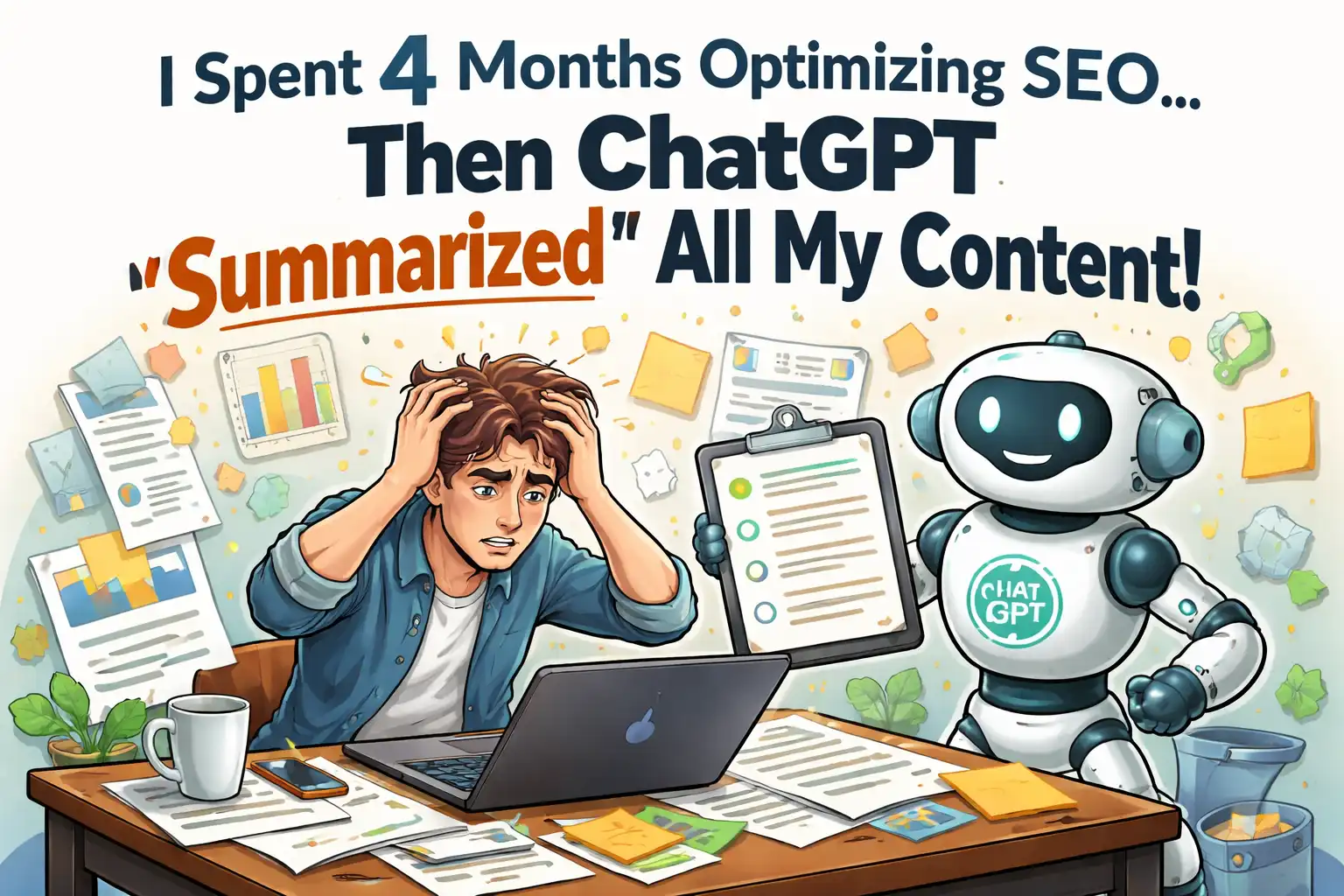
This happened on a Tuesday afternoon last month, and I remember it clearly because I had just brewed a cup of coffee and was about to check last week’s traffic data. The curve in Google Search Console looked fine—steady growth, and I was even a little proud—four months of content optimization, keywords breaking into the top ten, finally seeing some return.
Then I opened ChatGPT and casually searched for a topic I had written a long guide about. The AI’s answer did cite data from my site, but users didn’t need to click through to read my article. The answer ended right in the chat window, clean and concise, even with a cute emoji.
It’s hard to describe the feeling at that moment—like you’ve prepared a full-course meal, a guest smells the aroma at the door, says “Looks good,” and then walks away.
I Got My SEO to Rank First, Only to Find No One Clicking
Ahrefs data show that AI summaries have reduced click‑through rates for top‑ranking Google content by 58%—to be honest, I wasn’t surprised when I saw that number. I’m the one who stopped clicking. Last month I looked up “best practices for schema markup,” and Google’s AI summary broke the answer into four steps with a nice flowchart. I read it and closed the page, not even remembering which article supplied the original information.
The problem: my own site is experiencing the same thing.
I have a tutorial on structured data, 3,200 words, seven screenshots, and code examples. The article ranked second on Google. Within three months of AI summaries appearing, its click‑through rate fell about 40%, while impressions stayed roughly the same. Google still indexed the article well; users just didn’t need to visit. For content creators, it feels like a silent, slow‑moving car crash.
From 2025 to 2026, the nature of search has changed. ChatGPT processes 2.5 billion prompts daily, about 65% of which can be considered search behavior. Bing’s side‑panel Copilot is a built‑in answer engine. Perplexity’s growth curve is steeper than early Google. All these signals point to one direction—search result pages are becoming increasingly self‑contained, and fewer people need to click to get information.
This isn’t just a pessimistic narrative. It means the optimization logic itself must change.
I Realized in 2025 That Traditional SEO Was No Longer Enough
Honestly, I’m the type of person who doesn’t like admitting they’re behind. I’ve been doing SEO for six years, from keyword research to technical audits to content strategy, and I thought I’d mastered it. So when people started talking about GEO and AEO, my first reaction was “another old concept repackaged.”
But after running a test, I found it didn’t work.
GEO—Generation Engine Optimization—doesn’t aim to rank content higher in search engines; it aims to make large language models willing to cite you as a source. That’s an entirely different logic. Traditional SEO relies on backlinks, domain authority, content depth, and page structure. Those factors still help in GEO, but they’re not decisive. AI models care more about verifiable facts, data provenance, and a structure that can be directly extracted.
AEO is even more straightforward—it’s more “defensive” than GEO. AEO doesn’t expect your content to be cited as an authority; it wants your content to be extracted directly into answer boxes, like Google’s AI summary or Bing Copilot’s direct answers. In AEO logic, good formatting beats good prose, and direct answers beat contextual buildup.
Neither is exactly the same as traditional SEO, but both build on its foundation. Roughly 70% of content cited in AI summaries already ranks within the top 100 on Google. So SEO isn’t dead; it’s become a necessary but no longer sufficient condition.
My AEO Mistake: Told a Story and Wasted Three Months
In the fall of 2025, I produced a series of comparative review articles—side‑by‑side comparisons of two SaaS tools, each feature illustrated with real screenshots and a summary table. The articles were detailed, and I was satisfied. After publishing, organic traffic came quickly; the first two months were good. In the third month, Google updated its AI summary algorithm and “rewrote” my content.
The AI summary extracted the comparison table from my article but kept only four‑fifths of it, dropping a key differentiator—the very feature I thought was most important. The search result’s conclusion became biased. Users glanced, thought they had enough information, and left, but the conclusion was incomplete.
I spent two weeks in Google Search Console checking indexing status, repeatedly reviewing the article’s schema markup, and discovered a mistake I should have caught long ago: when extracting content, the AI prioritizes list and table formats and takes the first data set, then judges importance by order. I placed the most important comparison toward the end of the table, so the AI grabbed the earlier, less representative content.
The lesson is concrete: if you want the AI to answer user questions, put the core point first, then supplement with details and caveats later. Interestingly, many content creators’ long‑standing habit—setup, then expansion, then summary—is completely reversed in GEO and AEO contexts.
Is Traditional SEO Still Useful in 2026? My Take
My view: traditional SEO is still useful, but its ROI curve is flattening. Google’s core ranking factors (backlinks, site authority, content depth) still matter for user‑initiated searches. The problem is that AI summaries intercept a large share of traffic at the SERP stage; users see the answer and leave.
A concrete example is a tool review article. A user searches “best project management tool 2026,” and previously the results were ten links that the user would click one by one. Now Google’s AI summary presents a comparison table with Asana, Monday, ClickUp, Notion, complete with ratings and price ranges. After seeing that, most users don’t click any article. If your site’s SEO is solid but you never get AI citations, you’ll rank but won’t get traffic.
In this situation, I’m taking a two‑pronged approach. One leg is maintaining the traditional SEO foundation: keep content fresh, preserve backlink structures, manage crawl budget, monitor Core Web Vitals. The other leg is specifically structuring content for GEO and AEO, which means revamping a large batch of existing articles.
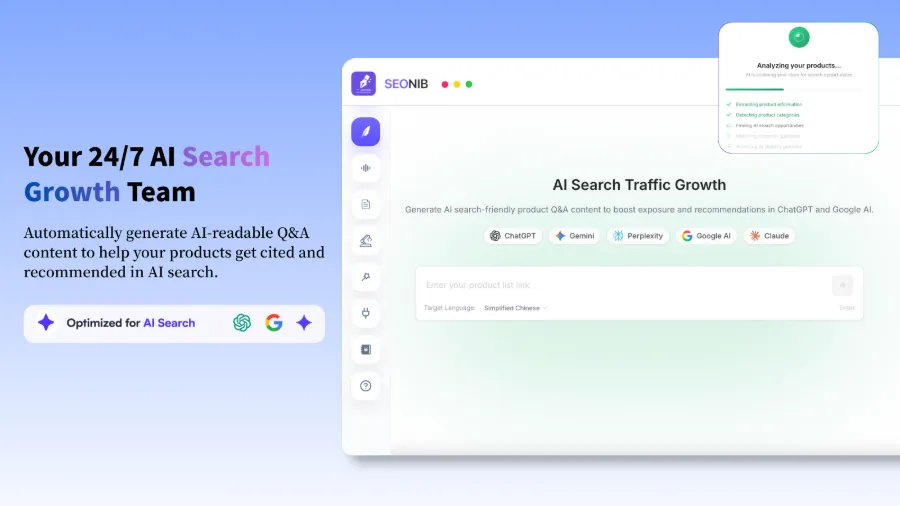
Revamping isn’t pleasant. You have to reformat, split, and reorganize a lot of content. I used several tools for this, including but not limited to SEONIB to automatically extract key points from source material and generate AI‑friendly structures, reducing manual effort. After a while, SEONIB helped me reformat about forty old articles, freeing time to tackle deeper strategic issues.
Of course, no tool solves all GEO and AEO challenges. Structuring is only the first step; content authority, data verifiability, and citation transparency are irreplaceable. But tools can keep you from collapsing under scale.
What I Learned—and Two Unexpected Things
Unexpected #1: AI Citations Are Slower Than Expected
I assumed that after optimizing, AI models would quickly update citations. That wasn’t the case. I tweaked the structure of several pieces, added clear schema markup, and waited almost six weeks before ChatGPT and Perplexity began citing the new structure. Google’s AI summary updates even slower; some content took ten weeks after changes to reflect. This taught me that GEO is a medium‑to‑long‑term strategy; you won’t see results in a few weeks.
Unexpected #2: Structured Content Helps Traditional SEO Too
That was a pleasant surprise. When I started focusing on content structure—not just heading hierarchy but also paragraph length, keyword placement, and the use of tables and lists—I found that AI could extract the content more easily, and Google’s regular search snippets improved. The display rate of page summaries rose, and one old article’s CTR actually increased by about 12% despite no other changes. This shows that structured content is effective in traditional search as well, even though I hadn’t emphasized it before.
Real‑World Pitfalls I’ve Hit
In February this year, I undertook a large‑scale content overhaul. The plan was to modify about sixty articles, add FAQ schema and structured tables, and update old data. I spent an entire day in the CMS, and because I missed a multilingual publishing setting in an AI content automation tool, the Chinese version of the articles was overwritten with machine‑translated Simplified Chinese.
Eight articles ended up with awkward phrasing and unnatural sentences. Google re‑indexed them within a week, and rankings dropped across the board—one article fell from the first page to the fourth. I spent two weeks manually fixing the errors, republishing, and waited a month for rankings to recover.
The lesson: automation tools save a lot of repetitive work, but you must verify each language’s output and not trust default templates. In my workflow, I hard‑coded language‑specific handling rules before using bulk publishing.
Some Still‑Unresolved Questions About GEO
Some creators claim GEO is “zero‑cost traffic.” I disagree completely. In my experience, getting content into AI citations requires heavy investment in authority. Sources must be verified, data must have provenance, and author credibility must be visible. Those aren’t things you can assemble quickly. If your content lacks concrete data backing and is just an opinion piece, AI will rarely cite it as a primary source.
I’ve also noticed that knowledge‑type content is more likely to be cited than how‑to guides. How‑to content often requires user action that AI can’t replace, so it’s less affected by GEO. In contrast, definitional, comparative, and statistical content are AI‑citation hotspots. If your site focuses on comparative reviews and data analysis, you’re likely among the most impacted by GEO.
FAQ
Do GEO and traditional SEO require the same amount of resources?
GEO demands higher content quality—especially regarding data sources and structured formats. In my practice, preparing a high‑quality GEO piece takes about 1.2 × the time of a comparable SEO piece because you must also handle data verification, citation tagging, schema markup, and table optimization. However, GEO’s marginal returns are higher; a piece cited by AI multiple times gets far more exposure than a traditional SEO article’s organic reach.
My content is being cited by AI but gets no clicks—what should I do?
This is a very real dilemma. If your revenue depends on ads or conversions, you need to ensure that the AI‑extracted snippet retains your brand or core conclusion so users know the information comes from your site even if they don’t click. There’s no perfect short‑term solution; personally, I allocate about 30 % of my content budget to GEO’s zero‑click value and 70 % to deep content that can still drive clicks.
How often do AI search engines update their citation sources?
It varies widely by platform. From my observations, Perplexity updates citations roughly every 2–4 weeks, ChatGPT’s knowledge cutoff depends on model version releases—typically 1–3 months. Google’s AI summary updates the slowest; some cases show changes only after eleven weeks. No platform publishes its update frequency, so it’s wise to wait at least two months after changes before evaluating impact.
Should I rewrite existing content to fit GEO?
You don’t need to rewrite everything. I recommend prioritizing articles published within the last six months that rank in the top thirty. Those already have baseline authority; you just need structural tweaks and data additions. Low‑ranking or very old content isn’t worth the effort—its authority signals are too weak for AI to prioritize. From a cost‑benefit perspective, updating high‑ranking content’s structure is more efficient than creating new pieces from scratch.
Share Article