My Brand Is Invisible in AI Search? A Step‑by‑Step Guide to Getting Recommended by AI
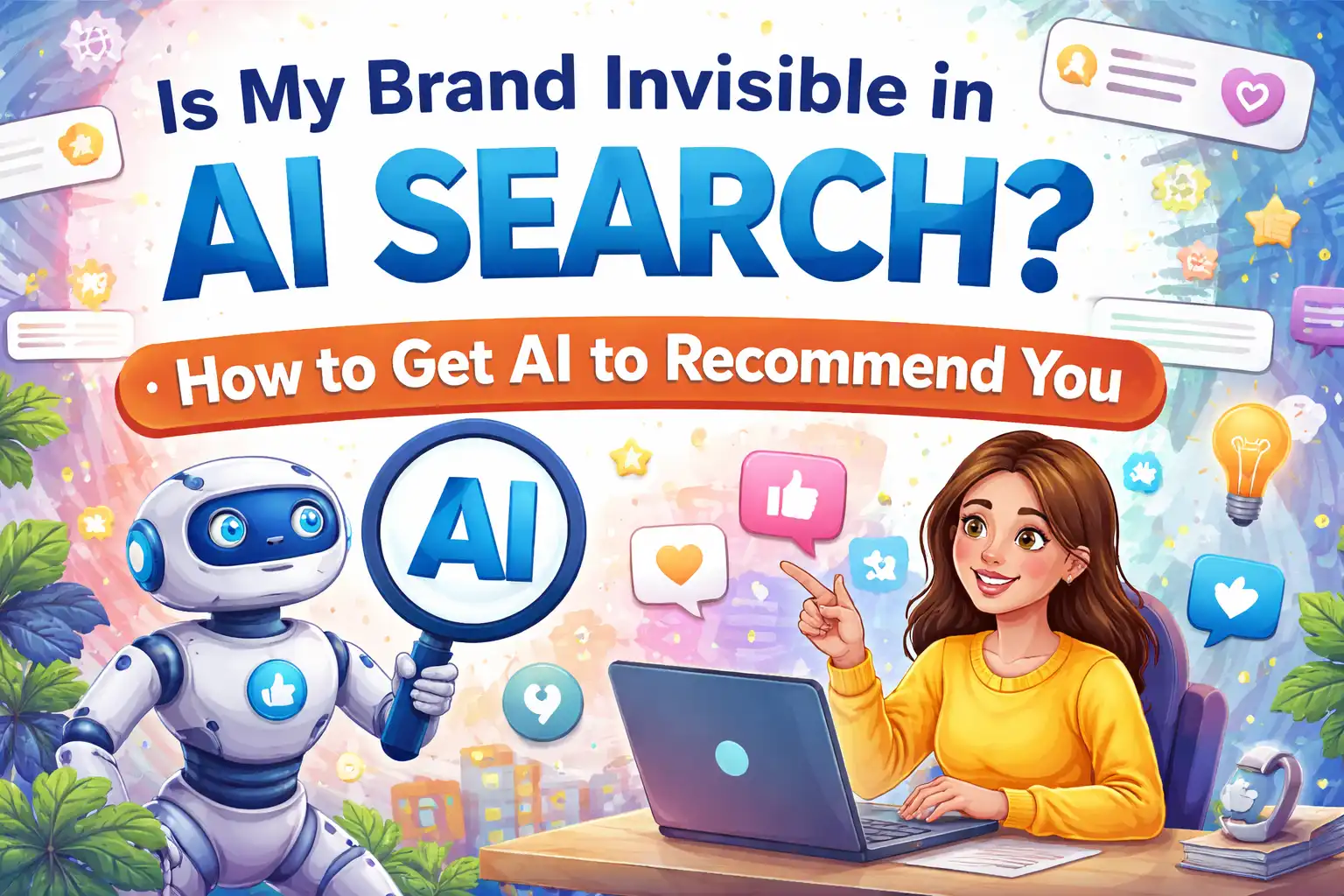
After nearly three months of optimizing my website’s SEO, traffic finally increased, and I felt a little proud watching the Google Search Console data every day. But last week, a friend asked ChatGPT “Which cross‑border independent site tools are worth buying?” and the AI listed five brands, none of which was mine. That moment felt like spending an entire night dressing up for a party and no one noticing you.
Later, after careful research, I discovered that the logic of AI search is completely different from traditional SEO. Google values ranking weight, while AI models like ChatGPT, Perplexity, and Claude care about “who is consistently recognized by more people.” No matter how well your website is written, if Reddit never mentions you, YouTube never reviews you, and e‑commerce platforms never evaluate you, the AI simply won’t recognize you.
This article summarizes the pitfalls I fell into and the methods I used to get out of them.
The “Three Rings” in AI Search — Mentioned, Cited, Recommended
In AI search, brand exposure is not a single ranking but three levels.
Brand Mention is the shallowest level. The AI mentions your brand name in its answer, but without a link or attribute description. It’s like someone calling your name at a party but not handing you a microphone, then turning to talk to someone else. Its value is limited to building awareness and almost never drives conversion.
Brand Citation is a step forward. The AI treats your website as an information source and links to your page in a footnote‑like manner. At this point, you are regarded as a “reliable witness,” bringing some traffic and credibility. Purchase likelihood ranges from moderate to high.
Product Recommendation is the true endpoint. The AI not only mentions you but also lists your product name, price, reviews, and suitable scenarios, directly guiding users to make a decision. It’s like someone dragging your product straight into a shopping cart — only at this level can you truly affect revenue.
| Exposure Level | Value | Purchase Likelihood |
|---|---|---|
| Brand Mention | Build awareness | Low |
| Brand Citation | Build credibility and traffic potential | Medium‑High |
| Product Recommendation | Directly enter decision circle | High |
I was only focused on climbing Google rankings at first, and I had no position in the recommendation tier, which was a wasted effort.
Why Would AI Recommend You? Consensus and Consistency, Missing Either Is Useless
Whether AI recommends a brand depends not on how well the website is written, but on consensus.
Large models cross‑validate across multiple platforms: Is your product discussed on Reddit? Are there reviews on YouTube? Do media outlets like PCMag or Tom’s Guide mention you? How are the Amazon reviews? Only when multiple independent sources consistently recognize you will the AI place you in its recommendation list.
A typical example: Keychron mechanical keyboards. The reason ChatGPT repeatedly recommends them is that PCMag has a review, Tom’s Guide includes them in a list, Amazon has thousands of reviews, and Reddit’s mechanical keyboard community discusses them daily. Multiple sources have reached consensus. After cross‑validation, the AI deems them “reliable” and confidently recommends them.
Besides consensus, consistency is also a fundamental condition. If your website says “stainless steel” and Amazon says “brushed metal,” the AI’s cross‑comparison will find mismatched information, making it unable to determine which is true, so it skips your brand. I examined my own products and found several spec descriptions that indeed differ across platforms — a simple issue with surprisingly huge impact.
During the process of establishing data consistency, I tried using SEONIB to automatically publish to multiple platforms, ensuring product names, specs, and prices are synchronized, saving me the hassle of manual edits one by one. If you’re also organizing multi‑platform data, you can first try these free SEO tools / independent site growth tools to get the basics running before considering automation.
What Types of Content Does AI Love to “Borrow”?
AI is like a very lazy student; it doesn’t do its own research but prefers to copy work already organized by others. The following five types of content are its most frequently cited sources:
- Media review lists: Product rankings compiled by TechRadar, Good Housekeeping, etc., with clear structure that AI can use directly.
- E‑commerce platform product pages: Structured specs, reviews, and inventory data on Amazon, which AI uses to verify facts.
- Laboratory tests and expert reviews: Quantitative assessments from sources like Consumer Reports, highly trustworthy and favored by AI.
- Community discussions: Real user experiences on Reddit; AI heavily references these when answering “Is it worth buying?” type questions.
- Product comparison articles: Content like “Brand A vs Brand B” that helps AI clarify suitable scenarios for different products.
These five types of content dominate AI answers.
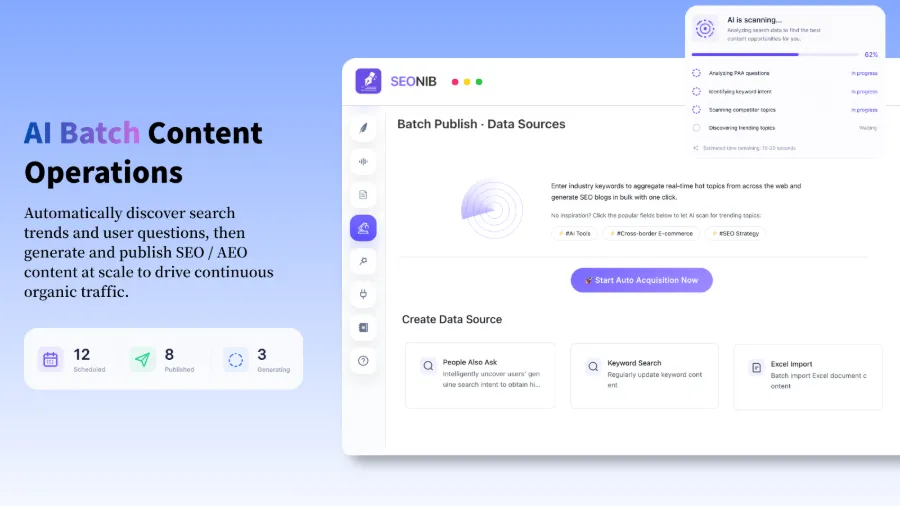
If your product appears in these five content types, AI will have a place for you when assembling answers. For how to write these list and comparison articles, you can refer to Blog Writing Made Easy, which provides ready‑made structures and templates.
Practical Guide: Three Steps to Make AI Remember Your Brand
If you also want to go from “invisible” to “recommended,” the following three steps are the most effective practices I discovered after three months of trial and error.
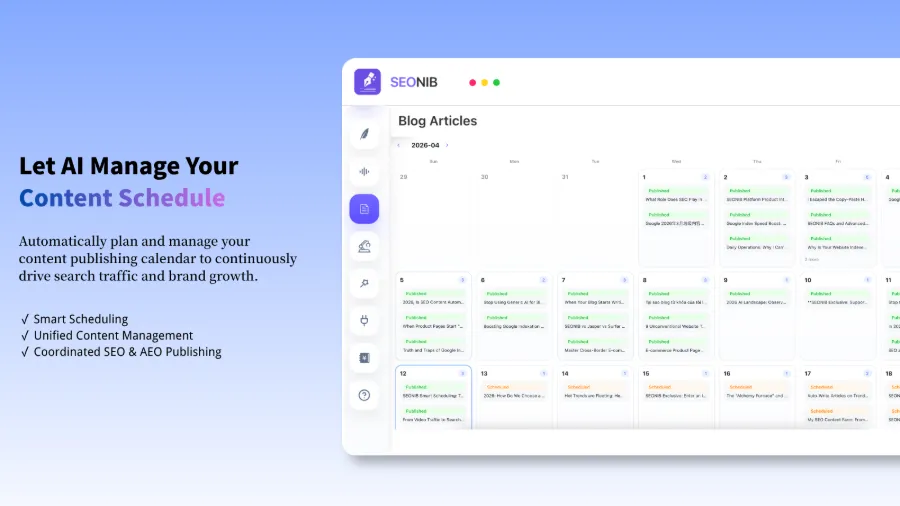
Step One: Unify Data Consistency. Standardize product name, model, material, and price across your website, Amazon, Google Merchant Center, and Shopify. Avoid inconsistencies like “website says stainless steel, Amazon says brushed metal.” SEONIB can automatically sync to these platforms; it has already been listed in the Shopify App Store, and you can start using it by installing.
Step Two: Build Cross‑Platform Consensus. Proactively generate comparison articles, list posts, and expert review content, then publish them across multiple platforms. It’s not about stuffing positive reviews, but about ensuring independent third‑party sources can see your brand. Participate in relevant Reddit threads and aim for inclusion in media rankings — so AI encounters you in many places.
Step Three: Use Automation Tools for Continuous Output. Manually maintaining multi‑platform content updates is exhausting; I later used SEONIB’s content calendar feature, set a publishing frequency, and let AI automatically generate and sync to each platform. Maintaining daily updates significantly increased the probability of AI citations within three months. After setting up scheduled tasks, you can further refer to the AI Agent Auto‑Publish Guide to refine the entire publishing workflow.
The process isn’t complicated but requires some patience. If you want more details, consult the Help Documentation, which contains more specific steps.
FAQ
Q1: What is the core difference between AI search and traditional Google search?
Google looks at page rankings and link weight, while AI search looks for cross‑platform consensus. AI cross‑compares Reddit, YouTube, media reviews, and e‑commerce ratings; it only recommends you if multiple sources consistently recognize you. No matter how high your website’s weight is, without discussion it won’t help.
Q2: My brand is new and has little online discussion; how can I build consensus?
Start with content. First create product comparison articles and list posts, publish them on your own blog and Medium, and sincerely engage in relevant Reddit threads. Aim to be featured by small‑scale media or blogs. You don’t need to get on TechRadar right away; start with a few niche sources so AI sees you in at least 2–3 places.
Q3: Which fields specifically need to be checked for data consistency?
At a minimum, check product name, specifications (material, size, color), SKU number, price, and inventory status. Pay special attention that the wording for the same attribute is identical across platforms; otherwise, the AI will be unable to match the information and will skip your product.
Q4: How can I know if my brand has been mentioned by AI?
There is no perfect tool yet; you can query ChatGPT, Perplexity, or Claude with your brand name and see if the AI’s answer includes you. Use different prompts (e.g., “best xx brand”, “xx product recommendation”) and test regularly. You can also monitor AI Overview sections in search engines for your brand.
Q5: Will using automated content tools cause penalties from AI or search engines?
It depends on content quality. If your tool merely generates low‑quality, duplicate articles in bulk, the algorithm will eventually demote them. However, if you use the tool to produce informative, well‑structured, valuable articles, AI search engines actually prefer them—because they need clean, clear content to assemble answers. The key is the originality and informational value of the content, not the tool itself.
Share Article