Stop Using the “Manual Mode” for SEO: A Fully Automated Content Pipeline That One Person Can Run
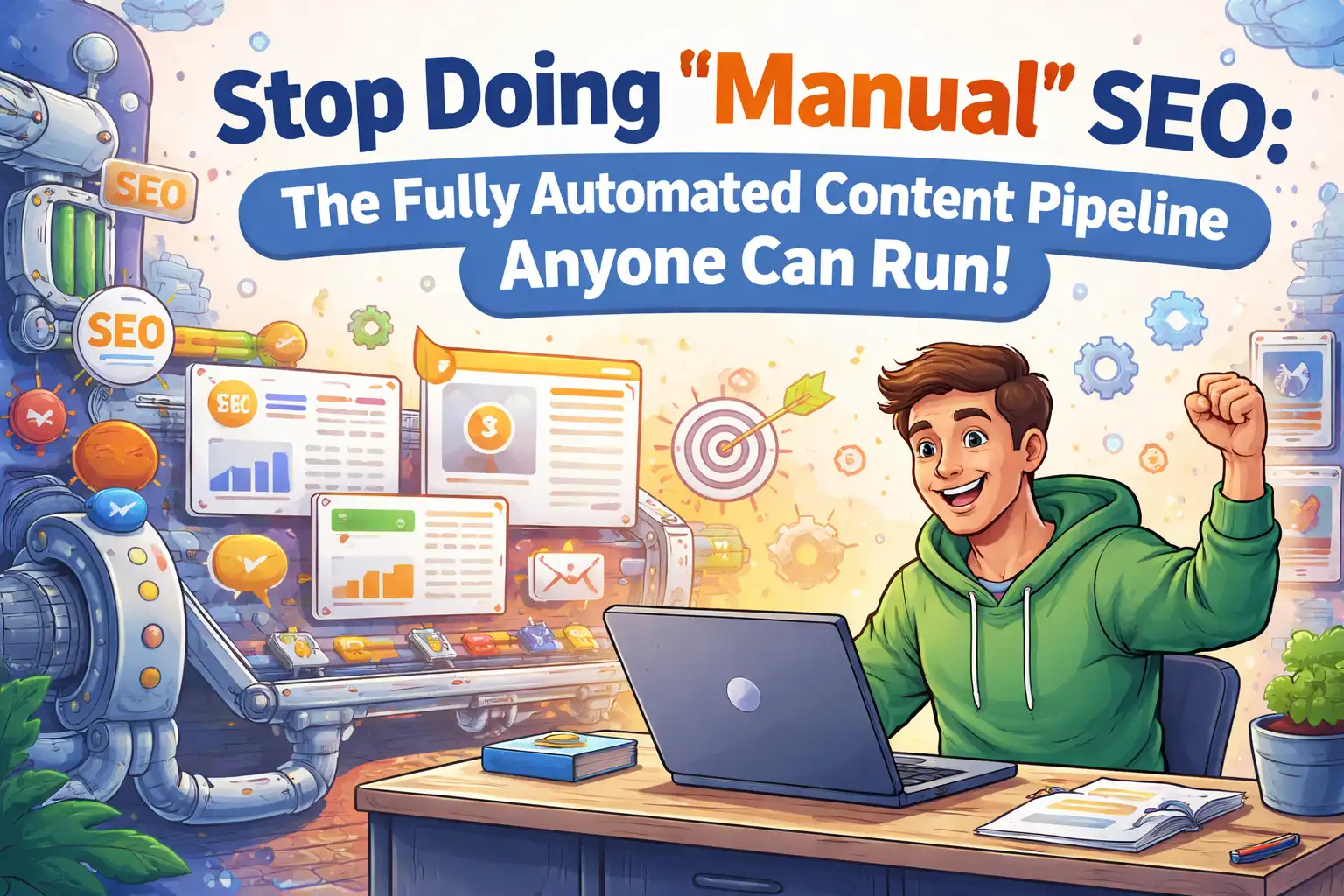
For the past six months I’ve been opening the backend every morning, and the first thing I see is “Has the article been published?” – topics are sourced by scrolling Twitter, writing is done by forcing drafts, images are taken from Baidu Images, and publishing requires logging into three platforms and clicking once on each. It wasn’t until I let AI take over the entire workflow that I realized the old “manual mode” wasn’t doing SEO at all; it was just hard labor. This article, written from the perspective of an operator I’ve tortured, breaks down how to build an automated pipeline from trend discovery to multi‑platform synchronization, where the pitfalls are, and whether it’s worth it.
During the topic‑selection stage I learned a deeper lesson: AI’s biggest value isn’t writing for you, it’s eliminating the decision‑fatigue of “what should I write”. Previously I spent two hours each week scanning hot topics, reviewing competitors, and guessing which keywords had traffic, which took up 30 % of content production time. Now AI monitors industry trends and competitors’ content gaps, pushing a batch of topics with estimated search volume every day; I just skim and confirm. After using an AI topic‑selection tool, the average weekly topic‑selection time dropped from two hours to 20 minutes – not because I kept a timeline for a week, but because the anxiety was removed and the time came back.
Creation Stage: Turn Keywords, Product Links, or Even a Video into an SEO Article
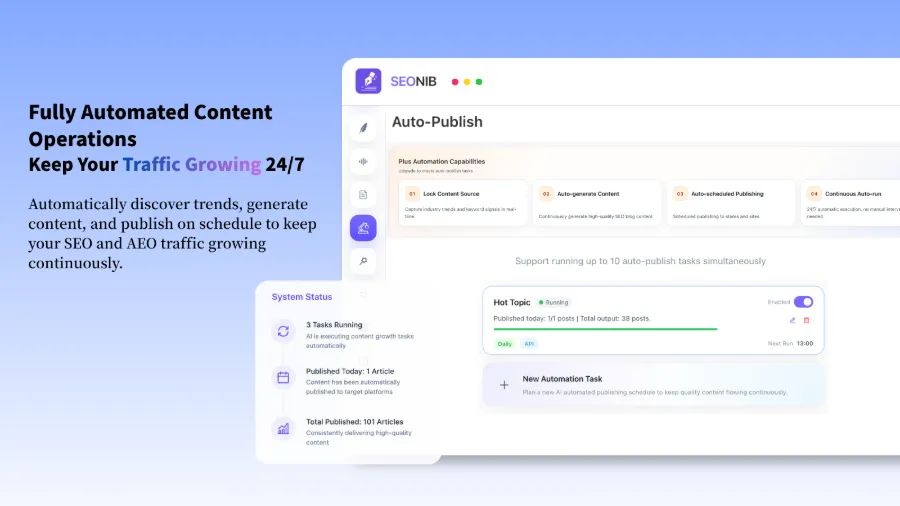
One‑click conversion of different input sources into SEO‑optimized articles is something I monitored for three months before trusting it. Keywords, hot trends, product links, social‑media posts – all can be fed in. I tried a tool called SEONIB that lets you drop a product link in and AI automatically generates a buyer’s guide and review article, complete with embedded purchase cards. It also supports 40 languages and is AEO‑compatible for AI search platforms – meaning it produces Q&A‑style content that’s easier for ChatGPT and Google AI Overviews to capture. AI automatically adds images, formats, and embeds internal links – tasks that used to be done manually are now fully automated. AI‑generated content is 40 %–60 % faster than manual writing, but it still needs human fine‑tuning to preserve brand voice – don’t believe the “zero human intervention” claims; brand tone is something AI hasn’t fully mastered yet.
Publishing & Synchronization: Set It Once, AI Updates You Daily Without Relying on Willpower
The biggest bottleneck in content production isn’t writing, it’s continuous publishing and maintenance. I could only keep daily updates going for about two weeks before I stopped. Now I set a publishing frequency, and AI automatically generates, queues, and publishes; the content calendar shows the next week’s schedule. Multi‑platform sync – WordPress, Shopify, SHOPLINE, Webflow – pushes everything with a single release. Automatic sync saves roughly five hours per week of cross‑platform copy‑pasting. There’s a hidden benefit: you don’t have to worry about forgetting to log in; the platform treats your inactivity as “passive operation”.
My Shopify store is built on the Shopify official marketplace; I’ve migrated three times over the years, and the biggest lesson is that an independent site doesn’t generate traffic for you – content does. I use the SEONIB Shopify App Store integration, which connects directly to the backend, so manual data scraping isn’t needed. If you’re on SHOPLINE, check out the article “How to Get Higher Google Rankings for Your SHOPLINE Store” (https://seonib.com/c/knowledge/content-marketing/what-makes-a-shopline-store-rank-higher-in-google-2026/index); the synchronization logic described there is universal.
Results & Adjustments: Automation Isn’t “Set and Forget”; I’ve Already Hit These Pitfalls for You
On day 45 I opened Google Search Console and saw a batch of pages whose rankings had actually dropped. I had set a goal of five articles per week; after six weeks some pages had absurdly high keyword density, with AI stuffing “best hiking shoes” dozens of times, making the text read like a robot reciting. That glitch cost me two extra weeks of rewriting, republishing, and waiting for re‑indexing. It confirms a point: many tools only help you write, not publish – a truly automated pipeline must include publishing and synchronization, otherwise you’re doing the second half of the work yourself. SEONIB also offers content preview and adjustment features to avoid “robot face”, but you have to actually use that preview interface.
According to tracking data, automated content reaches the Google first page after an average of 60 days at a rate 34 % higher than manual content, but editing time still requires about 30 % of the original effort. A fitting analogy: automation is like giving you an intern who can draft the first version, but you can’t hand over the final review to the intern. So use a content scoring tool – Clearscope, Frase, etc. – to run a score; send anything below 70 back for revision. If you don’t want to spend extra money, manually scanning for “AI‑scented sentences” can also save a lot of trouble.
If you’re just starting, first read the tutorial “How to Connect a WordPress Site with SEONIB” (https://seonib.com/help/6/How%20to%20Connect%20Your%20WordPress%20Website%20with%20SEONIB); the setup takes about half an hour. Ongoing maintenance can follow the “Help Documentation” (https://seonib.com/pricing) for optimization tips, especially the frequency parameter – starting with two articles per week is safer than five.
FAQ
I don’t have a website. Can I generate content with AI and build a site?
Yes. SEONIB and similar tools offer a “build‑first, generate‑later” option; you just need a domain name, and AI can help you create a content site. However, it’s recommended to start on an existing platform, such as WordPress or Shopify, get the pipeline running, then consider building a dedicated site.
Can AI‑generated content really surpass manually written content?
Individual pieces are generally slightly lower in quality than those from a skilled writer, but at scale AI’s overall output far exceeds manual effort. The key is to allocate time for “review + edit” – you save the few hours of drafting, not the half‑hour of final review.
Is the free version sufficient? When should I upgrade?
The free tier is good for testing whether the pipeline runs smoothly. When you decide to schedule content production formally (e.g., at least three pieces per week), the paid version becomes worthwhile because it removes quantity limits and unlocks advanced features (multi‑platform sync, batch generation, etc.).
Share Article