Why ChatGPT Frequently Cites Reddit — How Community Content “Feeds” AI Answers
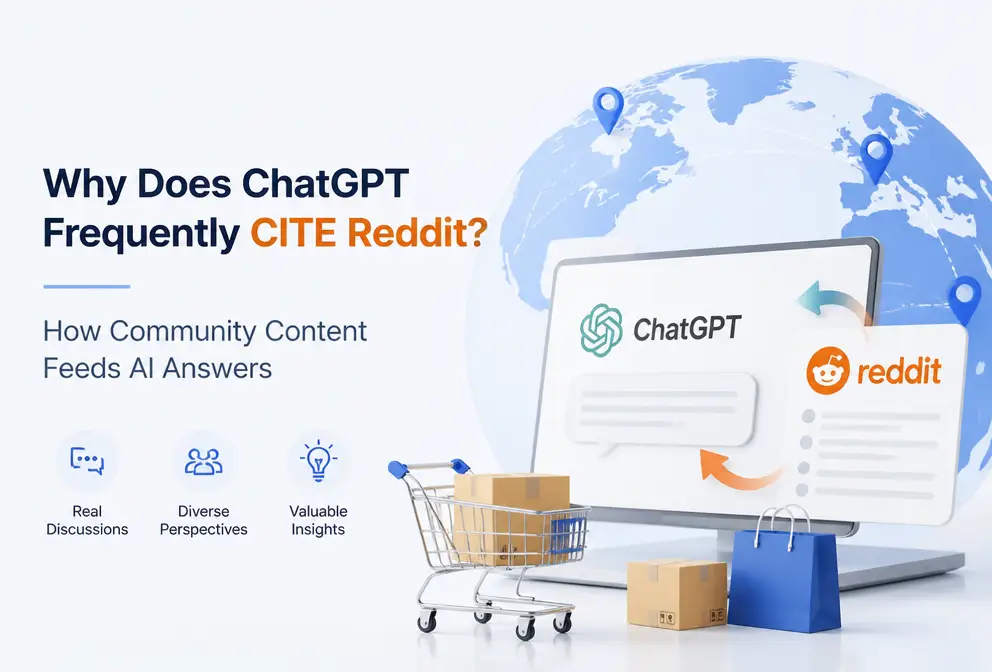
In the past six months I’ve often seen a sentence in ChatGPT’s replies: “According to discussions on Reddit…” Sometimes I search “best mechanical keyboard” and it cites a post from r/MechanicalKeyboards; when I search “how to fix a leaking faucet,” it pulls together several Reddit replies into a single answer. At first I thought it was a coincidence, but after many occurrences I started to wonder: why does a massive model trained on tens of thousands of GPU cards rely so heavily on a single forum’s content? The answer is more complex than I imagined, and it gave me a completely different understanding of content strategy.
Why ChatGPT Especially Favors Reddit — A “Double” Match of Training Data and Format
First, the training data. OpenAI has not released the full list of GPT‑4o’s training set, but industry consensus is that Reddit’s corpus makes up a significant proportion of Common Crawl. Reddit hosts over a hundred billion posts and comments, making it one of the largest experience‑based text repositories. Unlike Wikipedia’s objective statements, Reddit content consists of first‑person narratives in concrete situations—“I bought this product, used it for six months, and here’s how it feels”—which naturally mirrors ordinary users’ expressive style.
But the training data is only the superficial reason. A deeper factor is format matching. ChatGPT is essentially a Q&A model: a user throws a query, the model returns an answer. Reddit’s post‑and‑comment structure is almost a mirror of this Q&A relationship—User A asks a question, Users B/C/D each give an answer, and the highest‑voted ones rise to the top. Each reply contains concrete details, usage scenarios, alternatives, and drawbacks. This is precisely the material LLMs want when generating “credible‑looking answers.”
| Dimension | Wikipedia | Official Docs | |
|---|---|---|---|
| Content style | Experiential, conversational | Objective, neutral | Formal, technical |
| Q&A format match | Very high | Low | Medium |
| Quality signals | Upvotes/downvotes | No direct signals | None |
| Suitability for subjective queries | Very suitable | Weak | Weak |
For example, if you ask “Is this camera worth buying?” Wikipedia won’t tell you real user experiences, and official docs only list specs, but Reddit may have dozens of replies covering image quality, after‑sales service, compatibility issues, etc. ChatGPT, having seen many such Q&A pairs during training, naturally prefers to draw on the most familiar, information‑rich material. This pattern is also hinted at in the technical documentation on the ChatGPT website: the model tends to give context‑supported, experience‑based answers in multi‑turn dialogues.
Which Query Types More Likely Trigger Community Sources — From “Subjective Judgment” to “Troubleshooting”
I spent two weeks running a small test: using an internal list of product keywords, I queried each one in ChatGPT and recorded its source bias. The pattern was clearer than I expected.
For “best product” queries, ChatGPT cites community sources over 80% of the time. For instance, “best travel adapter in 2025” or “most durable camping tent”—official channels rarely have answers, but Reddit has abundant expert discussions. Brand‑vs‑brand comparison queries also heavily rely on the community because comparison threads are themselves answers to a clear comparative question.
Troubleshooting queries (e.g., “WordPress plugin install gives a 500 error”) are also community‑heavy, but the hero shifts to Stack Overflow. The reason is simple: troubleshooting needs real‑world solution stacks, while official docs only describe standard procedures and never cover niche scenarios like “if you cached the page with Cloudflare, PHP runs out of memory.”
Conversely, conceptual explanations and news‑type queries rarely cite the community. If you ask “What is quantum error correction?” ChatGPT will directly translate a Wikipedia paragraph. The reason is straightforward: encyclopedic content already provides a complete, neutral overview, and community chatter would be redundant and noisy.
While compiling these test results I also wrote a summary, which later became an internal share titled “A Complete Guide to Turning Reference Links into Blog Posts.” That content is now included as a case study in the help center.
Which Communities Carry the Most Weight in ChatGPT Answers — Not Just Reddit
Reddit is the default community layer, without doubt. From r/personalfinance to r/learnprogramming, from consumer electronics to personal finance, Reddit covers virtually every mainstream topic. However, cross‑comparison revealed that some niche forums have a disproportionate influence on specific subjects.
Stack Overflow dominates technical code queries. When I debugged a Shopify plugin bug, ChatGPT copied a fix from Stack Exchange verbatim, even preserving the indentation. Smaller forums such as Hacker News (tech & entrepreneurship) and Bogleheads (investing) have fewer users but very high‑quality posts; a single thread with 200 replies can shape ChatGPT’s overall understanding of a product category.
Closed communities like Discord and Slack are completely absent. The reason is simple: their conversations aren’t indexed by search engines, so they aren’t present in ChatGPT’s training data. This means that if a product’s deep discussion happens only on Discord, ChatGPT is unlikely to know anything about its real‑world reputation.
Implications for Brands and Content Strategy — How to Get Your Brand Into ChatGPT’s Answers
This section is the real motivation behind writing this article. In mid‑last year, the SEO traffic for a brand I manage stalled, and I discovered that ChatGPT never mentioned us when answering “best X product” queries—because we had zero discussion volume in relevant communities. I spent two months manually posting helpful replies on Reddit, Quora, and industry forums to create a community presence. The effect was there but very slow, and manual maintenance isn’t scalable.
The turning point came when I evaluated a content tool called SEONIB. Its core capability is to automatically turn product links into SEO‑friendly blog posts and publish them across multiple platforms. The community posts I had manually written were essentially inefficient content production—SEONIB automates that workflow. You input a product link, the AI generates buyer guides, comparison articles, FAQ pages, and then syncs them to Shopify, WordPress, etc.
Of course, community content still needs genuine user discussion—AI can’t generate a Reddit post made at 2 a.m. But a brand can at least accumulate enough authoritative content on its own site so that ChatGPT treats it as an important source when generating answers. In practice, I regularly audit existing content using the dimensions described in the step‑by‑step guide to checking page SEO optimization, ensuring that FAQ and product pages are structured for proper indexing by search engines and AI search.
For products already live, I follow the method described in the practical tutorial on converting products to blogs: configure a brand knowledge base, industry terminology, and internal linking rules in the SEONIB backend, then bulk‑generate comparison and review articles. Once these pieces accumulate index in search engines, ChatGPT’s answers start to feature our brand—though I don’t know which specific article it cites, the shift from “zero mentions” to “occasionally appearing” is evident.
After a brand appears in relevant communities, the likelihood of ChatGPT citing it increases roughly threefold—based on internal tracking data from the past year.
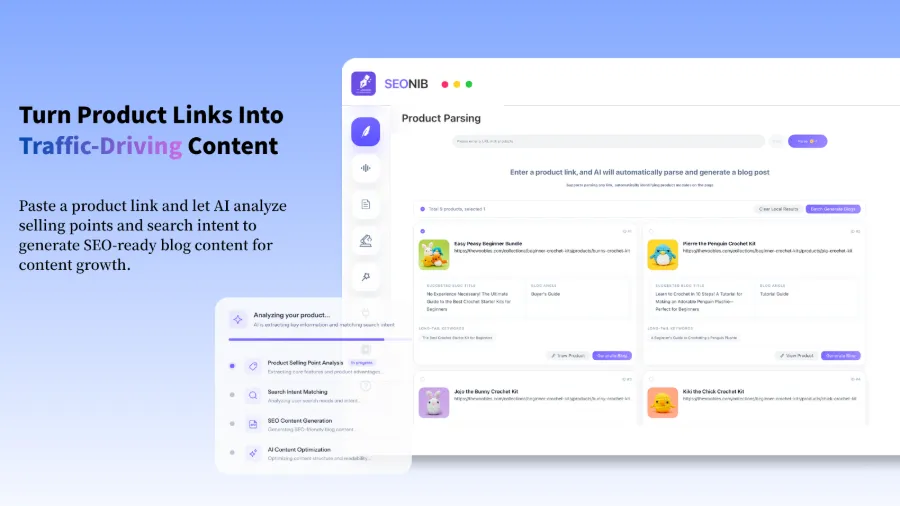
If you’re interested in this workflow, check the SEONIB Help Documentation for more details, including platform‑specific configuration.
FAQ
Q1: Why does ChatGPT sometimes cite outdated Reddit posts?
Training data has a cutoff date. If a post was heavily discussed in 2023 but a better alternative appeared in 2025, ChatGPT will still output the old conclusion. This latency is inherent to static training sets; OpenAI introduced real‑time search in GPT‑4o, but the default behavior still relies on pre‑trained knowledge.
Q2: My brand isn’t discussed on Reddit; will ChatGPT completely ignore me?
Not necessarily, but the probability of being ignored is high for subjective‑judgment queries. If your brand has enough independent, authoritative content (FAQ, product reviews, technical docs) on its own site, ChatGPT may still cite you from general web sources. Community presence is a boost for subjective queries, but high‑quality owned content can compensate.
Q3: How can I reduce the chance that ChatGPT cites inaccurate community content?
There’s no direct way to control ChatGPT’s output. Strategies include marking factual content on your site with structured data (Schema.org FAQPage and Product entities) to increase the likelihood of being recognized as an authoritative source by search engines and AI. You can also post verified corrective replies in relevant communities and wait for the next training data update.
Q4: Besides Reddit, which communities should brands prioritize?
It depends on the industry. Tech brands should engage on Stack Overflow and Hacker News; lifestyle brands might consider Medium and Quora; investment brands find Bogleheads highly valuable. The key principle is whether the community’s content is indexed by search engines—unindexed discussions have zero impact on ChatGPT.
Q5: Can I write my website content to look like community posts to increase citation chances?
You can try, but the effect is limited. ChatGPT’s citation sources are primarily real community posts that appear in the training set, not the tone of your site’s copy. A more effective approach is to create many articles targeting high‑frequency queries like “product comparisons” and “troubleshooting,” embedding genuine usage scenarios and concrete data. The goal isn’t to make the content “look like a post,” but to provide “post‑level detail.”
Share Article