I Did SEO for 17 Years, But AI Turned Me Into a Beginner
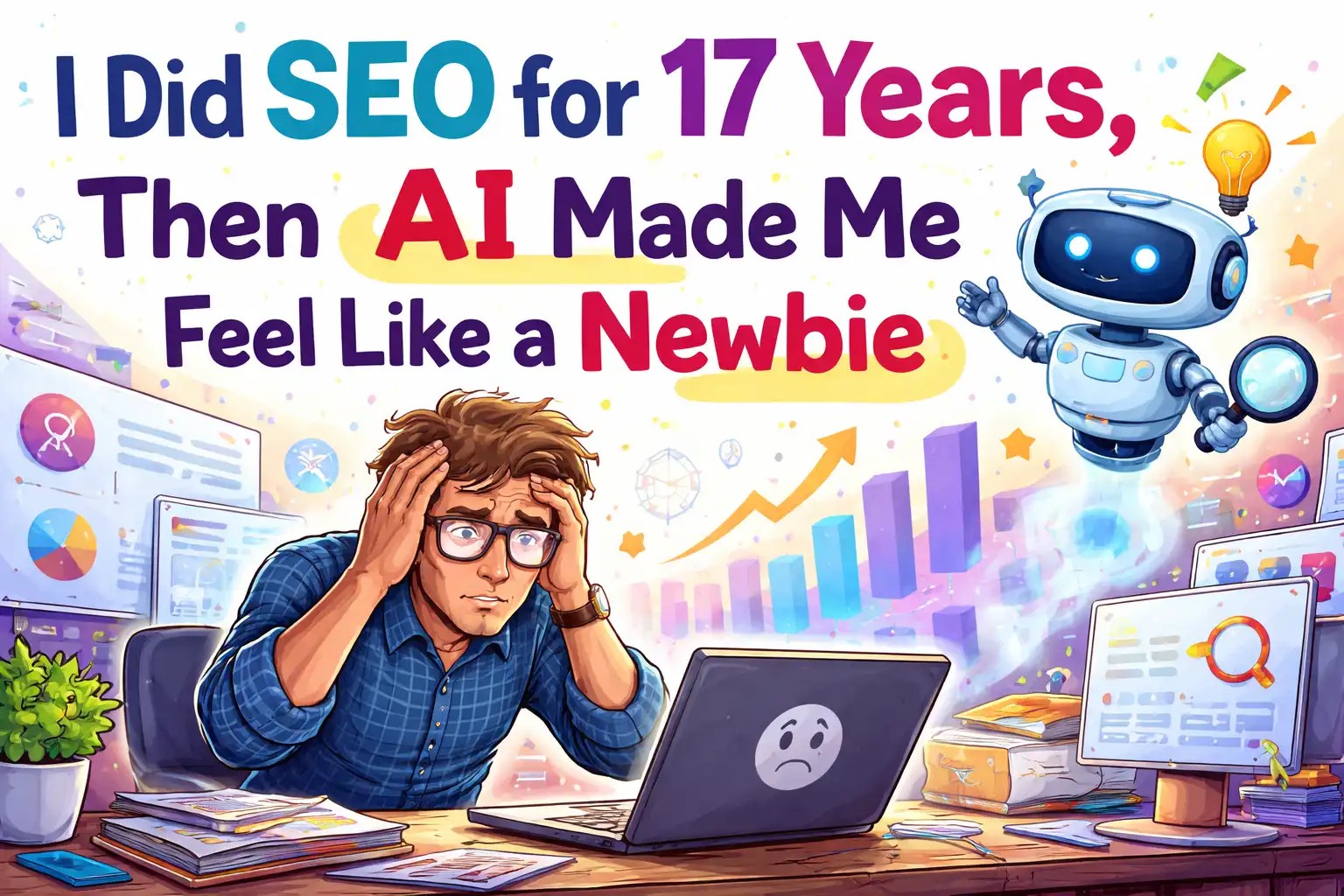
When I first started in 2009, SEO was as simple as flipping a switch. Pick a keyword, write an article, pile on some backlinks, and the rankings would climb quickly. Back then, “publish an article and it lands on the homepage” wasn’t a joke—it was routine. By 2026, AI had shredded my old handbook overnight. Google still processes 5 trillion searches a year—about 100 times the expected dialogue volume for ChatGPT this year. The traffic pool is still there, but your old fishing rod can’t catch any fish. This isn’t a lament; it’s a solid post‑mortem: the old map can’t find new lands. Below are the things that actually helped me relearn SEO over the past six months.
The Basics Remain, but Old Tactics Are Obsolete
Keyword research, technical SEO, backlinks—these fundamentals haven’t changed. What has changed is that the old mechanical formula of “copy competitors + add a few original bits + stuff keywords” is completely dead. AI can generate thousands of such low‑quality pieces in a day. Google’s counter‑attack is fierce; after the core update in 2024, a test site of mine dropped from 20 k daily visits to 200, taking three months to recover. The cause wasn’t poor content but Google’s misjudgment of the site’s overall quality, which also cleared out legitimate pages. Similar incidents existed before, but the scale is now far larger.
The problem isn’t that SEO is dead; it’s that “writing for search engines” no longer yields a profit. AI can mass‑produce content, and machines can instantly filter it out—no need for your “spun” articles.
From “How to Rank” to “What Users Really Want”
My old mental flow when writing content was: What’s the monthly search volume for this term? Which sub‑topics do competitors cover? What can I add? It was as mechanical as a menu. Now I ask not “how to optimize this keyword,” but “what does the searcher truly want to know at this moment?”
Take the query “how to start a YouTube channel” as an example. Previously I would jump straight to equipment and algorithms. But the person searching might be a complete beginner office worker who has never touched a microphone. They don’t need “the best camera recommendations”; they need “three zero‑cost steps to get started.” Without user research, nobody will read what you write.
To put this mindset into practice, start by reading the 2026 AI SEO Complete Guide, which breaks down user intent and content strategy in detail.
Content Automation: Let the Machine Do the Repetitive Work
Continuous updates are the core of SEO ranking accumulation—a truth that’s held for a decade. Manual operations—finding topics, writing drafts, adding images, filling SEO fields, publishing across platforms—are slow and exhausting; one person can’t keep up with a schedule of three posts per week. This is where content automation shines.
I tested SEONIB to see how much of the workflow could be handed over. It covers everything from trend discovery to one‑click generation, scheduled publishing, and multi‑platform sync. My own editing time shrank to about 30 % of the original, freeing the rest for user research and strategic optimization.
The flow diagram below is very intuitive—AI automatically discovers topics, generates articles, and schedules publishing in one seamless process. Humans only need to intervene at key checkpoints.
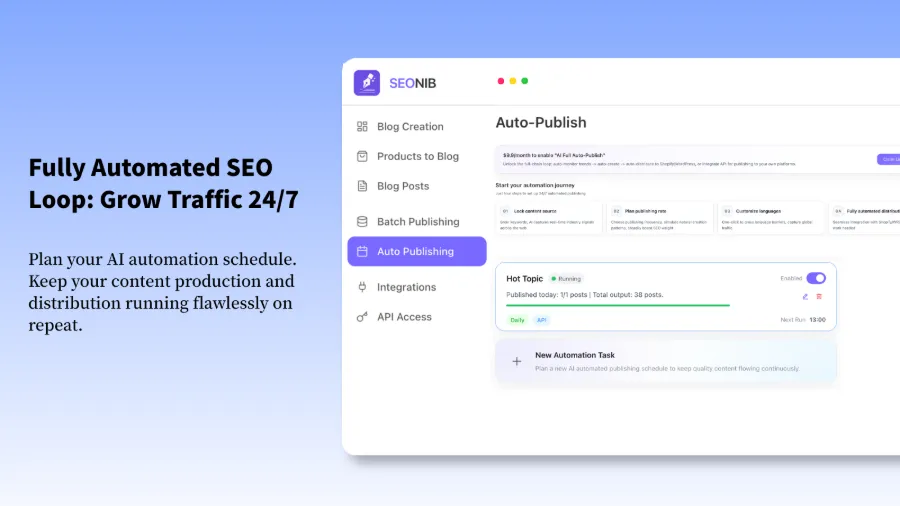
A live demo makes it clearer—this video shows the tool completing the entire process from keyword input to content publishing with a single click.
On the practical side, check out a content creator’s real record of using AI automation to jump on trends. He treats AI as a racehorse, while the human picks the track, doubling efficiency.
If you want to run the whole pipeline, detailed configuration can be found in SEONIB Bulk Publishing to WordPress: Turn Your Blog into an Automated Content Factory. More specific setup instructions are also in the SEONIB Help Documentation.
Beyond Google: AI Search and Cross‑Platform Coverage Are the Next Step
Decision‑making points have already scattered. ChatGPT, Perplexity, TikTok, Reddit, Amazon—search is no longer a single entry point. Relying solely on Google rankings isn’t enough; you need AEO (AI Engine Optimization) and synchronized content across all platforms.
The logic is simple: if you publish a piece only on your own site, AI summaries won’t cite you, and TikTok won’t have any trace of you. But if you automatically distribute the same content to multiple channels and get flagged as a source in AI Q&A, exposure grows exponentially. Tools like SEONIB also support one‑click sync to these platforms, automating the entire chain from creation to distribution.
The screenshot below shows the interface that converts social media content directly into an SEO blog, eliminating the manual format‑conversion step.
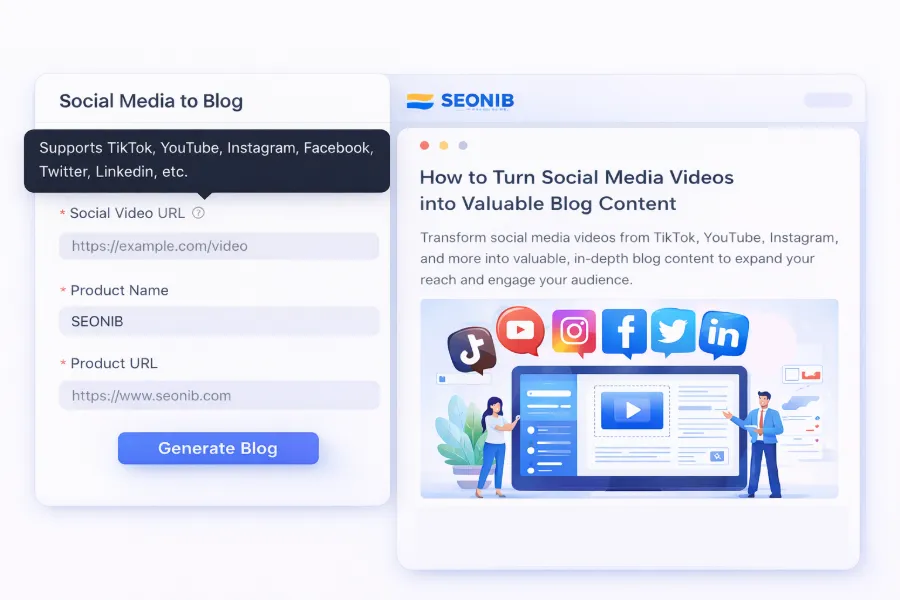
Product‑side operations can refer to this: Convert product links into SEO blogs that continuously attract organic traffic with one click.
FAQ
Q1: Do we still need backlinks in the AI era?
Yes, but the value of backlinks has changed. Previously they were entry tickets for ranking; now they serve more as authority signals. A link that moves from a low‑quality farm to a reputable industry outlet gains noticeable weight. Stop wasting time buying links; focus on creating content that naturally earns citations.
Q2: How can I tell if an AI‑generated piece is useful to users?
Simple test: would you share this piece with a colleague? If you’re hesitant, others will be even less likely. Another hard metric is bounce rate and dwell time—AI content often performs poorly on both because it lacks genuine insight.
Q3: Can a small site without a brand still survive on SEO?
Yes, but the path is different. The biggest advantage of a small site isn’t ranking breadth but precision—targeting niche long‑tail keywords, building tool pages, and producing hyper‑local content that solves a very specific problem. Big brands cover generic terms; you go deep, and users who find you tend to trust you more.
Share Article