AI Search Visibility in Practice: GEO Tool Testing and Content Automation Strategies
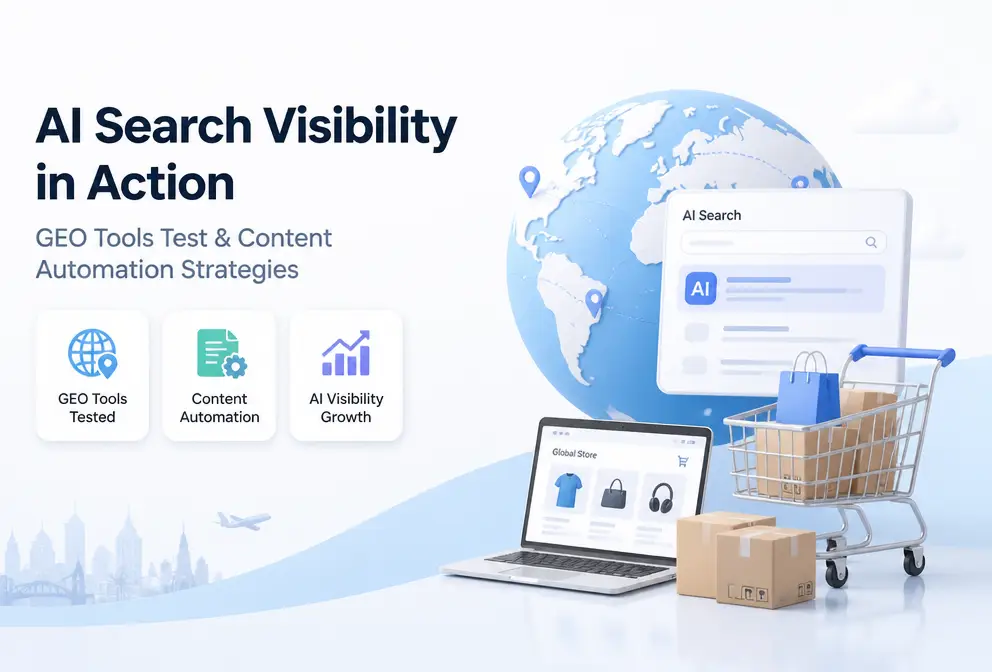
Over the past three months I’ve been staring at the declining curve on Google Search Console while watching ChatGPT increasingly recommend competitors’ products. After some digging, I discovered that 60 % of Google searches no longer generate outbound clicks, and 77 % of mobile search users get their answers directly from AI summaries. Even more frustrating, asking the same question to ChatGPT 100 times yields almost a different brand recommendation each time—this unpredictability makes a brand’s position in AI answers extremely fragile. Manual tracking is impossible; AI Overviews can replace 52 % of the cited sources within a few hours. This pain point gave rise to GEO (Generative Engine Optimization) tools, but testing shows that most tools only address the “monitoring” step, while the real gap lies in a full closed‑loop capability—from problem discovery to fixing execution to verification.
Why AI Search Visibility Has Become the New Battlefield for Brands
ChatGPT’s weekly active users surpassed 800 million by the end of 2025. 60 % of overall Google searches generate no outbound clicks, and that figure rises to 77 % on mobile. AI Overviews update every hour, and more than half of the citations are replaced—your brand might be cited today and disappear tomorrow. If you only look at clicks on your own site, you can’t sense what’s happening inside the AI engine. Many GEO tools have emerged, but the real question isn’t “should we monitor?” but “what can we do after monitoring?”
I’ve also explored practical guides that teach ChatGPT to treat your site as a treasure trove, but they usually only cover citation‑acquisition strategies, not a stable, end‑to‑end loop. I tested ten mainstream GEO tools (including Profound, Writesonic, HubSpot, Semrush, AirOps, etc.) and scored them on six criteria: closed‑loop execution weight 25 %, AI platform coverage 20 %, SEO+GEO depth 15 %, data scale and freshness 15 %, customer evidence 15 %, self‑service scope 10 %. The result: fewer than two tools achieved a complete “gap detection → outreach execution → impact verification” loop; the rest either stopped at monitoring or offered analysis without executable remediation.
| Category | Representative Tool | Closed‑Loop Stage | Core Features |
|---|---|---|---|
| Full Closed‑Loop | Tool A | Detect → Fix → Outreach → Test | The only tool that automatically generates third‑party outreach tasks and tracks impact |
| Deep Analysis + Light Fix | Tool B | Detect → Analyze → Partial Fix | Strong analysis depth, but fixes stay at content suggestions, no outreach |
| Monitoring Only | Tool C | Detect only | Visual dashboard, no automation capability |
If you’re also interested in selecting GEO tools, you can refer to the 2026 Top Ten AI Content Marketing Tools review, which provides a detailed comparison of many more solutions.
From Monitoring to Action: The Practical Path of Content Automation
Once the AI visibility gap is identified, the hard work truly begins. Closing the gap requires four parallel workflows: continuous new‑content production, refresh of existing pages, third‑party outreach (inviting others to cite your brand), and UGC interaction. Doing these four tasks manually is impossible. I spent two months trying, and the efficiency was catastrophically low.
That’s why I needed a platform that could automatically take over the entire pipeline. I started using SEONIB—it integrates trend discovery, content generation, scheduled publishing, and multi‑platform synchronization into an unattended pipeline. Every morning when I open the dashboard, there are already 24 new topics waiting for me, covering 40 languages.
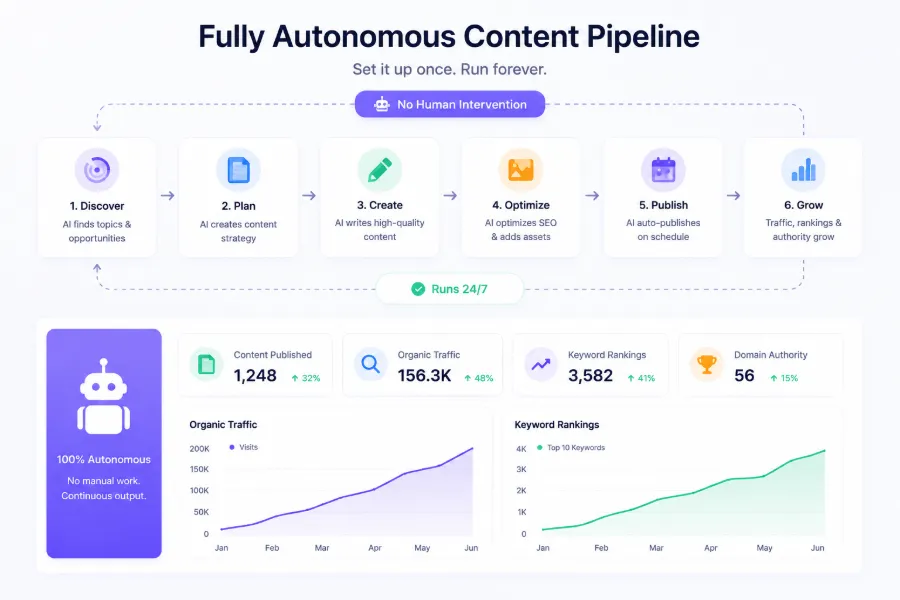
After trend discovery, SEONIB automatically creates articles optimized for both SEO and AEO. My most frequent use case is e‑commerce: paste a Shopify product link, and within seconds a buyer’s guide or tutorial blog with product cards is generated. Once published, the content automatically syncs to WordPress, SHOPLINE, Medium, and other back‑ends without any manual copy‑pasting.
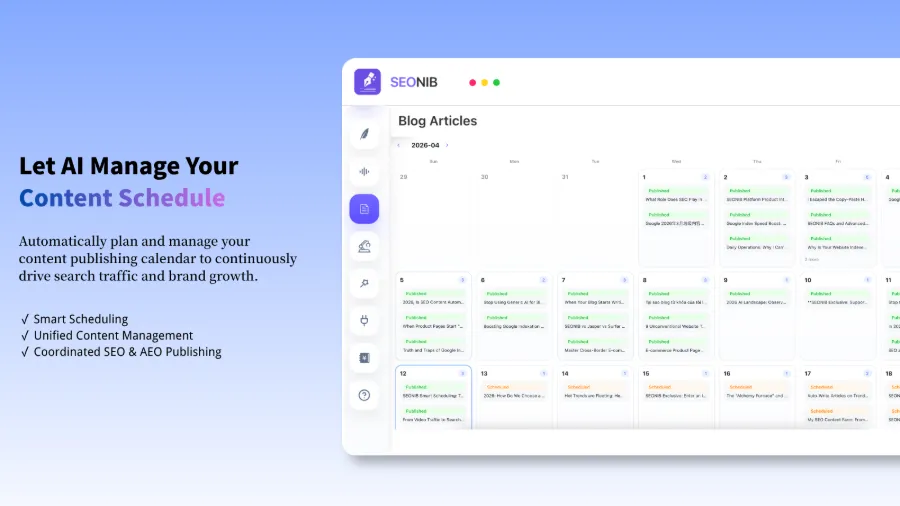
The content calendar scheduling is also fully delegated to the system. I set posts for Wednesday and Friday at 10 am, and SEONIB generates and pushes them on schedule, freeing me from daily monitoring. This rhythm lasted two months, and the SEO weight visibly climbed in the crawl.
For the product‑link‑to‑blog workflow, there’s a step‑by‑step guide you can follow while working. E‑commerce merchants can also refer to a practical case study that walks through turning product links into SEO‑optimized blogs, detailing how to make AI‑generated posts compatible with both Google and AI search platforms.
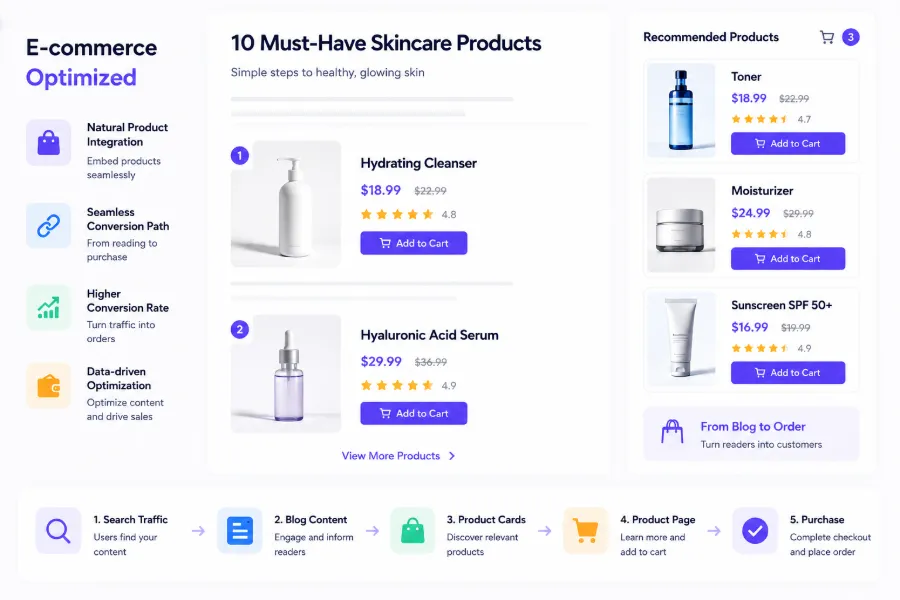
Once the automation pipeline is set up, I mainly handle review and strategy adjustments. If you want to get your team up to speed quickly, check the SEONIB help documentation for detailed configuration steps.
Verifying GEO Optimization Results: An Engineer’s Measurement Framework
90 % of AI engine citations come from third‑party sources, meaning that even if your site ranks highly on its own, ChatGPT may completely ignore you and instead cite a blog that mentions you. Pure on‑site SEO monitoring is therefore insufficient.
I built a simple measurement framework: for each core brand keyword, I ask five high‑frequency questions each week in ChatGPT, Perplexity, and AI Overviews, then tally the number and position of brand mentions. After generating and distributing content with SEONIB (plain text), I focus on changes in brand mention counts within Perplexity. If the citation count doubles within a month, it indicates that outreach and content strategy are taking effect.
During this process, it’s also worthwhile to validate your product‑market fit at zero cost; such validation can help you decide whether to continue investing resources.
FAQ
Q1: What’s the fundamental difference between GEO and SEO?
SEO optimizes traditional search engine backlinks, aiming for rankings and clicks. GEO optimizes the answer‑generation process of AI engines, aiming for the brand to be cited as an information source. GEO must control not only your own content but also how third parties evaluate you.
Q2: My site’s traffic is fine—why should I care about AI search visibility?
Normal traffic indicates traditional search is working, but AI engines are siphoning off a large share of high‑intent queries. If your brand never appears in AI answers, a new generation of users will never know you exist, eventually eroding growth.
Q3: Will content‑automation tools lower content quality?
It depends on usage. Bulk output without any review can indeed produce low‑quality content. Good automation tools (like the SEONIB mentioned above) let you configure brand knowledge bases, internal‑link rules, and product cards, and you can still manually fine‑tune after generation. The key is to use automation to solve the “continuous output” pain point while leaving judgment to humans.
Q4: How can a small team start GEO optimization with minimal cost?
Begin with a free or low‑cost GEO monitoring tool to assess your current AI‑engine visibility. Then focus on optimizing 5‑10 core brand keywords’ Q&A content, using automation to generate and distribute it across major platforms. Outreach can start with manual emails to industry bloggers. Keep the first three months’ budget within 25 % of your existing SEO tool spend.
Q5: How long does it take for GEO optimization results to appear?
Fast scenarios (e.g., new content published to a blog and crawled by an AI engine) may show changes within 2‑4 weeks. However, achieving stable, recurring brand appearances in AI answers (instead of random flashes) typically requires at least three months of continuous content output and outreach. The accumulation cycle for third‑party citations is usually longer than for on‑site rankings.
Share Article