10 Essential AI Tools for Shopify Founders

Last October I helped a Shopify seller who sells home‑goods review his content strategy. He spent two hours a day browsing Google Trends, reading competitors’ blogs, and taking notes, and after three months he had published only four articles. It wasn’t that he couldn’t write—he could produce a decent piece each time—but the problem was “what to write” drained him. Topic research took about three times as long as actual writing and felt like it never built up. This isn’t an isolated case; most Shopify sellers get stuck not because they “can’t write,” but because they “don’t know what to write” and “don’t have time to publish after writing.”
Trend Discovery & Topic Selection: The Starting Point That Keeps Content Flowing
That seller later changed his approach: instead of manually checking hot topics every day, he used a tool to automatically monitor industry trends. The AI delivered 5–10 searchable topics each day; he only needed to glance at them, click “confirm generate,” and let the system handle the rest. After three months, his content update frequency rose from one article per week to three per day, and organic traffic started to climb in the fourth month.
The core change wasn’t faster writing—it was the disappearance of the “psychological friction” of topic selection. Most sellers overestimate the importance of writing ability and underestimate the sustained execution of topic selection and publishing—AI tools’ greatest value is not writing well, but not forgetting.
The most common sources for topics are threefold: industry trends (Google Trends, industry media), competitor content (which pages are getting traffic), and seasonal keyword fluctuations. Hook these signal sources into a dashboard and a quick daily glance is enough.
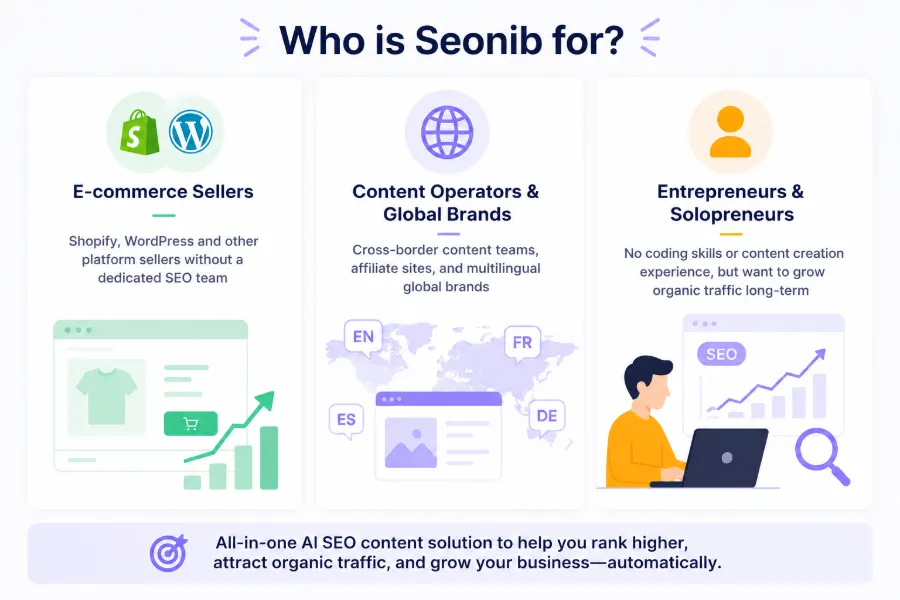
One practical detail to note: about 30 % of the topics the AI suggests aren’t worth writing—search volume is too low, competition is too fierce, or they’re unrelated to your product. They need a manual filter. Still, pulling five usable topics per week is far more efficient than spending two hours daily searching manually.
Brand consistency’s impact on AI search is a topic that isn’t discussed much among cross‑border sellers, but fixing brand terminology and style early means later generated content doesn’t need constant revisions.
If you haven’t built a site yet, you can follow the approach of a quick‑validation landing page for project ideas, start with a simple page to run the content workflow, and then consider a more complex architecture.
Content Generation & SEO Optimization: From Keywords to Rankable Articles
Once topics are set, the next step is turning keywords into a rankable article. By 2025, most AI writing tools can handle this stage, but the difference lies in whether the tool understands your product, brand voice, and the entities you want to cover.
For example, when generating a buyer’s guide directly from a product link, SEONIB automatically conducts keyword research, plans H2 structure, and inserts internal links. I tried a case: input a Bluetooth speaker product link, and in 14 seconds it produced a guide that included product comparisons, usage scenarios, and FAQs. Fourteen days after publishing, Google Search Console showed 23 clicks from search. For a new domain with no external links, that number was expected—by the third month, monthly clicks exceeded 200.
The key isn’t speed but whether the generated content contains the entities search engines need to understand: product name, functional specs, applicable scenarios, comparison dimensions. A good buyer’s guide should read like it was written by a human—contextual, comparative, and containing all information needed for a purchase decision.
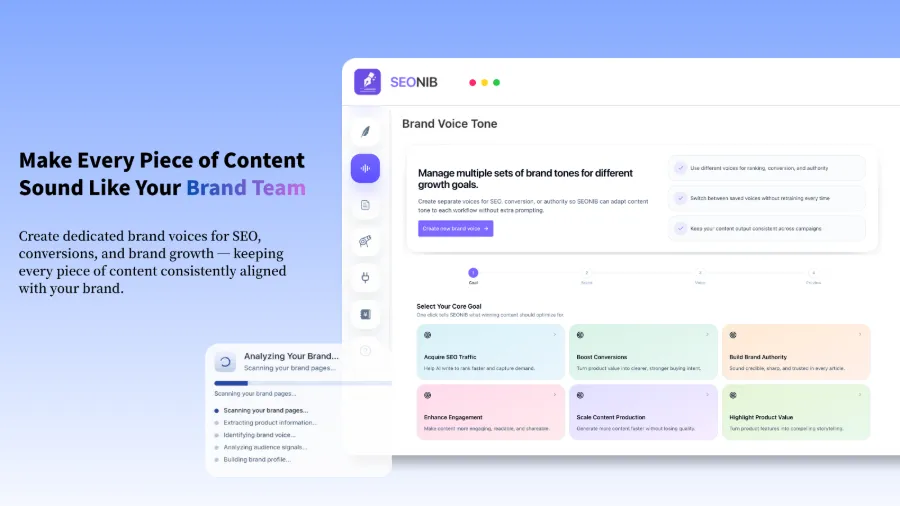
No single tool can cover the entire pipeline. If topic selection, generation, SEO, and publishing each rely on different tools, management friction increases—formats get lost, internal links break, image URLs become invalid when copying from one platform to another. I’ve seen people write content with ChatGPT, correct grammar with Grammarly, do SEO analysis with Surfer, then paste the result into Shopify—four tools for one piece of content, with at least one error along the way.
The “single pipeline” mindset is key. It’s not about having many tools; it’s about being able to carry everything from “discovering a topic” to “publishing content” without manual hand‑offs.
Publishing & Multi‑Platform Sync: One Generation, Full Coverage
After the content is written, the next step is publishing. If you run Shopify and Shopline, or also have a WordPress blog, each publish requires logging into a different backend, adjusting formatting, and uploading images. A team member can waste about three hours a week just repeatedly logging into each platform.
The solution is a publishing system that supports multi‑platform sync. Generate the content once and automatically push it to all connected platforms—no manual steps needed. Setup takes about 15 minutes: install a plugin in Shopify, authorize the connection, and set the default publishing status. After that, every time you generate content, the system publishes it according to the schedule you defined.
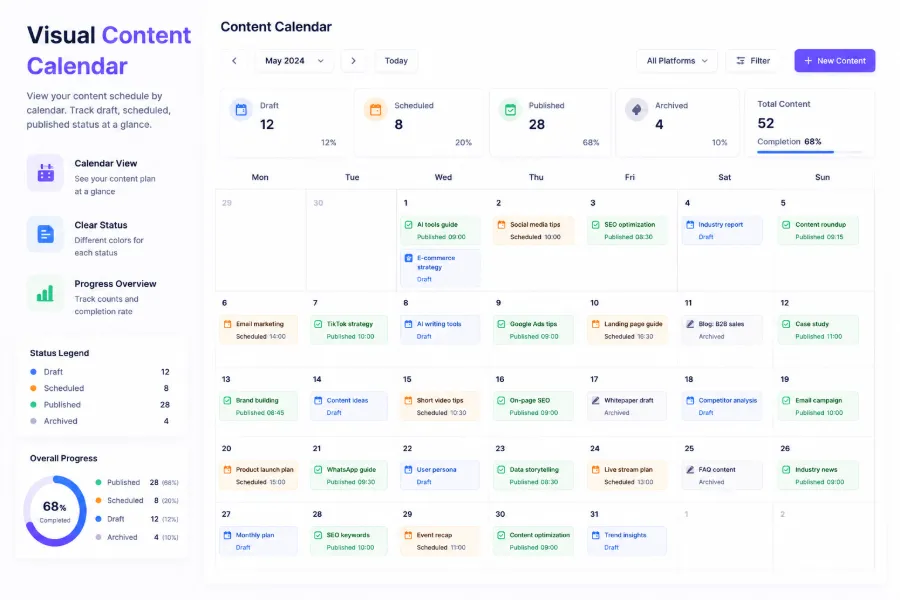
A content calendar is another feature worth attention. You can see which pieces have been generated, which are queued, and which are live for the week. If you have a month‑long content plan, set the publishing rhythm once, and AI will automatically fill and execute the calendar. You’ll no longer feel the anxiety of “what should I write today”—the next two weeks of content are already in the queue.
How to connect third‑party sites with SEONIB explains the exact configuration steps for Shopify, WordPress, and Shopline. If you use another site‑builder, check whether it supports Webhooks or API integration.
Independent‑Site SEO Strategy: From Single Articles to Overall Authority
A single article can bring traffic, but sustained organic growth requires a more complete knowledge‑base structure. A site that continuously updates its knowledge base for six months grew from 0 to over 1,200 daily organic visits—a figure from a pet‑supply client who published 3–4 articles per week around the “pet nutrition” theme, eventually covering about 80 long‑tail keywords.
However, there’s a trade‑off to note: focusing solely on SEO while neglecting user experience can cause rankings to drop. I’ve seen a seller whose articles were keyword‑stuffed, with page load times over five seconds and bounce rates above 80 %. Google began demoting the site after six weeks, and traffic plummeted. SEONIB includes basic SEO optimizations (titles, H2s, image alts, internal links), but user‑experience factors—page speed, clear navigation, mobile friendliness—must be handled by you.
Industry hot‑topic blog writing guide offers suggestions for topic directions that can serve as a reference during content planning.
Turning product links into SEO blogs that continuously attract organic traffic discusses the synergy between product pages and blog content. The core idea: product pages drive conversion, blog pages bring traffic, and each needs a different content strategy.
If you plan to systematically build a knowledge base, refer to SEONIB’s help documentation for content‑strategy recommendations, including how to plan topic clusters, allocate internal‑link weight, and monitor coverage growth.
Frequently Asked Questions (FAQ)
Can these AI tools completely replace human content creators?
No. AI tools handle the execution layer of content production—topic discovery, first drafts, SEO optimization, automatic publishing. The strategic layer—brand positioning, differentiating selling points, tone—still requires human oversight. A sensible division of labor is: humans set the direction, AI executes, humans review and adjust.
Do Shopify sellers have to own a website to use AI content tools?
Not necessarily. Some tools can publish content directly to third‑party platforms without a standalone site. However, if you want the content to become a long‑term asset (knowledge base + internal‑link network), a standalone site yields a higher ROI. Without a site, you can still use a temporary domain provided by the tool to run the workflow.
Will multilingual content production affect SEO performance?
If done correctly, multilingual content is a plus for SEO—it covers more search intent. But publishing raw machine translations without handling hreflang tags or localizing keywords diminishes the effect. It’s recommended to have at least one human review per language version, especially for product names and industry terminology.
How can I ensure AI‑generated content isn’t penalized by search engines?
The key is whether the content provides informational value. Pure keyword stuffing, semantic duplication, or lack of original insight will be demoted regardless of whether it’s AI‑written. It’s advisable to add at least one or two paragraphs of human‑added information (real data, usage experience, case studies) to each AI‑generated article; search engines will evaluate it far more favorably.
Does automatic article generation from product links support bulk processing?
Most tools support bulk import of product links and can generate corresponding buyer guides or product descriptions in one go. Bulk mode reduces the level of personalization per article, but it’s sufficient for baseline coverage. After bulk generation, it’s recommended to have a human perform a round of differentiation—reordering paragraphs, adding real usage scenarios, etc.
Share Article