10 AI Tool Integrations for Cross‑Border E‑Commerce That Save Me Hours Every Week

Manually scrolling through social media for topics, copying keywords into an AI chat box, pasting generated content paragraph by paragraph, then logging into three different platform back‑ends to format and publish—I’ve been running this workflow for two years. To learn more about the value of SEO and GEO services, see Is It Worth Paying for SEO & GEO Services?. The problem isn’t a lack of content; it’s that every step in the content production chain involves repetitive work and a lot of waiting time. I later started to consciously identify which AI integrations could truly eliminate these useless tasks, rather than just swapping “typing” for “copy‑pasting AI chat logs.” The ten integration points shared in this article are the ones I have gradually tested over the past few months; they compress “writing content” from a weekly task into an hourly one.
Automatic Trend Detection and Topic Suggestions
In the past, finding topics relied entirely on intuition and effort. I would scroll through Google Trends each day, skim a few competitor blogs, note down the keywords that “seemed writeable,” and manually slot them into a content calendar. The most time‑consuming part wasn’t writing, but deciding “what to write”—a half‑hour scan yields only two or three reliable topics. Moreover, it’s easy to miss emerging long‑tail topics that have just started gaining search volume but aren’t yet fully covered. To learn how to boost a Shopline store’s ranking, read What Makes a SHOPLINE Store Rank Higher.
If you want ChatGPT to understand your site better, see ChatGPT’s Deep Understanding of Sites. After AI integration, this step changes. The tool continuously monitors industry trends and competitor content gaps, automatically pushing 15–20 high‑potential topics to the topic pool each day. These topics have already been evaluated for keyword search volume; they aren’t generic “you might want to write about” suggestions, but judgments based on real search data and competitor coverage. You just glance at the list, click the suitable ones, and they instantly become writing tasks in the content calendar. This compresses the “topic meeting” from a weekly session to a daily 5‑minute selection.
The real time‑saver isn’t “writing” but “not writing what’s already done and never seen.” Automation reduces topic selection and formatting, not the thinking behind the content—AI helps you solve the direction problem, but you still need to decide which topics relate to your category and which angles match your product.
One‑Click Keyword and Product Link to Blog
This is the most direct time‑saving step. Previously, writing a product recommendation article took about 1.5–2 hours: manual keyword research, checking search volume for primary and related terms; drafting an outline to decide whether it would be a review or a buyer’s guide; generating content paragraph by paragraph, adjusting wording and data each time; then adding images, titles, and meta descriptions. A single article consumed nearly half a day of focused effort. See the detailed help documentation in theHelp Documentation](https://seonib.com/help).
After AI integration, you input a keyword or a product URL, and the tool automatically generates a fully structured SEO blog post. Product links become buyer’s guides or review content; keywords become search‑engine‑oriented blogs. The entire chain finishes in under ten minutes. Compared with before, it isn’t just “writing faster”; the “writing” phase drops from 80 % of the workload to 10 %—the remaining time is a quick skim to verify brand information and product data.
The key time‑saving point isn’t generation speed but the fact that formatting and SEO metadata are completed simultaneously. Previously, 20 minutes were spent manually adding heading levels and title tags; now that step is eliminated. The table below shows the full labor‑time change:
| Step | Manual Method | AI‑Integrated Method | Time Saved |
|---|---|---|---|
| Keyword Research | Manual tool lookup | AI auto‑matching | 30 min / eliminated |
| Content Generation | Write & proof section by section | One‑click generation | 60 min → 5 min |
| Formatting | Manual headings/images | Automatic | 20 min / eliminated |
One pitfall I hit early on: when I first tried full automation, the AI sometimes produced smooth but information‑poor paragraphs—all‑encompassing yet not useful. The time saved initially was partially eaten up by rework. Later, I added a brand‑term library and context configuration, telling the AI our product specs and terminology preferences; the issue improved dramatically.
Multi‑Platform Sync and Automatic Publishing
Content is ready, but publishing has always been a hidden time sink. Each back‑end has its own editor, image‑upload method, and category‑tag logic. Logging in, pasting, adjusting formatting, previewing, publishing—five steps multiplied by three platforms, and 20 minutes fly by.
After AI integration, writing once pushes the content automatically to Shopify, WordPress, SHOPLINE, and 3–5 other platforms. Not just the body text, but titles, meta descriptions, and featured images sync as well. Data is transferred via Webhooks, so there’s no need to debug each platform’s API separately. Pre‑publish checks and debugging shrink from 20 minutes per release to a weekly status‑sync check.
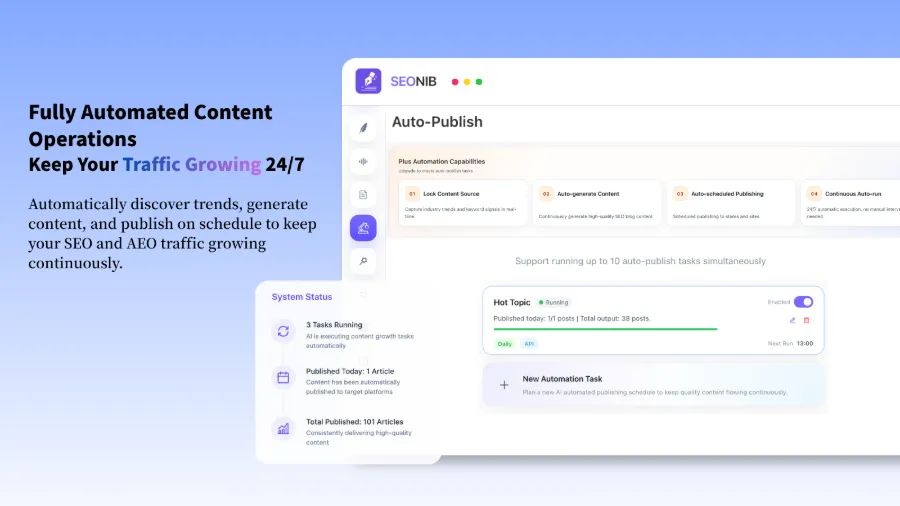
The biggest hidden cost of multi‑platform sync is debugging, not publishing itself. The first time you connect a platform you’ll hit a few snags—one platform may reject certain HTML tags, another may have mismatched image dimensions. Real time is saved once the debugging stabilizes. Once you understand the differences among the platforms you use, each subsequent publish truly becomes a one‑click operation.
For visibility after publishing, see the article on how AI‑generated content gets indexed by AI search engines, which adds strategies for getting your content absorbed by AI crawlers.
Scheduled Publishing and Automatic SEO Metadata Filling
Maintaining a regular update frequency is the least reliable thing to rely on willpower for. When I first started, I’d schedule content on Monday, slack off by Wednesday, and by Friday realize I’d only published half an article. Switching to a bi‑weekly schedule left gaps that made traffic curves erratic.
AI scheduling solves this: set a publishing frequency—daily, weekly, or a custom cadence—and the AI automatically generates and publishes according to the plan. No daily logins, no manual adjustments. One setup lets the AI run for 30 days without manual intervention. The content calendar no longer shows “to‑do” anxiety but “scheduled” predictability.
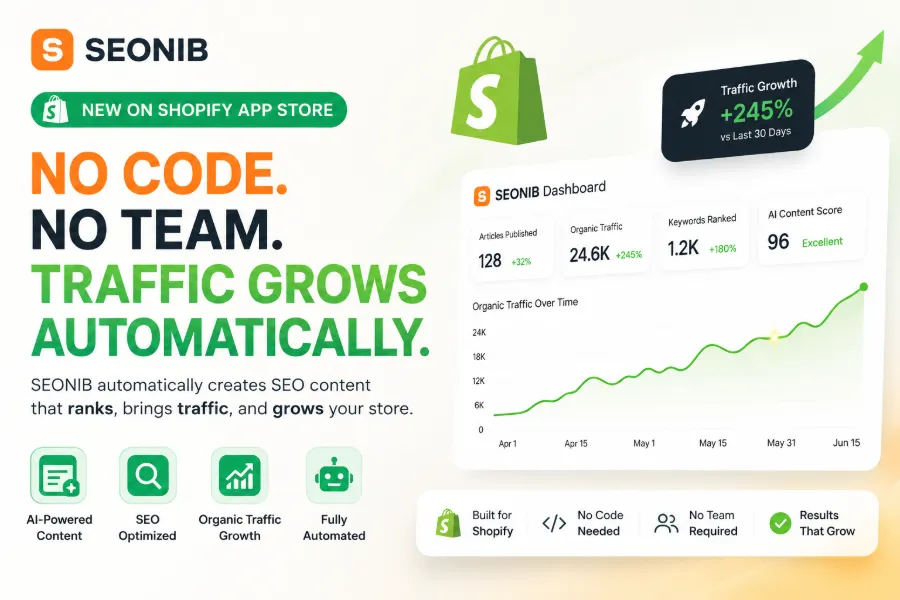
Here’s the underlying integration logic: after you set a schedule, the tool pulls topics from the topic pool, combines them with the brand‑term library and content context configured in SEONIB, generates the post, and pushes it to the connected platforms. SEO metadata (title tags, descriptions) are also auto‑filled at this step, eliminating the need to edit each platform’s backend individually. Scheduling isn’t just a timed trigger; it understands your content rhythm—whether it’s a new seller’s weekly surge or a mature site’s daily steady flow. The cadence directly influences the cumulative traffic curve.
For SEO metadata optimization details, see the discussion on how ChatGPT can better understand your site’s content; it explains how search engines recognize content structure and context, which is directly tied to metadata quality.
Multilingual Content and AI Search‑Engine Compatibility
Cross‑border e‑commerce naturally requires coverage of multiple markets. Traditional pain points: outsourcing English content to translation agencies, each language quoted separately, and translators often lack e‑commerce terminology and natural‑language search habits. Even after translation, you still need to re‑adapt SEO structure, keyword density, and meta descriptions.
With AI integration, a single piece of content automatically produces SEO‑optimized articles in 40 languages. It’s not simple machine translation; each language is adapted to local search habits, using locally common phrases and sentence structures, and adjusting content architecture to fit that language’s search intent. For example, English may favor a Q&A style, while Japanese might need more granular category headings.
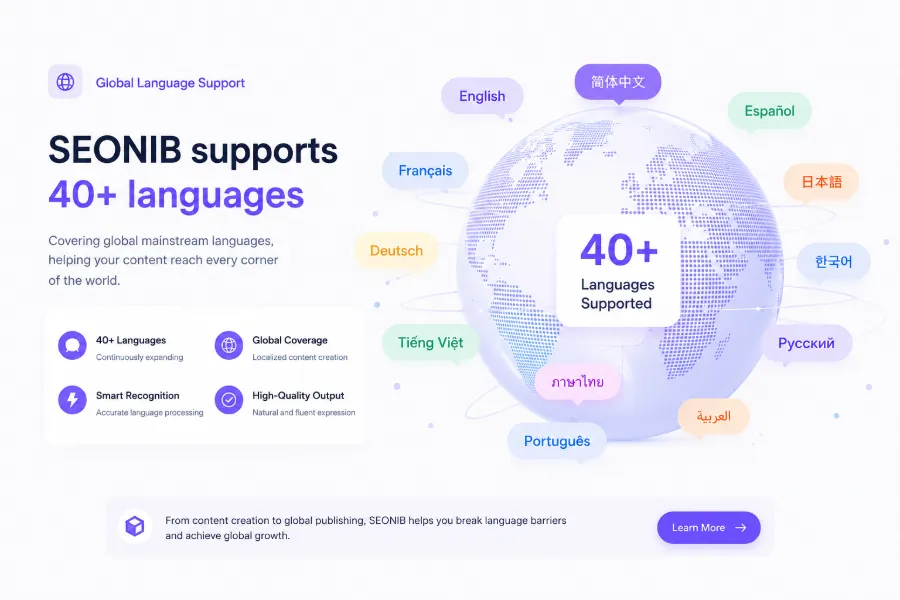
A 70 %‑accurate AI translation can satisfy most users’ reading needs, but to truly have AI search engines (e.g., Perplexity, Google AI Overviews) recognize and cite the content, you need an AEO structure—organizing content into Q&A entities and key‑information blocks. SEONIB automatically optimizes this structure when generating multilingual content. If your site runs on platforms like SHOPLINE, refer to the article on boosting Shopline store rankings in Google, which also includes practical multilingual adaptation tips.
For configuration details and the full first‑time setup steps, consult the help documentation.
Frequently Asked Questions
How much technical skill is required to set up these AI tool integrations?
Most integrations have a low barrier. Connecting a platform usually only requires copying and pasting an API key or Webhook URL. Multilingual and multi‑platform sync configurations are completed within minutes. No coding is needed, but understanding each platform’s publishing rules may take about 30 minutes for initial debugging.
Will syncing across multiple platforms cause duplicate‑content penalties?
No, as long as each platform publishes the content independently with its own canonical URL. Duplicate penalties usually occur when the same content is copied across subdomains or published in a non‑standard way. The AI integration pushes the content as a new article to each platform, and search engines treat them as distinct pieces on their respective sites.
Which types of e‑commerce sites benefit most from these integrations?
Sites with extensive product lines, multiple market coverage, or high content‑update frequency see the biggest gains. Especially product pages with many SKUs but lacking supporting content—AI can turn product links into buyer’s guides and reviews, dramatically increasing content coverage.
How long does it take for automated content to affect traffic?
It depends on your publishing frequency and market competition. With daily updates, you’ll typically see impressions rise in Search Console after three to four weeks. Weekly updates may take six to eight weeks. The key is consistent publishing rather than bursty spikes; search engines look for a stable update rhythm.
Can AI‑generated content match the linguistic quality of human translation?
High‑quality AI‑generated content often surpasses most human translations in coverage and structural completeness. However, for culturally sensitive phrasing, local idioms, or highly specialized legal language, a human review is still recommended. The best practice is to let AI produce the first draft, then spend a few seconds verifying key information—saving about 80 % of the time compared with a traditional translation workflow.
Share Article