From “Not Cited by AI” to “Published Online”: How to Choose an AI Search Visibility Tool in 2026
At 9 a.m. I opened the AI visibility dashboard as usual, and saw that the core product page we’d published hadn’t appeared in the ChatGPT citation list for three consecutive days. The report highlighted the issue in red with a downward arrow beside it. I stared at it for a few seconds, then closed the tab—nothing would change anyway. The tool we bought only measures; it points out the problem and then stops.
Over the past six months I’ve manually checked every major AI search visibility tool on the market, reviewing their real‑time pricing pages, plan boundaries, and “what you can do after an alert.” The sorting criterion for this list isn’t how pretty the dashboard looks; it’s the same question: when a tool tells you where you’re falling behind in AI search, can you actually fill that gap? Monitoring AI search visibility is only half the job; the real differentiator is what you can do after the alert.
Why Many Teams Are Re‑Evaluating Visibility Tools in 2026
Three practical reasons are pushing buyers toward “alternatives.” First is plan boundaries. Semrush’s current entry‑level SEO package (annualized $117.33 / month) marks all AI‑related features as excluded—AI search performance, AI sentiment analysis, AI visibility reports, and custom prompt monitoring are not included. To track, you must start at the Starter tier, annualized $165.17 / month, with a daily cap of 50 prompts, and the cap rises with higher tiers.
The second reason is that the purchased tool only measures. Semrush’s AI visibility is limited to measuring its AI search story. The third reason is timing—Adobe completed its acquisition of Semrush on April 28 2026, which is a natural moment to reassess your tech stack.
Before you start comparing, it’s worth clarifying one thing: instead of staring at a flood of broad keywords, first pick a small set of truly important prompts. This aligns with the approach of quickly validating what target buyers are searching for—first identify which problems are worth pursuing, then decide which tool to invest in. After a tool shows you where you’re missing out, what can you actually do next?
The Decision Metric Is Not a Score but “What You Can Do After an Alert”
In 2026, daily multi‑engine monitoring is already a baseline that almost every tool can achieve. The real differentiator is action—can you turn a discovery into published content?
I ran a reproducible self‑test: I selected three prompts buyers would ask, tracked them for a week, and tried to close one gap without leaving the tool. Success was simple: within a week, the page corresponding to that gap was online and resubmitted to the AI engine.
The test revealed a hidden cost: entry‑level pricing usually covers only a single engine. Some tools’ entry tier tracks only ChatGPT; covering other entry points such as Perplexity requires extra fees per engine. The phrase “multi‑engine coverage” in an entry price often means just one engine. The same piece of content is treated completely differently across AI engines, yet most entry‑level plans track only one. Multi‑engine support is an extra‑cost item that’s easy to overlook when comparing prices.
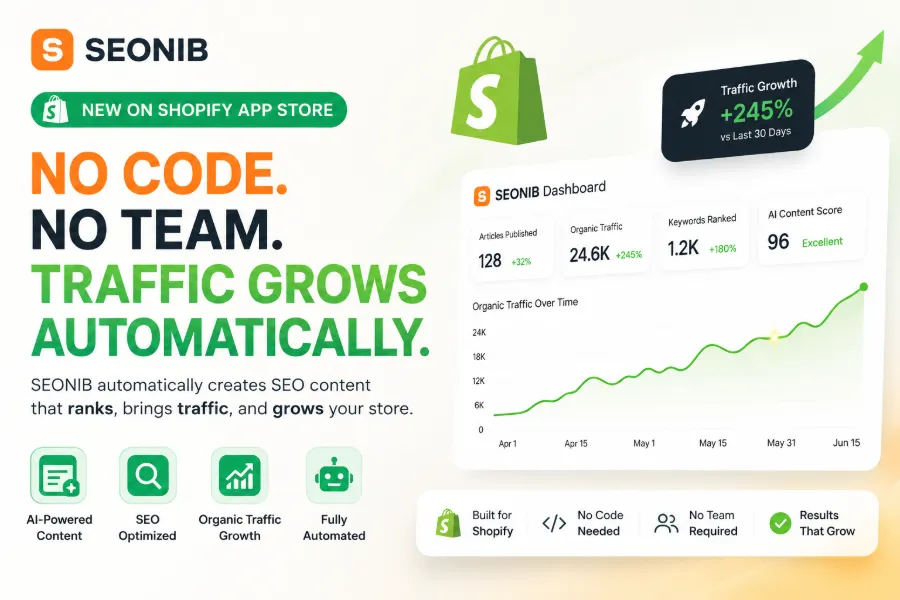
The chart above shows the organic traffic trend for a Shopify seller after three months of integrating an automated content pipeline. Traffic only rose after the content kept being published, not during the week the report was viewed. Results are driven by publishing, not by reporting.
Six‑Tool Comparison: The Real Gap Is on the Publishing Side
All prices are taken from vendor pages as of August 31 2026. Sorting is based on “post‑alert action capability”: who can turn a gap directly into research, drafting, scoring, and publishing, versus who just hands the execution off to other tools.
| Tool | Entry Price (annualized) | Positioning | What Can Be Done After Alert |
|---|---|---|---|
| Frase | $39 / month | Track to publish loop | Gap goes straight into research, drafting, scoring, and publishing |
| Profound | $99 / month | AEO‑budget focused | Content agent consumes monthly quota; entry tier tracks only ChatGPT |
| Peec AI | $80 / month | Independent scorecard | Analysis and reporting; execution left to other tools |
| Otterly.ai | $29 / month | Independent author starter | Monitoring + suggestions; multi‑engine extra fees per engine |
| Ahrefs Brand Radar | $50 / month | Ahrefs ecosystem | Mentions, citations, volume measurement; execution is yours |
| Conductor | Not disclosed | Enterprise | Sales process; price not public |
Read the plans before comparing prices. Frase’s $39 / month entry tier (annual) is the only one that bundles “discovery → draft → score → publish” in a single workspace. The others each have a focus: Profound and Peec AI are standalone AI visibility monitors that leave execution to your other tools; Otterly.ai and Ahrefs Brand Radar tell you where you’re not cited, but the work remains yours. Coverage differences for the Gemini entry point also matter—each tool tracks Gemini search visibility to varying depths, some merely mention it in passing.
A common overlooked cost: many buyers subscribe only to “scorecard”‑style monitoring, paying an extra monthly fee just to confirm a fact they already know—“not cited.” I’ve seen more than one team subscribe to both Otterly.ai and Ahrefs Brand Radar, only to discover after a billing cycle that the toolset didn’t shorten the time from discovery to fix—gaps remained unfilled.
Since the gap among the six tools concentrates on the publishing side, the question becomes: can a tool that links trend discovery → content generation → automated scheduling → multi‑platform sync fill the half that scorecards don’t? That’s exactly where tools like SEONIB fit—they don’t tell you where you’re not cited; they make the missing content go live the same day.
Plug Monitoring Into the Publishing Pipeline so Gaps Are Filled Before the Next Report
A monitoring‑identified gap is essentially a piece of content that doesn’t exist yet but could be indexed by AI. Pair it with a pipeline that generates a structured SEO article directly from the source, schedules it automatically, and syncs it across platforms, and the gap’s lifecycle shrinks from “review in a week” to “publish today.”
The practical workflow is: first, pick the prompts to watch and bind them to a publishing plan; then use a content calendar to monitor production cadence; finally, use cross‑platform sync to reduce duplicate effort. Turning product links into stable, organic‑traffic‑driving SEO blogs is the most common starting point—you already have a product page, you just need a steady stream of surrounding content.
Once the pipeline is launched, it continuously produces output without daily manual triggers.
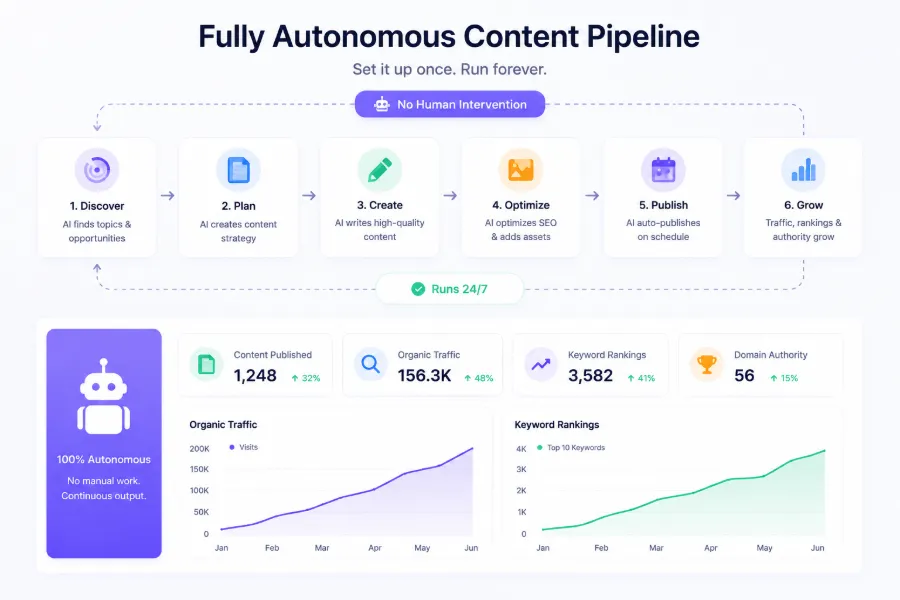
A single generation can be automatically pushed to 10+ platforms and supports 40 languages. For teams operating in multilingual markets, this means one piece of gap‑filling content can simultaneously cover multiple language versions of AI search entry points. When you follow the steps above, refer to the official help docs for detailed configuration—especially platform author and scheduling time‑zone settings, as these are the most error‑prone areas.
FAQ
Why can’t I find AI visibility data in many tools’ entry‑level plans?
Because AI visibility features are placed in higher‑tier plans. For example, Semrush’s entry‑level SEO package excludes all AI‑related features; tracking starts at the Starter tier, annualized $165.17 / month. This is a tier‑based strategy, not a technical limitation.
When a tool says it “covers multiple engines,” does the entry price usually include only a few?
Usually just one. Profound’s entry tier tracks only ChatGPT; Otterly.ai charges extra per engine for multi‑engine coverage. When you see “multi‑engine,” first verify how many engines are covered at the entry price before discussing monthly fees.
How much content can a daily limit of 50 prompts actually cover?
It’s enough for a medium‑sized keyword set. If you allocate 50 prompts to 5 core buyer questions, each question can be tested 10 times per day. However, covering multiple languages and engines will quickly exhaust that limit.
I only want to know whether my own pages are mentioned in ChatGPT—what’s the cheapest plan I need?
A single‑engine entry plan is sufficient; Otterly.ai starts at $29 / month. But keep in mind that monitoring only ChatGPT means you won’t see performance in Gemini or Perplexity, which can differ dramatically.
After Adobe’s acquisition, should I wait for the integration before deciding on my current subscription?
You can wait, but don’t stall indefinitely. Integration periods usually last one to two quarters, during which product roadmaps are reshaped. If you already have a pressing gap‑filling need, waiting for the integration won’t make the gap disappear on its own.
Share Article