When AI Overviews Took My Traffic, I Built an Automated Article‑Writing Bot
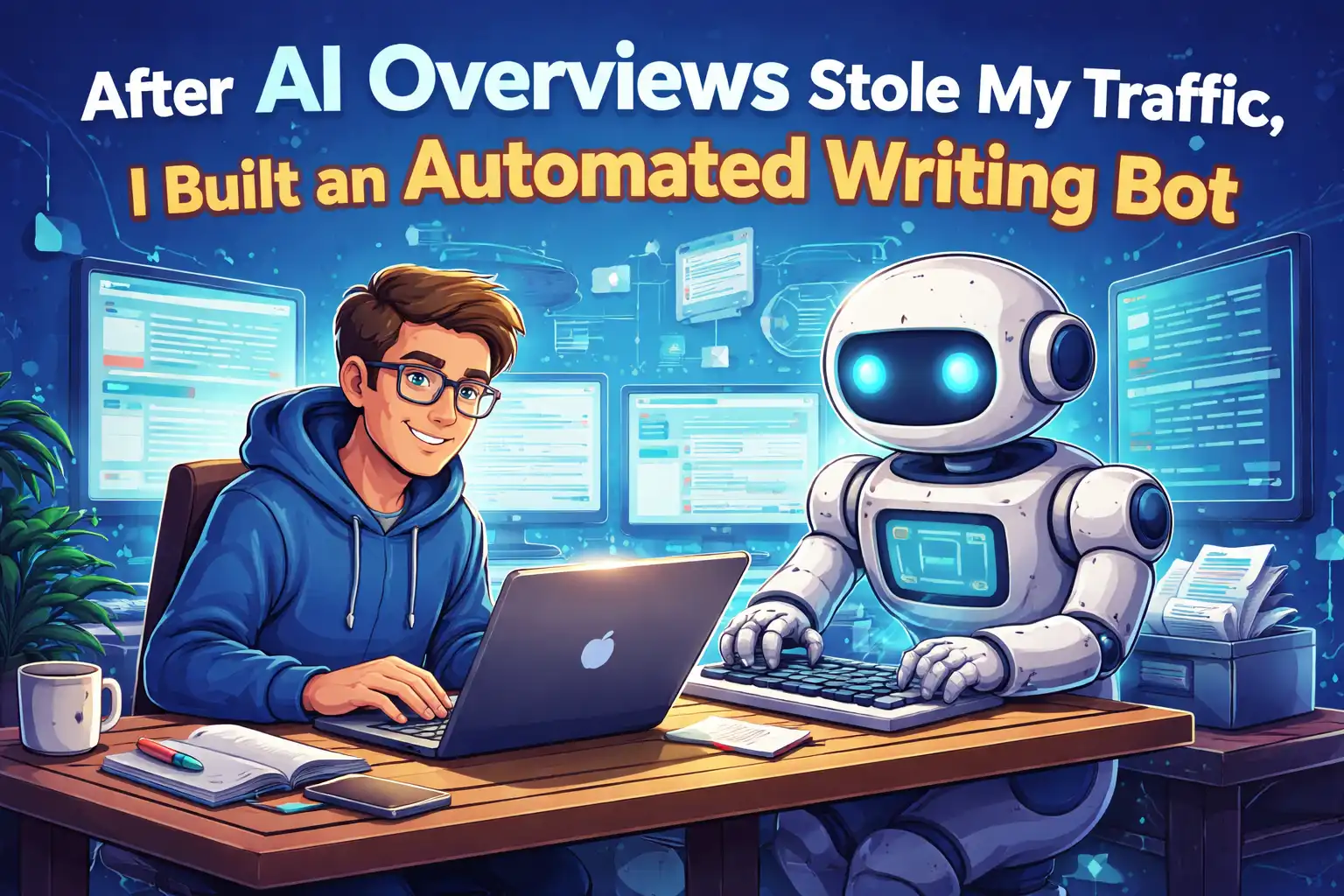
Before 2025 I thought SEO was pretty simple: pile on keywords, build backlinks, guard the rankings, and traffic would come naturally. Back then I had a few top‑of‑funnel keywords for my main sites and easily captured about 90 % of the top traffic on the search results page; those words alone could feed the whole team each month. Then, at the beginning of 2026, Google rolled out AI Overviews on a massive scale—users type a question and the answer appears directly at the top of the SERP, no need to click any site. My “golden keywords” lost half their traffic in three months, and the worst of them almost went to zero. I sat in the office staring at Google Search Console, all the data turned red. It felt like digging a canal with all effort, only to have someone install a faucet next to you while yours ran dry.
The Pitfall I Fell Into: Assuming High Rankings Equal High Traffic
Back then I was still bragging to colleagues: “Hey, our keyword ranking went up again.” It wasn’t until I saw AI Overviews keep users on the SERP that I realized how naïve I was. Traditional SEO logic says: the higher you rank, the more clicks you get. AI Overviews, however, give a summary answer, so users don’t need to click through to solve most problems. Click‑through rates for top‑of‑funnel keywords dropped to almost zero, yet my site lived off those very keywords.
I started looking for direction and found an interview with James Dooley. He said SEO isn’t about using a fishing rod to catch one fish, but casting a big net to catch them all. He introduced the concept of “compound 1 % gains”—instead of chasing a single burst, you accumulate hundreds of small improvements for long‑term advantage. He repeatedly emphasized: I’m not an SEO expert; I’m a businessperson who uses SEO. That sentence woke me up. If my content can’t even get into the AI Overviews snippet, a high rank is meaningless. I needed to shift from a “ranking mindset” to an “AI citation mindset”—getting the AI engine to treat my content as an authoritative source and feed it to users, rather than hoping users click into my site.
The Real “Winners” Aren’t SEO Experts, but Ubiquitous Brands
James Dooley’s approach isn’t about obsessing over keywords; it’s about building a brand content matrix. He set up over 1,000 sites, casting a net across more than 650 industries and generating over 2 million leads. The core secret is three words: show up everywhere.
A single blog post is broken down into social‑media posts, YouTube scripts, forum answers. Content repurposing isn’t laziness; it’s leaving a brand footprint in every channel a user might encounter. AI Overviews may eat clicks from the SERP, but it also pulls content from multiple platforms to generate answers. The broader your distribution, the higher the chance AI indexes you.
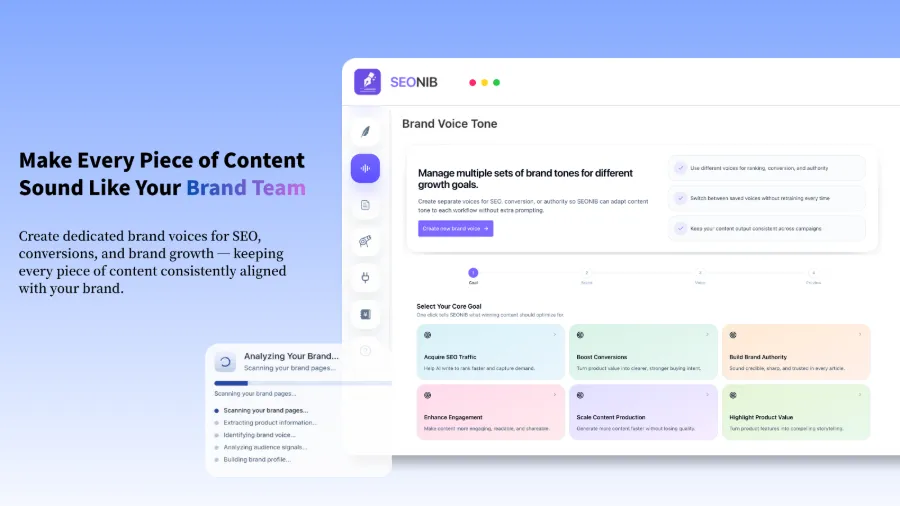
Achieving this manually, platform by platform is impossible. You need to know which tools can automatically sync content to Shopify, YouTube, social media, etc. I tried a bunch of solutions and eventually referred to a comparison of the 7 Best AI SEO Tools (https://seonib.com/cdn/paa/seonib-jasper-ai/7-best-ai-seo-tools-to-rank-faster-in-2026/index.html) to find the right automation stack. If you haven’t built multi‑channel distribution yet, start with the Shopify API (https://shopify.com); it’s the most basic step for an independent site.
Manual Work Was Too Slow, So I Built an Automated Content Pipeline
When I realized that manually writing a few blogs a day and copy‑pasting them to different platforms was not feasible, I decided to completely overhaul the process. Trend discovery, content generation, scheduling, multi‑platform sync—these four steps were handed over to a system that runs automatically; I only need to glance at the data once a week.
I chose SEONIB (https://www.seonib.com) to run the entire automation pipeline. It isn’t just a text generator; it’s an engine that ties the whole content‑marketing workflow together: AI automatically monitors industry trends, pushes hot topics into my idea pool; I confirm with a click, and it generates articles with SEO metadata and internal links based on keywords or product URLs; then it publishes on a calendar I set and syncs to WordPress, Shopify, Webflow, and other major platforms.
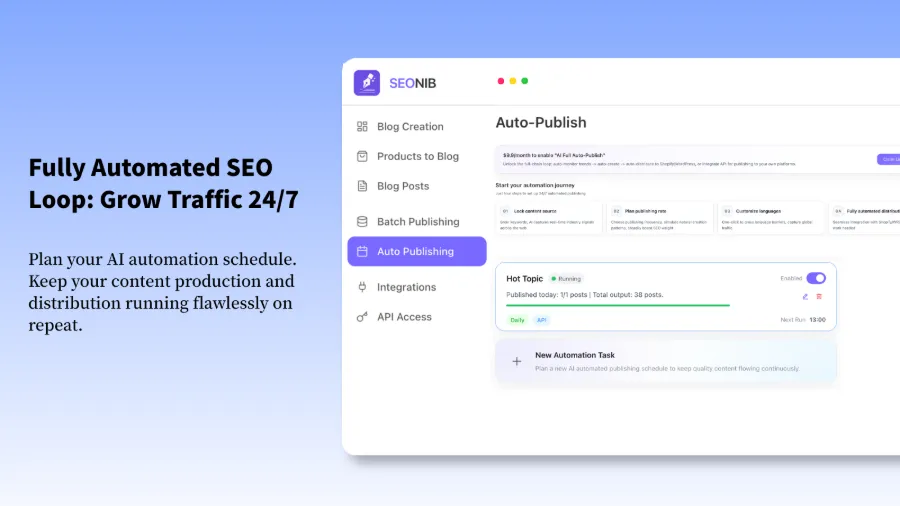
The efficiency gap between the old manual process and the new automated one is night‑and‑day. If you’re still writing and formatting by hand, I strongly recommend reading this article on Turning Product Links into Sustainable Organic‑Traffic SEO Blogs (https://xie.infoq.cn/article/b542f50b346275caa59ce63c9) which breaks down the time‑cost differences between traditional and automated workflows. Also, if you want to convert product links directly into SEO articles, SEONIB has a built‑in feature Turn Product Links into SEO Blogs (https://seonib.com/c/guides/turn-product-links-into-seo-blogs-that-drive-sustainable-organic-traffic-2026/index#); just paste the URL and it automatically generates buyer guides or review content.
A Small Site I Powered with Automation
Proof is in the pudding. I took a brand‑new, niche site with no historic authority and ran an experiment. All content was produced by SEONIB’s automation pipeline. I configured a set of long‑tail keywords such as “city balcony waterproof coating selection” and “how long can old ceramic tiles be renovated,” which have low search volume but clear conversion intent. AI daily fetched relevant trends, generated articles, published them, and synced to several external platforms.
The biggest headache for a new site is indexing. I manually submitted indexing requests several times before, but Google ignored them. SEONIB automatically generates a standards‑compliant sitemap and uses the IndexNow protocol to proactively notify search engines. I did encounter some indexing delays; the article What to Do When a New Site Indexes Slowly? (https://seonib.com/cdn/paa/2026-seonib-solution-to-slow-indexing-of-new-websites/index.html) offered a solution. If you’re interested in the “product page to blog” scenario, the post One‑Click Convert Product Pages to Blog with SEONIB (https://blog.csdn.net/SEONIB_Explorer/article/details/159613242) shares real‑world details.
Three months later the site’s traffic curve rose from zero to an average of 300+ unique daily visitors. Not huge, but enough to cover server and domain costs. More importantly, about 15 % of the traffic came from AI Overviews snippets—meaning the content was used as an authoritative answer by the search engine. This is the logic James Dooley mentions: “Even a small niche can generate 3‑4× returns.” Even with modest visit counts, precise user intent yields higher conversion rates.
If you want more operational details, the official Help Documentation (https://seonib.com/help) provides a complete guide from account setup to multi‑platform syncing.
FAQ
Do AI Overviews pose a real threat to a small site like mine?
Short answer: Yes, but they can also become an opportunity. AI Overviews mainly capture clicks for top‑of‑funnel keywords; if 90 % of your traffic comes from those, you’ll see a sharp drop. Conversely, if your content is pulled into the AI snippet, you gain zero‑cost brand exposure. The key is to structure your content so AI engines can easily extract it.
Will Google penalize me if all my content is long‑tail keywords?
No. Long‑tail keywords are exactly the precise, Google‑encouraged content direction. As long as the articles provide real information and aren’t just keyword stuffing, there’s no penalty. Automated articles still need entity coverage and internal‑link structure, otherwise they may be flagged as low‑quality.
Will automatically generated blogs sound “robotic”?
It depends on your setup. If you just give AI a keyword and let it write freely, you’ll get a template feel. But if you configure brand context, terminology, and writing‑style examples in the system, the AI’s output will resemble human‑written tone and structure. I used SEONIB’s brand‑context feature; the articles passed several manual reviews without issues.
How many articles should I publish each day to be effective?
There’s no fixed answer. For a small site, start with 2‑3 articles per day, then monitor indexing rates and traffic after two months. Too many can cause content fatigue; too few may not show results. Consistency is key so that search engines perceive your site as continuously updated.
Can a site build a brand without any manual writing?
Yes, but you’ll need extra effort to build a brand knowledge base. Automation tools execute the work, but brand positioning, messaging, and tone must be defined manually. Feed the system with a brand manual, product selling points, and industry terminology as structured data, and the AI‑generated content will maintain a consistent voice.
Share Article