
My 2026 Shopify Growth Tech Stack: Content Automation and Multi‑Platform Distribution
Running an independent store in 2026 is no longer the old “write a few articles, post on social media” model. The rise of AI search, Google’s demand for continuously updated content, and the complexity of cross‑platform distribution have made many merchants realize that their old tech stack can’t keep up. In 2025 I tried using ChatGPT together with a manual publishing workflow to run my store’s content, but after three months the indexing rate was shockingly low and traffic barely grew. In 2026 I completely rebuilt the content process, switching from a manual bottleneck to an automated pipeline, and only then did natural traffic start to climb.
If you’re also running an independent site, you probably understand the pain: the problem isn’t a lack of tools, it’s a lack of something that links topic selection to publishing in one seamless flow.
You can read this article to learn how to quickly validate a project idea with a simple website.
Use a Simple Website to Quickly Validate Whether a Project Idea Has a Market
Why Content Production Has Become the Biggest Growth Bottleneck
Independent‑store sellers often mistakenly think “I just need to write good articles.” In reality, creating content that search engines love consumes time at every step—from finding a topic to final publishing. Finding high‑search‑volume keywords requires browsing Google Search Console and third‑party tools; drafting an initial article can take an hour; configuring SEO metadata, adding images, internal links, and external links takes additional time. In the 2026 competitive environment, these processes stacked together become a disaster.
My own data shows that you need at least 8–12 new pieces of content per month to maintain topic authority, while manually producing one article takes 2–4 hours. That translates to over 20 hours per week spent on content. After three months, my publishing frequency started to drop—not because I didn’t want to write, but because I couldn’t keep up.
Worse still, traditional AI writing tools only solve the “writing” step. I tried using ChatGPT with Surfer SEO to generate drafts; the content quality was okay, but the subsequent steps didn’t disappear: I still had to copy the draft into the backend, format it, upload images, and publish on each platform manually. Content production turned into a segmented manual workshop, and the efficiency bottleneck was not the writing itself but the tedious post‑writing tasks.
Low publishing frequency leads directly to falling search rankings. Google is now far more sensitive to site activity than a few years ago; a period of silence shows up on the ranking curve.
Filling Every Gap in Content Production with an Automated Pipeline
A true content automation pipeline should cover four stages: trend discovery, content generation, scheduled publishing, and multi‑platform synchronization. Missing any one of them breaks the flow.
Trend discovery is the stage most sellers overlook. In 2026, SEO is no longer “write what you think readers might search for.” Traffic sources are diversifying beyond Google. You need a system that monitors hot industry topics and search‑trend changes. Content generation isn’t just about writing a smooth article; it also requires SEO optimization, internal linking, and brand‑tone control. Scheduled publishing keeps the cadence without daily logins. Multi‑platform sync pushes a single article to every channel that can reach users.
It’s worth noting that SEONIB has successfully entered the Shoplazza App Store, making it easy for Shoplazza users to use.
SEONIB Has Successfully Joined the Shoplazza App Store
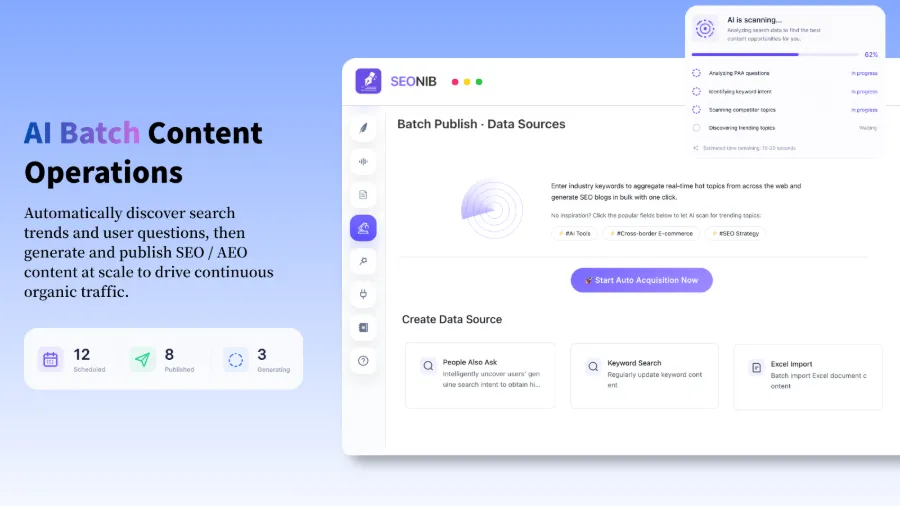
The core engine of the automated pipeline I built is SEONIB. Its workflow is completely different from my previous fragmented toolchain: I only need to set up a keyword pool, content calendar, and publishing frequency, and the system automatically closes the loop from topic selection to publishing. The trend module pushes new high‑potential topics to my dashboard each day; after I confirm them, they become writing tasks. The generation module has built‑in SEO strategies, so I no longer need to configure metadata manually. The publishing module automatically outputs to the Shopify site according to the schedule and syncs to other platforms.
Once the publishing plan is set, the system generates and publishes content daily without human intervention. I now spend about 30 minutes per week reviewing the topic list and checking performance data. If you want to see the specific configuration of this system, refer to “7 Ways to Get Your Content Cited by AI Answer Engines.”
7 Ways to Get Your Content Cited by AI Answer Engines (2026) – it details content‑structure optimization. A more complete configuration guide is in the SEONIB Help Documentation.
From SEO to AEO: Getting Content Cited by AI Search Answers
The logic of traffic allocation has changed in 2026. AI search products such as Perplexity, ChatGPT Search, and Google AI Overviews are reshaping how users retrieve information. Traditional SEO strategies—writing long articles around keywords, stacking backlinks—perform far less effectively in AI‑search contexts.
For an in‑depth analysis of a full‑platform SEO strategy in 2026, read this article.
Full‑Platform SEO Strategy in 2026
AI search engines’ answer pages have completely different requirements from traditional SEO content. They favor Q&A structures, clear factual statements, and information with citations. Long‑form overview articles are condensed into a few sentences in AI summaries; if your content isn’t presented as Q&A blocks or structured data snippets, the chance of being included in answer pages is low.
My response is to generate AEO pages in bulk. SEONIB includes templates optimized for AI search, supporting automatic creation of Q&A pages and entity pages with built‑in structured‑data markup. These pages can be synced to platforms like Shoplazza—SEONIB’s presence in the Shoplazza App Store proves that. Cross‑platform compatibility is crucial in 2026 because broader exposure means more opportunities for AI engines to crawl your content.
Another adjustment is strengthening entity SEO. I now systematically cover brand names, product names, industry terms, and related entities in my content, helping AI search engines understand the site’s topical domain. Data shows that 73 % of modern searches happen outside Google, meaning content must appear in the user’s actual usage contexts, not just traditional SERPs. If you’re tweaking your SEO strategy, check out this Technical SEO Checklist (2026 Practical Edition), which covers everything from structured data to site architecture.
My Complete 2026 Tech Stack Overview
Content automation is just one part of the growth tech stack. Below is the full set of tools I currently use:
- Content Engine – the core of the automation workflow, handling trend monitoring, content generation, scheduled publishing, and multi‑platform distribution.
- CMS – primarily Shopify for site building, supplemented by SHOPLINE and Medium for auxiliary distribution.
- Analytics Layer – Google Analytics 4 for traffic sources and user behavior, Ahrefs for ranking and topic‑gap analysis.
- Distribution Channels – direct sync to WordPress, SHOPLINE, Webflow, etc.
The biggest difference from my 2025 stack is that I no longer need to publish content manually every day. Each week I spend a fixed 30 minutes opening Google Search Console and GA4, checking which pages are gaining traction and which topics need more content, then adjusting next week’s publishing plan.
After adopting this stack, my blog’s monthly organic traffic grew by about 140 %. Of course, the exact figure depends on industry and site baseline, but the core change is that traffic growth no longer relies on more time investment, but on the continuous operation of the system itself. If you want to see the full workflow from inspiration to distribution, read the “Complete Creation Guide from Inspiration to Global Distribution.”
Complete Creation Guide from Inspiration to Global Distribution – it covers the details of building the content pipeline.
FAQ
Is this tech stack suitable for beginner sellers?
Yes, but you should already have a clear product category and content direction. Automation tools solve execution efficiency and frequency issues; they cannot replace understanding of the target market and user needs. Beginners should first spend 2–4 weeks producing content manually to define topic direction and tone before integrating the automation pipeline.
Will content automation cause a drop in quality?
It can, if you never review. My approach is to let AI generate the first draft, then manually verify topic accuracy and brand consistency before handing it off for automatic publishing. This workflow maintains frequency while keeping quality above a minimum threshold. Purely unreviewed automated content sees a noticeable decline in indexing rates.
In 2026, do independent‑site owners still need to write articles manually?
Some types of content still require a human touch, such as in‑depth industry analysis, personal opinion pieces, and brand stories. However, routine SEO articles, product descriptions, FAQ pages, and AEO Q&A content can be fully handled by automation tools. The key is to categorize content—what can be mass‑produced and what must be manually refined.
How is multilingual content automated?
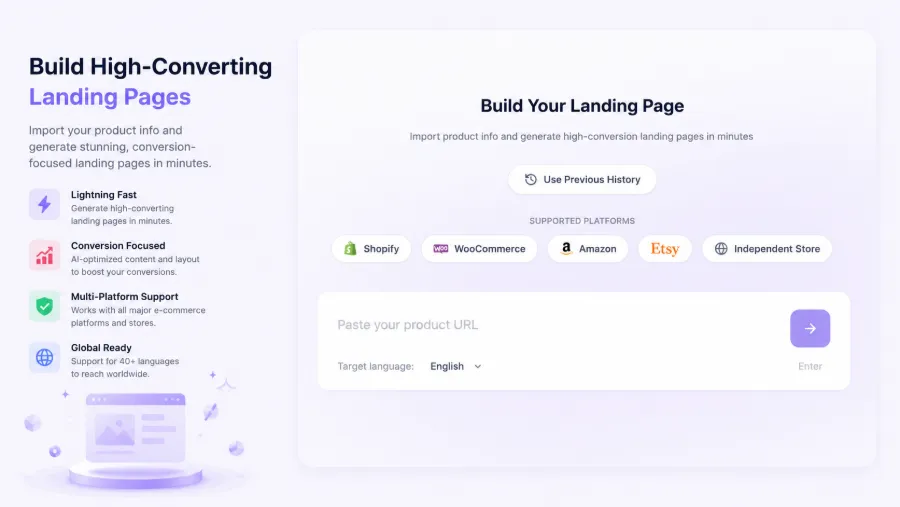
My setup creates separate content plans for each language, each with its own keyword pool and publishing calendar. SEONIB supports automatic generation and publishing in 40 languages, creating language versions from the source content while maintaining topic consistency. After launching multilingual content, you’ll need to monitor duplicate‑content issues for each language.
What cost does content automation require?
Beyond subscription fees, the biggest cost is the time spent on configuration and debugging. When I first integrated the automation pipeline, I spent about two weeks fine‑tuning topic‑filtering rules and publishing strategies. Once stable, the monthly operating cost is mainly the subscription fee plus a 30‑minute weekly data review. Compared to a manual workflow, the ROI is clearly favorable.
Share Article