
Why Content Marketing Has More Long-Term Value Than Advertising? Compound‑Interest Model vs Consumption Model
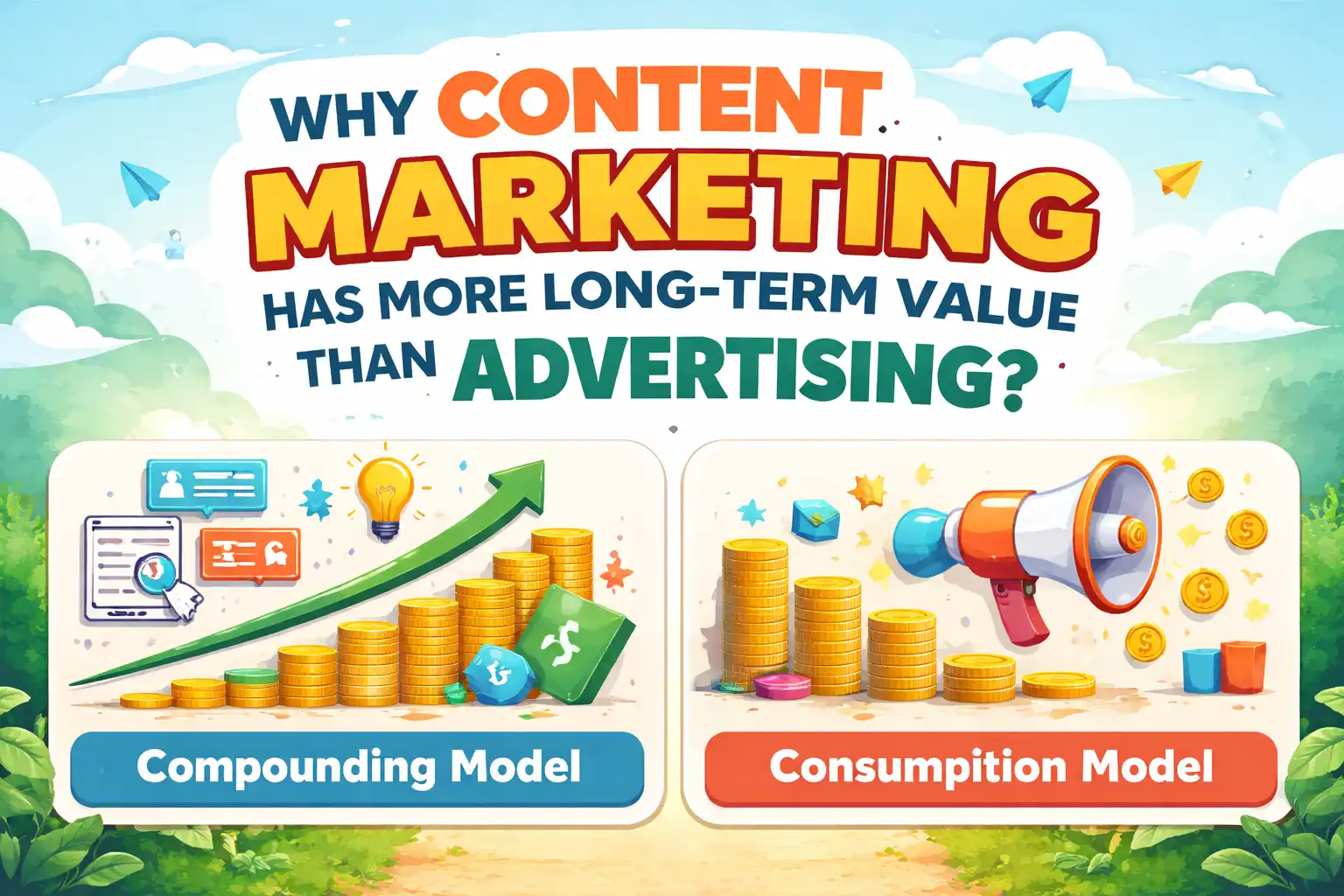
I used to do that too—open the Google Ads dashboard, set up keywords, watch the budget evaporate at a rate of a few hundred yuan per hour, and then console myself with “at least someone saw it.” Later, a friend who runs an independent site said something that stuck with me: “Your ads are like renting a stall in a mall; you pay rent every month, and if you don’t, you’re out. Your blog posts? That’s a piece of land you bought in the city center that belongs to you forever.” From then on, I spent less and less on ads and more time on content. It wasn’t because I didn’t want quick money; it was because I finally saw the economics of the two approaches.
Advertising Is Renting Traffic with Money, Content Marketing Is Buying Assets for Yourself
Advertising’s essence is leasing. You pay CPC, and Google puts you in front of the search results. CPC has risen about 44% over the past five years, and in hot industries a single click can cost $8–$15. What $100 bought in clicks in 2020 now costs nearly $150. Worse, if you stop the budget this month, the traffic drops to zero next month—you’re left with nothing.
Content is an asset. Write an article, and it forever lives in the search engine’s index. The first week may get only a few dozen clicks, but after three months it appears in the results for twenty‑plus long‑tail keywords, and after a year it may cover hundreds of terms. Data from Ahrefs and Demand Metric point to the same conclusion: advertising is consumption, content is investment. You exchange rent for a temporary stall; you exchange property for a permanent foothold. I’ve bought ads before; it felt like tossing money into a river and hearing a splash. Writing a good article is like planting a tree by the river—nothing visible the first year, but by the third year it blocks a swath of sunlight.
Long‑Tail Traffic Is Not a Bonus; It’s the Engine of Compound Growth
Many people think “one article can only target one keyword.” That misconception runs deep. Ahrefs analyzed 11.8 million search results and found that a page ranking #1 on Google on average ranks in the top 10 for about 1,000 other keywords. Yes, you read that right—one thousand. If you write an article about cross‑border e‑commerce taxes, it may also appear for “how EU VAT works,” “Amazon seller Germany tax rate,” “VAT registration process,” and hundreds of other long‑tail terms.
Ads can never achieve that. Buying a keyword gets you traffic for that single term. A blog post is like a fishing net with 1,000 hooks—cast it, and each hook could catch a fish. As you create more content, those nets start to interconnect. When you write your 10th article, internal links boost the authority of the previous nine. That’s compound interest.
When your content library grows from 5 to 30 articles, each new piece brings 3.5 × the traffic increment of the early ones. If you want to scale this compound‑interest process, check out how Batch Publishing and Data Source Settings work—batch generation is far faster than hand‑crafting each post. Writing one article plants countless future traffic entry points.
Trust Is Something You Can’t Buy, But Content Can Accumulate It Slowly
Consumers are naturally wary of ads. A Demand Gen Report survey shows 70 % of consumers prefer learning about a brand through articles rather than ads. Can you blame them? I still instinctively scroll past “sponsored” tags. A sincere, in‑depth blog is different—readers think, “This person really knows, they’re not just trying to sell me something.”
Once that trust is built, conversion rates are six times higher than traditional outbound marketing, according to Aberdeen Research. Trust can’t be purchased; it must be accumulated by consistently delivering value. In the first three months of my blog, almost no one contacted me through it, but I kept writing two posts a week because I knew every read was earning trust points.
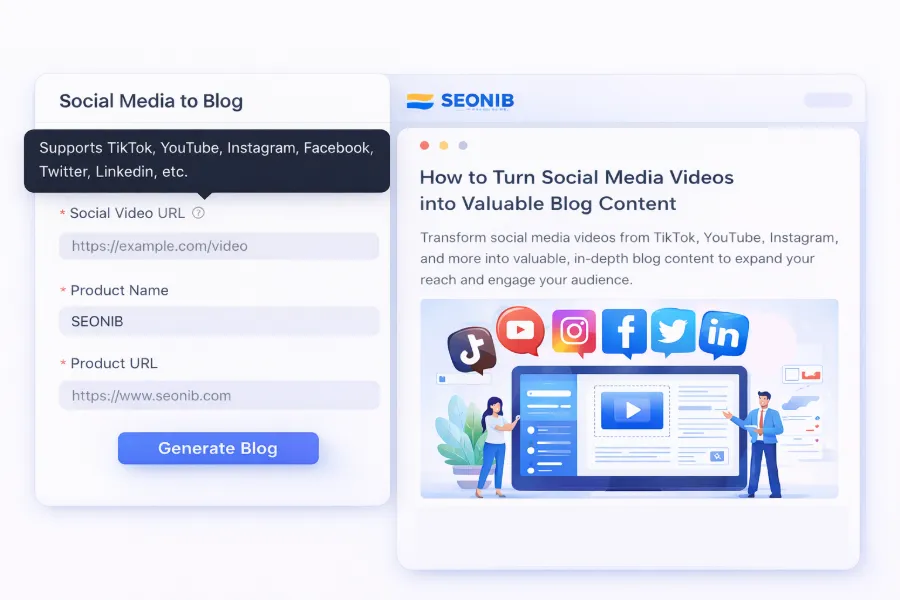
If you open the independent sites that have been doing content marketing for three+ years, you’ll see readers actively searching for new posts, bookmarking pages, even emailing the author to say thanks. That’s trust—slow‑burn, but the most valuable kind. Want a real‑world case? Read this blog‑driven search traffic story; the growth curve mirrors my own experience almost exactly.
AI Search Gives Content Marketing an Extra Boost
The 2026 search landscape is no longer what it used to be. AI search engines are becoming new traffic sources, and they barely reference ads. Perplexity cites an average of 21.87 sources per answer, with 82.5 % pointing to deep internal pages. Google’s AI Overviews now cover 25 % of search results, and those AI‑generated snippets heavily rely on well‑structured, data‑backed blog content.
That means content marketing now has a brand‑new growth curve. Before, you could only rely on ranking in Google’s top ten pages; now a well‑structured article can be quoted by AI within 48 hours—something ads can never achieve.
Moreover, AI‑referenced traffic behaves differently—users get the answer directly in the AI chat, so search‑engine click‑through rates drop, but brand exposure actually rises. If you don’t want to miss this entry point, you first need to understand why SEO in 2026 shouldn’t focus only on Google—you must appear everywhere search engines and AI platforms can see you.
Why Most People Can’t Survive the Compound‑Interest Turning Point—and How to Do It
The first three months of content marketing are genuinely slow. Orbit Media shows that writing a blog post takes about four hours on average. I wrote two posts a week for the first three months, spending a lot of time, and traffic only grew ~18 %. By month four I was staring at the almost‑flat curve in Google Search Console and almost gave up.
Many people quit at that point. In reality, months 4–6 are the real moat. If you stick around to month 12, each new article’s traffic efficiency is 3–5 × that of the first one. Search engines start to trust your site, the backlinks you’ve accumulated begin to work, and AI engines start quoting your earlier content.
The problem isn’t that most people don’t want to do it; they simply don’t have the time. Writing two posts a week for a year is a high barrier. That’s why I started using SEONIB for the structural work. SEONIB doesn’t replace your thinking—it compresses AEO formatting, FAQPage Schema, internal‑link suggestions, and other structural tasks into 20–30 minutes, leaving you to focus on insights and data. Reducing article creation from four hours to half an hour dramatically increases the odds of staying consistent.
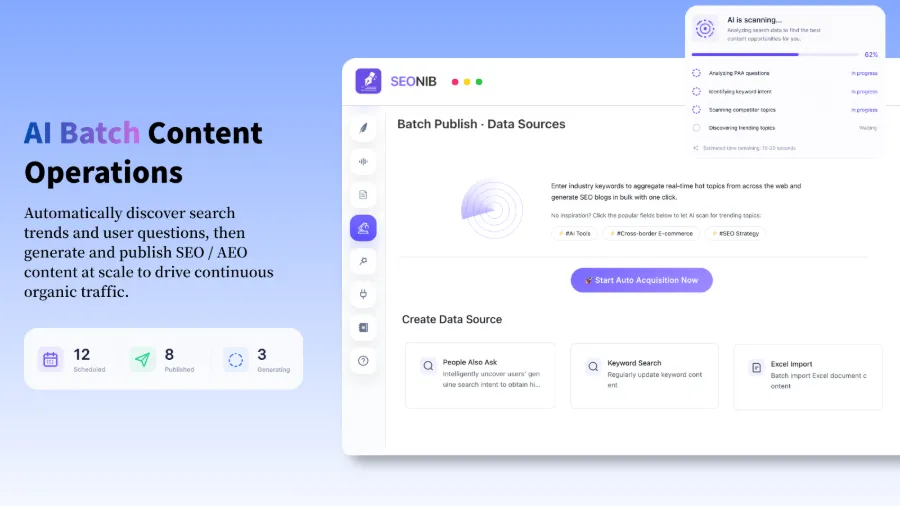
After adopting SEONIB, I can reliably produce 4–5 posts a week and no longer have to copy‑paste manually to every platform. If you want to learn how to write faster, check out the guide Blog Writing Has Never Been Easier. If you’re just starting with content marketing, read the full Help Documentation first—it covers the entire workflow from site building to automated publishing.
FAQ
What’s the fundamental difference between content marketing and advertising?
Advertising is a leasing model—you pay for each impression, and when the budget stops, traffic drops to zero instantly. Content marketing is an asset model—each article lives forever in the search index, accumulating keyword rankings and AI citation weight over time. Demand Metric shows content marketing’s acquisition cost is 62 % lower, and it generates three times as many leads as advertising.
How soon can you see results from content marketing?
Growth is slowest in the first three months (~18 %). By month 6 you reach ~42 %, and by month 12 you enter the compound‑interest acceleration phase. Most people quit between months 4–6—that’s precisely the moat. After 12 months, each new article’s traffic efficiency is 3–5 × that of the first one.
Why do AI search engines prefer citing articles over ads?
AI engines train primarily on publicly available text; ads have low priority for inclusion. Perplexity cites an average of 21.87 sources per answer, with 82.5 % pointing to deep internal pages. A data‑rich, well‑structured blog can be quoted by AI within 48 hours, whereas ads never appear in AI citation lists.
Is the cost of content marketing really lower than advertising?
Acquisition cost is 62 % lower than traditional marketing (Demand Metric). Writing a blog post takes about four hours (Orbit Media), but with AI‑assisted tools the structural work can be compressed to 20–30 minutes. The most expensive input isn’t money—it’s time—so you need to stick with it for 12 months to hit the compound‑interest turning point.
I’m a beginner—where should I start with content marketing?
Start with your first article; don’t obsess over a perfect topic. Choose a niche you know well, write a 1,000–1,500‑word deep guide with data and case studies, and maintain a cadence of two posts per week for at least six months. Also, focus on structure—clear H2/H3 headings, FAQ Schema—so AI engines can easily extract your content.
Share Article