Doing SEO in 2026, It Feels Like I'm Not Competing with Google, but with Myself
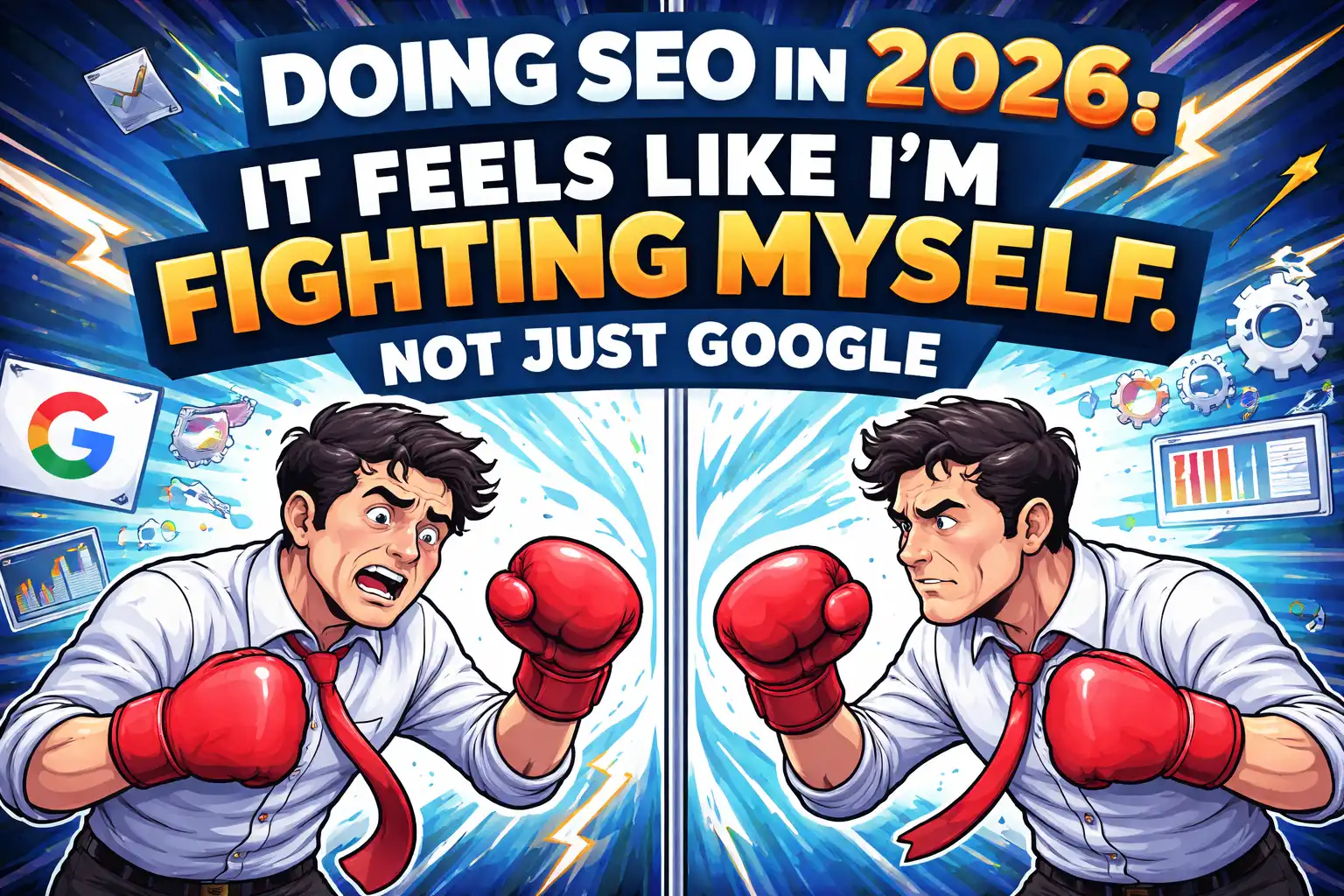
It all started like this. At the end of last year I realized I was spending three mornings a week doing the same thing: opening Search Console and staring at the “clicks” curve, which had become smoother than before. No, it wasn’t a “cliff‑fall” drop; nobody gave me that drama. It was more like—you have a plant that isn’t dead but also isn’t growing; it’s just alive, green, but you know something’s off.
I tried to recall that old feeling. A few years ago you wrote an article called “CRM Software Selection Guide,” stuffed three keywords into the title, tossed in a random photo of a mug on a keyboard, published it, and two weeks later organic search traffic started to rise. Six months later that article was delivering 2,000 visits a month, as regular as a paycheck on the 15th. Now you write the same kind of piece, publish it, Google AI Overviews turns it into a three‑sentence summary, users read the AI summary, say “Okay, I get it,” and walk away. No clicks, no impressions beyond that, except maybe your brand name shows up in the AI summary—if you’re lucky.
This isn’t a complaint; it’s a description. I’ve been doing content marketing for eight years and have never seen a year like 2025‑2026 that makes you question “what am I even doing?”
The “keyword mindset” in SEO is no longer enough, yet many people still use it
I admit I used to be that kind of person: pull a keyword list, sort by search volume, and write from the highest to the lowest. This method worked almost flawlessly before 2019. Starting in 2022 the results started to slip, but I thought it was because my topics were weak. In 2024 I discovered that even if you rank third in the SERP, click‑through rates are falling. AI summaries now occupy the top half of the results page, siphoning traffic that used to go to the top ten results.
There’s a misconception that “my ranking hasn’t dropped, so SEO is still working normally.” That’s wrong. Rankings can stay the same while metrics deteriorate. For example, I have an article on “How SaaS Companies Should Customer Retention,” ranking fourth on Google. Historically, the fourth position should get a 6‑8% CTR. From February to April this year, its CTR was just over 2%. It wasn’t that my content got worse; the SERP now shows an AI summary, and users leave after reading it.
This made me seriously question: what are we actually fighting for in SEO? Is it a position on the results page, or is it “being seen when users are looking for something”? Those two used to be the same thing; now they’re diverging.
Of course, I later adjusted my strategy—not a clever overhaul, more a trial‑and‑error approach. I tried to write articles that sound more like “questions people ask” rather than “keywords people search for.” I stopped chasing broad terms like “CRM” and wrote instead “How does a CRM system handle data migration in a SaaS company’s renewal process?” Such specific questions are hard for AI summaries to fully cover, so the AI’s answer quality is insufficient and users click through to read more. This strategy works, but it doesn’t mean I love it—it means each article now requires more time to understand exactly where the user is stuck, rather than just checking search volume and starting.
We’re starting to be “seen” but no one “clicks”
I accepted a fact: in 2026 the goal of content marketing is no longer “driving users to your blog,” but “having your brand cited when AI answers a user’s question.” This citation isn’t an academic reference; it’s when AI lists sources and mentions your site.
It sounds like motivational fluff, but the data doesn’t let you ignore it. I tracked brand mentions in AI summaries for three months and found one thing: the more often a brand name is mentioned in ChatGPT or AI Overviews, the more users directly search for that brand. This isn’t a subjective feeling—I compared weekly brand search term data and saw that during periods with AI citations, brand‑search volume grew by about 22%. Those users didn’t click through from the AI summary, but they remembered the name and later searched for it themselves.
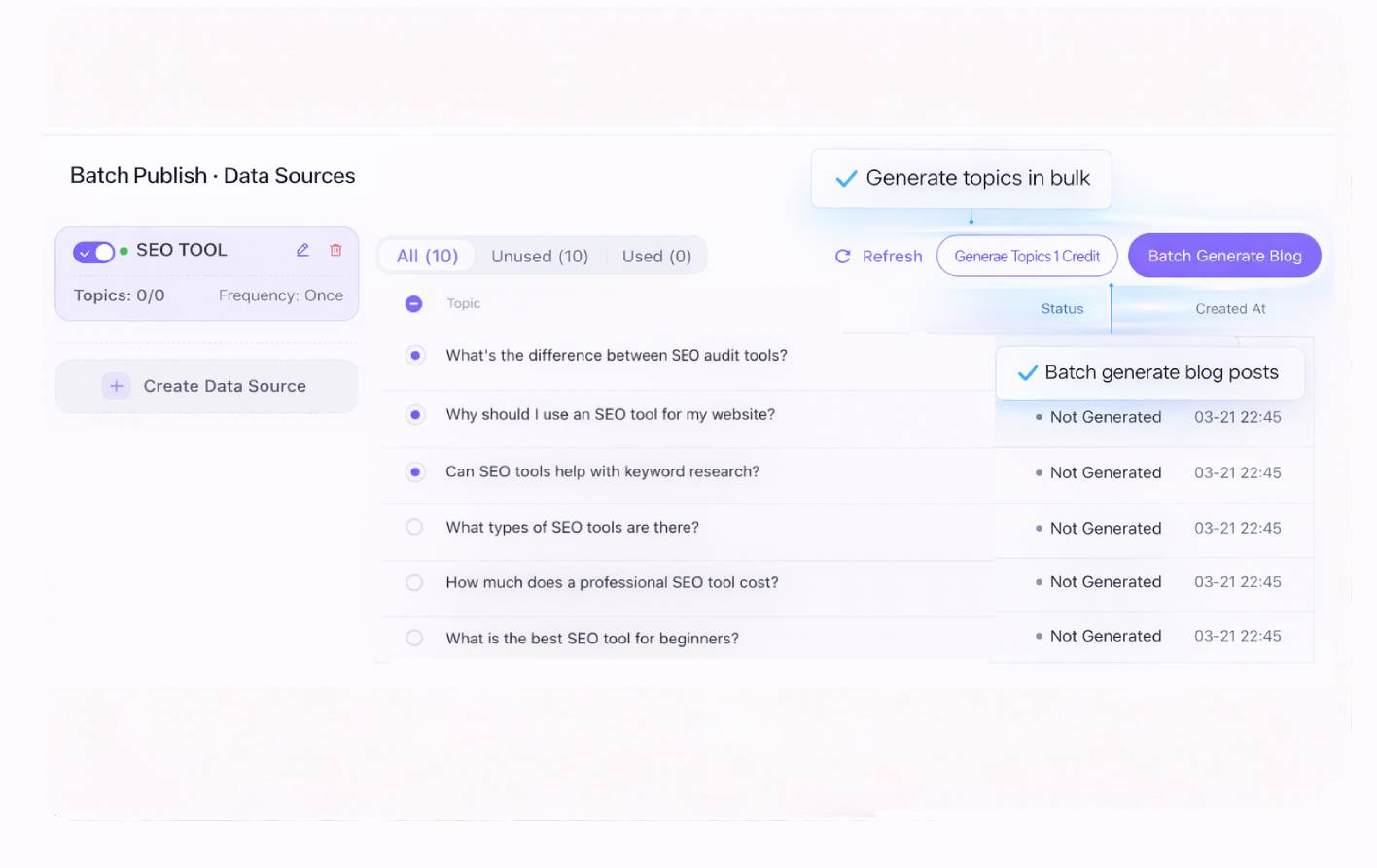
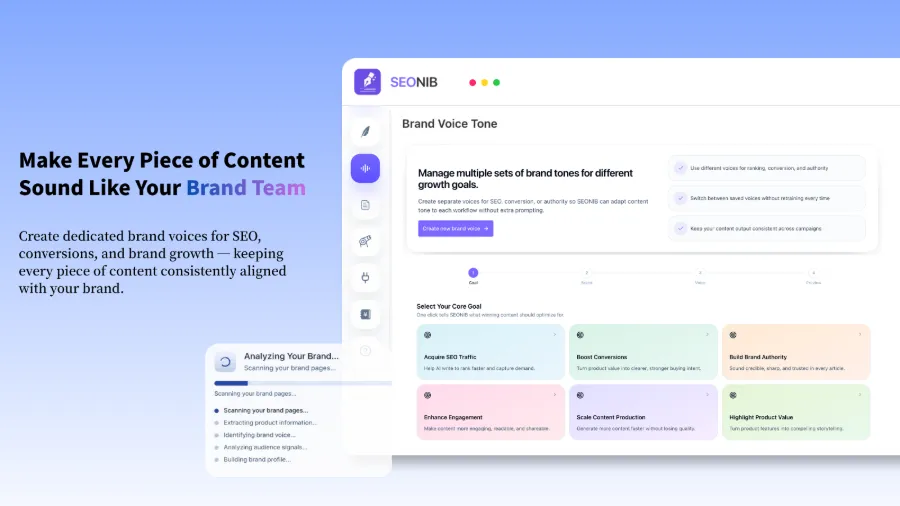
So my workflow changed. I no longer stare only at Search Console for CTR; I also watch a fuzzier metric—whether my content is being used as an “information source” by AI. This is hard to quantify. My current method is to periodically sample screenshots of AI Q&A and see which sites are listed in the answers. Sometimes you can use an automated tool like SEONIB to bulk‑publish content, and those sites can appear in AI citations. The tool doesn’t discriminate, but you still need to control content quality yourself—I have a batch of articles produced via auto‑generation plus human review; they’re average quality, but because they address long‑tail questions, they appear in AI summaries more often than the meticulously crafted guide articles of the past.
This makes me feel split. On one hand, I think content quality should be paramount; on the other, reality tells me that “good enough” and “plenty” of content may be more effective in this era than “excellent” but “scarce.” I have no conclusion, just a description of the current situation.
Manually maintaining a content calendar is a gamble with your own willpower
The SEO industry has an under‑discussed problem: the frequency and sustainability of content output. I’m not talking about a “three‑posts‑a‑week” guideline; I’m asking whether you can actually keep up three posts a week for six months. Most people, including me, can’t. In 2025 I tried: write three long‑form pieces each week for seven weeks. In the eighth week I stopped because of travel, fatigue, and topic exhaustion—no dramatic reason, just couldn’t keep going.
This issue is especially acute in SaaS. SaaS content marketing doesn’t have “seasonal hits” like e‑commerce; your product may be stable all year, but you must continuously produce content to maintain SEO momentum. It’s exhausting.
Later I experimented with automation tools to manage the content creation and publishing pipeline. I didn’t let AI “think” what to write; I let it handle repetitive tasks: topic collection, draft generation, formatting, cross‑platform publishing. I set up a content calendar that runs automatically each week, and I only spend about half an hour each week reviewing the upcoming topics, making minor tweaks, and letting it continue. After two or three months, content output stopped feeling like “driven by willpower” and became a relatively steady assembly line.
That doesn’t mean the quality improved. Some of the automatically produced articles are mediocre, but they accomplish an SEO task: keeping the site’s update frequency high so search engines see ongoing activity. It’s a trade‑off—sacrificing some content quality for a stable flow of authority signals. I’m still debating whether the trade‑off is worth it.
Brands are becoming a new “ranking signal”
I’ve noticed a shift: Google and AI search tools, when deciding whether a piece of content is worth citing, increasingly look at how often a brand is mentioned within the industry. It’s not the traditional domain authority; it’s “how your brand is discussed in the context of other sources.” This concept resembles early discussions of “brand mentions” as a ranking factor, but by 2026 it’s become more concrete.
For example, I have a B2B SaaS client whose site’s SEO metrics have never been great—low domain authority score, few backlinks. Yet they are frequently recommended on several industry forums and third‑party review platforms, naturally including their brand name. I compared the frequency of AI citations for them and found it higher than a competitor with stronger backlinks but lower brand awareness. This made me rethink the value of “link building.”
I’m not saying backlinks are dead. I’m saying that if AI search tools prioritize brands that are “mentioned across multiple independent sources,” then building a widely discussed brand may be faster than swapping a few backlinks.
So I adjusted part of my content strategy: I deliberately “show up” outside my own site—write columns, answer industry Q&A, leave valuable comments in YouTube comment sections. Not for backlinks, but to increase the frequency of my brand name appearing in independent contexts. The effect isn’t certain yet, but after about three months I’ve seen a slight upward trend in brand‑search volume.
FAQ
Q: Can SEO still deliver stable organic search traffic in 2026?
Yes, but you need to adjust expectations. If your target keyword is something an AI summary can answer in one sentence (e.g., “What is SEO?”), CTR will be very low. If you focus on very specific execution questions (e.g., “How does a Shopify store support multi‑currency checkout and multilingual SEO?”), the AI summary can’t cover it in depth, and you’ll still get clicks. Over the past six months with this strategy, my average CTR rose from around 2% to just over 4%.
Q: Do we still need high‑frequency content updates under AI search?
Yes, but not for “freshness signals”—that’s what Google has been saying for a decade, but its impact is diminishing. The real purpose of frequent updates is to give your site more content covering different long‑tail topics, increasing the chance of being cited in AI summaries. Using automation tools, I maintain 3‑4 updates per week without having to log in manually every day.
Q: Does an increase in brand‑search volume prove SEO is effective?
It can serve as a supporting metric. If brand‑search volume grows by more than 15% over three months while AI citation frequency also rises, it’s likely that your content strategy is working on the “being seen” dimension. However, don’t look at absolute numbers alone; consider them alongside overall industry search volume trends.
Share Article