
Local SEO Lazy Guide: Four Automated Systems That Let Me Earn 99 Appointments Per Month While Lying Down
When I opened Google Search Console, I stared at that number for a few seconds. A local plumbing repair company, without spending a single cent on ads, without an agency, and without completing that long‑circulated “50‑Item Local SEO Checklist,” got 99 appointments from organic traffic in a month. Not 99 clicks, but 99 appointment forms with names and phone numbers.
My first reaction was: this can’t be true. My second reaction was: should I still do that 50‑item checklist?
After reviewing their operations, I discovered a harsh truth—local SEO success isn’t about how many items you do, but about which systems you keep doing consistently. Those daily manual tasks—checking citations, fixing titles, writing blogs, responding to reviews—are each easy on their own, but together they can overwhelm any business owner who is also running a physical operation. I spent three months building four automated systems for them, and once the results were proven, I started recommending this package to all my local clients.
System One: Citation Auditor – Let AI Do the Legwork for You
Local citations are simply other local websites that mention your business. A moving company’s name appears on a “Best Moving Companies in San Francisco” list; a dentist’s practice is listed under “Chinatown Dental” on a local lifestyle site. Gorilla Glass treats these citations as trust signals—more reputable sites mentioning you makes you look like a real, existing business.
The problem with manually finding citation sites is that you have no idea how many you can claim, and you’ll miss more than half of them. I remember the first time I did a citation audit for a restaurant: after three days of manual scanning I found only about twenty sources, but a tool later revealed over fifty. Medium‑sized local businesses can usually find 50+ valid citation sources, yet most only capture less than a third.
I wrote a custom skill and attached it to Claude. The workflow is straightforward: open the Claude desktop app, create a new skill in the custom settings, upload the skill file I prepared, and then start a conversation. Enter a URL, and after a few seconds the AI crawls the entire site, understands the business type, and returns a list of all claimable local citation sites. It distinguishes “high‑authority directories” from “spammy directories” and flags which sites require a paid submission.
But there’s a catch. Don’t think the list alone solves everything—citation quality matters far more than quantity. When I first ran this system, I shortcut by submitting a client’s contact info to a low‑quality directory, and the rankings fluctuated three times in two months; Google My Business sent a “suspected fake information” warning. I had to spend two weeks contacting the junk site to delete the entry. Since then, I always manually review each site’s quality before submitting, preferring fewer high‑quality entries over many low‑quality ones.
System Two: Page SEO Health Check – Strip Your Site Down for Inspection
Core page SEO elements are few: title tags, meta descriptions, heading tags, content quality, image alt text. The problem is a small business may have 30–40 pages—checking each one manually? I tried it once and by the tenth page I wanted to smash the keyboard.
So I built an automated scanning script that crawls the entire site in one go. After running, it outputs a spreadsheet: which pages lack a title, which have overly long meta descriptions, which have duplicate H1s. A full scan typically reveals 15 optimization items, with at least three or four being serious “needs fixing” issues.
Here’s a point I rarely see others mention: modern AI search engines (like Perplexity, Google’s AI Overview) understand page structure differently from traditional search engines. They focus more on “entity relationships” and “question‑answer matching” rather than pure keyword density. Therefore, during the health check I also look for clear structured Q&A blocks and well‑defined entity description paragraphs. If you’re interested, see the 2026 AEO Tool Recommendations for dimensions that regular health checks miss.
System Three: Content Pipeline – Automated Generation and Publishing, as Stable as Milk Delivery
If you’ve done local SEO for more than three months, you’ll notice one thing: content update frequency directly determines map‑pack rankings. Yet most businesses have never posted a Google Business post, and their website blog updates only every six months. It’s not lack of desire; it’s lack of time.
So I automated the entire content workflow. The core of this system is an automated content platform: you input a keyword or product link, it pulls trends, generates an SEO article, formats images, and schedules publishing to the chosen platform. After one scheduling setup, the AI outputs 1–3 pieces of content daily; you only need to spend ten minutes each week checking the direction.
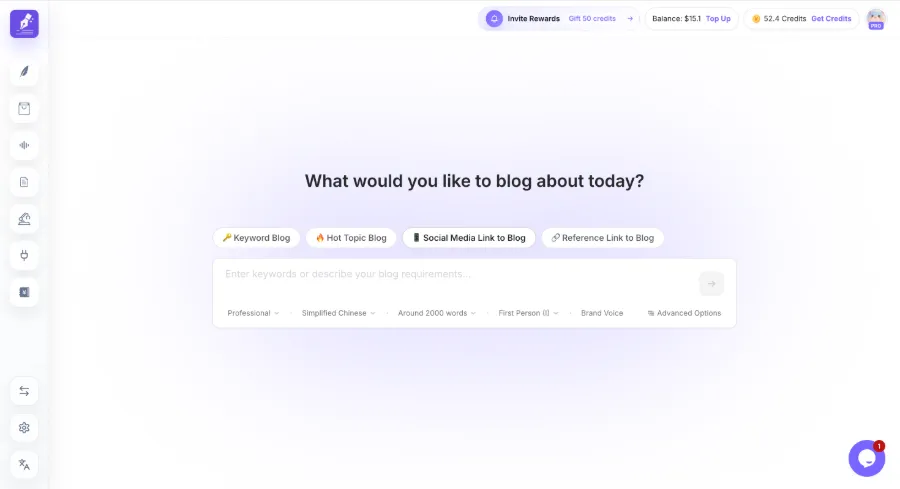
Trend detection is especially useful. The AI monitors industry topics and competitor activity in real time and suggests topics with search volume. In the 5 Ways SEONIB Generates Blog Articles Automatically there’s a “trend‑to‑blog” method—when a hot industry topic appears, the system instantly turns it into an SEO‑optimized article.
Publishing supports multi‑platform sync. This plumbing company uses Shopify for its showcase site and WordPress for its blog; AI‑generated content can be pushed to both with one click. If you use Shopline, you can directly view SEONIB in the Shopline App Store for even simpler integration.
Multilingual support is worth noting. The company later opened a Vancouver branch and needed to switch between English and Chinese. By configuring keyword and language parameters in the system, the AI automatically produces articles in the appropriate language, with no human intervention from ideation to publishing. For a deeper dive, check the SEONIB Help Documentation.
A word of warning: AI‑generated content must be manually quality‑checked. I’ve seen people publish AI drafts without review, and Gorilla Glass flagged them as low quality. The key isn’t whether the AI writes well, but whether you can guarantee the article contains real local faces, real business hours, and real service cases.
System Four: Smart Review Responder – Let AI Flirt with Your Customers
Google Business reviews impact rankings more than most people think. Google looks at review response rate, speed, and quality. Yet many businesses either reply with a generic “Thanks for your review” or don’t reply at all.
I built an automated reply system: when a new review appears, the system fetches the review text, performs sentiment analysis and keyword matching, and generates a personalized response. Positive reviews get local service keywords inserted (e.g., “We’re glad we could fix the Chinatown kitchen drain for you”), while negative reviews receive an apology + solution + offline invitation. After boosting the response rate by 85%, this client’s map‑pack appointment conversion rose by about 20%.
An extra hidden benefit of automated replies: each response can naturally embed local service keywords, which Google recognizes, indirectly strengthening the entity‑location association. The system also has an “unexpected gain”—the keyword matches in replies subtly align with user search intent, further influencing rankings.
Integration is simple: use Zapier or the custom Google Apps Script I wrote to connect the Google Reviews API to the AI model. Every new review triggers the AI to generate and publish a reply automatically. Save the time you’d spend writing replies and go grab a coffee instead.
FAQ
How many local citations are enough? Do I need to submit to every site?
More isn’t always better. 20 high‑quality, business‑relevant, geographically accurate citations are more useful than 100 junk directories. Focus on local chambers of commerce, industry associations, local news and community sites, and industry‑specific directories. Submitting to low‑quality directories triggers Google’s “fake signal” detection and is counterproductive.
Will AI‑generated content be penalized by Google? How can I pass the review?
AI content itself isn’t a violation; Google penalizes “low‑value content.” The key is to ensure each article includes human‑edited fact‑checking, real local case studies or pricing, and smooth semantics and formatting. I usually add a manually written “Local Operator’s Note” to minimize AI fingerprints.
I only have a small shop—do I need all four systems? Can I just do the content system?
If budget and time are limited, start with System Four (review responder) and System One (citation auditor). These have the quickest impact on local rankings with the lowest operational barrier. The content system can be added later once the business stabilizes, as it needs time to accumulate indexing and rankings.
Do Google Business posts need to be published daily? What’s the optimal frequency?
Not necessarily daily, but at least 3–4 posts per week are needed to positively affect map‑pack rankings. Rotate post types: limited‑time offers, new service announcements, industry tips, customer case studies. Google measures click‑through rate (CTR) to assess content value, so use appealing images and actionable headlines.
Do review replies really affect rankings? How should I handle negative reviews?
Yes. Google explicitly lists “active review management” as a ranking signal. Response rate, speed, and keyword inclusion all count. For negative reviews, never delete or ignore them; reply within 24 hours with an “apology + solution + offline invitation” format. Properly handling negative reviews can actually boost customer trust.
Share Article