The Only Correct Direction for Content Strategy After Google I/O 2026: From Ranking to Being Cited by AI
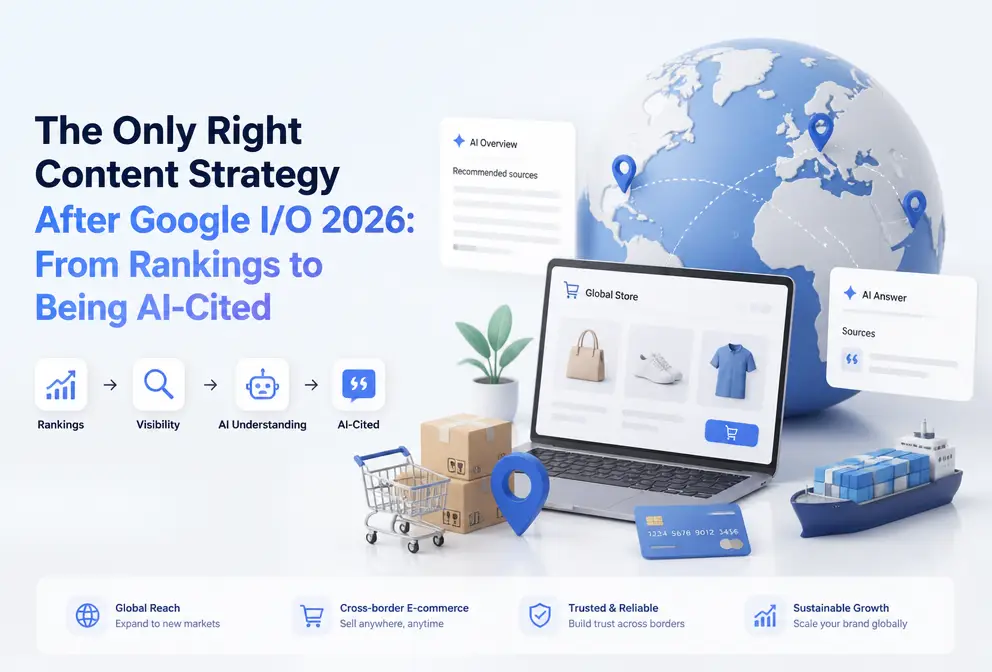
I spent a full two days watching the Google I/O 2026 keynote and filled my notebook with points that need immediate strategic adjustments. If you’re still using traditional SEO thinking—publish a page and wait six months for traffic—you’ll soon notice that rankings remain but clicks disappear. The core change this time isn’t the search interface itself but Google’s redefinition of “discovery”: from user‑initiated searches to AI agents checking for you regularly. The top‑ranked brand’s rotation rate in AI search results is as high as 52%, meaning even if you’re cited today, you could be completely forgotten three months later.
Information Agents Are the Most Underestimated Change in 2026 Search
Information agents are the most underestimated announcement at this I/O. Users can set a topic—such as “AI e‑commerce tools” or “Shopify SEO tips”—and the agent automatically monitors blogs, news, social media, and real‑time data sources, notifying the user when content updates. Users no longer need to search daily; the agent does all the monitoring.
This impact is structural for SEO teams. Ranking is no longer a one‑off task. Pages must continuously stay fresh and structured to be re‑cited by agents. One independent site I manage had a page about cross‑border e‑commerce logistics that historically ranked in the top three. After the agent mechanism launched, the page was summoned regularly for two months. In the third month, with no new content, the agent stopped citing it, and the traffic it had provided dropped to zero, while traditional search ranking and traffic stayed unchanged. The decoupling of the two traffic mechanisms was my biggest lesson this year.
The impact on AEO (Answer Engine Optimization) is even more direct. Information agents don’t return ten blue links; they return a comprehensive answer with citations. Your goal shifts from “rank on the first page of search results” to “be cited in the synthesized answer.” These are completely different problems— the former relies on domain authority and backlinks, the latter on structured data and real‑time content updates. Manually maintaining page freshness is too labor‑intensive to keep up with the frequency of agent summons, so I started using SEONIB for automated content updates and publishing.
AI Mode Switch to Gemini 3.5 Flash Accelerates “Winner‑Takes‑All”
The global upgrade of AI Mode to Gemini 3.5 Flash is the most direct technical move from this I/O. Flash is faster and cheaper, meaning many queries will return AI‑generated answers instead of link lists. I observed an overall drop in click volume, but the remaining click patterns changed—traffic now flows more toward cited sources rather than the top‑ranked page. Brand names and high‑intent queries are being swallowed the by AI Overviews.
Why do some sites get cited more by AI engines? The answer lies in a compressed citation pool. Flash lowers AI operating costs, leading to more queries answered by AI and, consequently, fewer sources available for citation. The winner‑takes‑all dynamic has sped up: previously the “pie” was divided among the top ten, now it’s concentrated among the top two or three cited sources.
You can try it yourself—ask something like “AI e‑commerce SEO tool recommendations” and open Gemini to see which sources it cites. The citation pool is much smaller than the traditional top ten, and the rotation rate is extremely fast.
Personalized Search Breaks the Unified SERP Assumption
Personal Intelligence launched in January 2026 on Gemini and expanded to AI Mode in March. Users can connect Gmail, Calendar, and Photos to AI Mode, and search results are based on personal booking records, purchase history, and travel plans. Two users searching “Tokyo hotel recommendations” will see completely different answers.
I had been optimizing page content for a “typical user,” but Personal Intelligence shatters that assumption. The new logic for content success is: you need to address specific user states. A hotel recommendation page should respond differently to a first‑time business traveler versus a budget‑conscious family—but a traditional page can’t satisfy both simultaneously. Optimizing for the “average user” yields only average results.
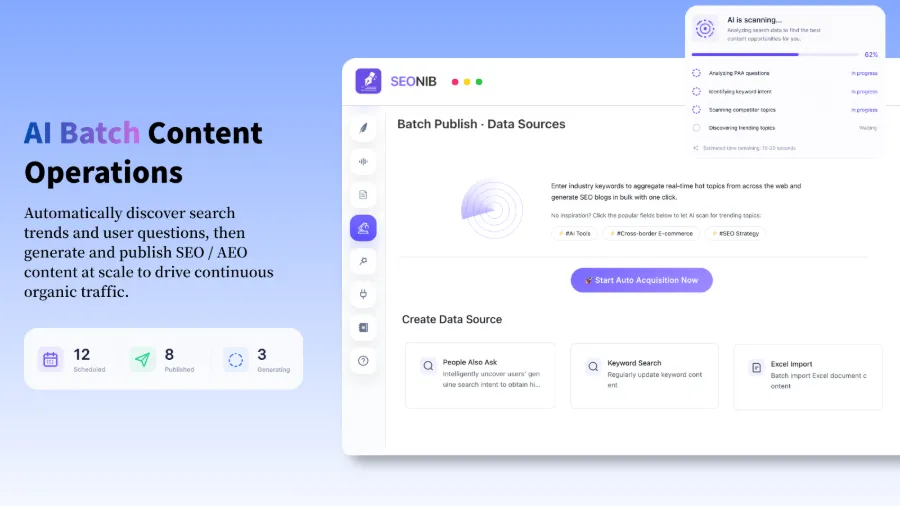
Another observation from information agents is a change in traffic rhythm. It doesn’t reduce traffic; it turns “burst” traffic into “continuous” traffic. You no longer wait for a keyword to explode; you get a steady stream of agent query traffic every day—this raises the bar for content maintenance capabilities, not lowers it.
Gemini Spark and Agent Context Windows—Your Brand Needs to Be Remembered by the Model
Spark is Google’s 24⁄7 personal agent, starting from Workspace and extending to third‑party apps via MCP (Model Context Protocol). The key SEO implication isn’t Spark itself but the pattern it represents—every AI platform is building similar products. When a user asks an agent “find me a CRM under $50 that integrates with HubSpot,” the agent shows one or two options and explains why. Your brand needs to appear trustworthy within this context window.
This requires some technical work: structured comparison data, feature statements with sources, transparent pricing pages, third‑party review citations, and documentation that reads like a manual rather than marketing copy. In essence, AEO is about keeping the brand’s “working memory” readable to the model.
Turning product links into SEO blogs is the first step into this context window. You need to cover users’ comparison needs with structured content, not just publish a marketing article.
If you want a deeper dive into the process, check our Help Documentation.
FAQ
What is the core difference between information agents and traditional search?
Information agents are proactive monitoring systems; after a user sets a topic, the agent automatically retrieves and pushes updates. Traditional search is reactive—users must input keywords to get results. Information agents require continuously updated content, while traditional search emphasizes page authority and one‑off optimization.
Does the decline in AI Overviews click volume mean SEO is no longer valuable?
SEO’s value shifts from ranking to being cited. Total click volume is indeed falling, but the traffic quality from citations is higher—users click cited sources when they have a clear intent. SEO must manage both traditional rankings and AI citations simultaneously.
Do I need to do separate AEO optimization for each target language?
Yes, but it’s not just a translation issue. Different languages have different AI model training data, citation preferences, and structured data requirements. Global brands must create independent AEO adaptations for each market.
Will Personal Intelligence make SEO unpredictable?
Yes, but unpredictability doesn’t equal unoptimizable. Content needs “state awareness”—the ability to cover multiple user intent branches at once. Optimizing for non‑personalized search (e.g., comparison or guide content) remains effective; only the traffic allocation method changes.
Share Article