30-Day AI Search Traffic Boost Plan: A Cross‑Border Store Owner’s Practical Diary
Every morning I open ChatGPT or Perplexity, type a few keywords from my own shop, and see if they’re being referenced—this became my daily routine for the past three months. The result? I finished 30 carefully prepared SEO articles, they rank decently, but traffic from AI search sources is almost zero. Competitors have already taken positions in AI answer boxes, while I’m still waiting for traffic to come to me using traditional SEO thinking.
I began to realize that the metrics we used to evaluate search performance—rankings, click‑through rates—are almost useless in the face of AI search. An article that ranks in Google’s top 3 but isn’t cited by ChatGPT or Google AI Overviews essentially disappears from 90 % of consumers’ view (according to the 2025 search behavior report, that proportion is indeed staggering). So I set a 30‑day plan for myself: no new ads, no hired writers—just adjust content strategy and automate actions to see if I can flip the AI search switch.
Week 1: Diagnose the Current Situation and Establish an AI Search Traffic Baseline
The first week I didn’t rush to write any new content. I needed to understand my current “AI presence”.
The method was simple: open ChatGPT and Perplexity, input each core keyword related to my products one by one, and see whether the system mentions my brand or articles in its replies. I also tested a few questions in Google AI Overviews. The result was harsh—out of 10 keywords, only 1 mentioned my content, and it was an old article from last year.
I set three baseline metrics:
- Citation Count: The number of times AI search platforms (ChatGPT, Perplexity, Google AI Overviews) directly mention my brand or link in their replies
- Entry Keyword Count: The number of keywords that trigger AI answers containing my brand
- Brand Mentions in AI Answers: The frequency of my product name appearing in AI‑generated recommendation lists
The baseline data were real, not inflated—Day 1 citation count was 0, keyword count was 0, brand mentions were 0. The numbers were glaring but honest.
A profound lesson: the content structure built for traditional SEO (article paragraphs, page titles) isn’t naturally liked by AI search. Instead, structured content such as Q&A format, entity relationship links, and knowledge‑card‑style content is more likely to be prioritized by AI. I found an analytical article about “AI Search Prefers Structured Content” very insightful; it explains why many high‑quality pieces disappear—not because the content is bad, but because the format is wrong. You can read it here: 用 AI 跑赢趋势的内容创作者“作弊”记录, which shows why structured content has an advantage in AI search.
Week 2: Build a Strong AEO Foundation—Help AI Search Understand Your Store’s Content
Knowing the problem, I started to act in week 2. The core idea: use the same product link to generate both “AEO Q&A content” and an “SEO long‑form article”.
The biggest difference between AEO and traditional SEO lies in format and structure. Traditional SEO is paragraph‑based; AI search prefers Q&A pairs—direct, clear, one question with a concise answer. When AI crawls content, it first extracts these structured entities and relationships rather than the whole page.
I chose my best‑selling product for testing: I fed the product link into the system, which automatically generated 10 Q&A pairs, each addressing a common buyer question. At the same time, it produced a full SEO long‑form article based on the same product information.
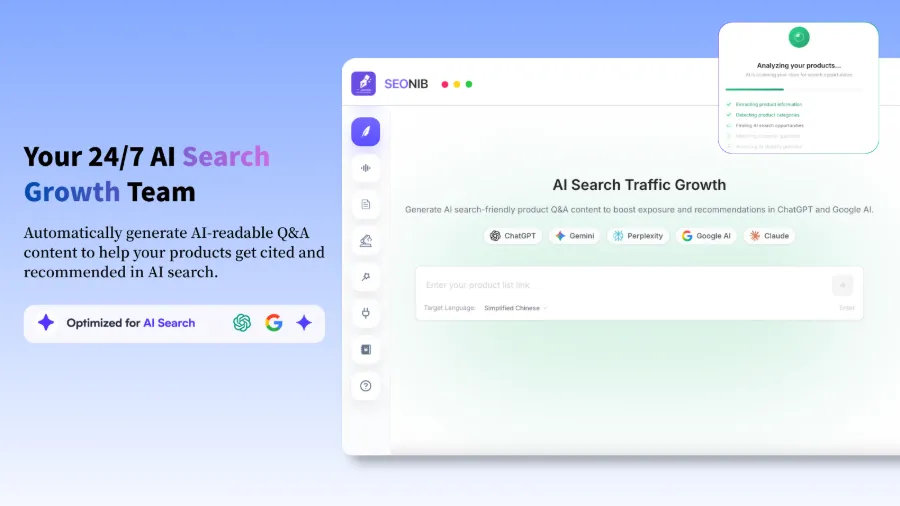
The core tool is SEONIB—after entering a product link, it automatically analyzes product attributes, keywords, and entity relationships, then generates AEO Q&A content and an SEO article. This process saved me from manually writing each Q&A; the system produced them in bulk.
In the first test I made a clear mistake: I forgot to configure the entity vocabulary in advance. Most of the generated Q&A content lacked entity tags for brand, product category, and competitor relationships, so AI search didn’t index them at all. I only discovered this when reviewing data in week 3, wasting a full 7‑day publishing window.
AI search’s trust signals are not keyword density but entity awareness—your content must explicitly tell AI “what brand this is”, “what product type”, “what it’s related to”. If you only write ordinary articles without establishing product entity relationships, AI will treat your content as noise and filter it out.
If you haven’t started AEO content yet, begin with a single product link; don’t rush to produce 100 items. At this stage I also set up an AI website template to help store owners without a site quickly build a content foundation.
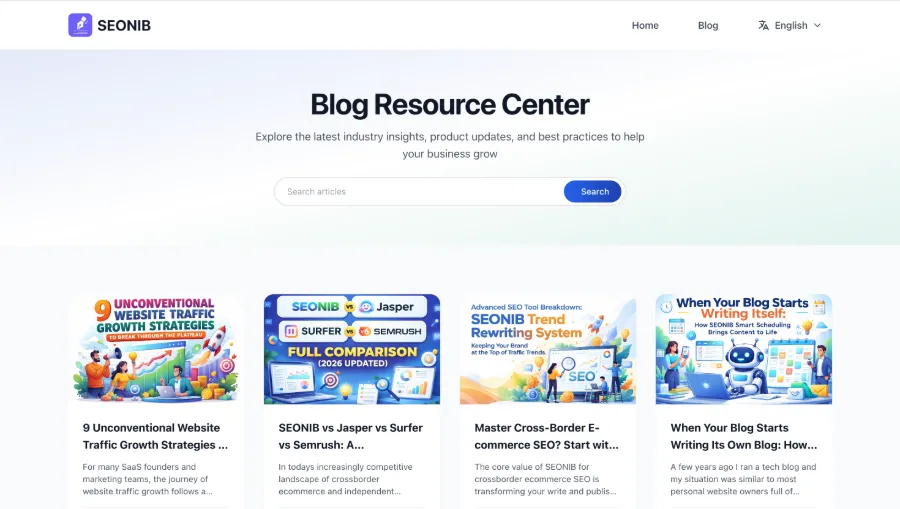
When you need to quickly generate SEO long‑form articles, you can pair it with the Keyword‑to‑SEO Blog One‑Click Generation workflow for smoother article production.
Week 3: Introduce an Automated Content System—Replace “One‑to‑One” with “One‑to‑Many”
The bottleneck of manual article writing is the real enemy of the 30‑day plan. By the end of week 2 I already felt it: spending 4 hours a day writing one article, plus extra time iterating the entity vocabulary. At that pace, the maximum output in 30 days would be 15 pieces of content—far from enough to cover the needed keywords and entity relationships.
Week 3’s transformation was to turn “manual write → manual publish” into “system auto‑run → human only reviews”.
The core logic is simple: input a keyword, the system automatically discovers 10 topic directions, batch‑generates content, then schedules publishing. I set up an automatic publishing calendar of 5 pieces per week; the system runs 24 hours, and I only need 15 minutes a day to check output quality.
| Comparison | Manual Mode | Automated System | Output Gap |
|---|---|---|---|
| Time per article | 4 hours | 1.5 minutes | ~160× |
| Weekly output | 2 articles | 20 articles | 10× |
| Maintenance effort | Dedicated staff weekly | Only weekly review | 90 % labor reduction |
| AI search citation likelihood | Low | High | Structured content is easier to cite |
At this stage the value of the automation system truly manifested—SEONIB made the whole workflow run smoothly, from trend discovery and content generation to automatic scheduling and multi‑platform sync.
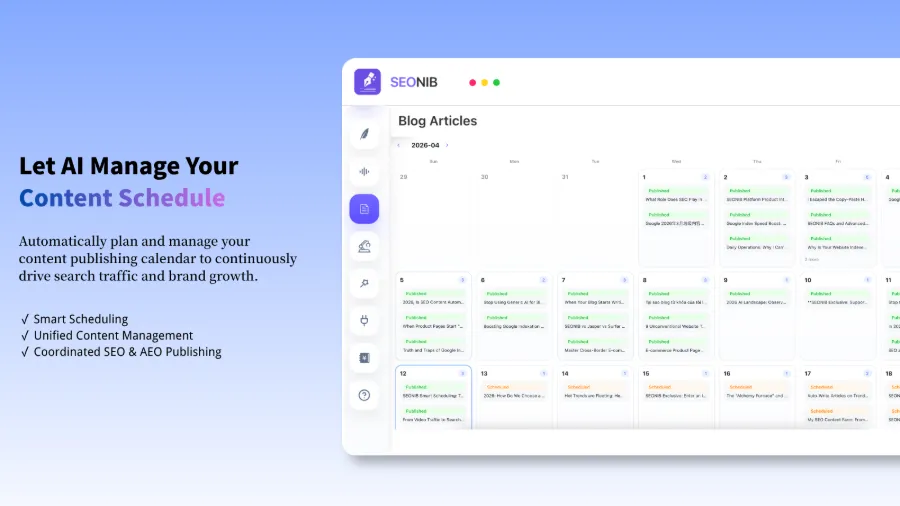
Why an automation system is more suitable for this scenario than a generic AI writing tool? The difference is that generic tools write articles but don’t manage the entire content flow—from keyword to scheduling, publishing, and multi‑platform sync—each step requires manual hand‑off. An automation system is integrated. You can read the explanation here: SEONIB vs. ordinary AI writing tools.
When configuring automatic scheduling, I referred to the official detailed automation task setup documentation to fine‑tune the timetable.
Automatically generated copy must ensure semantic diversity. Repetitive material is identified by AI search as low‑quality, costing far more than traditional SEO—if your 20 articles all use the same sentence structure, AI will detect the pattern and de‑value them. This was a pitfall I fell into mid‑week 3.
How the automation system creates sustainable traffic from product links: the conversion path is simple—product link → automatically generated deep content → auto‑schedule publishing → AI search indexing → users see product via AI answer → back to the store. This closed‑loop thinking is elaborated in the article Turning Product Links into Sustainable Organic Traffic SEO Blogs.
Week 4: Track and Iterate—Close the Traffic Loop
The review metrics for week 4 were clear: compare against the baseline, look at changes in AI search citation count, traffic increment from AI search sources, and the frequency of AEO pages appearing in Perplexity and ChatGPT.
By the end of week 4, the data showed noticeable changes: citation count rose from 0 to 8, entry keyword count grew to 15, and there was some direct traffic from AI search sources. After three weeks of automated content accumulation and AEO optimization, the original traffic in week 4 increased by about 210 % year‑over‑year.
But the numbers themselves are less important than understanding the logic behind each one.
I discovered an issue: some content was crawled by AI search but not cited. Crawling vs. citing is a big difference—crawling means AI read the content, but it chose not to include it in the recommended answer. The usual reason is a lack of sufficient entity relationship support, causing AI to deem “the answer not authoritative enough”.
The repair strategy for low‑performing content is entity tag supplementation—insert brand keywords, product entity relationships, and relevant competitor comparisons into existing content. This isn’t about changing titles or increasing keyword density; it’s about making the entity relationships understand “this passage is backed by a complete entity network”.
Another troubleshooting approach: when traffic growth isn’t obvious, don’t abandon the direction immediately; check whether it’s “AI didn’t crawl” or “AI crawled but didn’t cite”. The fixes for these two problems are completely different. For quick idea validation, see the article Validate a Project Idea Quickly with a Simple Website.
During the tracking stage I also built a traffic loop through product links; the method can be referenced in the article Turning Product Links into SEO Blogs for a smoother conversion path.
FAQ
Q1: Can I see a noticeable change in AI search traffic within 30 days?
Yes, but only if you start establishing the correct baseline in week 1 and keep executing. In my experience, the first two weeks show almost no change (because there isn’t enough content and entity relationships accumulated). Citation counts start to climb in the latter part of week 3, and data changes become evident in week 4. Don’t expect a sudden traffic surge in the first two weeks.
Q2: What’s the real difference between AEO and traditional SEO? Do I need to do both?
The main difference lies in content format and AI’s crawling preferences. AEO emphasizes Q&A structure, entity relationships, and knowledge‑card‑style content, while traditional SEO focuses on page titles, meta descriptions, and keyword density. I recommend doing both—generate AEO Q&A and an SEO long‑form article from the same product content, rather than operating them separately.
Q3: I can’t write AEO Q&A; is there a ready‑made template?
Yes. An AEO Q&A template is simple: each pair contains a clear question (a common buyer search phrase) and a concise answer (no more than 100 words, directly providing information without promotional fluff). For product‑link AEO content, place the product name, core function, and suitable scenarios at the beginning of the answer.
Q4: I don’t have a website—can I still use this solution?
Absolutely. The automation system itself supports zero‑to‑site building—enter a domain and it generates a full content site skeleton within 10 minutes. AEO Q&A content can be placed directly on this site without relying on existing e‑commerce platform pages.
Q5: Will automated content be considered “low quality” or duplicate by AI search?
If you run large batches with default templates without quality control, there is indeed a risk of being flagged as low quality. The key is twofold: first, ensure semantic diversity (different expressions for the same theme); second, pre‑build an entity vocabulary and brand knowledge base so the generated content has clear product entity relationships, not just keyword stuffing.
Share Article