The Age of Agent Search: Before AI Places Orders for Users, What Keeps Brands in This Stage?
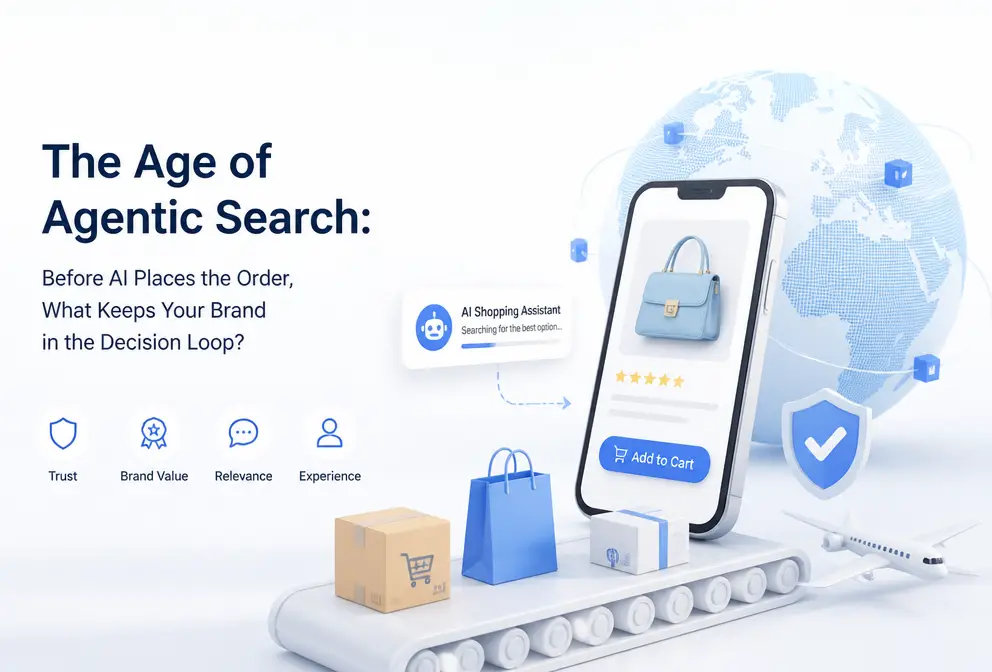
In 2025, shopping behavior is undergoing a subtle yet far‑reaching change. Users no longer flip through pages of search results or click into landing pages one by one to compare specs; instead, they hand their demand directly to an AI agent—“Find me a sunscreen suitable for oily skin, budget under 200”—and the AI handles the search, filtering, comparison, and even the purchase. For brands, this creates an awkward situation: a layer of AI now separates users from products. How much can traditional SEO tactics—keyword rankings, click‑through rates, landing‑page conversion—still matter?
The answer is not optimistic. When users no longer click on search results themselves, the carefully cultivated ranking positions of brands lose their direct relevance. The real question becomes: why would an AI agent recommend you?
From “Search‑Click” to “Delegate‑Recommend”: The User Path Has Changed
Traditional search behavior is a complete, user‑initiated journey: input keywords, browse result pages, click a few links, compare information, make a decision. Throughout this process, brands talk directly to users via titles, descriptions, and landing‑page experiences, and click‑through and bounce rates serve as intuitive metrics of content effectiveness.
Agent‑based search compresses this journey. After the user issues a command, the AI agent independently performs retrieval, filtering, and comparison, finally returning a single recommendation or a short list. Brands no longer face users directly; they face the AI’s “recommendation logic”—whether your content is read, understood, and deemed worthy of recommendation by the AI.
The shortening of this path has a direct consequence: traditional metrics such as click‑through and bounce rates become essentially meaningless in the agent‑search scenario. Users don’t click your page, which does not mean your brand wasn’t recommended; conversely, a high click‑through rate no longer guarantees that users actually saw you. Organic traffic is shifting from “user‑initiated visits” to “AI‑aggregated recommendations,” and the definition of search visibility changes accordingly.
By 2026, brands that still focus solely on optimizing for a single search engine will miss a massive influx of traffic generated through AI aggregation and recommendation. This is not a prediction—it is a traffic‑structure migration already underway.
For more on daily automated SEO content for standalone sites, see How Independent Sites Publish SEO Content Daily on Autopilot.
How Agent Search Determines “Who to Recommend”
When an AI agent filters brands for a user, its information sources differ from traditional search engines. Keyword matching is only the foundation; more important are structured content, entity relationships in knowledge graphs, and the consistency and citation frequency of a brand’s content across platforms.
Specifically, AI agents favor content that is complete, has clear entities, and comes from consistent sources. They need to be able to parse: who the brand is, what it sells, which entities it’s associated with, and whether there are enough third‑party citations to back it up. A brand that only has a product description on its own website and leaves no trace elsewhere is almost “invisible” to the AI agent.
That is why Entity SEO becomes crucial in the age of agent search. Brands must enable AI to understand their identity and business boundaries, not just stuff keywords. The completeness of a knowledge base and the depth of topical authority directly determine whether an AI answer engine will cite your content.
If you’re looking for free e‑commerce tools, check out Free E‑commerce Tools.
Citation rate—how often an AI answer engine cites your content—is becoming a new metric for brand search visibility, alongside traditional keyword rankings. There is a concrete, implementable methodology behind this: seven proven operational paths for getting your content cited by AI answer engines, all centered on information structuring and entity building.
What Brands Can Do: Three Actionable Strategies
Faced with agent search, brands are not powerless. There are three concrete action directions, each illustrated with the context of cross‑border e‑commerce standalone sites.
1. Cover More Platforms to Expand AI Capture and Citation Opportunities.
When an AI agent decides whom to recommend, it doesn’t look only at your website. It aggregates information from Shopify stores, social media, third‑party reviews, industry forums, and more. Brands that appear on multiple platforms have a higher probability of being captured and cited by AI. By 2026, the SEO landscape no longer suits a single‑channel focus on Google; content must appear wherever both users and AI pass through.
2. Build Brand Entities and Knowledge Bases so AI Can Understand “Who You Are, What You Sell, Why You’re Recommended.”
The key here is information structuring. Brands need clear entity pages, Q&A pages, and knowledge pages that tell AI their business scope, product lines, and core selling points. Consistency across platforms matters more than the ranking of a single piece of content—if the website says “focused on outdoor gear” but social media is all food content, the AI agent will struggle to determine your brand attributes.
3. Maintain a Steady Content Update Rhythm to Continuously Accumulate Topical Authority.
AI agents tend to cite content sources that are regularly produced and consistent. A blog that hasn’t been updated for three months is far less likely to be recommended than a site that publishes relevant content weekly. This involves efficient multi‑channel content production and distribution—manual posting on each platform quickly drains operational resources.
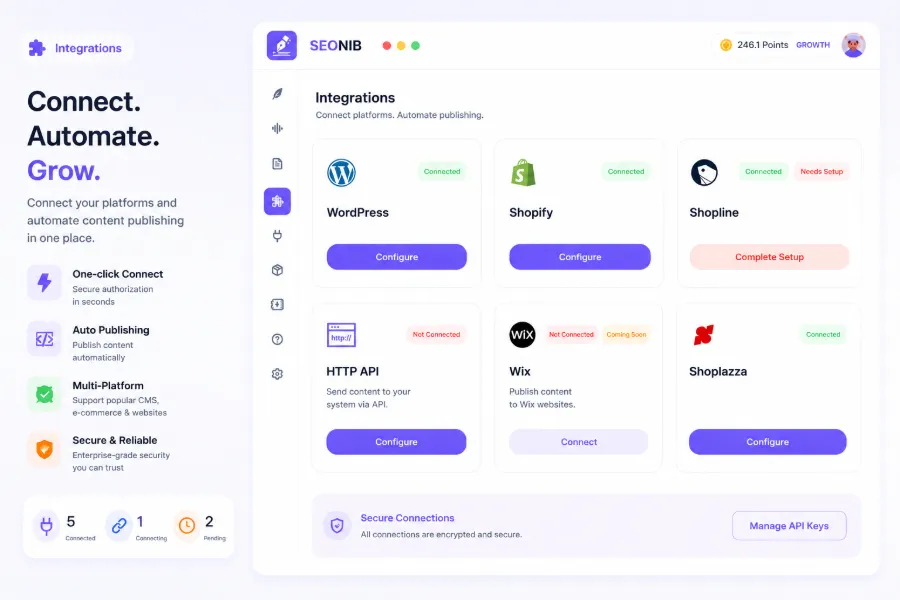
Scaling content production is a common bottleneck for many standalone sites. A tool that supports content generation in 40 languages and automatically syncs a single publication across multiple platforms can dramatically lower the cost of maintaining multi‑platform content. Platforms like SEONIB automate the workflow “topic discovery → content generation → scheduled publishing → multi‑platform sync.” Ready‑made operation manuals are available for implementing automated content publishing on standalone sites.
For an in‑depth analysis of 2026 SEO trends, read the article Stop‑Only‑Focusing‑on‑Google‑In‑2026‑SEO‑You‑Need‑to‑Be‑Everywhere‑06‑05.
Trust and Entities: The Brand Moat in the Agent‑Search Era
When AI agents become the “middleman,” the trust chain between brand and user must be rebuilt. Previously, users trusted a brand by browsing its website, looking at product images, and reading reviews; now, users trust the AI’s judgment, which is based on how well the AI understands the brand’s information.
Thus, a brand’s core task shifts from “selling products” to “selling information assets that AI can understand and recommend.” Concrete steps include: creating brand‑specific Q&A pages covering all possible user questions; building entity pages that clearly define relationships among brand, products, industry, and competitors; maintaining knowledge pages that let AI quickly extract core brand information.
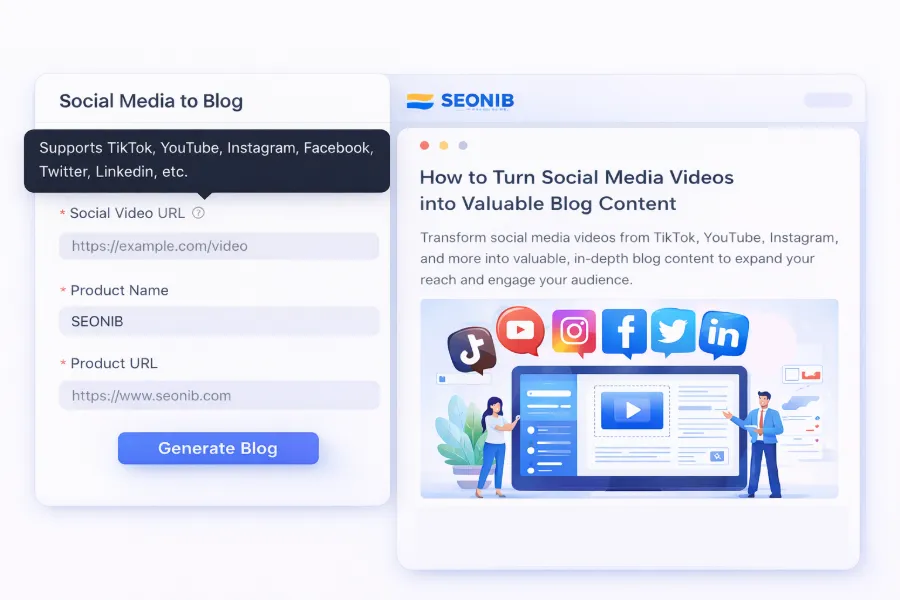
A noteworthy point: existing social‑media content can be transformed into blog articles, becoming AI‑indexable information sources. An Instagram post or a TikTok video, once organized, can become a structured blog entry, further enriching the brand’s information base within the AI search ecosystem. A 10‑minute‑to‑build content site can serve as the brand’s information foundation in the AI search ecosystem.
The cost and manpower required for these actions are unavoidable. Small and medium standalone sites often lack dedicated SEO teams; manual content creation and platform‑by‑platform publishing quickly hit a bottleneck. This is where content‑automation tools play a role—platforms like SEONIB automate repetitive content production tasks, allowing brands to focus on strategy. Complete AI SEO automation guides and platform‑specific documentation can serve as starting points.
Detailed help documentation is available in the Help Center.
Outlook: Brand Competition Landscape Under Agent Search
Agent search will not eliminate brands, but it will change the dimensions of competition—from battling for user attention to battling for AI recommendation weight. This shift may not be a bad thing for small and medium standalone sites.
Large brands have traditionally relied on ad budgets and brand volume to suppress smaller sellers, but in AI‑agent recommendation logic, information completeness and consistency outweigh budget. A small standalone site with clear product information, unified content across platforms, and steady updates can achieve a higher recommendation probability than a large brand. Thus, small and medium sites may actually narrow the gap with big brands in the agent‑search era.
However, there is a failure mode to watch out for. If a brand continues to rely on traditional SEO tactics—focusing solely on keyword rankings and publishing large amounts of low‑quality content—it will gradually lose visibility in the agent‑search recommendation loop. This degradation does not happen instantly; it becomes apparent as AI‑agent penetration rises. Waiting until traffic visibly drops before adjusting often means falling behind by six months or more.
Brands need to stay flexible amid uncertainty and continuously monitor changes in the AI search ecosystem. Agent‑search recommendation algorithms are evolving rapidly; a strategy that works today may be obsolete tomorrow. Ultimately, competitiveness stems from “continuous, consistent, structured” information supply—regularly updated content becomes a digital asset that provides long‑term support for AI citations. Cost‑benefit assessments of SEO and GEO services can serve as decision‑making frameworks.
FAQ
What’s the difference between agent search and traditional search engines?
Traditional search engines return a list of links for users to click, browse, and compare themselves; agent search lets AI perform retrieval, filtering, and comparison, returning only the recommendation. The core difference is the shift of decision authority—users no longer manually select, they delegate judgment to AI.
What are the key factors for a brand’s content to be recommended by an AI agent?
Information structuring, entity clarity, cross‑platform content consistency, and third‑party citation frequency. AI agents favor brands they can clearly understand “who, what, and why,” while keyword density is not a primary factor.
How can a small brand with no budget gain exposure in the agent‑search era?
Start with information structuring and entity building; the cost is low. Create clear Q&A and knowledge pages, keep information consistent across platforms, and update content steadily. AI agents prioritize information completeness over ad spend, giving small brands a chance to be recommended based on content quality.
Do brands need dedicated pages for agent search?
Yes. Q&A pages, entity pages, and knowledge pages are the main information sources for AI agents. These pages don’t need complex designs; the focus is on clear, structured information that covers core user questions.
Will agent search replace traditional SEO?
Not entirely in the short term, but it will siphon a large portion of traffic. Traditional keyword rankings remain useful, though their weight is declining. Brands should pursue both traditional and AI search strategies rather than choosing one over the other.
Share Article