
AI Content Demoted? I Saved My Rankings with Four Tricks

Last year I did something stupid. I pumped out a hundred blog posts with AI in one go, hoping to earn traffic passively. Two weeks later, when I opened Google Search Console, my hands went cold—traffic didn’t rise; it dropped 80%. After three days of log checks and a few runs with Screaming Frog, I finally confirmed: it wasn’t a manual penalty, it was the Helpful Content Update that sent me back to square one. Search engines don’t hate AI; they hate “content without a human touch.” Below is the real process I followed from being penalized to regaining rankings, hoping it helps you avoid the pitfalls I fell into.
First, Stop Blaming AI—Which Hidden Traps Did You Step Into?
My first reaction after the demotion was to blame Google for discriminating against AI. After carefully rereading those articles, I found each one committed several obvious mistakes. The most fatal was pure machine output with no human intervention—the articles looked like the same template copied and pasted, lacking concrete examples, original data, and filled with filler phrases like “in today’s fiercely competitive market environment.”
After Google’s March 2024 Helpful Content Update, about 40 % of sites with purely AI‑generated content saw their traffic cut in half. This isn’t speculation; it’s real data shared by dozens of members in the SEO group I belong to. Google’s post‑update documentation is actually quite clear: they don’t use detection tools to decide whether you used AI; they look at whether the article provides real informational gain. If users finish reading and get nothing new, a demotion is inevitable.
Other errors I made included: high content duplication (the same set of phrasing repeated across five different topics), lack of E‑E‑A‑T signals (no author bio, no citations, no personal experience), and keyword stuffing that warped natural language. In six articles I used the same opening sentence pattern, which even I found cringe‑worthy.
So let me be blunt: if the content itself is low‑quality, it doesn’t matter whether AI wrote it. Blaming AI is just an excuse for laziness.
#1 Lifeline—Every AI Draft Must Undergo “Human Revamp”
Once I recognized the problem, I started fixing those articles. The core rule is simple: each AI‑generated draft must be manually refreshed before publishing.
Here’s how I did it:
- Step 1 – Adjust the article structure. AI‑generated paragraphs usually follow a pyramid shape, putting the conclusion at the end. I flipped it to an inverted pyramid: the first paragraph gives the answer, then I expand on reasons and actions.
- Step 2 – Insert at least one real personal case per article. For example, in this piece about content demotion I wrote about the traffic crash in March last year and the all‑night investigations that followed—something AI could never fabricate.
- Step 3 – Replace AI‑typical phrasing. Delete boilerplate like “It is worth noting,” “Overall,” “Cannot be ignored,” and replace them with concrete operational descriptions.
- Step 4 – Add external authoritative citations. Link key points to Google’s official docs or industry reports.
- Step 5 – Run Copyscape. Ensure there’s no accidental duplication.
After rewriting, I republished the batch. Four weeks later the average click‑through rate rose about 65 %, and Google re‑indexed without any warnings. The key point: search engines judge “originality” mainly by informational gain and E‑E‑A‑T signals, not by detecting AI fingerprints. If you can provide things AI can’t produce (personal experience, specific data, operational details), you won’t be penalized for using AI tools.

During this period I also discovered a time‑saving trick: people on social platforms often share valuable posts. Instead of starting from scratch, refer to the method for batch‑generating blog articles from social links (https://seonib.com/help/19/Guide%20to%20Converting%20Social%20Media%20Links%20to%20Blog%20Posts), structure the verified content, then manually flesh out the details. This guarantees a baseline quality.
The Best Hybrid—My Semi‑Automatic Workflow
Writing a full article by hand every day is unrealistic. Pure automation gets you banned. I found a balance: use a tool to generate an SEO‑compliant draft, then quickly polish it manually.
I started using SEONIB (https://www.seonib.com) for this workflow. Input a keyword or product link, and AI automatically produces a draft with structured data, basic SEO tags, internal linking suggestions, and image logic. After the draft appears, I spend 15‑20 minutes on human refresh: replace awkward paragraphs, insert personal experience, adjust tone, and verify citations. With this pace, output went from two articles per week to one per day—without any demotions, all indexed normally.
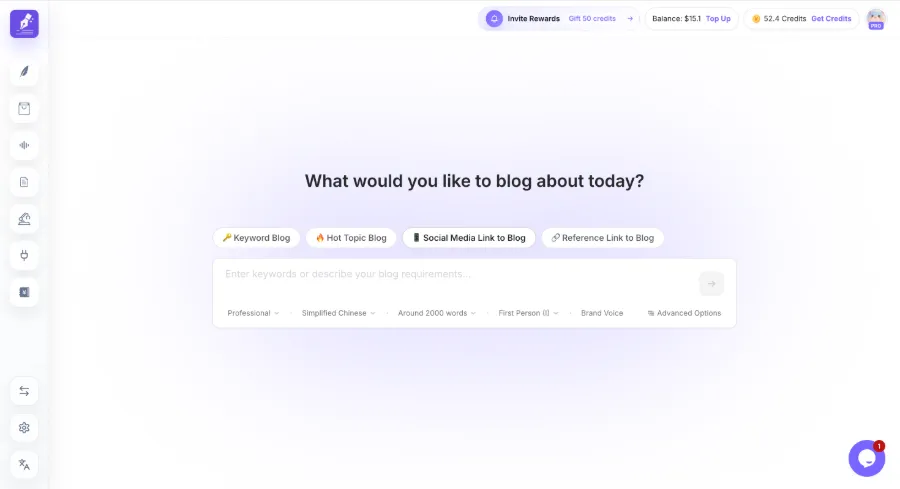
The other part of the semi‑automatic workflow is publishing and syncing. Set up scheduled publishing rules, and AI pushes articles on schedule—no daily login needed. I initially stumbled here: manually distributing to three platforms, I forgot to add image alt tags, so some versions missed them. Later I configured third‑party site sync rules; see How to Connect Third‑Party Sites to SEONIB (https://seonib.com/help/8/How%20to%20connect%20third-party%20websites%20with%20SEONIB). Once configured, there’s nothing to worry about.
A counter‑intuitive observation from this workflow: semi‑automatic (AI draft + human polish) is more efficient than fully manual and safer than fully AI. Pure human writing stalls and delays; pure AI output fluctuates in quality and is easy to detect. After mixing, human intervention frequency drops, but each intervention hits the most quality‑impacting stage—originality. More details are in the SEONIB Help Docs (https://seonib.com/help) advanced configuration tutorials.
Technical “Anti‑Demotion Armor”—Structured Data and Originality Verification
Content quality is just the foundation. To make search engines understand your content correctly, you can’t skip structured data.
I spent a weekend adding Schema markup to all new articles: FAQ Schema for Q&A pages, Article Schema for each blog post, and Product Schema for product pages. The effect was noticeable—adding FAQ Schema boosted that page’s search click‑through rate by about 22 %. Schema.org’s standards are detailed enough; the key is to match the correct page type, not to over‑tag.
For originality verification, besides Copyscape I also use Google’s site: search to see if competitors have scraped my content. I’ve encountered two cases where a spun version stole the ranking within five days of publishing. My response was to submit a copyright claim and adjust the publishing strategy, ensuring the first version indexed by Google was mine.
Multilingual publishing is another common pitfall. Directly using Google Translate or AI translation without localization makes the machine footprint obvious to search engines. My current approach is to produce a genuine translation for each language market, then adapt expressions to local holidays, slang, and measurement units.

This week I’m also exploring AEO (AI Search Engine Optimization). Traditional SEO aims for the top spot in search results. AEO’s goal is for your content to be directly retrieved and quoted by AI search tools like Google SGE or Perplexity. The basic idea is similar: clear entity relationships, structured Q&A pairs, and up‑to‑date data. If structured data is well‑implemented, the likelihood of AI citing your content increases significantly. For originality detection and structured data tools, see the 2026 Top 10 Page SEO Analysis Tools (https://seonib.com/guide/2026-top-10-seo-tool) for useful options.
If you want to quickly generate blogs with structured data, check out the demo One‑Click Convert Product Page to Blog with SEONIB (https://blog.csdn.net/SEONIB_Explorer/article/details/159613242). No need to hand‑code Schema.
FAQ
Q1: Will AI‑written content always be demoted?
Not necessarily. Demotion isn’t because “AI was used,” but because the content lacks informational gain. If you edit, add your own data and experience, search engines won’t punish you just for the tool source. All of my manually refreshed articles are now indexed normally.
Q2: How can I tell if my AI content has been penalized by search engines?
Open Google Search Console and look at the “Pages Indexing” panel for “Indexed but not crawled” or “Discovered but not indexed.” If that number jumps more than 30 % within two weeks, and the “Search Results” panel shows a simultaneous drop in impressions and clicks, it’s likely you’ve been hit by the HCU. I noticed my impressions fell from an average of 1,200 per day to 240 on the third week, which alerted me to a serious issue.
Q3: How much must a human rewrite be to be considered original?
There’s no fixed percentage. My experience: at least about 60 % of the sentences should be rewritten, especially the opening and closing. AI‑generated paragraphs tend to be overly uniform and need to be broken up and reorganized. The core criterion isn’t character‑replacement rate but whether the article contains information only the author could know.
Q4: Does fully automated publishing always lead to problems?
Not “always,” but the risk is high. The biggest issue with full automation isn’t the content itself but the lack of monitoring for updates. If an automatically generated article triggers a manual review, you may not notice indexing anomalies for several days. Manual checks once or twice are fine, but if you automate 100 articles, the filtering workload can become larger. You’ll need to find your own balance.
Q5: What should I do with a multilingual AI site?
Never publish a machine‑translated version directly. I tried using AI to translate Chinese content for the French market and got zero indexing. Later I hired native speakers to polish the translations, adding localized examples and data sources; rankings appeared after three weeks. The key for multilingual sites is: the source text is the same, but each language version must provide independent informational gain.
Share Article