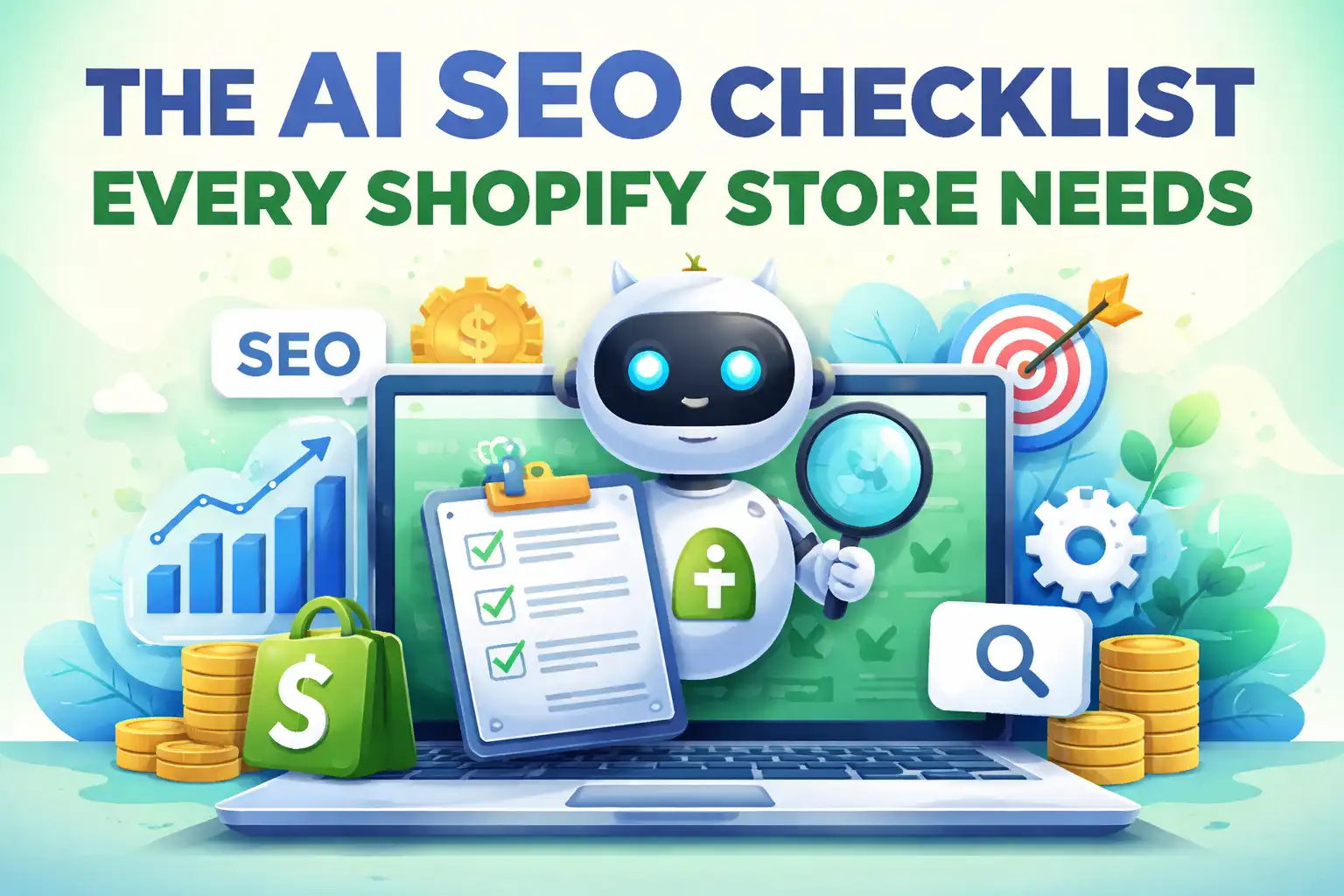
AI SEO Checklist Every Shopify Store Needs
In the past three years I’ve helped clients run a dozen Shopify standalone sites and have seen many cases where “hundreds of articles were published, yet traffic didn’t move at all.” Recently I took over a lighting‑vertical site that had already published nearly 80 articles, but its organic traffic was still stuck around 200 per month. The problem wasn’t content quality—it was a chaotic publishing rhythm: two articles today, none next Wednesday, then five articles the following week when the mood was right. Traditional SEO—manual topic selection, human writing, copy‑pasting across platforms—is already outdated. What you truly need is to pull your effort out of repetitive grunt work and focus on decision‑making, not labor. Below is an AI SEO checklist I’ve distilled after more than two years of work, with every step vetted through pitfalls.
Reject Content Drought, Replace “Write Tomorrow” Procrastination with AI
The most familiar scenario for Shopify sellers: after a new product launch, you post a few social media updates and then face a long silent period. It’s not that you don’t want to write; you just don’t know what to write. I’ve seen countless sellers list six topics at the start of the month and never touch any of them by month‑end. Competitors publish three stable posts per week, and after three months their search traffic doubles while the other side is still saying “write tomorrow.”
AI doesn’t solve writing speed; it solves the continuity of topic selection. Now my first thing in the office each day is to open the system‑generated topic pool—ChatGPT combined with industry monitoring tools—filtering out the day’s high‑potential directions from competitor activity, social media hot words, and keyword trends, usually about 4–5 topics. I don’t have to guess topics; I just decide which direction aligns best with my product scenario. This tool has dramatically boosted traffic.
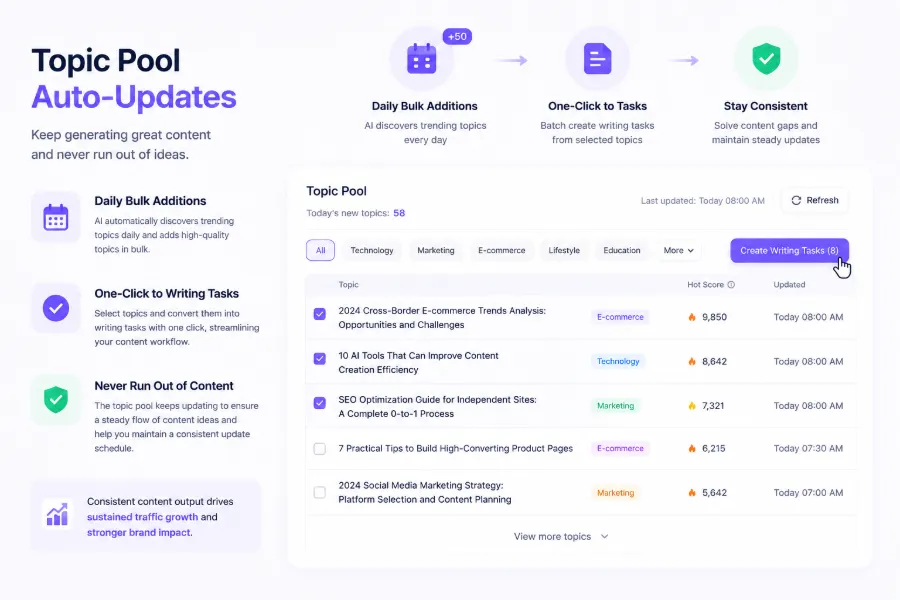
In practice, this yields a stable output of 15–20 targeted article ideas per week. Compared with the past where everything relied on willpower, now it’s like someone hands you a recipe each day and you just decide “what to cook today.”
Turn Shopify Products into an SEO Content Machine with One Click
Topic selection solved, the next step is the products already listed in your store—they’re the best content material. I’ve validated a very practical workflow this year: feed a product link into AI, which automatically analyzes specs, user reviews, and selling points, then outputs several pieces of content from different angles.
The operation is straightforward. My go‑to tool is SEONIB; paste a product link, and within a minute AI generates a buying guide, a review comparison, and two FAQs. Images are auto‑scraped, internal links point to related products, and SEO meta descriptions, titles, and H‑tags are filled in according to standard formats. No need to open the backend for item‑by‑item tweaks or copy‑pasting.
One product link yields four pieces of content in under two minutes. The big prerequisite: your product information must be complete. If the title is just “Red Dress” and the description is a single paragraph of fluff, AI’s output will be limited. My habit now is to first flesh out product specs, materials, and usage scenarios before submitting to AI. If you’re not familiar with the setup, check the official help docs, which explain how to bind a Shopify store and set automatic rules.
When your products can be bulk‑converted into blog content, the internal linking network naturally expands. Don’t underestimate this step—many sites stall because the articles aren’t interlinked, not because there are few of them. For a more complete creation workflow, see the guide “From Inspiration to Global Distribution” and you’ll see how a near‑hands‑off production line can be built.
Content Scheduling and Publishing: From “Think Then Publish” to “Automatic Scheduling”
Having content isn’t enough; rhythm is the core variable for SEO accumulation. I once made a stupid mistake—publishing 30 articles in two weeks, then taking a month off. Google’s crawler came once, grabbed a batch, saw no new content afterward, and left. That blank period caused about half of the previously built index to disappear.
Before enabling automatic publishing, validate the direction with data. I recommend reading “How to Quickly Validate Product Search Demand” to avoid drifting after automation.
My approach is to set a basic publishing frequency: one article per day, pause on weekends. AI generates and pushes content on that schedule in the background. You don’t need to log in daily or click “publish.” A quick glance at the calendar view each morning tells you whether today’s content is queued normally or if there’s an anomaly; you can adjust a day in advance if needed.
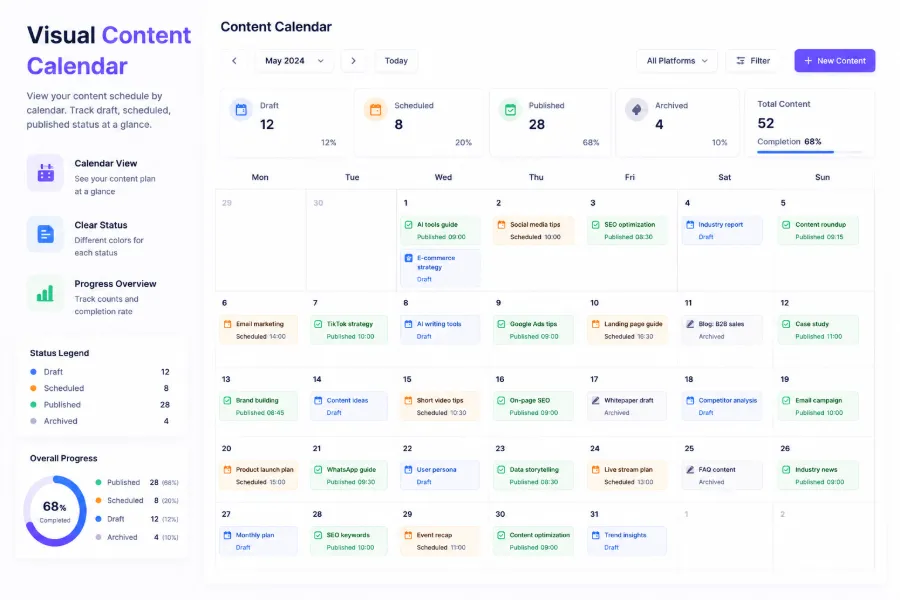
I’m all too familiar with the old “will‑power‑driven” update routine—editing articles at 2 am, swearing to update regularly tomorrow, then breaking again on day three. Now the content calendar clearly marks statuses: pending generation, pending publishing, live. The visual benefit is that you can instantly see how your traffic assets are distributed over the coming week.
A quick note: SEONIB’s cross‑platform sync is mature—WordPress, Shopline, Medium, Framer can all publish, but my primary focus remains Shopify, so I prioritize its integration. After three months of continuous automated publishing, organic traffic typically grows 2–4×. This isn’t a new algorithm boost; it’s simply that Google’s crawler learns the site’s update rhythm. The video below demonstrates the full blog‑to‑Shopify sync, far more intuitive than a manual guide.
From SEO to AEO: Let AI Search Recommend Your Content
The first three items follow traditional SEO logic: publish more content, build domain authority, wait for Google rankings to rise. Since last year, however, a new variable has reshaped how search traffic is allocated—AI search.
Think about it: when a user asks ChatGPT or Perplexity “Which brand’s Bluetooth speaker sounds best?” where does the AI pull its answer from? Not the top‑ranked homepage link, but pages with clear information structures, comprehensive entity coverage, and explicit Q&A formats. Traditional SEO articles that stuff keywords, list selling points, and lack structured Q&A are ignored by AI search.
Shopify’s official site launches millions of new sites each year, but very few can do AEO (AI Engine Optimization). Early this year I partnered with a DTC home‑goods store; they published 200 AI‑generated articles in the first three months, yet organic traffic barely moved. The post‑mortem showed they were only stacking quantity, with no article covering entity‑level information like “what material is the product made of,” “which season is it suitable for,” “how to pair it,” or “differences from competitors.” After four months they shifted direction, rebuilt a product knowledge base, and turned each item’s common questions into entity Q&A—traffic finally started to climb. The three‑month waste was painful, but the lesson is crystal clear: AI search recommendation logic doesn’t demand article volume; it demands entity coverage and answer structuring.
I now generate an AEO Q&A page for each product, containing 8–12 entity Q&As covering material, size, maintenance, after‑sales, usage scenarios, etc. These pages contain no promotional tone; they simply answer real search queries. The result is noticeable: for the same category keyword, optimized AEO content is cited three times more often in Perplexity and Google AI Overviews than ordinary articles.
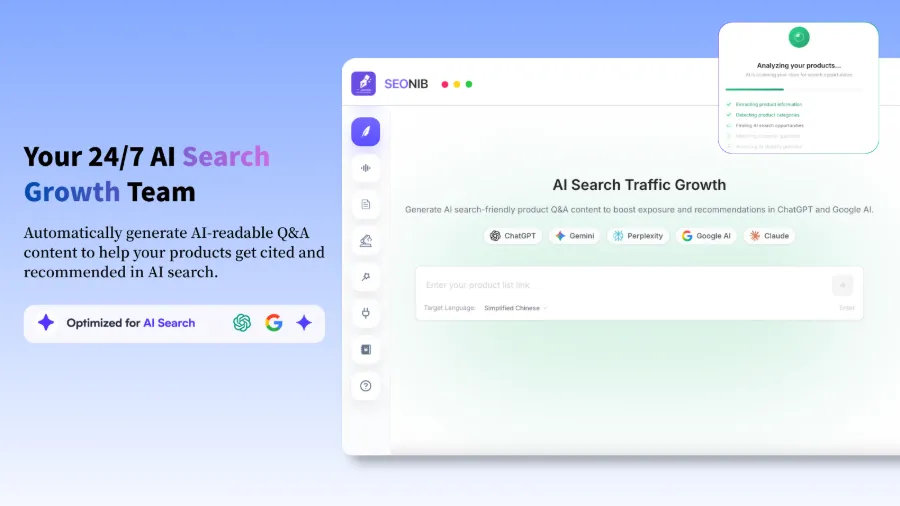
Looking back, this approach is especially suited for Shopify sellers because you already have product data, taxonomy, and FAQs—just reorganize them into an entity‑SEO format. If you’re running a similar store, I strongly recommend reading “Store GEO Optimization” for the same concept; platform differences are minimal.
Content creation shouldn’t be the start of the workflow. Topic validation and rhythm setting are. The AI simply maximizes execution. I don’t worry about algorithmic lottery; I focus on reproducible mechanisms.
FAQ
Q1: What’s the fundamental difference between AI SEO and traditional SEO?
Traditional SEO relies on “more content, more coverage” to capture bulk traffic, with content quality heavily dependent on human judgment. AI SEO automates repetitive steps—topic selection, generation, publishing, syncing—while the strategic layer still requires human direction, data validation, and rhythm adjustment.
Q2: I have no technical background. Can I still implement this automation?
Absolutely. Most Shopify sellers I work with have no development experience; the workflow is essentially three steps: configure Shopify connection → set content templates → set publishing frequency. The only prerequisite is spending half a day getting the first content flow up and running.
Q3: Is there a best practice for publishing frequency?
My tests show daily publishing beats publishing five times a week. Google’s crawler prefers steady, lightweight updates over bursty large batches. Publishing one article per day for 90 consecutive days yields a significantly higher index success rate than publishing seven articles in a weekend and then pausing for a week.
Q4: How should content and product pages work together on a Shopify standalone site doing AI SEO?
Product pages are the traffic entry points; content pages retain users and build trust. A common practice is to link blog content to product pages via internal links—e.g., inserting related product cards at the end of a review article. AI can automate these associations without manual edits per article.
Share Article