
Solo Founder Running a One‑Person Operation: How My Typical Workday Looks Like

Every morning when I sit at my computer, I’m not faced with a meticulously planned task list but with client messages I didn’t get to reply to last Friday, weekend‑accumulated order notifications, and three consecutive blank slots on my content calendar. As a solo founder, the biggest daily challenge isn’t setting strategy; it’s slicing time into 20‑minute units and filling those endlessly unfinished execution items. There’s no team to share the load, no excuse to make, and everything ultimately falls on my shoulders. This article, written from a genuine perspective, shares a day in the life of this solo founder—no filters, just a schedule, trade‑offs, and some exhausting but unavoidable realities.
For a solo operator, the most important thing in the morning isn’t “efficiency” but “damage control.” The first thing I face each day isn’t a new opportunity but the backlog that has built up over the past several hours. Below is my day.
9:00 – 10:30 AM: Clearing the Battlefield, Defining Today’s Focus
In the first hour after getting up, I almost never touch any news feed or read a book. The first thing I do is open my message list and skim through client inquiries, order anomalies, and platform notifications. The goal isn’t to reply to everyone, but to quickly separate what must be handled today from what can be postponed until tomorrow.
I spend about 30 minutes on this: I scan message titles, flag anything involving payment failures, logistics issues, or customer complaints in red, and mark the rest as “reply later.” Then I open the Shopify backend and my independent‑site backend to see if there are new orders to confirm or inventory alerts. This filtering process pulls my attention back from “everything feels urgent” to “only these few items will cause trouble if left undone.”
I’ve observed that roughly 80 % of solo founders spend the first three hours completely occupied by “urgent but not important” tasks. System notifications, platform ad recommendations, email pushes—these look like they need a response, but they neither drive growth nor solve core problems. It took me months to learn to distinguish “truly needs attention” from “just looks like it needs attention.”
After that, I confirm the three things that must be completed today. Not five, not ten—just three. This number is something I’ve trial‑tested; more than three and half of them remain undone by day’s end, piling up for tomorrow and creating a vicious cycle. Three items mean that even if something unexpected happens in the afternoon, I can still preserve core output.
10:30 – 12:30 PM: High‑Intensity Execution Block – Content Production & Operations Maintenance
These are the two hours when my energy is at its peak, and I devote them entirely to content creation. As a solo‑run independent site, organic traffic is the only free channel, so content updates cannot be interrupted. The morning writing block does not allow checking messages, looking up data, or suddenly researching a new tool.
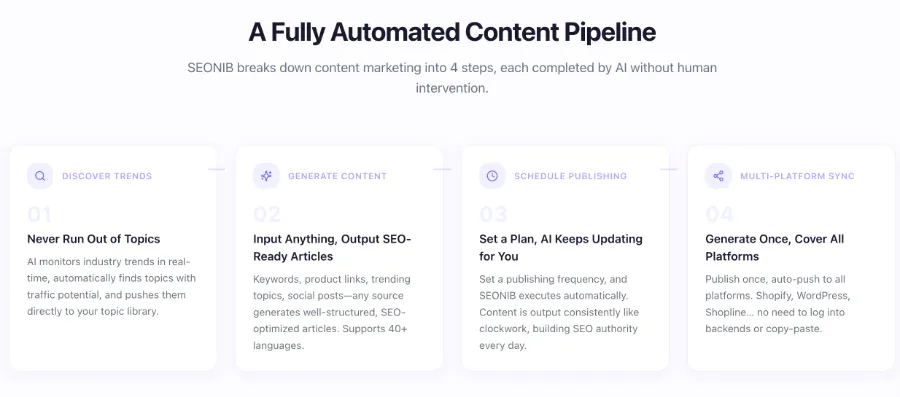
Where do topics come from? I maintain a content calendar in advance; each day it already contains 5–10 candidate topics sourced from industry trend monitoring, competitor content coverage, and recurring content tasks (e.g., product update notes, holiday promotion copy). I never spend more than five minutes deciding on a topic—pick a direction, confirm the keyword has search volume, ensure it doesn’t conflict with existing content, then start writing.
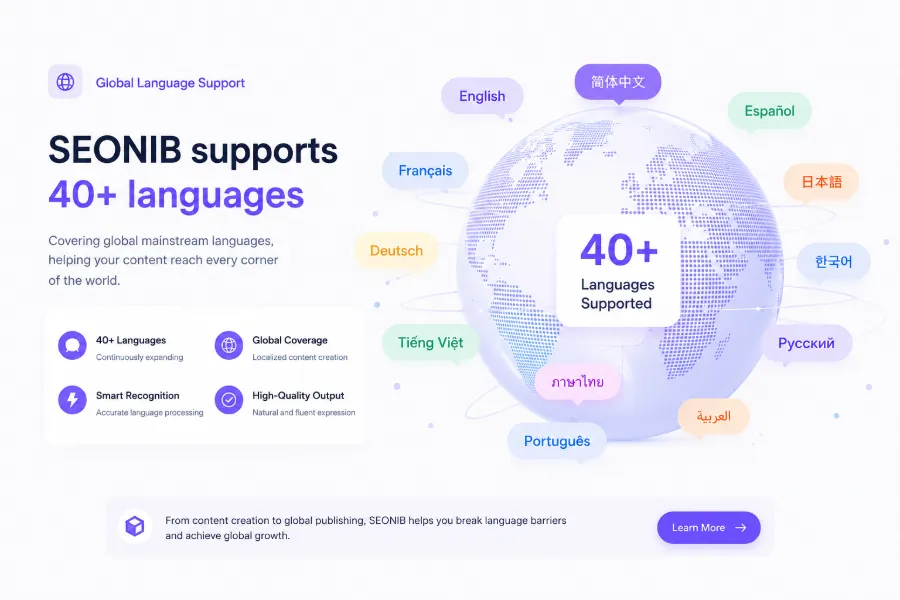
Writing the content itself usually takes 40 minutes to an hour. The real time sink is the pre‑publish steps: adding SEO keywords, adjusting internal links, selecting images, creating multilingual versions. In the early solo‑operator days, I manually published content every day for 45 consecutive days. Then one morning I found myself at the computer but couldn’t bring myself to open the editor. It wasn’t laziness; the repetitive manual workflow drained my willpower. Traffic curves rise slowly during the persistence phase but drop faster when interrupted. This experience made me realize that a solo operation can’t rely on willpower to keep updating; I must automate the repetitive work.
Later I tweaked the workflow and started using SEONIB to handle the entire chain from content generation to publishing. Input a keyword, select language and platform, and the rest is automated. The saved time is spent on tasks that still require human involvement, such as reviewing article quality, adjusting brand tone, and adding industry insights. A solo operator’s energy is limited; rather than repeatedly copy‑pasting, it’s better to compress those tasks into a reasonable range.
By the end of these two hours, at least one piece of content is published or queued for scheduled release. If time remains, I start the topic selection and outline for a second piece, preparing for tomorrow.
1:30 – 3:30 PM: Technical Maintenance, Bug Fixes & Tool Optimization
After lunch my focus dips a bit, and I use this time for technical maintenance—coding, API debugging, and bug fixing. A solo founder has no tech team to pass the buck; any cross‑platform sync issue eventually lands on my desk.
Common pitfalls involve different backends handling the same format differently. I’ve encountered several cases: an article with a table looks perfect in WordPress but the table breaks into gibberish after syncing to Shopify; internal link URLs get extra parameters on one platform; image alt text gets truncated in some systems. Each cross‑platform sync averages 3–5 such format discrepancies. Solving one format issue can require 3–5 rounds of testing, taking about an hour.
I compiled a personal troubleshooting checklist, documenting past pitfalls and their fixes. Later I realized these notes could be cross‑referenced with existing resources—e.g., the Technical SEO Checklist Guide helped me pre‑empt many format and link issues without waiting for post‑publish fixes.
Some technical problems can be solved through ecosystem integrations. For example, SEONIB adjusts API parameters for each platform during cross‑platform sync, handling most format conflicts before publishing, so I don’t have to manually fix each article. Occasionally, a sync interruption occurs—say, a platform updates its API version and the old integration fails. Then I need to consult the latest integration docs and compare field changes. I bookmarked the SEONIB integration page in the SHOPLINE App Store so I can see change logs immediately after each version update.
Another often‑underestimated issue for solo founders is tool‑switching overhead. Switching from WeChat to the backend, from the backend to the editor, and from the editor to an API debugging tool costs far more than just click or load time. The brain must re‑enter the context, and this hidden cost accumulates substantially over a day. I tried consolidating all technical maintenance into a single block rather than scattering it throughout the day; the reduced number of switches improved my overall mental state.
If I encounter an unsolvable problem, I consult the SEONIB Help Center for ready‑made solutions or known issue documentation.
3:30 – 5:00 PM: Learning & Strategic Catch‑Up
This is the segment most solo founders get cut out of—learning and research. No one reminds you to stay on top of industry changes, and there’s no KPI forcing you to read new docs. Yet without continuous information intake, a strategy from two months ago can become obsolete today.
I set a rule for myself: spend at least two hours per week on SEO and AI search tool updates. The rationale is that a two‑month knowledge gap makes previously accumulated understanding stale—not invalid, just less effective. Search engine algorithms, AI search recommendation logic, platform policy updates—all have increasingly short cycles.
I usually split those two hours into two 30‑minute blocks on two different afternoons. Sources include tool update announcements, competitor content changes, and industry‑shared technical posts. I don’t do deep research while reading; I just jot down key points into a clipping folder. At month‑end I review the folder and integrate truly relevant insights into my content strategy.
A particularly memorable share was about AI search’s preference logic for independent sites—How to Make ChatGPT Treat Your Site Like a Treasure mentioned details I’d never noticed, such as entity density and internal linking logic, not just titles and keywords. That information directly shaped my content planning for the next two weeks.
Additionally, I spend a little time reviewing how my existing content is performing in search engines. Are rankings shifting? Which pages are losing traffic? Which new topics are gaining search volume? I record this data and feed it back into tomorrow’s topic selection. My more detailed workflow can be found in the Complete Guide from Inspiration to Global Distribution, which outlines my end‑to‑end process from trend discovery to multilingual publishing.
7:00 – 9:00 PM: Review & Tomorrow’s Pull‑String
Regardless of what was accomplished during the day, everything must be stopped at night. The core nighttime tasks are twofold: review today’s data and set a minimal work‑load constraint for tomorrow.
The review takes about 15 minutes. I open Google Search Console and my site backend to check the early performance of today’s published content—whether it’s indexed, any keyword ranking changes, and whether traffic trends look normal. I don’t analyze every number; I just confirm there are no major anomalies. If traffic drops suddenly, I investigate whether it’s a indexing delay or a page error. These data directly decide whether I need to tweak content direction tomorrow or stick to the original plan.
I use the HTTP API Push & Integration Guide to automate part of the review data output, reducing manual number‑gathering time.
Then I write down the three things that must be completed tomorrow. This step takes no more than five minutes, but its value is huge—15 minutes of review plus five minutes of planning saves at least an hour of morning chaos. When I wake up, I don’t have to think “what should I do today?”; I just open the pre‑written three‑item list and start executing.
I have to admit, a solo operation can never finish everything. Even with automation, not all details are covered. Some tests get pushed to next month, some strategic iterations are indefinitely postponed. I no longer chase “cover every method, perfect every detail.” “Done is better than perfect” sounds like a slogan, but in my one‑person workflow it’s a daily verified fact. Publishing content on schedule, even with minor formatting quirks, is stronger than writing a perfect article that isn’t published for two days.
That’s my typical day. No earth‑shattering efficiency revolution, no overnight traffic explosion—just a lot of execution, a little review, and constant adjustment. The solo‑operator rhythm isn’t about finding breakthroughs in direction; it’s about accumulating compound interest through daily steady execution—keep doing it tomorrow, and the data will slowly improve.
Frequently Asked Questions
How does a solo founder balance content production with product development?
Perfect balance is impossible; you must make hard priority cuts. I split the week into two blocks: Monday‑Wednesday focus on content production and maintenance, Thursday‑Friday handle product development and technical optimization. The switch isn’t driven by time ratios but by locked calendar blocks.
How does a solo founder ensure content updates don’t stop?
My first 45 days taught me that you can’t rely on willpower. A solo operator must reduce the update frequency to a level that doesn’t consume willpower—e.g., one article per day—and use automation tools to keep that frequency stable on the execution side. The key isn’t how fast you write, but whether the publishing process can run unattended.
What if a solo founder hits a technical roadblock?
If I’m completely unfamiliar with a direction (e.g., server configuration or API integration), I first check the tool’s own documentation and FAQ, then look for existing third‑party integration solutions. If that still fails, I open a ticket with the support team—don’t waste time grinding on a skill you’ll only use once; a solo operator’s time is too valuable.
Is daily review and planning worth it, or is it a waste of time?
Fifteen minutes of review plus five minutes of tomorrow’s planning occupy a tiny fraction of the day’s total workload, but the payoff is measurable: my morning startup efficiency on planned days is double that of unplanned days. The value isn’t in a perfect review; it’s in preventing the next day from starting from zero.
Is multilingual content suitable for a solo founder to try?
Yes, but with a caveat. If your primary language content hasn’t yet achieved stable traffic, adding languages will only split your attention. My approach is to first establish a stable publishing rhythm in the main language, then use tools to batch‑generate other language versions without manual translation of each article. The prerequisite for a solo founder to do multilingual content is that the toolchain is already running smoothly, not that every step requires manual effort.
Share Article