Google Stops Giving Clicks? Let AI Recommend You Directly
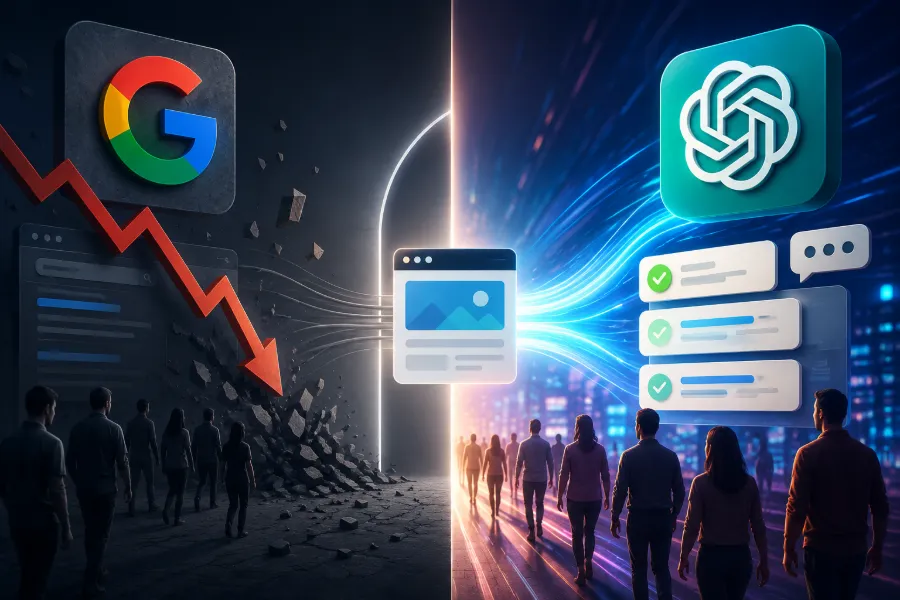
Open Google Search Console; the natural‑search traffic curve is still smooth, and the monthly trend line is even slightly rising. But oddly enough, the conversion rate looks like it’s been paused, staying flat for three consecutive months. I stare at the click data in the backend, then open the chat windows for Perplexity and ChatGPT, and suddenly realize something: users get the answer directly from the AI and no longer need to click into my site. I used to labor over titles and meta descriptions to squeeze out a higher click‑through rate; now the AI throws the conclusion right in front of users, eliminating the need for a redirect altogether. Since users aren’t clicking, let’s change the approach—let AI recommend your content directly, making it the “default answer” in its responses.
Why Your Site Is Shifting From “Being Clicked” to “Being Skipped”
My site used to get a lot of traffic thanks to click‑bait titles and meta descriptions. But starting at the end of 2024, a clear trend emerged: the summary box for Google AI Overviews on the SERP is taking up more space, and answers from Perplexity and ChatGPT appear before the blue links. I checked a few high‑traffic pages: impressions stayed the same, but clicks dropped by nearly 30 %. Users glance at the summary, get their question answered, and leave.
I spent three weeks optimizing a product page—keyword research, internal linking, schema markup—nothing left out, and it ranked in the top five on Google. Guess what? The AI search engines didn’t cite it at all. When I searched the brand name on Perplexity, the page didn’t show up. That moment made me realize a huge blind spot in traditional SEO: we only care whether the blue link gets clicked, ignoring whether the AI “understands” and incorporates your content into its knowledge base. Data shows that 73 % of “search” behavior now happens outside traditional search engines—users search on TikTok, browse Reddit, or ask ChatGPT directly. If your content lives only in Google’s index, you’re essentially excluded from the real decision‑making circle.
A New Way to Let AI Recommend You: From SEO to AEO
Since the traditional search entry point is shrinking, we need a new playbook. I spent some time researching “AI Engine Optimization” (AEO), which basically means stop trying to trick Google’s algorithm and instead make AI models—Google AI Overviews, Perplexity, ChatGPT—actively cite your content when generating answers.
| Dimension | SEO | AEO |
|---|---|---|
| Goal | Keyword ranking | AI citation & recommendation |
| Content format | Long‑form blogs, listicles | Structured Q&A, brand‑entity paragraphs |
| Metrics | Click‑through rate, bounce rate | Citation count, recommendation rate |
The two mindsets are completely different. SEO aims for “when users search, you appear on the first page”; AEO aims for “when AI explains, your information appears in the summary.” AEO’s core consists of three things: make AI understand you, trust you, and cite you. Understanding you requires structured data; trust you requires coherent brand context; citation requires your content to become the “default knowledge source” for the topic.
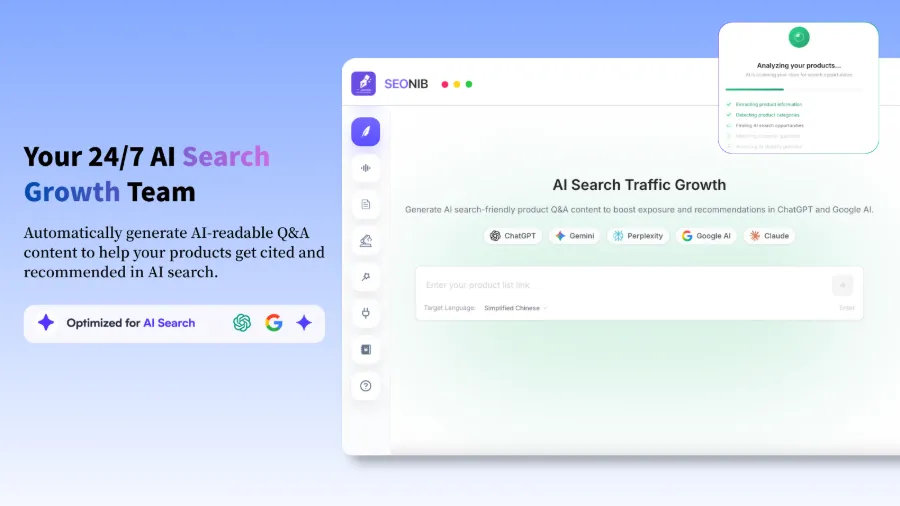
For example, I started converting all product pages into a Q&A structure, telling the AI: “My product is X, it solves problem Y, users often ask Z.” You’ll find this format shows up far more frequently in AI search results than traditional blogs. If you want to dig deeper into which AEO tools you can use, check out this 2026 AEO Tools Recommendation List where I’ve listed some tools I’ve personally tested with good results.
From Manual Work to AI Automation: My Content Workflow Transformation
How painful was the old process? Every morning I’d scan industry news for topics, open ChatGPT to write an article, manually add images and SEO metadata, then log into WordPress, Shopify, and Shopline to publish. One article took at least two hours, and I could only publish three or four pieces per week—far from enough to sustain a content volume. Moreover, AI search engines don’t give much weight to sites with low update frequency.
Then I changed my mindset: since AI needs a steady stream of fresh content to verify your activity, let the content production itself become automated. The new workflow has four steps: discover trends, generate content, schedule publishing, and sync across platforms.
Discover trends – AI automatically scans industry hot topics and competitors’ content gaps each day, pushing high‑potential topics directly to me. No more manually browsing Twitter or news sites.
Generate content – even direct. Input a keyword, a product link, or even a YouTube video script, and the AI outputs a fully structured SEO article. If you have a product link and want to quickly turn it into a blog, this article will help a lot: Turn Product Links into SEO Blogs.
Schedule publishing – the part I enjoy most. Set a daily or weekly publishing frequency, and the AI executes automatically without any manual clicks.
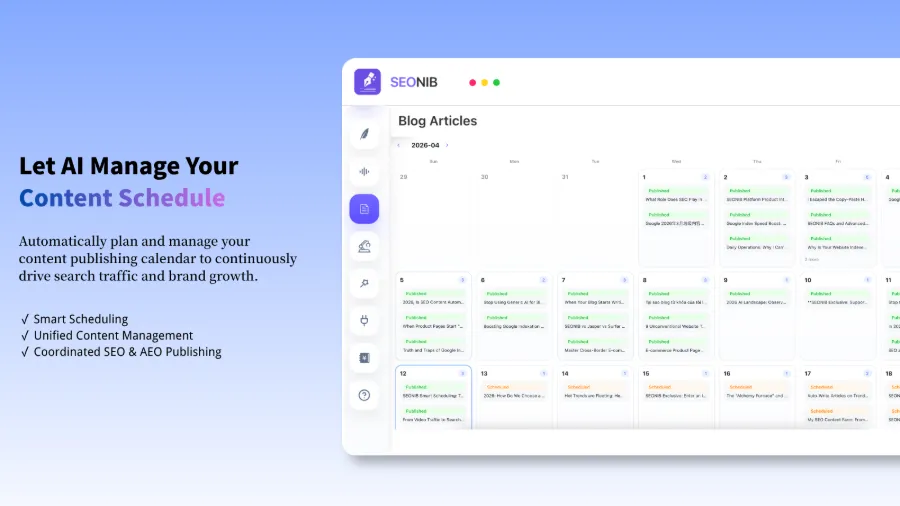
Later I used SEONIB to create a daily task that automatically fetches product links, generates articles, and publishes them, completely eliminating manual work. Content now churns out like clockwork, and both SEO authority and AEO citation probability have noticeably increased.
Multi‑platform sync – the final piece of the puzzle. The same article needs to appear on WordPress, Shopify blog pages, and Shopline store article sections simultaneously. No more logging into each backend to copy‑paste. SEONIB can push to all platforms with one click, including Shopify, WordPress, and Shopline. I’ve automatically generated and published to three platforms in a single day, fully unattended.
Shopline’s own app marketplace also offers integration; see the Shopline App Store for details. If you don’t have a website, no problem—SEONIB’s built‑in site builder can spin up a content site in ten minutes without any code.
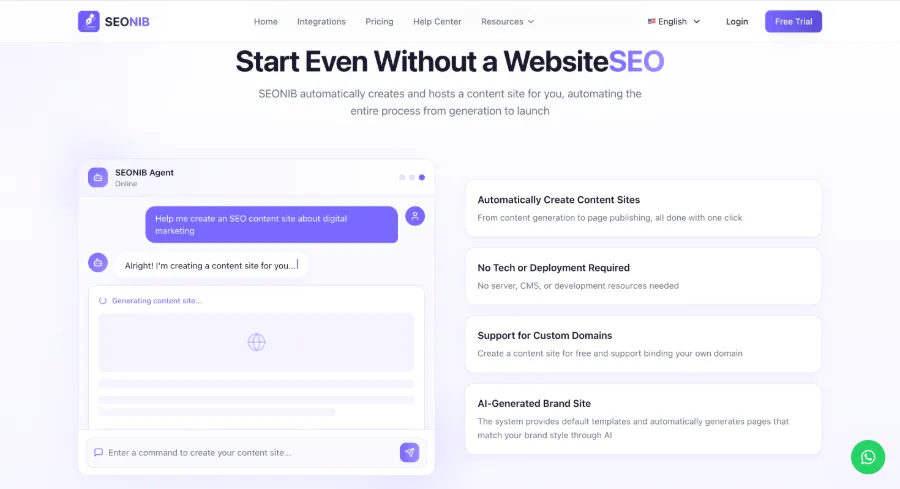
For a detailed walkthrough of the automation steps, refer to this help documentation for deeper configuration options.
No Guesswork: Use AEO Content to Verify Whether AI Really “Sees” You
Having the automation in place doesn’t guarantee success. My biggest pitfall was that content volume increased, but AI never cited it. Many sites die because “there’s too much content, but AI can’t understand it”—hundreds of articles without structure or brand context, so the AI can’t recognize who you are.
How to verify? The simplest method: search your brand’s core keywords on Perplexity and see if your information appears in the answer. If several searches return nothing, the AI hasn’t indexed your content yet. Then check two things: first, whether the site has entity markup (e.g., Schema.org definitions for organization and product); second, brand consistency—ensure every article uses the same brand name, description, and core terminology. For a deeper dive into how brand consistency affects AI search, read this analysis on Brand Consistency and AI Search.
Another quick test is to use a simple website rapid‑testing project idea to see at low cost whether your content can be captured by AI.
In essence, AEO is about turning your brand into the AI’s “default knowledge,” which is more stable than ranking on Google’s first page. My experience shows that after 30 consecutive days of publishing structured content, the frequency of AI citations increased, but you don’t need to write hard every day—just maintain a regular, consistent cadence. Regular updates, consistent brand terminology, and a sustained knowledge base are far more important than sheer volume.
FAQ
What’s the biggest difference between AEO and SEO?
SEO’s core goal is to get users to click your link on the search‑engine results page; AEO’s goal is to have AI search engines cite your content directly when generating answers. The former focuses on click‑through rate and rankings; the latter focuses on citation count and recommendation weight.
How can my content be indexed by AI search engines?
First, ensure your site has structured data markup (e.g., Schema.org organization and article entities). Then continuously publish content in a Q&A format with consistent brand context. AI’s crawl and index cycle is faster than traditional search engines, but only if the AI can “understand” your content.
Can I do AEO without a website?
Yes. Build a simple brand content site; it can be set up in ten minutes without any coding. The key is that the site contains clear structured data, brand information, and Q&A‑style descriptions of core products/services.
How do I know if AI is already citing my content?
Open Perplexity, ChatGPT, or Google AI Overviews, enter your brand keyword or core product name, and see if the answer includes your site’s information. If several searches return nothing, the AI hasn’t cited you yet.
Does AEO optimization require daily content updates?
Not necessarily every day, but maintaining a steady update frequency (e.g., 2–3 structured pieces per week) is more effective than occasional bursts. AI values the continuity and consistency of its knowledge base more than a one‑off surge in quantity.
Share Article