
I personally turned the content operation of my Shoplazza store into a pipeline

Previously, every day I opened the Shoplazza backend, and my first thought wasn’t “how many did we sell today” but “what should I write today”. Browsing competitors, brainstorming topics, finding images, formatting, copying and pasting to various platforms— I repeated this process for almost two years, and the content update frequency relied entirely on willpower. Then one day I realized: if AI can write, why not let it run by itself? This article records my whole process of turning content from “manual labor” into an “automated pipeline”, without selling anxiety, just explaining how to implement it.
I did something very simple: I turned the daily manual struggle of content into a system that runs automatically once the rules are set. It’s not about learning programming or paying writers; it’s about using tools to fully outsource the two most time‑consuming steps, “writing” and “publishing”.
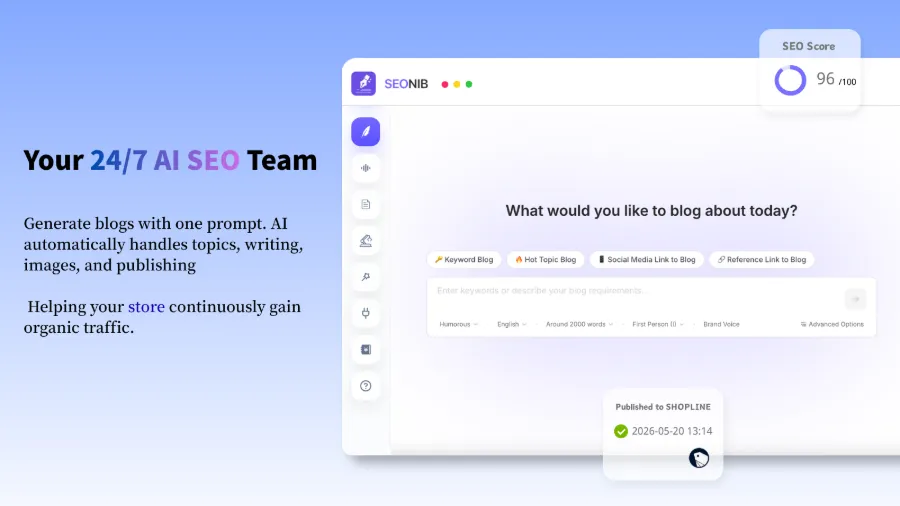
Let’s admit it: most independent site content operations are actually ineffective
I manually updated for three months, writing over twenty product descriptions and industry educational pieces. When I checked Google Search Console, the total indexed count was less than fifteen, and the natural search clicks per day never exceeded ten. It wasn’t that the articles were bad; the whole process was flawed.
Topic selection based on guesswork: spending two to three hours each week browsing competitors and industry news, picking a few directions that feel writeable, without any data support, just intuition. Writing under pressure: a 1,200‑word article requires research, drafting, and adding images, often dragging over two days to finish. Publishing manually: for each article you have to log into the Shoplazza backend, select a category, fill in a summary, set an SEO title, upload images, and click publish—these mechanical steps are even more tiring than writing.
I did the math: on average I spend about 8 hours per week on “non‑writing” tasks (topic selection, formatting, syncing across platforms). That’s 32 hours a month—enough time to learn a new skill. Moreover, the most ironic part is that this update rhythm sustained by willpower can’t last beyond three months. After a two‑week gap, the search crawler’s visit interval lengthens immediately, and the modest authority I had built up drops back down.
A ruthless discovery: what we actually lack is not content, but publishing rhythm
Later I read some independent site SEO analyses and noticed a pattern: no matter how high the article quality is, if the publishing frequency is unstable, Google’s crawler won’t treat your site as an “active content source”. For site‑building tools like Shoplazza, the crawler’s visit frequency is directly affected by the content update rhythm—if you fish for three days and dry out for two, it will come once every three weeks; if you consistently publish three articles per week, it may crawl every two or three days.
I tried continuous updates for three months, ensuring at least three articles per week. After three months, the data showed an approximate 50 % increase in indexed volume, and some long‑tail keywords started appearing on the second and third pages of search results. This confirmed for me that the problem wasn’t the inability to write good content, but the inability to output consistently. Manual work simply can’t maintain that pace.
At that time I began exploring the concept of automatic scheduling: could I set a cycle so the system automatically generates and publishes content at fixed times? Like setting a cron job, without me having to sit at the computer every day.
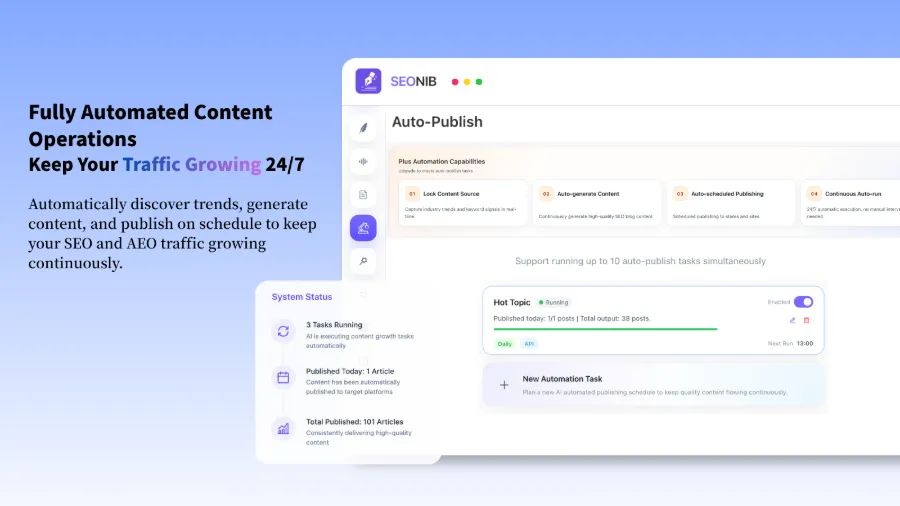
This gave me a renewed understanding of the value of a “content calendar”—it’s not just for planning topics, but also to signal to search engines that “this site updates regularly”. If you can publish content daily or every other day for three consecutive months, even if the article quality is only slightly above average, search authority will gradually accumulate. I found a detailed Keyword Research Guide and discovered that many high‑potential long‑tail keywords are virtually untouched—if I can consistently produce content covering these terms each day, the indexed volume naturally rises. Coupled with the understanding from the SEO Ultimate Guide, the impact of publishing frequency on authority is more direct than I imagined.
I changed my approach: let AI handle “generation” and “publishing”, I only handle direction selection
After deciding on a direction, I started looking for an automated solution. I saw a creator share his experience—he used a set of tools to automate the entire workflow from topic selection to publishing, continuously producing content, and he only needed to review the direction once a week. That “Cheat Record of a Content Creator” inspired me: if others can do it, why can’t I?
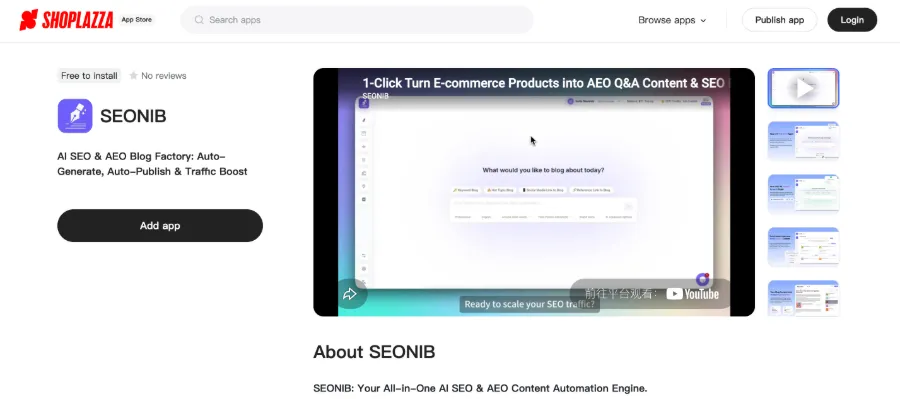
So I redesigned the workflow: each morning I spend 15 minutes opening trend monitoring to view an AI‑filtered list of topics, checking a few that seem to have traffic—and then hand the rest over to the system. From keyword input to automatic article publishing on Shoplazza, I don’t need to intervene at all. More specifically, I used SEONIB to configure a set of automated tasks: schedule a post at 10 am daily, source topics from an industry keyword library and trend tracking, automatically generate the article, automatically select images, automatically fill SEO metadata, and then push directly to Shoplazza’s product blog category.
At first I also hit a snag: when AI lacked defined brand context, the content often went off‑track. For example, for a store selling outdoor gear, AI wrote an article “How to Choose a Hiking Staff” and recommended only competitor brands. Later I configured brand information, target audience keywords, and prohibited competitor mentions, and the content finally aligned. This process wasted a whole week’s publishing quota, but it taught me that automation isn’t “throw it in and forget it”—you must first feed it proper context.
The truly time‑saving aspect of this part is “multi‑platform sync”. Previously, after writing an article, I had to manually paste it into social media, Medium, and even reformat it for a blog. Now a single generation automatically syncs to all connected platforms—Shoplazza、Shopify、WordPress、shopline all work. If you want to see the exact configuration steps, you can view the help documentation.
A mind‑blowing result: product links automatically become purchasable blog articles
After the content pipeline was up and running, I discovered an application I hadn’t imagined before: turning a product URL directly into a buyer’s guide and review article. Previously, when I sold a camping lantern, I could only write a dry product description page. Now, by feeding a product link, AI automatically generates a “2025 Outdoor Essential Lighting Gear Buying Guide”, naturally embedding my camping lantern’s product card—with price and a purchase button. Users can click the card to add to cart while reading the article.
Compared to the previous “copy‑paste product description” method, this approach significantly boosts user dwell time. I checked the backend data: articles generated from product‑to‑blog have an average dwell time about twice that of a plain product page. Google treats dwell time as a signal of content quality, which also indirectly raises the search rankings of other pages.
SEONIB can even automatically detect product SKUs and generate cards with price and stock status within the article, eliminating the step of manually inserting purchase links. However, not every product is suitable for conversion into an article—items with very low price and no decision threshold (like phone cases) might cause users to bounce if you write a “Top 10 Trendy Phone Cases” piece. I now filter based on search volume data, converting only products with clear “pre‑purchase search” behavior. To determine which products are worth writing about, see How to Quickly Validate Product Search Demand.
After six months of using this method, the content library grew from just over 30 articles to more than 400, and natural search traffic nearly tripled. What surprised me most was that many long‑tail articles continued to bring in new visitors steadily even three to four months after publishing—they don’t fade like social posts; they are continuously accumulating assets.
FAQ
Do Shoplazza merchants really need to update content every day?
You don’t need to update daily, but you should maintain a predictable rhythm. For example, publishing on Tuesdays, Thursdays, and Saturdays creates a habit for search engines. If you can’t consistently produce three articles per week, first use automation tools to fill the frequency gap, then gradually improve the quality of each article.
I have no SEO background; can I operate an automated content system?
Yes. You only need to know what your store sells and what keywords your target customers might search for. The tool can handle keyword research and content generation for you. It’s advisable to read a few basic SEO introductory articles to grasp the concepts of “search intent” and “long‑tail keywords”.
After establishing a content growth system, do I still need to review the articles myself?
Yes, initially. Especially during the first two weeks when AI is first being fed brand context, it’s recommended to review each article and correct factual errors and tone deviations. Once the system stabilizes, you can reduce it to a weekly spot check. My current habit is to spend 20 minutes on the weekend scanning the drafts slated for publication next week.
Share Article