Stop Obsessing Over Traditional Keyword Rankings: In the AI Search Era, Build Sites That AI Actively Cites
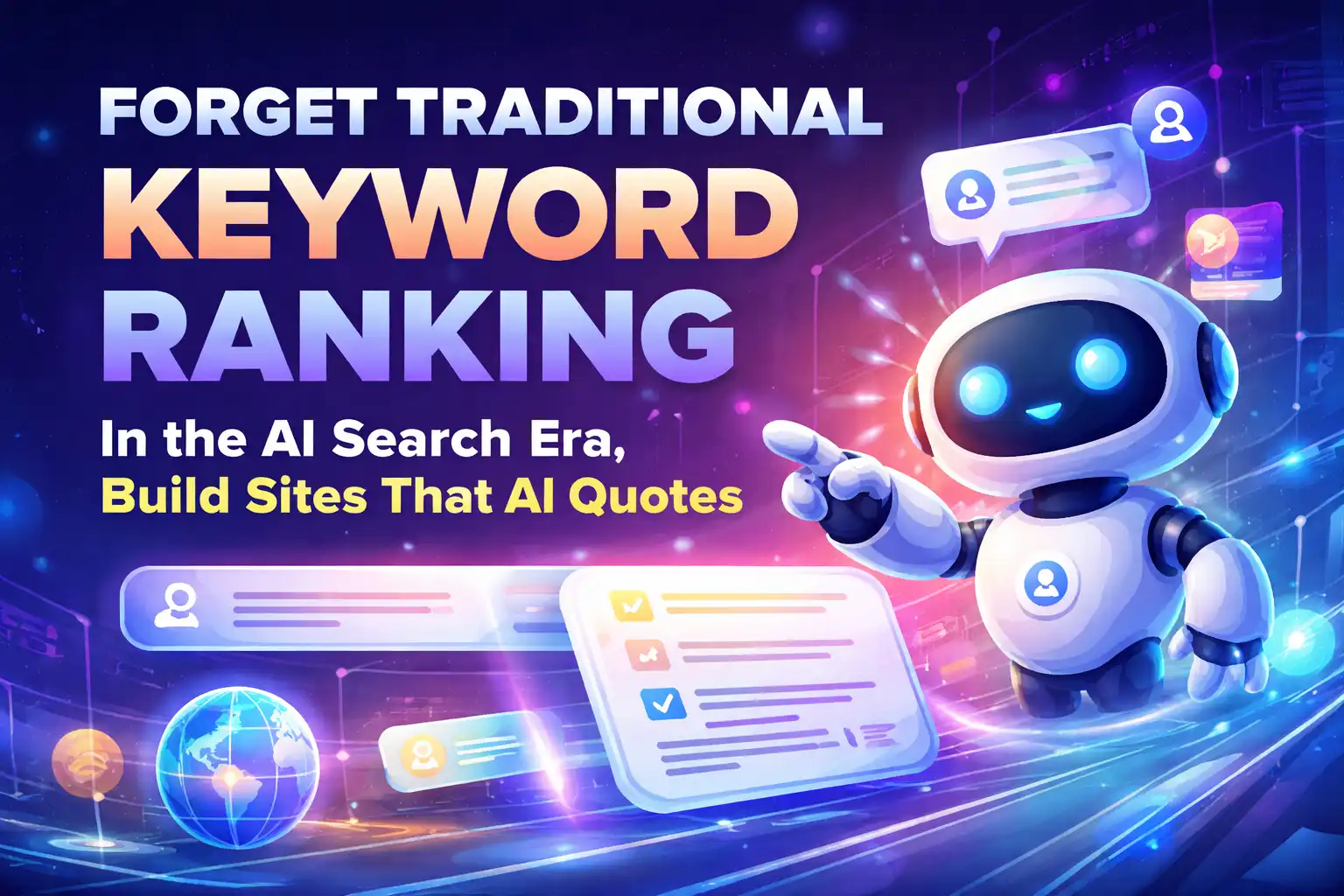
I recently discovered a frustrating fact: the ranking optimization we’ve been pulling all‑nighters for over the past few years may be turning into a solo hype session. Users ask a question in ChatGPT, and the AI pulls the answer directly from a paragraph of an article without ever clicking on your site. So today I want to discuss a more painful and realistic issue—how to make your content no longer sit alone on a search engine but become the “unlucky one” that AI proactively cites when answering questions.
When Rankings No Longer Equal Traffic: Old SEO Rules Are Completely Obsolete
Traditional SEO aims for “rank #1” and then waits for traffic to flow in. That logic is collapsing. Data shows that Google search volume has dropped about 50% over the past five years, and even when a page ranks first, the click‑through rate continues to decline. Searchers read the answer directly in the search result snippet and never visit the website.
The old question—“Can this page rank for a certain keyword?”—is completely outdated. The new question should be: Can this page support the user’s complete answer journey? When a user asks “What are the best coffee beans?”, they may also want to know brewing methods, grinder recommendations, and roast level differences. If your page only covers one keyword and the AI can’t find a matching answer paragraph anywhere in the article, it will never be cited.
But from another perspective, this is a fair competitive opportunity. New players can overtake the curve because the rules have changed: it’s no longer about domain age and backlink count, but whether you organize information into answer blocks that AI can directly extract.
What AEO Is: A Revolutionary Shift from “Ranking” to “Being Cited”
Search engine optimization is becoming “generative engine optimization,” called GEO or AEO in English. The core shift can be summed up in one sentence: you no longer optimize a page for ranking; you optimize a snippet for being cited.
For example, Word Rocket published a long article about Anthropic’s new features. The AI won’t show the whole article to the user; it will extract only the paragraph most relevant to the question. If a user asks “How does Anthropic extend Project Glass Wing into the infrastructure domain?”, the AI will pull just the few sentences that address that. The whole article exists to give the AI multiple extractable answer blocks.
This introduces a key concept: “fan‑out questions.” If a user searches for coffee beans, they may also care about brewing equipment, bean varieties, and purchase channels. Your page needs to shift from a “single keyword” to a “multiple related questions” structure—not just piling up H tags, but organizing paragraphs around natural questions.
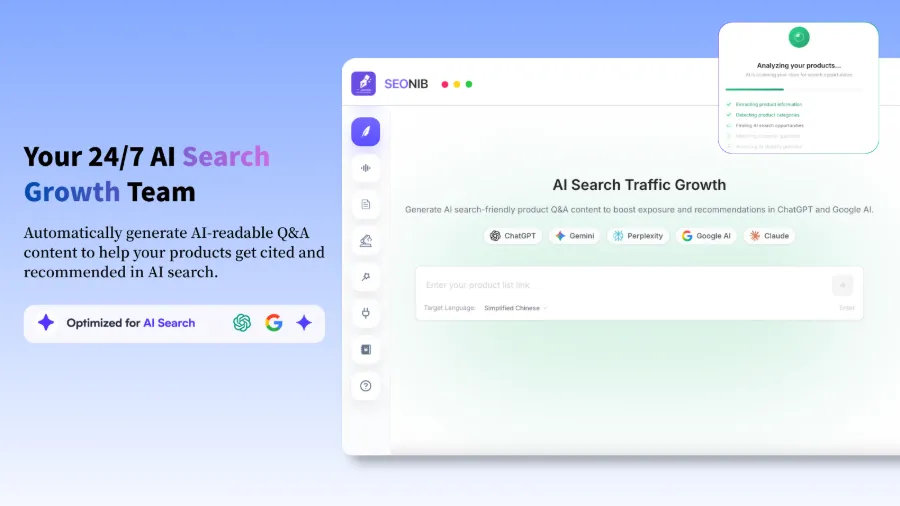
A tool that automates all this is called SEONIB. Its core logic isn’t to help you write more articles, but to reorganize your existing product info, keywords, and FAQs into answer structures that AI can directly recognize and cite, saving you the manual effort of sorting questions and embedding formats.
How to Implement: Turn Your Content from “One Article” into “A Network of Answers”
Step 1: Gather all the “people are asking” questions related to your core topic. Open Google’s “People Also Ask” module, or simply search your category in Perplexity to see what related questions the AI suggests. Arrange these questions in logical order, assigning each to its own paragraph or Q&A block.
Step 2: Embed these questions into the article structure. It’s not a mindless list of “Q1 A1 Q2 A2,” nor a forced insertion of H tags. Instead, let each paragraph naturally and fully answer a specific question. Length and depth aren’t the goal; supporting complete information jumps is. AI needs a clear opening sentence and a concluding sentence to extract precisely.
If you’re unsure how to map keywords to questions, check out this keyword‑blog writing guide, which breaks keywords down into actionable content structures.
Step 3: Identify how users actually phrase their queries in AI search. Users don’t use SEO‑style long‑tail keywords; they use natural language: “Which coffee machine is best for beginners?” “Capsule coffee vs. pour‑over, which is better?” Optimize your content accordingly, making each paragraph function like an independent mini‑answer.
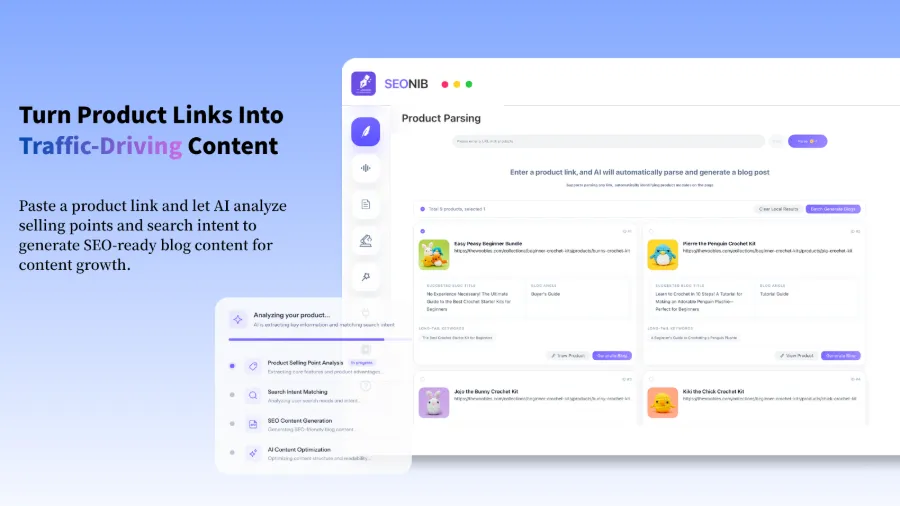
A very practical tip: drop your product link into the tool, let it automatically extract product info, and generate both Q&A‑style and long‑form content. If you’re not clear on the workflow, see this external share: “Convert a product link into an SEO blog that continuously attracts natural traffic,” which includes concrete case studies.
Validating Results and Continuous Iteration: Are You Really Being Cited or Just Self‑Celebrating?
How do you know AI is actually citing your content? Not by guessing. Open Google search and check the AI Overviews for source links that include your domain. Or ask a related question in ChatGPT or Perplexity and see the cited source.
In my first test, the AI cited a paragraph completely different from what I expected. It skipped my carefully crafted introduction and pulled content from a mid‑article Q&A block. This shows that what you consider important may not be what the AI deems important.
If the cited snippet’s conversion rate is unusually low, the issue may be truncation. AI typically cites only 2–3 sentences; if your answer block lacks a clear lead‑in or CTA, users may leave after reading the answer. The solution is to end each Q&A block with a hint for the next step, such as “For more details, see the product page” or “Specific steps are in the table below.”
If maintaining AEO manually feels too labor‑intensive, automation tools like SEONIB can continuously monitor your content structure, auto‑adjust paragraph formats, and predict which questions have traffic potential. For pricing details, check SEONIB’s pricing page, which includes a detailed plan comparison.
Another essential iteration strategy: monitor changes in search snippets and adjust your content coverage accordingly. Weekly, review how many times your snippet appears and how many clicks it receives in Google Search Console. High impressions but low clicks indicate a snippet issue; low impressions suggest AI isn’t finding your content block at all, requiring a restructuring of your question hierarchy.
Avoid the “perfect‑article” perfection trap. AEO’s effectiveness doesn’t depend on a single flawless article, but on having enough extractable answer blocks for many related questions. Writing eight effective paragraphs is far more valuable than a 3,000‑word article that only answers one question.
If you don’t want to guess which content format to pursue, start with a simple website to validate the market demand for your idea, and lay the citation path during the validation phase. Also, to quickly see which AI SEO tools can accelerate your iteration, check out the 2026 “Top 7 AI SEO Tools” list and find the ones that match your current stage.
FAQ (Frequently Asked Questions)
My article ranks high, but traffic has dropped. Why?
Most likely AI search is eating your clicks. Users get the answer directly in AI Overviews or ChatGPT snippets and don’t visit your site. Ranking #1 doesn’t equal clicks. You need to shift from a “ranking mindset” to a “citation mindset,” making each paragraph independently serve as an AI answer source.
Do AEO and SEO content need to be created separately?
They don’t have to be completely separate, but the strategies differ. Traditional SEO focuses on keyword density and H‑tag alignment; AEO focuses on complete, independent Q&A blocks. The most effective approach is to combine them in the same article: start with keyword coverage of search intent, then embed multiple Q&A blocks that can be cited. The two are not mutually exclusive.
How can I know if AI has actually cited my content?
The simplest method is to test. Ask a relevant question in ChatGPT, Perplexity, or Gemini and see if the source list includes your domain. Google’s AI Overviews also label source links. Additionally, Google Search Console’s “Search Results” report shows how often your page appears in snippets.
Do I need a technical background to write AEO content?
No coding or machine‑learning expertise is required. You just need to understand the “prepare answers for questions” logic. Learn how to naturally embed Q&A structures in your article, then let tools handle formatting. Most of the effort goes into organizing questions, not technical configuration.
Is the AEO strategy suitable for all types of websites?
It works best for informational, tutorial, or product‑comparison content. Pure brand‑intro pages or checkout pages rarely become AI citation sources. However, you can build a citable content network through blogs, Q&A pages, and product FAQ sections. E‑commerce standalone sites, SaaS blogs, and industry knowledge bases benefit most from AEO.
Share Article