
Every AI Tool I Pay For (And Why They're Worth It)

I’ve been running an independent cross‑border e‑commerce site for four years, and I’ve hit more pitfalls than I’ve written articles. At first I thought AI tools could solve content problems in one go, but after trying a dozen of them, some were abandoned after two weeks, and some, after paying the annual fee, turned out to be useless. In the end, only a few remained in my subscription list, and each of them truly saved me time and labor.
Initially I used ChatGPT Plus to generate drafts. Sounds great, right? Enter a few keywords and the AI spits out an 800‑word article outline. But the real problem isn’t the generation step—after the draft is produced, I have to manually adjust the tone, find images, polish the title, fill in the meta description, and then copy‑paste it into the backend for publishing. Even in the best case, it takes at least an hour and a half to go from generation to live. Moreover, this workflow is hard to maintain; after two weeks of continuous updates, I started missing schedules, and the site’s content updates became sporadic, naturally hurting SEO performance.
Content Creation: From Manual to Fully Automated Pipeline
This stage consumes the most time and is the first pain point that needs to be solved.
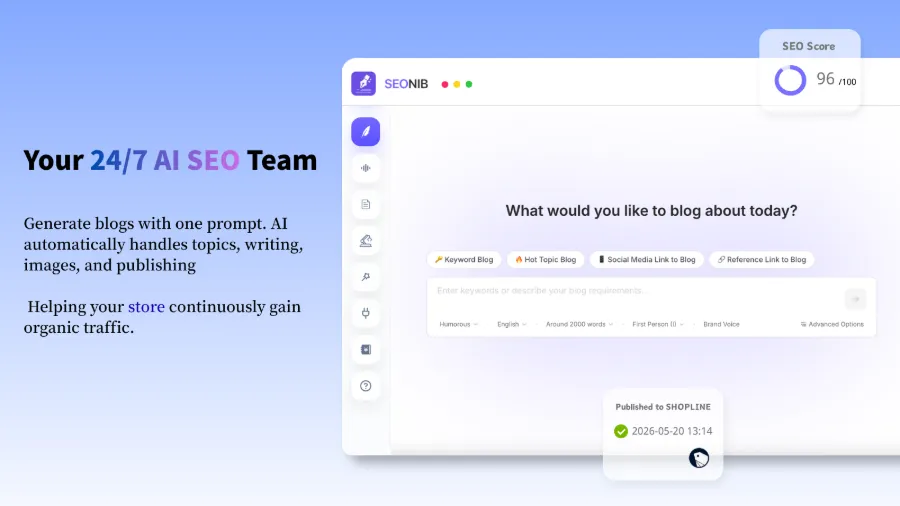
Later I switched to SEONIB. It can turn product links, keywords, trending topics, and other content sources directly into SEO articles, automatically adding images, optimizing titles and metadata. The whole process doesn’t require me to open an editor manually. It supports five content generation sources: product‑to‑blog, keyword‑to‑blog, trend‑to‑blog, social media link‑to‑blog, and reference link‑to‑blog. After setting it up once, subsequent content is generated automatically according to preset rules. I used to spend ten hours per week writing content; now I only need one hour for review and a quick wording tweak. For a detailed explanation of how it works, see this article on the Five AI Content Generation Modes.
I also tried some free AI writing services, but they either produced inconsistent quality or required extensive manual tweaking before publishing. The main issue isn’t the writing quality but the length of the workflow—each article has to go through generation, editing, image selection, and uploading; any bottleneck stalls the update frequency. When you tally the time cost, a paid tool that automates the entire pipeline ends up being more economical. A practical example can be found in this guide on Using SEONIB to Convert a Product Page into a Blog with One Click. If you’re interested in the exact pricing structure, check the official SEONIB pricing plans—for me, the monthly expense is fully justified by the time saved.
Content Strategy and SEO Optimization: Sustaining Search Traffic
Content generation is only the first step; acquiring search traffic also requires an SEO strategy. In the early days I used Ahrefs for keyword research and Surfer SEO for article structure optimization, then manually coordinated the two outputs. The communication cost between tools was high—research results lived in one system, optimization suggestions in another, and I still had to manually align them in the article.
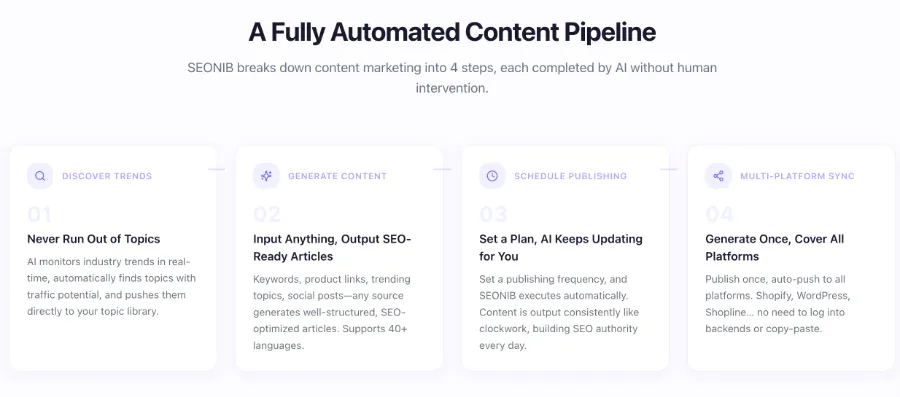
I also use SEONIB’s built‑in SEO features to plan topics and entity coverage. It automatically applies internal linking strategies, external link rules, and brand knowledge base during article generation, embedding the entire process within the generation workflow without needing to open other tools. In comparison, a tool that handles 80 % of the process is more practical than three powerful but siloed tools. This is a non‑obvious conclusion—integration matters far more than the sheer number of features.
After three months, the site’s search visibility began to improve steadily. It’s not an explosive surge, but the metrics rise month after month. This change is visible in Google Search Console: impressions grew from a few thousand per month to over twenty thousand, and core keyword rankings moved from the bottom to the first two pages. For a deeper dive into the logic behind this approach, see the AI SEO Guide (2026). Also, most independent‑store merchants eventually host their content on the Shopify official platform, so the coordination between SEO strategy and platform characteristics must also be considered.
Multi‑Platform Sync and Scheduled Publishing: Freeing Your Hands
Once the content is written, publishing itself is a hassle. My sites are spread across Shopify, WordPress, and Shopline, and initially each article required me to log into each backend, copy‑paste, and adjust formatting. The operation itself isn’t difficult, but it’s highly repetitive—over a month I wasted at least five or six hours on the transfer work.
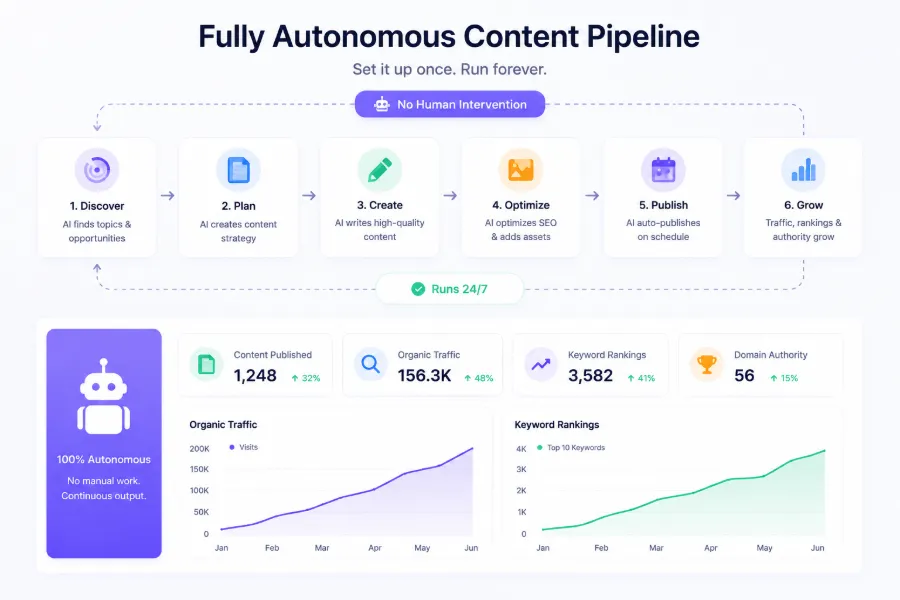
The tool supports a single publish action that automatically syncs to all connected platforms, eliminating the need to log in individually. I set up an automatic publishing schedule of three posts per week; the AI executes on time, and I only need to occasionally check the publishing status and content quality. After the setup, I went two months without manual publishing, and the content accumulation never stopped. Compared with the previous unstable manual updates, this efficiency boost is clearly visible.
There is a demo video that walks through the workflow, directly showing how to sync a blog to Shopify, which is highly relevant to this part:
For merchants already using Shopline, you can also refer to this piece on Why Every SHOPLINE Store Should Run a Blog. If you haven’t installed the tool yet, you can find and integrate it directly from the SEONIB Shopify App Store page.
FAQ
Are paid AI tools really worth it? Or are they just a gimmick?
It depends on your content volume. If you publish only two articles a month, free tools plus manual work are sufficient. But if the goal is continuous output and maintaining an SEO growth curve, the value of a paid tool lies in turning content creation from a proactive task into an automated process. I spend about one‑tenth of a writer’s cost on AI tools each month, yet the output is two to three times what a human would produce.
How do you decide which stages deserve a paid AI and which can be handled by free tools?
Look at the repetition level. Any stage that requires you to repeat the same set of operations with manual intervention each time is usually worth a paid tool—it eliminates the time loss of intermediate steps. Conversely, one‑off tasks (like writing a product description template) can be handled with free tools. The core criterion is “how many times does this task occur per week?”.
For a newly started independent site, what is a reasonable monthly budget for AI tools?
Start with the lowest paid tier, such as $20–$50 per month. You don’t need the most feature‑rich version at first; focus on content generation and automatic publishing—the two core modules. Upgrade to a pricier plan when traffic enters the growth phase and you need strategic support.
Where does the gap between free AI tools and paid versions lie?
Free tools typically only handle the “generation” step; all subsequent editing, image selection, SEO optimization, and publishing must be done manually. Paid tools address the entire pipeline—generation directly feeds into all downstream steps. Another difference is stability; free services’ response speed and output quality fluctuate during peak times, while paid versions are generally stable.
How to integrate multiple AI tools without creating information silos?
First pick a primary tool that covers most of the workflow, then use other tools as supplements. For example, the main tool handles content generation and publishing, another tool does keyword research, and you use Google Search Console to verify results. The key is to minimize switching frequency and avoid scattering data and operations across five or six different systems.
Share Article