From Accio to an Independent Store: How I Use SEONIB to Drive Traffic to Hot‑Selling Products and Earn a Few Extra Cups of Coffee a Day
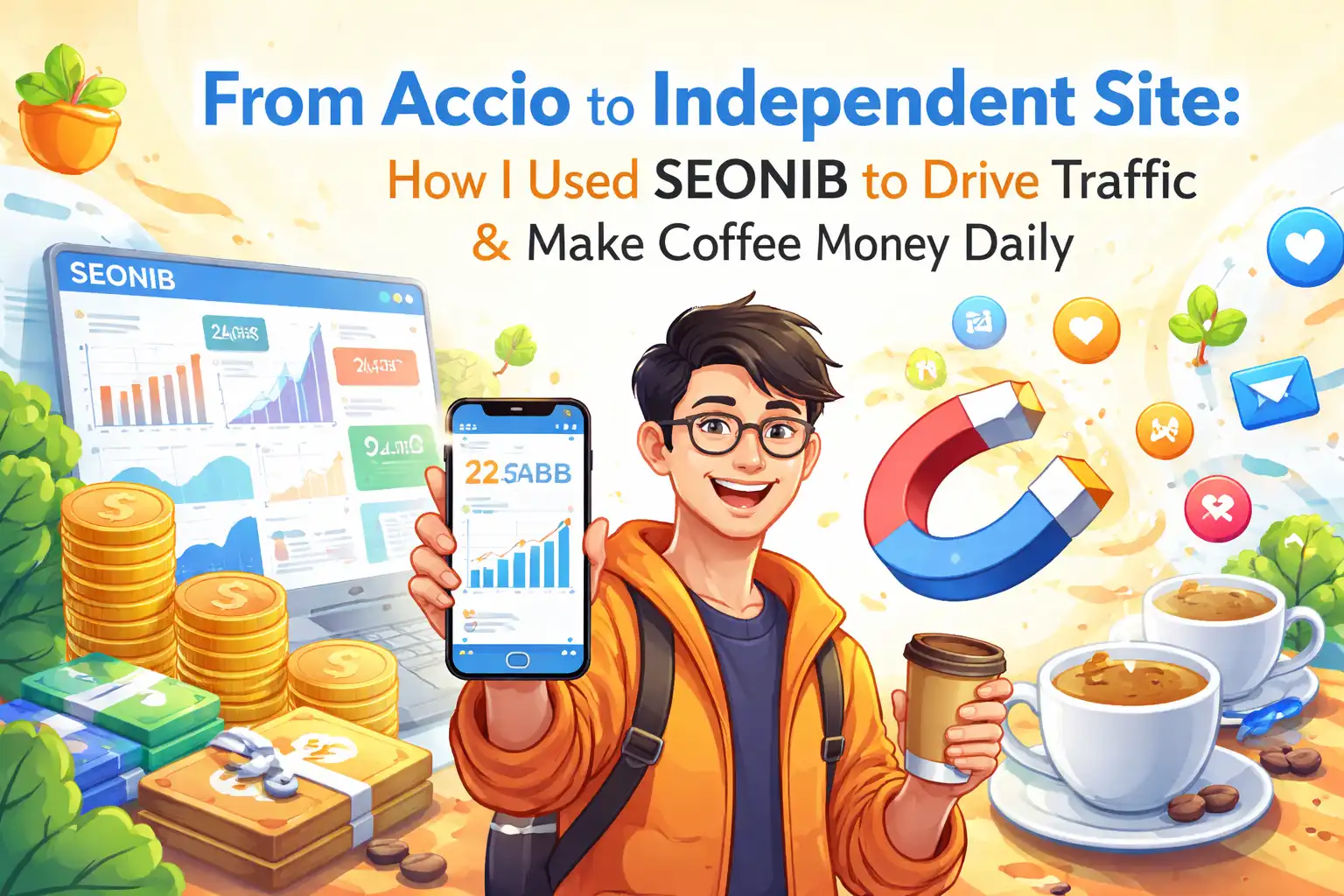
Choosing products on Accio used to feel like a blind man feeling an elephant—staying up late to scrape data, finally finding a product that seemed like it could explode, eagerly listing it, and then… nothing happened. No traffic, no orders, just a pile of inventory and a broken heart. Later I realized that product selection is only 10 % of the work; the remaining 90 % is content marketing. Throwing a product link into a tool that can automatically write SEO blogs and publish them across all platforms is the real key to turning a hot product into a money‑maker.
Product selection is only the first step; traffic is the real parent
The “hot‑trend” items on Accio look exciting, but once you launch an independent store, where does the traffic come from? Many people throw money at ads, but the ad budget burns out and the orders stop. I tried writing SEO blogs manually; a well‑optimized article takes at least 2–4 hours from topic selection to publishing, and the midnight‑crafted pieces aren’t guaranteed to be noticed by search engines. Organic traffic is the long‑term lifeline for an independent store, but who has the time to write every day? The gap between product selection and traffic can’t be bridged by luck alone.
From product link to SEO blog, one‑click detox
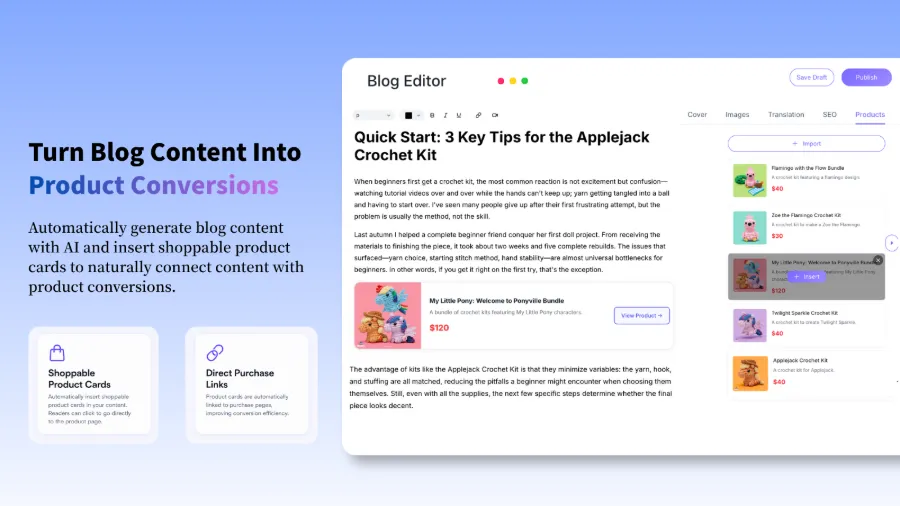
Then I tried a different approach: find a product link on Accio and feed it directly into SEONIB’s “Product to Blog” feature. Paste the product URL, and the AI generates a complete SEO blog in 60 seconds—title, keyword density, internal links, paragraph structure, all automatically handled. Compared with the hours of manual writing before, the efficiency gap is like walking versus taking a high‑speed train.
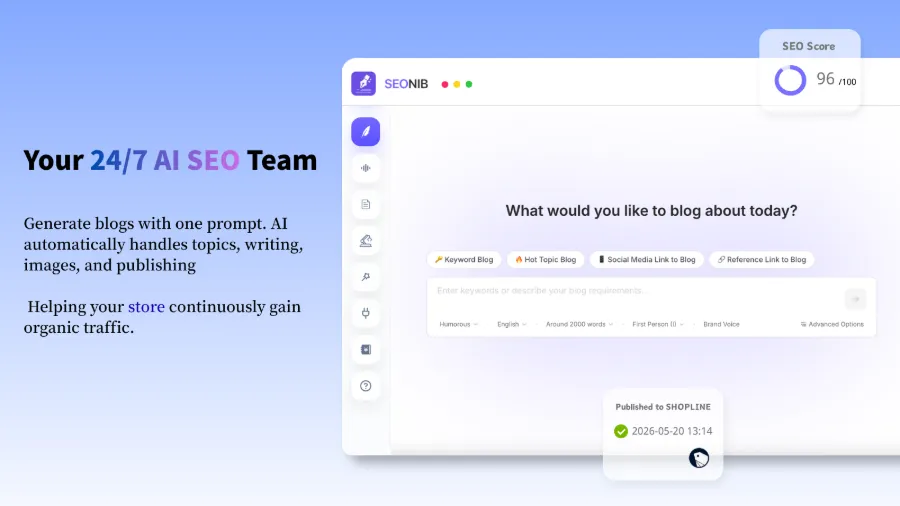
The generated blog isn’t just a wall of text; it automatically matches search intent based on product attributes, such as “buyer’s guide” or “usage review.” If you’re still stuck on what to write or how to write it, check out the 2026 Top 10 AI Content Marketing Tools to see how to pick automated writing tools in this ecosystem.
Not only can it write, it also feeds search engines on a schedule
SEO hates “three days of fishing, two days of drying.” Independent store operators often start with great enthusiasm, write for a week, then disappear for a month. Search engines prefer sites that update consistently—an independent store that publishes a blog every day for 30 consecutive days can see organic traffic increase by about 340 % on average. Relying on willpower alone is unrealistic.
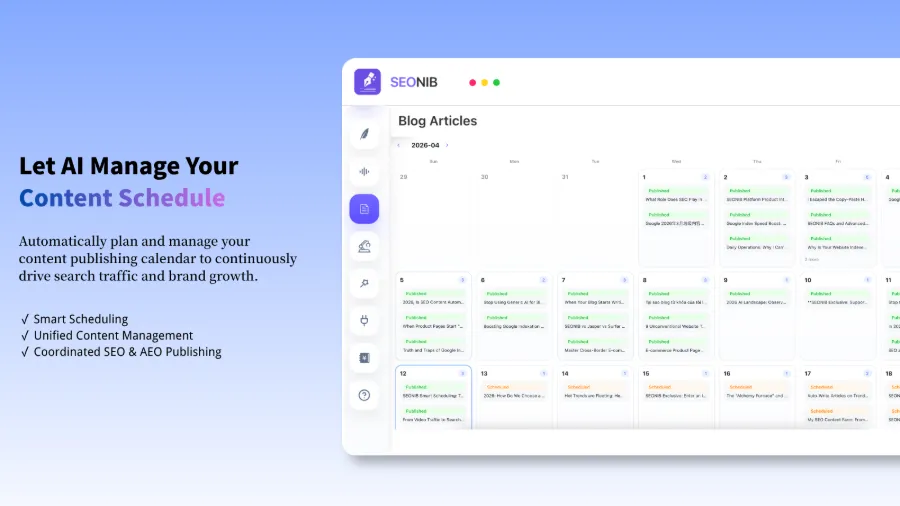
SEONIB’s content calendar and scheduled publishing features solve this problem. Set a frequency (e.g., three posts per week), and the AI automatically generates and publishes on time. Even better, it syncs with major platforms like Shopify and WordPress. Previously I had to copy‑paste each article manually to each platform; now it’s a one‑click push.
If you want to master the automation setup, see the tutorial One‑Click Turn Product Pages into Blogs with SEONIB for detailed steps. For deeper configuration tips—custom publishing rules, knowledge‑base settings—refer to the Help Docs, which cover everything from beginner to advanced use cases.
When a hot product meets a hot topic, where does the traffic come from?
You have product selection and content, but traffic can still be lukewarm. I later discovered that “timing” is more important than imagined. SEONIB offers “Trend Discovery” and “Hot Topic to Blog” features—e.g., when TikTok Shop releases a new policy in 2026, the AI automatically captures the buzz and combines it with your existing product selection to generate a timely article. Hot‑topic‑driven blogs typically receive three times the organic traffic of ordinary blogs within the first 24 hours after publishing.
From my experience, publishing yesterday versus today can result in traffic differences of severalfold. If your content hits a hot‑topic window, the exposure of the hot product spikes dramatically. However, chasing every trend blindly can stray from brand tone. For ROI assessment of content strategy, read the article SEO vs. GEO Services: Are They Worth It? for a detailed breakdown. The piece Turning Product Links into SEO Blogs that Continuously Attract Organic Traffic also discusses a similar approach.
Real‑world results: Can AI‑generated content actually deliver?
After running SEONIB for three months, a test site that started from zero grew to an average of 200+ organic visitors per day, and its keyword rankings climbed into Google’s top 20. This isn’t a brag‑filled article; I have to be honest: AI content has hard flaws. For example, in the second week after publishing, I noticed some paragraphs were semantically repetitive, reading like tongue twisters—this issue is especially pronounced in long texts. Moreover, AI‑generated depth is limited; for categories requiring professional knowledge (e.g., medical, legal), publishing without human review is a recipe for failure.
My maintenance strategy: spend 15 minutes each week reviewing the previous week’s articles, fixing issues, and continuously feeding industry terminology and brand information into SEONIB’s knowledge base so the next generation is more accurate. For better SEO results, combine this with a Technical SEO Checklist for a full‑site audit; the effects stack noticeably.
Another less obvious observation: many people look for hot products on Accio, but almost no one copies the product link into an AI tool to generate content—this is the information gap. Automated publishing is harder to stick with than manual writing, but SEONIB’s scheduled tasks eliminate the “consistency” variable, turning SEO into a passive skill. Content is produced in the background; I only need to occasionally check traffic trends.
FAQ
Q1: Does SEONIB only support Shopify? Can it sync to other platforms?
Not just Shopify; it also supports WordPress, Shopline, WooCommerce, Webflow, and more than ten other major site‑building platforms. Each piece of generated content can be synced to multiple back‑ends with a single click, no manual copying needed.
Q2: Do I need SEO expertise to use it?
No. SEONIB comes with built‑in keyword optimization, internal‑link strategy, and structured data. If you want to boost rankings further, spending half an hour learning the basics of core keywords and long‑tail concepts is recommended.
Q3: Once set up, can I completely forget about it?
Not completely. It’s advisable to spend 10–15 minutes each week reviewing published content, correcting any semantic issues the AI may have introduced, and updating the knowledge base. Automation solves about 80 % of repetitive work; the remaining 20 % still requires human oversight.
Q4: How long does the free version last, and are there feature limits?
The free tier provides 8 credits and functional limits, sufficient for testing and validating results. For full‑scale operation, upgrading to a paid plan unlocks scheduled publishing, multi‑platform sync, and other core features.
Share Article