Others Compete in SEO, I Use AI to Capture Search Benefits
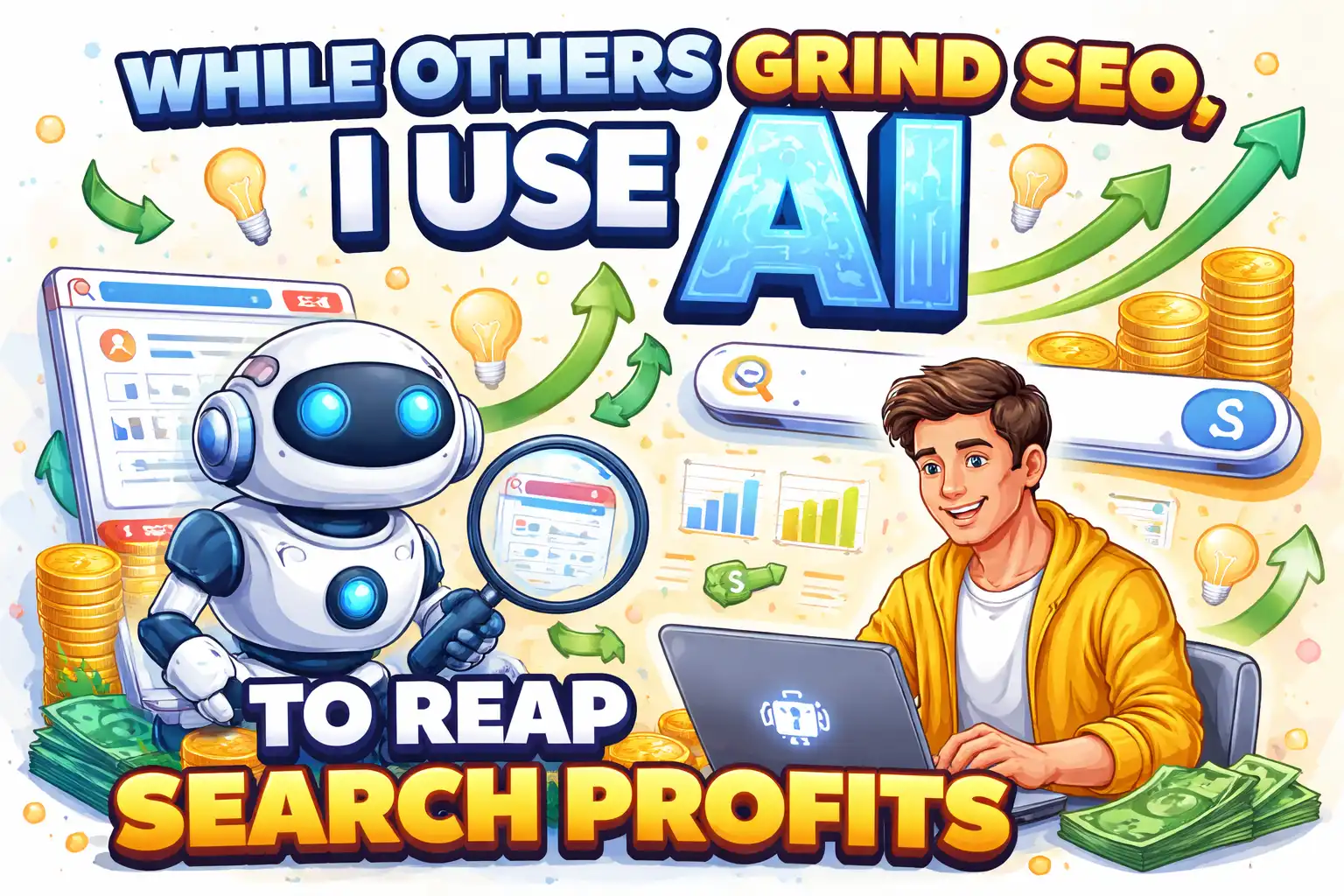
I was especially anxious for a period last year. Every morning I opened Google Search Console and watched a few keywords rise and fall month after month. I forced myself to publish three blog posts each week for thirty consecutive days, and the traffic increased by five percent — the number that fell within the margin of error. Then an unoptimized AI search snippet inexplicably got picked up by ChatGPT and generated a forty‑percent click‑through recommendation in a month. I sat in front of the screen, took a sip of cold coffee, and suddenly felt that the past three months were a joke.
From that day on I changed my approach. Not that I stopped, but that I no longer wanted to use clumsy methods. While others were still grinding on long‑tail keywords, I started thinking about how AI could run the entire content pipeline for me. This article talks about the practical process and some pitfalls I discovered.
When SEO Becomes a “In‑House Competition” — Why I Decided to Switch Tracks
Traditional SEO’s problem is that the ROI is getting worse. Writing articles manually takes time; a 2‑3 k‑word blog post takes at least two or three hours from topic selection to publishing. Even if you bite the bullet and update regularly, you can’t increase frequency much—two posts a week is already the limit. And the competitors? They run the same logic, and the market is huge; every long‑tail keyword has dozens of pieces of content fighting for it.
Meanwhile, AI search traffic entrances are growing rapidly. Products like ChatGPT, Perplexity, and Google AI Overviews don’t just look at keyword density and domain authority when recommending content. They prioritize entity coverage and contextual relevance. A friend’s product page spent half a year on Google’s first page, but after the same content was cited by Perplexity, it generated two thousand clicks in a week. That was impossible before—you needed to rank in the top three for exposure. AI search changed that rule: you don’t have to be on the first page; as long as you appear in the AI’s answer, traffic will come.
Once I understood this, I stopped obsessing over the red‑purple search ranking curve. I started thinking about how to make content flow like a factory line while ensuring it’s trusted by AI search engines.
While Others Chase Long‑Tail Keywords, I Let AI “Operate” My Content Library
The core of the shift is tools. I spent some time finding a platform that could replace the entire content‑operation workflow, not just a writing assistant. I used SEONIB, which doesn’t just help you write drafts; it automatically discovers industry trends, generates SEO blog posts from keywords and product links, and publishes them directly. I no longer have to manually select topics, write, format, and publish.
Specifically, I set up several content sources: input a long‑tail keyword and it generates a targeted blog; paste a product link and it automatically writes a buyer’s guide or review; even a social‑media post can be turned into an indexable article. It can generate five pieces of content for me each day at a cost less than a cup of Starbucks coffee. That was impossible before—writing five articles required editing fees and time, enough to buy a month’s worth of coffee.
If you also have product pages you want to turn into traffic‑driving blogs, check out this Product‑to‑Blog Conversion Guide. I started with product links, and the results were better than writing pure informational articles. Another frequently used resource is the Keyword Blog Writing Guide, which is handy when you haven’t settled on a topic direction yet. A peer shared a One‑Click Product‑to‑Blog Experience Share; the workflow is roughly the same and can be referenced.
Set Up “Auto‑Publish” Once, Then Forget It — 24‑Hour Continuous Output
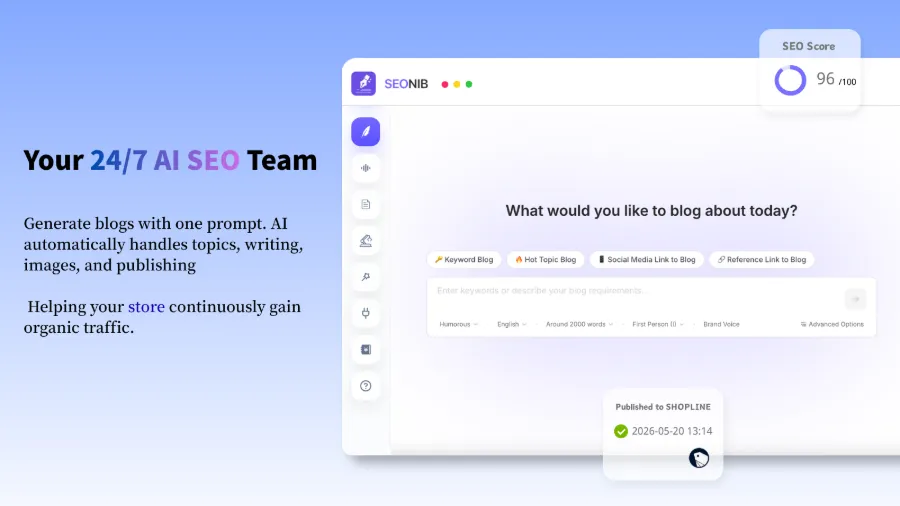
Content generation is only the first step; the real time‑saver is auto‑publishing. I spent about twenty minutes configuring the publishing frequency: two posts per day, synchronized to Shopify, WordPress, and SHOPLINE. After setting it up, I never touched it again; the content accumulated automatically like a clock.
A month later, the site’s organic traffic grew by roughly 150 %. Of course, the number varies per site and depends on the baseline, but the effect of continuous content output is visually obvious. For details on configuring these automated tasks, see the AI Agent Auto‑Publish Guide. If you use Shopify, you can install the sync plugin from the Shopify App Store. Once configured, SEONIB runs the schedule without daily logins.
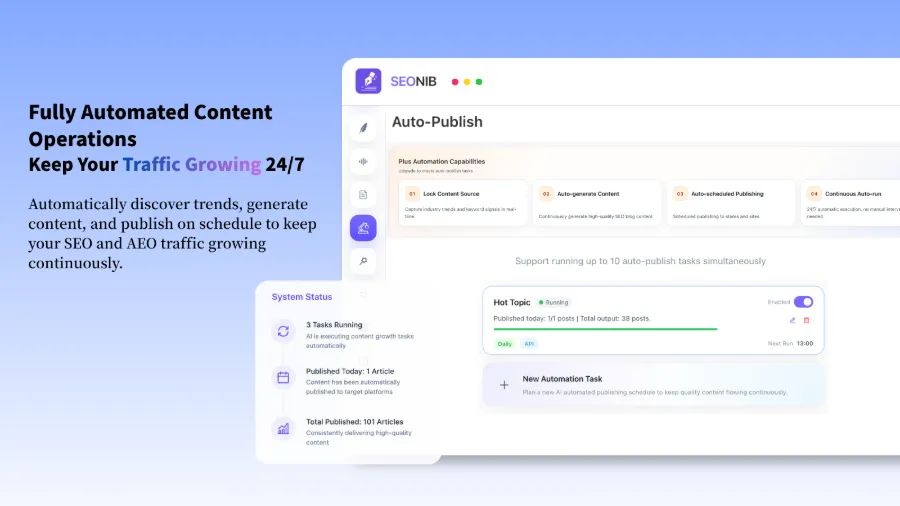
For users who want the full configuration, the complete SEONIB Help Documentation contains screenshots and parameter explanations for every step; I followed it step‑by‑step when setting up multi‑platform sync.
Pitfall Warning: The “Dark Side” of AI Search Benefits
It wasn’t smooth from the start. The first time I generated content with AI, I fed it generic prompts and got ten articles. Only two of the ten were cited by AI search summaries; the other eight sank into oblivion. The reason was a lack of brand context—AI search engines deemed those articles generic and not worth recommending.
Later, I spent about two days configuring a brand knowledge base, industry terminology list, internal linking rules, and asset library. I wrote the product’s core information, typical use cases, and competitor differentiators into the knowledge base, then had the tool automatically reference these when generating each article. After adjusting the brand context, the citation rate rose from twenty % to eighty %. It’s not an exaggeration to say that the jump from twenty % to eighty % is the difference between having brand context and not.
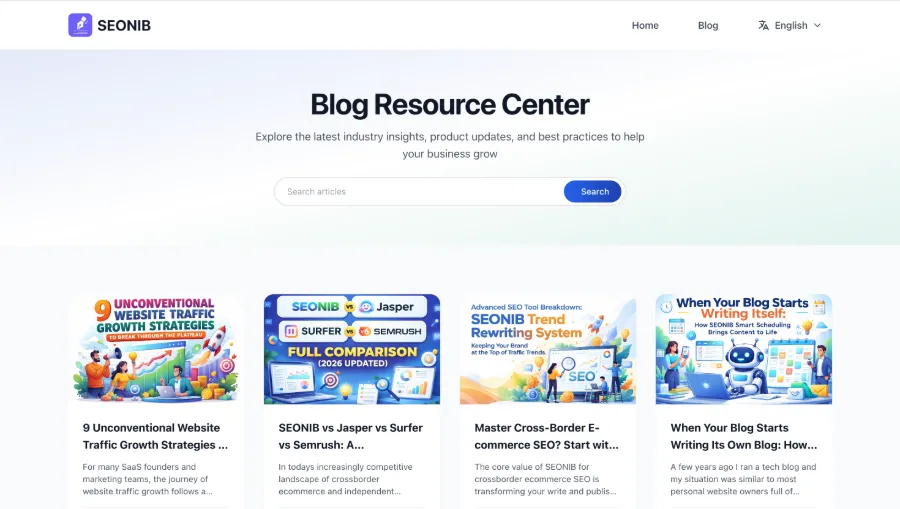
The features used here are SEONIB’s templates and brand‑context functions. Another hidden issue is that auto‑publish looks like “set it once and you’re done,” but after a while you’ll notice content becoming homogenized. AI always generates articles from the same information sources, so readers perceive duplicated angles. My solution is to manually add two or three new topic leads or industry news each week, giving AI fresh material. This isn’t a bug; it’s an inherent limitation of automation—you need periodic directional intervention.
If you’re considering building a multi‑platform content automation pipeline, take a look at the SEONIB Integration on the SHOPLINE App Store, which syncs directly to the Shopline backend and eliminates manual uploads. Also, the AI SEO Guide (2026) offers a more detailed explanation of AI search crawling behavior and entity coverage requirements—worth reading before configuring any tools.
FAQ
How long will the AI search benefit last?
At least until AI search engines’ recommendation mechanisms mature. Currently, AI search places higher demands on entity coverage and contextual quality than traditional search, but relies less on domain history, giving new sites a chance. The benefit won’t last forever; competition will gradually catch up, so now is a good entry point.
Do I still need to do traditional SEO?
Don’t abandon it completely. AI search and traditional search aren’t mutually exclusive; they overlap a lot. My current strategy is to let AI content cover long‑tail and mid‑tail topics, while traditional SEO optimizes a few core brand and product keywords. Each occupies roughly fifty % of my effort.
Do I still need human review after setting up auto‑publish?
Initially, yes. I spent about two weeks repeatedly tweaking prompts and the knowledge base to ensure stable content quality. Once the system stabilizes, you can reduce the review frequency, but I still recommend checking the content direction and update trends at least once a week.
What’s the minimum daily investment?
My daily operational time is under ten minutes, mainly reviewing the topic list and adding one or two new keywords. The real time investment is the initial configuration phase, which takes about two to three days.
Can I start without a website?
Yes. When I first tested, I used the platform’s built‑in showcase page feature, so I didn’t need to buy a domain. However, if you have a proper standalone site or e‑commerce store, the results will be better because the content can accumulate authority on your own domain.
Share Article